




Power every shift with operational context.
Give manufacturing teams an AI coworker that helps accelerate product innovation, troubleshoot issues, and scale shop floor expertise across every line and plant.
Get a demo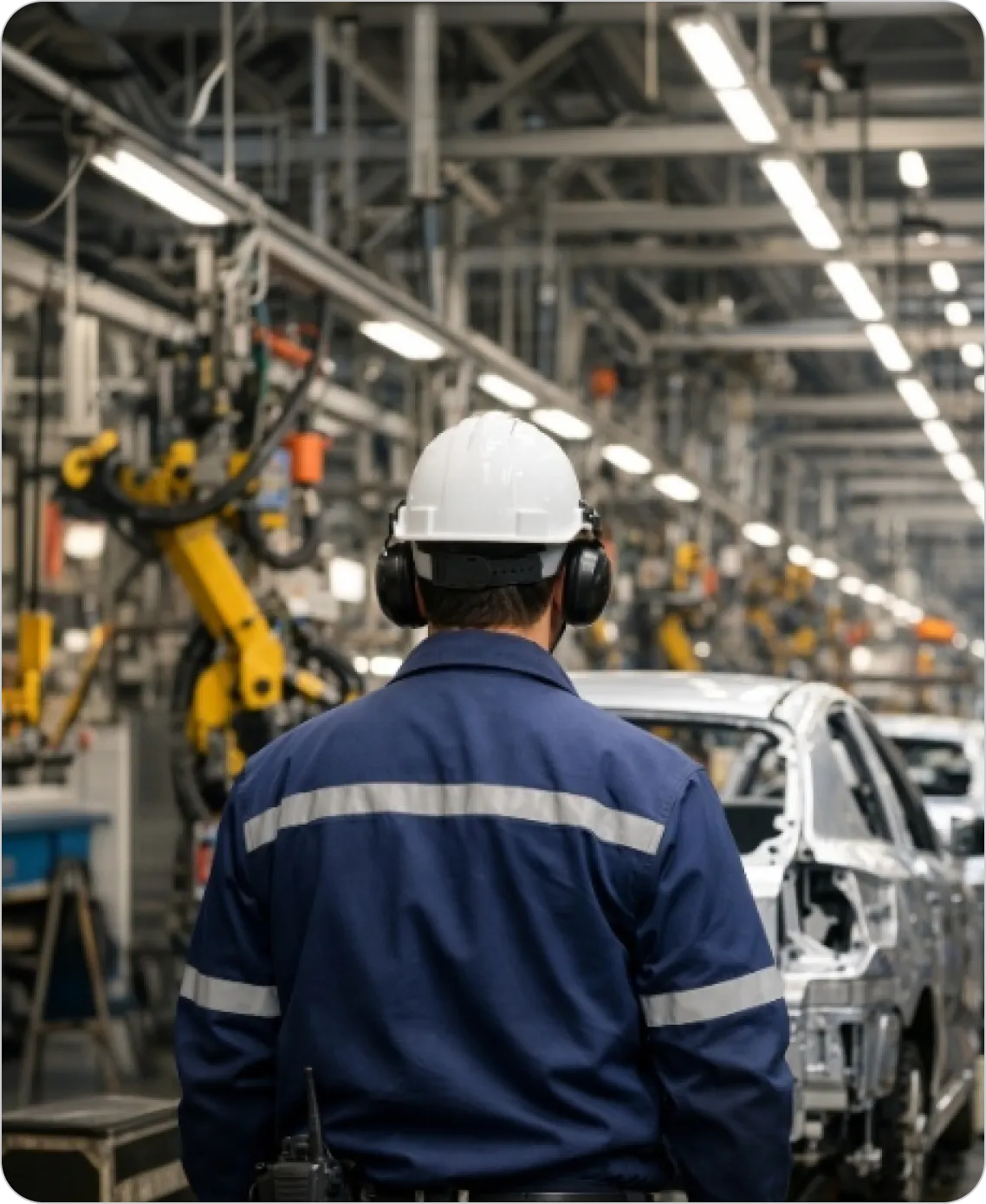
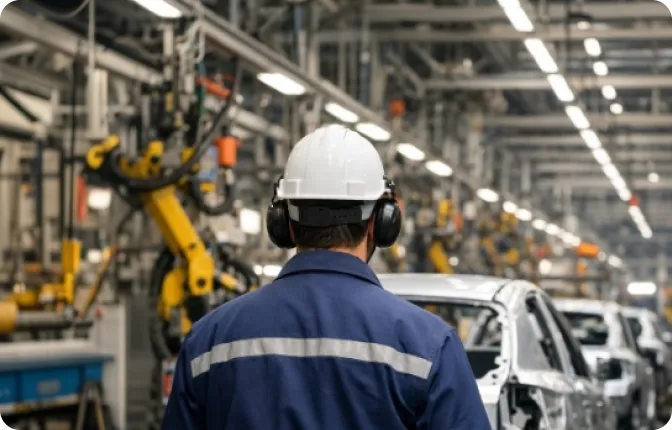

Give manufacturing teams an AI coworker that helps accelerate product innovation, troubleshoot issues, and scale shop floor expertise across every line and plant.

Keep work moving from design to the shop floor.

Accelerate product development
Bring together design history, product specs, andchange context so R&D and engineering teams can reuse prior insights and move innovation forward.

Resolve maintenance and production issues faster
Use maintenance history, troubleshooting guidance, and prior fixes to help teams diagnose problems, reduce downtime, and keep production moving.

Scale shop-floor expertise
Capture institutional knowledge from experienced operators and engineers so new hires ramp faster and best practices scale across plants and teams.



AI for predictive maintenance
Troubleshoot issues on the floor.
Help operators and technicians quickly work from the right relevant SOPs, maintenance logs, and prior incident reports so issues are resolved safely and documented accurately.
Generative AI for manufacturing
Speed up product development for R&D teams.
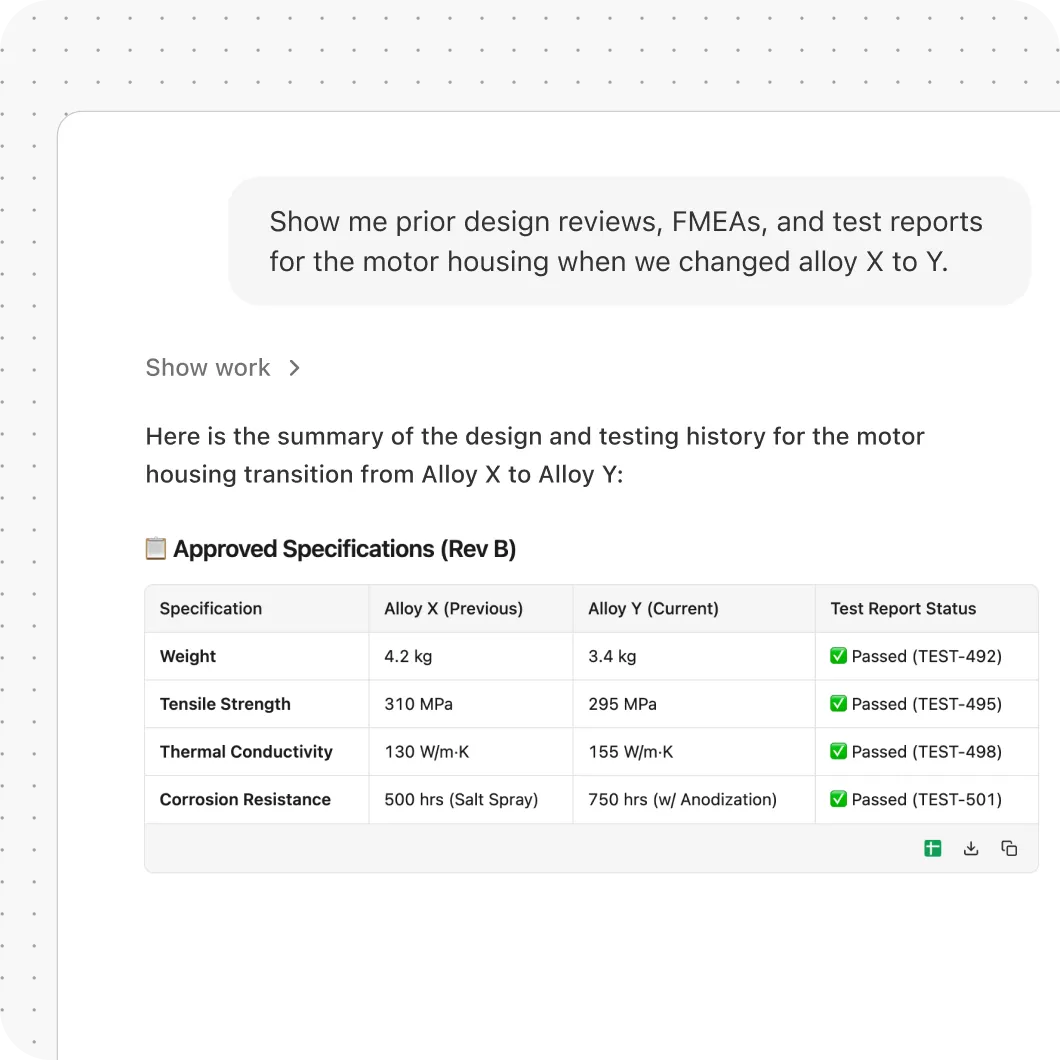
Turn design files, engineering archives, and change histories into usable inputs for concept briefs, reviews, and development decisions.
AI for quality management
Investigate quality issues with full context.
Bring together non-conformance reports, audit findings, and historical fixes so quality teams can quickly investigate issues and draft CAPA responses.
A Agentic AI for manufacturing
Resolve production incidents faster.
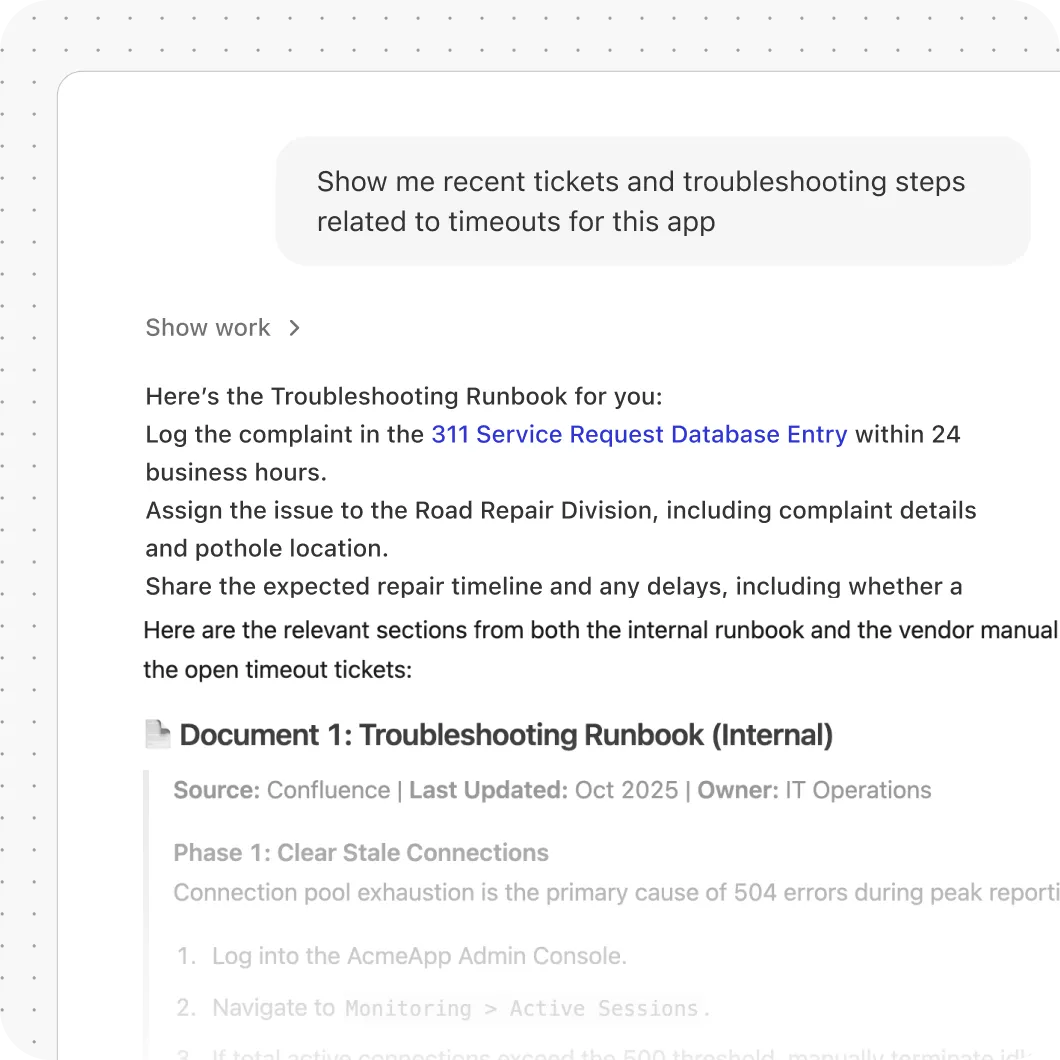
Pull together tickets, runbooks, system documentation, and vendor guidance so IT and OT teams can diagnose issues and get production up and running faster.
AI solutions for manufacturing
Ramp new plant and corporate teams.
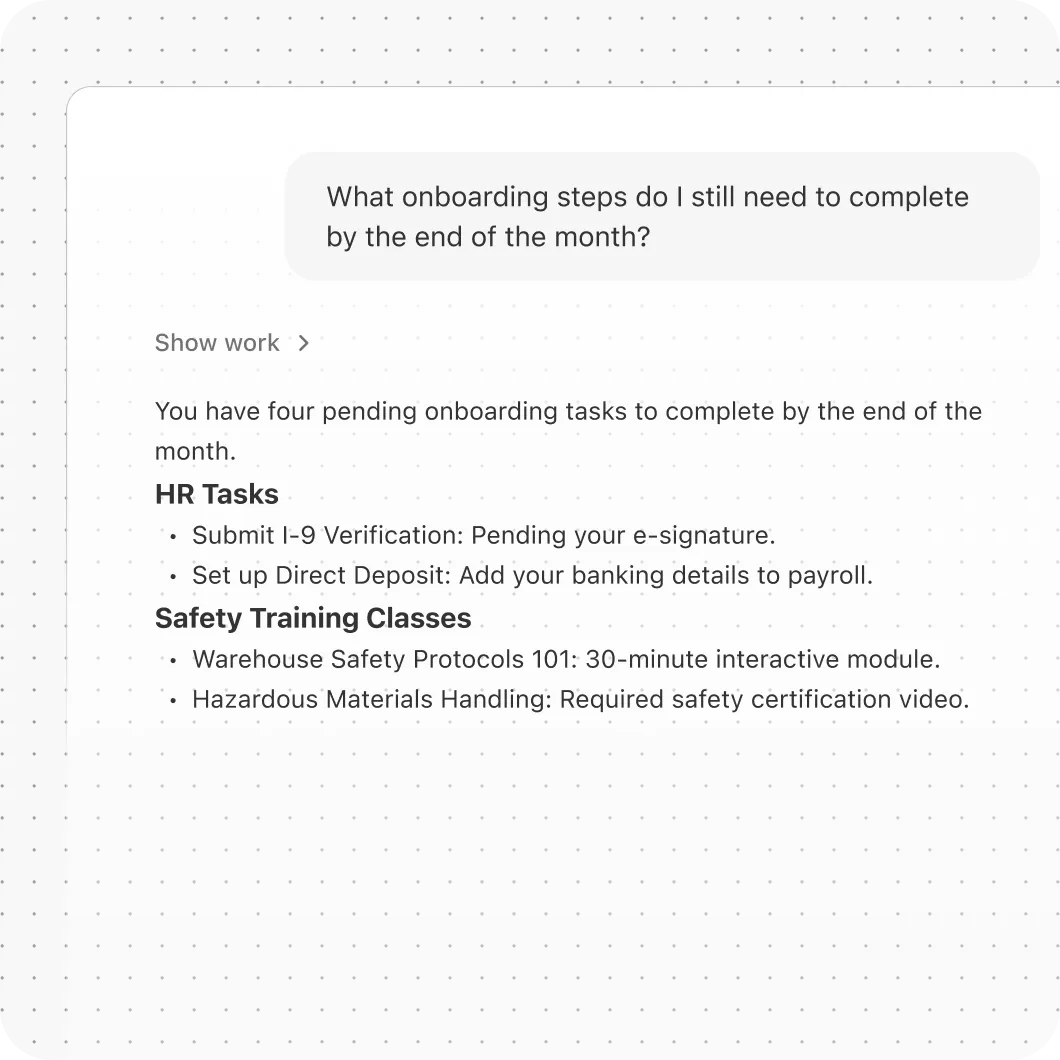
Give new employees one place to access training materials, work instructions, and plant-specific guidance.
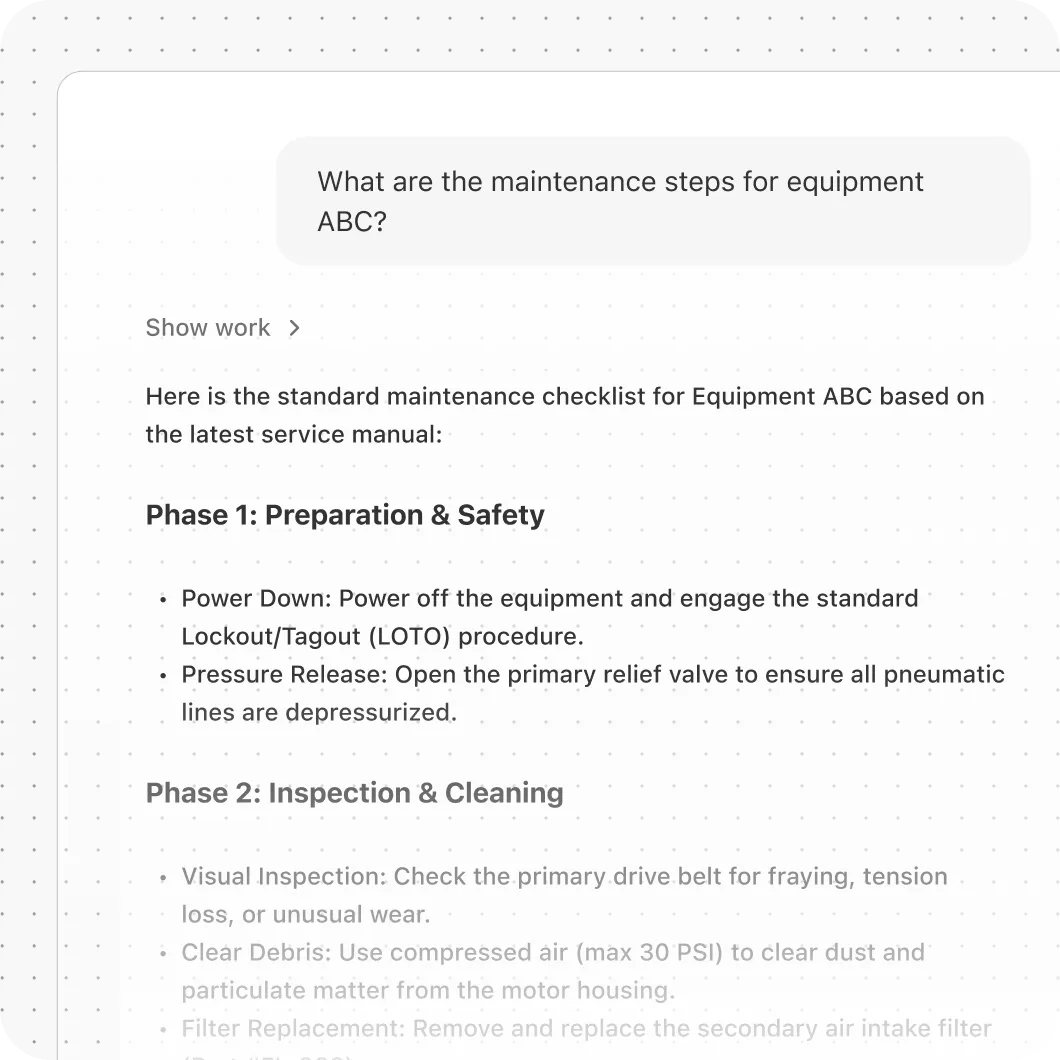


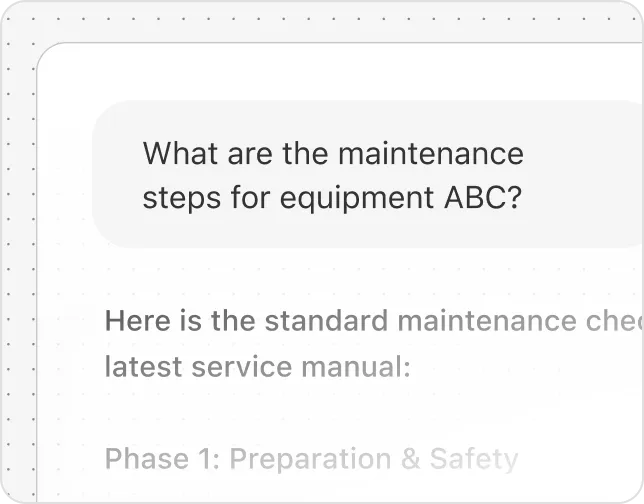
Help operators and technicians quickly work from the right relevant SOPs, maintenance logs, and prior incident reports so issues are resolved safely and documented accurately.
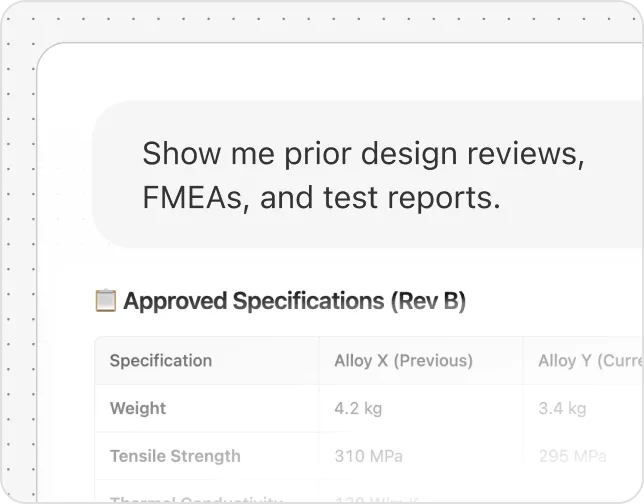
Turn design files, engineering archives, and change histories into usable inputs for concept briefs, reviews, and development decisions.
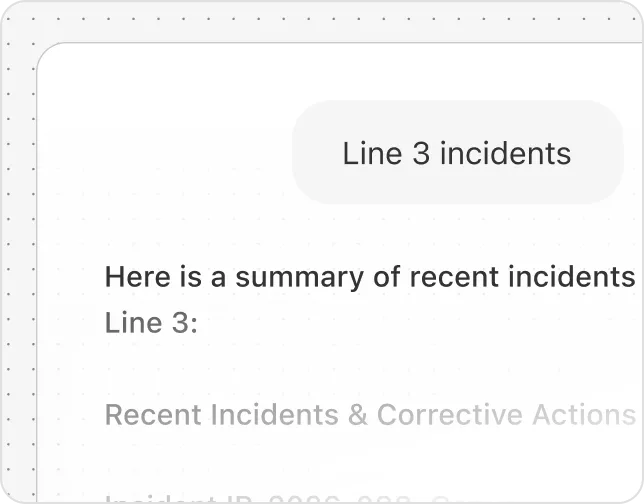
Bring together non-conformance reports, audit findings, and historical fixes so quality teams can quickly investigate issues and draft CAPA responses.
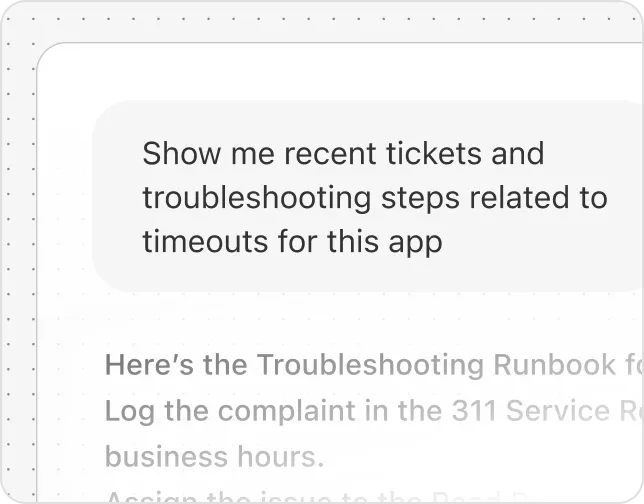
Pull together tickets, runbooks, system documentation, and vendor guidance so IT and OT teams can diagnose issues and get production up and running faster.
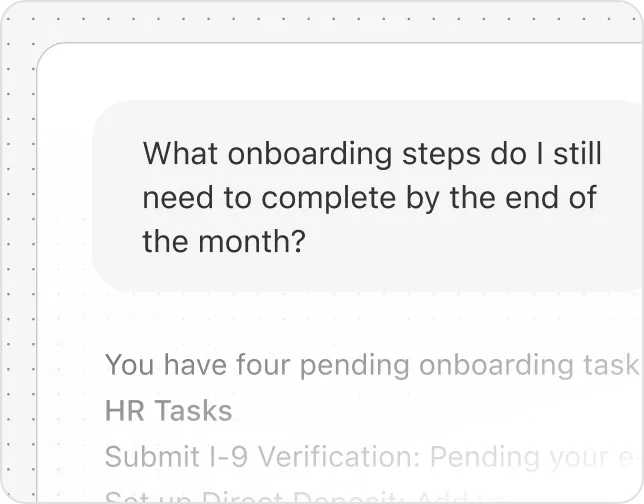
Give new employees one place to access training materials, work instructions, and plant-specific guidance.
Explore ready-to-use agents


FAQs
Manufacturing teams move faster when they can work from the full context behind a problem. With Glean, teams can find relevant procedures, designs, maintenance history, operational records, and internal expertise across disconnected systems. That makes it easier to troubleshoot issues, compare similar incidents, and take the right next step with more confidence. Static SOPs still matter. Glean helps teams find and apply them faster, with the surrounding context needed to resolve issues.
The most practical AI platforms connect to the systems manufacturers already use, from document repositories and collaboration tools to ticketing, engineering, and operational systems. Glean offers broad connector coverage for common enterprise tools and supports APIs and integration layers for more complex environments. That helps teams start where knowledge already lives instead of waiting for a long integration program before seeing value.
AI is only useful at scale when it respects how access already works. Glean enforces source-system permissions, so employees only see information they’re authorized to access. It also adds governance, sensitive data protection, and security controls designed for enterprise use. That helps manufacturers make knowledge easier to use across plants and functions without loosening controls around supplier, product, or operational information.
The strongest early use cases are usually the ones where expertise is fragmented and delays are costly. Manufacturers often start with troubleshooting, maintenance knowledge access, onboarding, quality investigations, SOP lookup, engineering collaboration, and cross-site knowledge reuse. These workflows reduce time spent searching, make expertise easier to scale, and help teams respond faster to issues in daily operations.
Manufacturers should measure AI against the operational bottlenecks they want to improve. Useful metrics include time to resolve issues, time spent searching for procedures or expertise, repeated work avoided, downtime exposure, and ramp time for new engineers or plant staff. When those gains show up across recurring workflows, AI becomes more than a pilot. It becomes a practical capability that improves how the business runs.
In regulated or defense-related environments, manufacturers need clear answers on data control, deployment model, permission enforcement, auditability, and model interaction. They should understand where the system runs, how sensitive information is protected, how access is governed, and what oversight controls are available. Glean is built to help enterprises adopt AI while maintaining strong security, governance, and control over sensitive data.
The core question is whether your team wants to spend its time building AI infrastructure or solving business problems. Building in-house can make sense for highly specific workflows, but many teams underestimate the work required to connect systems, preserve permissions, rank information well, govern usage, and maintain the platform over time. An enterprise AI platform gives manufacturers a governed foundation so teams can focus on high-value use cases instead of rebuilding context, security, and retrieval from scratch.
Trust comes from usefulness, transparency, and control. Operators and engineers are more likely to adopt AI when it helps with real day-to-day work, shows where answers came from, and respects existing permissions and processes. Start with lower-risk, high-frequency use cases, let teams validate outputs, and expand once people see that AI can help them work faster without taking judgment out of their hands.
AI can help preserve hard-won expertise by making documents, records, prior work, and team knowledge easier to find and reuse. With Glean, employees can search across what the organization already knows and apply that context when they run into unfamiliar issues. That helps newer employees ramp faster, keeps best practices from getting lost, and makes expert knowledge more accessible across teams and locations.
A practical rollout usually starts with a focused pilot, not a plant-wide transformation on day one. Manufacturers often begin with a few connected systems and high-value workflows, then expand once adoption and outcomes are clear. The key stakeholders typically include operations leaders, plant or engineering users, IT, security, and system owners, because scaling depends on governance, workflow fit, and user trust as much as the technology itself.
Explore more resources
How manufacturing companies can leverage AI to achieve Industry 4.0
How manufacturing companies can leverage AI to achieve Industry 4.0

The state of AI at work in 2025
The state of AI at work in 2025

Booking.com scales AI to 14,000 employees—and redefines work—with Glean
Booking.com scales AI to 14,000 employees—and redefines work—with Glean
Work AI that works.