




AI adoption doesn’t happen because a tool shows up. It happens when organizations redesign workflows, clarify ownership, and make change feel human.
In this episode of Intelligence: Real & Imagined from the Work AI Institute at Glean, Rebecca Hinds, Head of the Work AI Institute at Glean, talks with Phil Kirschner, Founder and Principal Consultant at PK Consulting, and Mark Christianson, AI Outcomes Manager at Glean, about AI transformation, change management, and why the future of work is really about effectiveness, trust, and work design.
What you’ll learn
- Why AI adoption depends on redesigning workflows, habits, and decision-making
- How a “chief work officer” mindset can connect HR, IT, and the physical workplace
- When to centralize AI strategy vs. decentralize experimentation across teams
- How AI champions, responsibility pledges, and clear change management improve adoption
Resources
Subscribe for more
https://www.youtube.com/@gleanwork
Follow our hosts and guests
- Rebecca Hinds: https://www.linkedin.com/in/rebecca-hinds/
- Mark Christianson: https://www.linkedin.com/in/markchristianson/
- Phil Kirschner: https://www.linkedin.com/in/philkirschner/
Follow Us
- LinkedIn: https://www.linkedin.com/company/gleanwork/
- Twitter/X: https://x.com/glean
- Instagram: https://www.instagram.com/gleanwork/
Timestamps
- 00:00 – Why AI adoption requires redesigning work
- 02:55 – The case for a chief work officer
- 05:37 – Why physical workplace design still matters
- 09:32 – What it means to have AI in your job title
- 16:47 – Centralization vs. decentralization in AI transformation
- 27:05 – How AI champions help drive adoption
Rebecca Hinds (00:00)
Welcome back to Intelligence Real and Imagined from the Work AI Institute at Glean.
Rebecca Hinds (00:05)
This is the show where we sort through what's real, what's hype, and what actually works with AI at work.
Rebecca Hinds (00:12)
I'm your host, Rebecca Hinds and I lead our Work AI Institute here at Glean.
Rebecca Hinds (00:17)
Today I'm joined by Phil Kirschner from PK Consulting and Mark Christianson from Glean.
Rebecca Hinds (00:23)
This episode is inspired by our AI Transformation 100 report which we're talking about.
Rebecca Hinds (00:29)
How do you rewire your organization for AI?
Rebecca Hinds (00:32)
Because real adoption doesn't come from access to the technology alone.
Rebecca Hinds (00:37)
It comes from redesigning workflows, habits and decision making.
Rebecca Hinds (00:42)
So AI becomes part of how work actually gets done.
Rebecca Hinds (00:46)
Let's dive in.
Rebecca Hinds (00:50)
I'm joined by two outstanding guests and also friends.
Rebecca Hinds (00:54)
Phil, why don't you kick us off and introduce yourself.
Phil Kirschner (00:58)
Thank you, Rebecca.
Phil Kirschner (00:59)
And thank you everyone for joining.
Phil Kirschner (01:00)
My name is Phil Kirschner.
Phil Kirschner (01:01)
I'm a New York City based modern work consultant, have fallen into the world of employee experience by way of workplace strategy in the built environment, which we'll get into today.
Phil Kirschner (01:11)
I have my own consultancy work with clients across industries, but usually at the intersection of groups like hr, IT and real estate.
Phil Kirschner (01:20)
And I write a newsletter called the Workline which is designed to help people kind of build their cross functional courage and lead across those lines for a better day at work.
Rebecca Hinds (01:30)
Wonderful.
Rebecca Hinds (01:30)
And for anyone who hasn't read the Workline, it's one of my go to resources for all things work and evolution of work.
Rebecca Hinds (01:37)
So check it out if you haven't already.
Rebecca Hinds (01:39)
Mark, please introduce yourself.
Mark Christianson (01:42)
Yeah, Mark Christianson, I am here in sunny Central Florida and I've been in tech for 30 years.
Mark Christianson (01:50)
Got into Digital workplace and started to figure out like how the evolution of things happened post Covid.
Mark Christianson (01:58)
So I wrote a book called the Productivity Paradox and have been in kind of Where Tech Meets the Human Condition and most recently was doing Digital Workplace and putting Glean into things.
Mark Christianson (02:11)
And now I'm working for Glean.
Rebecca Hinds (02:13)
Wonderful.
Rebecca Hinds (02:14)
And I think the productivity paradox summarizes so much of what we're seeing right now with AI.
Rebecca Hinds (02:19)
So I'm excited to dive into that.
Rebecca Hinds (02:22)
Phil and Mark, both of you think very carefully about AI in general, but in particular in very human terms.
Rebecca Hinds (02:29)
Not just as a technical problem, but as a question of work design.
Rebecca Hinds (02:33)
What we're starting to see across the board is that many of our org structures, when we think about tasks and roles and trust and space as well, physical and virtual, they're being called into question in the world of AI.
Rebecca Hinds (02:47)
I want to start with roles.
Rebecca Hinds (02:50)
So new roles within our organizations, evolved roles within our organizations.
Rebecca Hinds (02:55)
Phil, you've described the need for a chief work officer.
Rebecca Hinds (02:59)
Can you unpack that for us?
Rebecca Hinds (03:01)
What does that mean?
Rebecca Hinds (03:02)
What are they responsible for?
Rebecca Hinds (03:04)
And why do you think this role is important right now?
Phil Kirschner (03:08)
Sure.
Phil Kirschner (03:09)
So a couple months ago when Tracy Franklin was sort of nominated as the head of HR and IT at Life Sciences from Moderna, there was a lot of like news about kind of future forward roles and what that means for marrying a human and agentic workforce.
Phil Kirschner (03:25)
And having just started my newsletter, I kind of leapt to the page and said, this is excellent.
Phil Kirschner (03:29)
I love this progress, but I think there's an element that's missing.
Phil Kirschner (03:33)
And I cited a report that's now 12 years old.
Phil Kirschner (03:37)
So like, I did not come up with the term actually chief of work that I now hear more commonly as chief Work Officer.
Phil Kirschner (03:43)
But you know, potato, potato, where the original definition was more about someone who is responsible for, for the holistic experience of working for a company.
Phil Kirschner (03:53)
And that included kind of policy and talent and cultural principles that may come from HR digital workplaces, as Mark hinted at from, from it, the tools that we use, how we use the tools that we use, and then the physical workplace.
Phil Kirschner (04:08)
So all of those things having to be looked after by some number of people or group of people without any real specification about where that sits.
Phil Kirschner (04:18)
But it sent me down a path of just realizing, like, especially as our day at work is getting gnarlier by the minute, less predictable by the minute.
Phil Kirschner (04:27)
We're working for multiple teams, we're working with different tools.
Phil Kirschner (04:30)
You have people like me who has, I don't know, a half a dozen different email addresses for different client projects.
Phil Kirschner (04:37)
Everything is getting more chaotic and we haven't even really entered into the next realm of future of work topics on the kind of gig and freelance point.
Rebecca Hinds (04:47)
Right.
Phil Kirschner (04:47)
We've, we've covered remote and hybrid, not covered, but it's very much here and AI is very much here.
Phil Kirschner (04:53)
But as our team composition starts to include different ranges of employees or contractors or freelancers in addition to agents, the variability in our day will go up.
Phil Kirschner (05:03)
And I believe that someone has to be sitting there off on the side, hoovering up all the signals about the journeys and the choices that we make.
Phil Kirschner (05:11)
Not just to, to make sure that it feels good in a hugs and kittens kind of way, but are we making the best choices for us, for our teams, for the organization to balance kind of our objectives and their objectives, given all the signals that are available and the choices that Other people may be making that I may not be aware of a little bit of like a organizational fitbit, so to speak.
Rebecca Hinds (05:37)
It's fascinating.
Rebecca Hinds (05:37)
And I want to drill in into the physical environment piece because as you mentioned, we have, you know, seen and heard the return to office debate for, for years now we're seeing AI infiltrate the workplace.
Rebecca Hinds (05:52)
Why is the physical environment so important when our world is becoming increasingly digital?
Phil Kirschner (06:00)
That's a great idea.
Phil Kirschner (06:01)
Well, one precondition maybe to keep in mind.
Phil Kirschner (06:04)
Most companies never asked people what they thought about the place where they spend half their day.
Phil Kirschner (06:09)
And that largely comes from the fact that changes in the built environment are slow and expensive.
Phil Kirschner (06:15)
If somebody doesn't like a wall, it's difficult to do something about that.
Phil Kirschner (06:19)
Whereas if you say oh gosh, this Google Doc is not very helpful now you can just change it, right?
Phil Kirschner (06:25)
Like you can start another Slack channel.
Phil Kirschner (06:27)
You can try a different way to run a meeting that's free.
Phil Kirschner (06:31)
But to move buildings or change things in the environment is not.
Phil Kirschner (06:35)
And therefore a lot of facility teams even just come from a world of never asking for feedback.
Phil Kirschner (06:41)
The fact that we were there all the time, but we didn't have a choice.
Phil Kirschner (06:45)
Now even for the people who are working for companies that have a very strong preference for their presence no matter what they have a choice, the bar is much lower now for when I'm going to bail out because of, you know, delayed flights or traffic or weather or something or my kid being sick.
Phil Kirschner (07:05)
So we don't want, we don't go to bad restaurants twice and most offices are unfortunately like bad restaurants.
Phil Kirschner (07:14)
And yeah, I see in the chat this is, I'm talking about private sector.
Phil Kirschner (07:17)
It is definitely more of a problem in the public sector where there's less capital spent on those environments.
Phil Kirschner (07:23)
So it's maybe more important than now or than ever now because we're basically making retail oriented choices about going to work.
Phil Kirschner (07:32)
And it's not that we don't travel and take time to do fun things.
Phil Kirschner (07:37)
We, we will go to great distances for theaters and to visit family and sporting events.
Phil Kirschner (07:43)
It's not about that.
Phil Kirschner (07:43)
It's like what is the value to us?
Phil Kirschner (07:45)
And that puts a much higher priority on the office having to have a clearly defined and measurable purpose for why I should go there, not just because.
Phil Kirschner (07:58)
And needing the infrastructure to allow facility seems to measure all the choices that we're making there.
Phil Kirschner (08:04)
But it just, it remains this bastion of the old way of thinking about work because even the most change positive test and learn curious seeming leaders will, you know, maybe Having having renovated a bathroom that one time at home.
Phil Kirschner (08:24)
Think they know what the built environment should be like for their company.
Phil Kirschner (08:29)
So they'll be very open to test and learn for AI or for digital workplace.
Phil Kirschner (08:33)
But then say, not only does the office have to look like this, but you have to sit there all the time.
Phil Kirschner (08:39)
And that just doesn't clock.
Phil Kirschner (08:41)
And maybe the last signal.
Phil Kirschner (08:42)
I'm reading more and more books about future organizations and the future of work holistically, and I'd say 9 out of 10 don't even mention the existence of the built world.
Phil Kirschner (08:54)
Whether that's offices or warehouses or hospitals or homes.
Phil Kirschner (08:57)
Doesn't make.
Phil Kirschner (08:58)
It just doesn't come up.
Phil Kirschner (09:00)
And I think that's crazy.
Rebecca Hinds (09:02)
Personally, it's really important.
Rebecca Hinds (09:05)
I was with a group of chros last week and talking with a brilliant chro who made the decision to relocate his physical office to be right next to the Chief Digital Officer.
Rebecca Hinds (09:18)
Recognizing that where we sit in the office influences.
Rebecca Hinds (09:22)
And there's so much research to suggest this is the case.
Rebecca Hinds (09:25)
Influences, influences how we communicate, how we collaborate.
Rebecca Hinds (09:27)
And it's really important to think about.
Rebecca Hinds (09:30)
So thank you.
Rebecca Hinds (09:32)
Mark, I want to turn to you.
Rebecca Hinds (09:34)
You've had such an interesting career.
Rebecca Hinds (09:36)
You've held multiple roles with AI in the title from your time at Easycader and now at Glean.
Rebecca Hinds (09:45)
What does it look like to have a role with AI in the title?
Rebecca Hinds (09:50)
And what does that mean right now?
Mark Christianson (09:55)
I wish I didn't.
Mark Christianson (09:56)
The.
Mark Christianson (09:56)
The funny part is, is that AI and the joke is, and I've been using this and it doesn't come from me, but it's amazing.
Mark Christianson (10:03)
It's almost implemented like, so AI isn't like a cooked thing.
Mark Christianson (10:07)
Like we haven't figured out.
Mark Christianson (10:07)
Every time we branch something off, we say, okay, this is a skill as an agent.
Mark Christianson (10:10)
This is a ocr, whatever the heck it is.
Mark Christianson (10:13)
Like when we productionize it, we give it a name and rebranded.
Mark Christianson (10:17)
AI is this nebulous, like, smarter than something thing.
Mark Christianson (10:21)
And so I think why it ends up in the title now is because there's such.
Mark Christianson (10:26)
There's so much unknown about what's going on in the market.
Mark Christianson (10:31)
For me, it opens doors like, okay, cool.
Mark Christianson (10:35)
They take you seriously.
Mark Christianson (10:36)
It's not a side hustle.
Mark Christianson (10:37)
Oh, you also do the AI thing.
Mark Christianson (10:40)
So it's important to kind of have that on the placard.
Mark Christianson (10:42)
But really the whole thing is it should kind of melt away and just be part of the work or part of.
Mark Christianson (10:49)
Of your role.
Mark Christianson (10:50)
I don't see it.
Mark Christianson (10:51)
I think the.
Mark Christianson (10:52)
Where we're going to see it later is that AI is going to be on somebody who's going to be looking at it and saying what are they doing for the entire company holistically, you know, in that space you're generating LLMs, you're doing stuff for that.
Mark Christianson (11:03)
But I think as far as like me digital workplace, you know, or yeah, AI Outcomes manager is good now but really it should just be work outcomes or engagement outcomes because that's what we're doing here is just kind of going through and saying how do we make.
Mark Christianson (11:19)
I hate the word work because work is toil.
Mark Christianson (11:22)
You know, it's like in your brain.
Mark Christianson (11:23)
It's like the effort on shovel and stuff.
Mark Christianson (11:26)
This is the kind of thing where AI is going to, going to take it away from there.
Mark Christianson (11:29)
So it's like then we're saying like what's the creativity thing that you really want to do, that you love to do?
Mark Christianson (11:34)
The reason why hopefully you got into the job you are.
Mark Christianson (11:38)
That's kind of where the, where I really think that we're going to see that shift.
Rebecca Hinds (11:43)
Fascinating.
Rebecca Hinds (11:44)
And one of the things, Mark, I've been struck by you in particular is you describe yourself as a near futuristic having that near future lens.
Rebecca Hinds (11:55)
Someone who thinks about where work is headed in the short term future but not necessarily the long term future.
Rebecca Hinds (12:01)
Can you talk to us a little bit about that framing and whether you think this near future lens is something that we all ought to adopt or can benefit from adopting.
Mark Christianson (12:13)
Yeah.
Mark Christianson (12:14)
So I joke and tell people the futurists are the Isaac Asimov.
Mark Christianson (12:18)
Right.
Mark Christianson (12:18)
So they're long dead before they just start judging what you, what you said, which is fine for their relatives, but you don't have to stand up and kind of face it.
Mark Christianson (12:28)
And I look at it and say my role is to look three to four years out.
Mark Christianson (12:34)
Obviously it's compressing I think with the state of AI and the speed of things.
Mark Christianson (12:39)
But it's important to look at it and say there's a lot of change.
Mark Christianson (12:44)
But you have to look critically and say how is this going to impact my role?
Mark Christianson (12:48)
How is this going to impact what we do?
Mark Christianson (12:51)
To Phil's point about the physical office space, I'm looking at it and saying what does that evolution look like in the next few years?
Mark Christianson (12:59)
We're trying to force people back to the office, but what are we doing?
Mark Christianson (13:02)
Why are we doing it?
Mark Christianson (13:03)
Is it because of lack of engagement or is it because someone has to go and renegotiate a 10 year contract for the rental?
Mark Christianson (13:09)
And so how do we make the office do a thing that it hasn't done or hasn't had to do.
Mark Christianson (13:15)
It has to hold its own water.
Mark Christianson (13:17)
So I tend to try to frame everything and say, okay, if I take this out, the logical progression of where this is going, we branch off.
Mark Christianson (13:24)
What does that look like in a couple of years?
Mark Christianson (13:26)
It doesn't have to be perfect.
Mark Christianson (13:27)
It's just the constant thing I see with the C level executives just trying to work this out because they don't get the luxury of saying, I just want to make a decision to last for three, six, nine, 12 months.
Mark Christianson (13:38)
They're looking out two, three, four years.
Mark Christianson (13:40)
And that's a very.
Mark Christianson (13:41)
It's getting harder and harder.
Phil Kirschner (13:44)
That reminds me, or just to riff on that, I think it's important to hold a version of the future that is, you know, I joke, like the Minority Report version, right?
Phil Kirschner (13:54)
Like, will cars fly one day, probably soon?
Phil Kirschner (13:58)
No, but we could all kind of get our heads around like, yeah, probably.
Phil Kirschner (14:02)
And then just in making sure that the version that you're holding, whether it's physical or digital or AI, the plausible version in the three to five years is at least inspired by that 10 to 20 year version and not looking backwards.
Phil Kirschner (14:16)
And again, on the play side, hybrid as a construct is almost by definition trying to hold on to something that we had before.
Phil Kirschner (14:26)
It was like, oh, we did that then.
Phil Kirschner (14:28)
And I'm like, oh, I kind of wish we still were, but we're not.
Phil Kirschner (14:30)
So I'm going to call it something new.
Phil Kirschner (14:32)
Instead of saying mobility and moving around is almost inevitable, whether that's sharing in our own space or moving between home and co working, or being driven around by driverless cars to meetings that we didn't know we were going to have until that morning.
Mark Christianson (14:45)
Right?
Phil Kirschner (14:45)
That's probably going to happen.
Phil Kirschner (14:47)
So it's ridiculous that we're fighting about, you know, how early in advance should I be able to book a desk?
Phil Kirschner (14:53)
Right.
Phil Kirschner (14:53)
Just feels very restrained.
Phil Kirschner (14:55)
And the same can be applied to AI, right?
Phil Kirschner (14:57)
You can either look backwards and say, oh, I'm gonna do the thing I used to do differently.
Phil Kirschner (15:01)
Instead of reimagining the way you're gonna do it for a different.
Mark Christianson (15:04)
I think it's for me it's the effectiveness, digital effectiveness Officer.
Mark Christianson (15:08)
Because it's really, then it's, then it's whatever the technology or whatever the thing is, really it's how do you work effectively.
Mark Christianson (15:16)
But that's, that, that's the nuance in this is just to go through and say, hey, we have.
Mark Christianson (15:21)
But you have to have something of a North Star.
Mark Christianson (15:23)
You have to Say, look, in three years, we're kind of heading in this direction.
Mark Christianson (15:26)
Otherwise you're just.
Mark Christianson (15:28)
It's the anxiety.
Mark Christianson (15:29)
It's add theater where, you know, the new thing comes and you shift and shift and shift and change.
Mark Christianson (15:34)
Management is, is getting horribly overlooked.
Mark Christianson (15:38)
AI is, is more about the human condition than it is the technical.
Mark Christianson (15:42)
The technical is relatively easy.
Mark Christianson (15:43)
How do we get people to use it?
Mark Christianson (15:44)
How do we get to people use it to effectively, and then what, what happens when they use effectively?
Mark Christianson (15:49)
What do we do with the time?
Mark Christianson (15:51)
So it's like there's a whole bunch of things we have to do here.
Mark Christianson (15:53)
So effectiveness is really what I would say is if I was looking for a title that'd be like Digital Effectiveness or Chief Effectiveness Officer.
Mark Christianson (16:02)
Because as weird as that sounds, it's about where do you need to go to be effective, what do you need to do to be effective, and what do you need to be supported?
Rebecca Hinds (16:11)
And I would argue that this near future lens is especially important in a world of a lot of uncertainty too, because employees are looking for that clarity.
Rebecca Hinds (16:20)
We see it all the time in AI policies and AI principles.
Rebecca Hinds (16:24)
Having a policy and a principle and acknowledging that it's a working, living, breathing document that is going to evolve.
Rebecca Hinds (16:31)
Employees in almost every case would much rather have that than nothing because it gives them the clarity in terms of when can I experiment versus when can I not, how do I use this technology and push the boundaries?
Rebecca Hinds (16:47)
So I want to turn to one of the big themes of our AI Transformation 100 report, which is around structure and ownership.
Rebecca Hinds (16:55)
Where does AI live and in particular, when do you centralize versus when do you decentralize?
Rebecca Hinds (17:02)
Mark, I'll start with you.
Rebecca Hinds (17:04)
How do you think about this tension between centralization and decentralization?
Rebecca Hinds (17:09)
Do you have examples of organizations that have gotten this right and when does it tend to break down?
Mark Christianson (17:17)
I think everyone's kind of working it out.
Mark Christianson (17:19)
Some of them, I would say it's difficult to say what's right and what's wrong because of the fact that, you know, how long do you give them before you figure out, you know, did it work or did it not?
Mark Christianson (17:30)
I see things that are definitely better than others.
Mark Christianson (17:33)
And I like the patterning.
Mark Christianson (17:35)
I did a responsibility pledge to go in and look at it and say, how do we, how do we deal with the fear and the resistance by the, the company employees?
Mark Christianson (17:46)
It's something that you don't do.
Mark Christianson (17:48)
You normally, you come in with the software and say, hey, we're putting in Microsoft Office.
Mark Christianson (17:51)
Nobody argues.
Mark Christianson (17:52)
It's just like, train them and go, well, AI is a scary thing.
Mark Christianson (17:55)
Like, some people might have a myth in their head or they this is going to take my job.
Mark Christianson (17:59)
And so you have to deal with some of those things.
Mark Christianson (18:01)
And so you have to have centralization to manage kind of the overarching discussion, like, what is this going to do and how are you going to apply it?
Mark Christianson (18:11)
And how do you communicate that to the employees?
Mark Christianson (18:14)
It's not a skit.
Mark Christianson (18:15)
Are you going to like some of these big, okay, well, we're going to do this thing and we're not going to.
Mark Christianson (18:20)
We're not going to raise headcount.
Mark Christianson (18:21)
And hey, maybe we might do layoffs if they take ownership of that.
Mark Christianson (18:24)
If they don't, then you leave it up to the employees and they get nervous.
Mark Christianson (18:28)
And so I look at it and say, it's where I think it's best.
Mark Christianson (18:33)
And what I'm seeing better activity is ones that are getting out in front of that and saying, what is AI doing for us and what is the expectation?
Mark Christianson (18:40)
I wanted to augment our people so that we don't have to raise headcount to grow.
Mark Christianson (18:47)
So it's not about not headcount.
Mark Christianson (18:49)
It's just smart headcount.
Mark Christianson (18:51)
Get out in front of it, talk about it, and then give tacit permission to drive that.
Mark Christianson (18:55)
And then individually, and this is where the decentralization has come in.
Mark Christianson (18:59)
Give them the tools and then get out of their way.
Mark Christianson (19:01)
Because there's.
Mark Christianson (19:02)
These are people that have been in these roles for a long time, and if they had the time to step back and look at what they do and what other people do, I guarantee you they already have 10 ideas that they just haven't had the time or the wherewithal to expand on.
Mark Christianson (19:15)
Now, if you say, hey, you can create a skill, you can create a workflow, you could, you could think differently about how you do work, do this job better.
Mark Christianson (19:23)
You've basically created R and D at every level.
Rebecca Hinds (19:27)
And Phil, before I turn to you, Mark, you alluded to this idea or this concept of an AI responsibility pledge.
Rebecca Hinds (19:34)
I think it's very novel.
Rebecca Hinds (19:36)
Can you describe a little bit about what that was and what the motivation behind it was?
Mark Christianson (19:41)
Yeah.
Mark Christianson (19:42)
When I first joined Ezkidder, I weirdly went to the.
Mark Christianson (19:45)
I had to start to implement AI.
Mark Christianson (19:48)
They were behind it.
Mark Christianson (19:49)
And I saw the early signs of that tacit resistance.
Mark Christianson (19:54)
Okay.
Mark Christianson (19:55)
Because unlike anything else, if, like, they could say they use it, like AI in the workplace can be used or it can be ignored, they can continue to do what they do.
Mark Christianson (20:04)
And so they don't have to be vocally resistant.
Mark Christianson (20:06)
They could just be not using it as much or not effectively.
Mark Christianson (20:09)
And you could see it as like, okay, they're doing something.
Mark Christianson (20:12)
They're summarizing a document that's not really effective usage.
Mark Christianson (20:15)
They're just kind of checking the box.
Mark Christianson (20:18)
So really what is the effective use?
Mark Christianson (20:20)
They can be resistant.
Mark Christianson (20:21)
So what we wanted to do is say at Easykater was a very customer service heavy.
Mark Christianson (20:26)
And that was the gold standard, right?
Mark Christianson (20:27)
Customer service.
Mark Christianson (20:29)
So it was important to go out and say, look, the idea here is AI is is here to make our people better, to spend more time with the customer.
Mark Christianson (20:38)
Because I took away a bunch of the things that they didn't have to do.
Mark Christianson (20:42)
All those note taking or all this digging for information or whatever.
Mark Christianson (20:44)
How do we support the.
Mark Christianson (20:46)
The team so can take the extra time and make sure that that white glove, the human experience is better.
Mark Christianson (20:52)
It wasn't about how do we take AI and shove it in front of the customer and back away from it.
Mark Christianson (20:57)
So make it more human.
Mark Christianson (20:58)
And so the pledge was just a way for the executives to kind of go and say, look, guys, we're not doing this to cut people.
Mark Christianson (21:06)
We want to make you better.
Mark Christianson (21:07)
We want you to have time.
Mark Christianson (21:08)
We want our customers to feel extra supported.
Mark Christianson (21:11)
And it just outlined kind of that agreement.
Mark Christianson (21:15)
It was just like going out and saying the quiet part out loud, but being very intentional about it.
Mark Christianson (21:21)
I think it gives a lot of people like, okay, cool, they're not coming for my job.
Mark Christianson (21:26)
I feel supported.
Mark Christianson (21:27)
This is what they're saying.
Mark Christianson (21:29)
And then you can go in and it's a much healthier environment.
Rebecca Hinds (21:33)
I think it's really important and something we can all take pieces from, I think, as inspiration.
Rebecca Hinds (21:39)
So, Phil, one of the things that both you and Mark have already alluded to today is that the more AI is embedded in the flow of work, the more that's a sign things are working that, you know, you in particular have said we shouldn't think about doing AI just as we don't think about doing the Internet.
Rebecca Hinds (21:56)
Instead, organizations should clearly state goals and eliminate the micro behaviors that slow work down.
Rebecca Hinds (22:05)
What changes does that require?
Rebecca Hinds (22:07)
How do you do this in practice?
Phil Kirschner (22:09)
Yeah.
Phil Kirschner (22:10)
So first, all credit due to Anish Rahman, who's an economist at LinkedIn, who I think is the first person I heard say that on a stage.
Phil Kirschner (22:16)
The version of like, we don't say we Internet.
Phil Kirschner (22:18)
And like, just like, we don't.
Phil Kirschner (22:20)
We say, like, oh, I'm going to book tickets now, I'm going to book my vacation.
Phil Kirschner (22:23)
We don't say, I'm like going to the Internet.
Phil Kirschner (22:25)
And the same thing will be true for, for AI.
Phil Kirschner (22:27)
And I think a lot of the answer on what we have to change, Rebecca, comes back to what, what all of us have been flirting with a little bit is both change management and clarity and change management today.
Phil Kirschner (22:39)
I think employees are so sensitive to like low trust issues with organizations.
Phil Kirschner (22:45)
We were all treated genuinely like humans in 2020 and 2021.
Phil Kirschner (22:51)
It was the first time when all the, you know, the, the politics came down.
Phil Kirschner (22:55)
Like, I'm a human who feels unsafe, you are a human who feels unsafe.
Phil Kirschner (22:58)
And we saw our leaders in a different way.
Phil Kirschner (23:00)
And I think we're very sensitive now to how far the pendulum has swung the other way back to kind of corporate speak.
Phil Kirschner (23:06)
And I wanted to be really careful what you say for shareholders.
Phil Kirschner (23:09)
But a, a well managed change or one that is really set up for sustainable success starts with kind of brutal honesty of the definition of what's wrong.
Phil Kirschner (23:20)
So when employees are told, oh, like ChatGPT is here, you have to do things differently.
Phil Kirschner (23:26)
They're kind of asking, before you heard about this today, what yesterday did you think was actually broken?
Phil Kirschner (23:33)
Like, did you think our sales numbers were not high enough?
Phil Kirschner (23:36)
Did you think we were spending too much time in meetings?
Phil Kirschner (23:38)
Did you think we had too much space in the office or whatever it was?
Phil Kirschner (23:41)
If you had no preconceived notion that anything was wrong yesterday and now you're telling me you're trying to sell me on a future that I'm not aligned with, I'm going to, as Mark said, resist.
Phil Kirschner (23:52)
And that, that second part is maybe setting more of a North Star vision is very similar to a responsibility pledge.
Phil Kirschner (23:59)
Like, I'm going to articulate for you first what's broken and that should be clear enough with backed by data and who made the decision that something's actually broken.
Phil Kirschner (24:10)
So that when we step into the phase of, I'm now going to tell you where we're going over the next two or three years and the different thematic ways we're going to do it, how I'm going to know we're making that progress and pledge to you that if little changes we make along the way, which could be we try a new tool or we combine two teams or we move you around, if something doesn't work in service of that broader vision, we'll back off and say, all right, the micro stream didn't work, but we're, we've got lots of, we have a whole portfolio of changes going on.
Phil Kirschner (24:43)
But you know, why we're doing it.
Phil Kirschner (24:44)
I know why we're doing it.
Phil Kirschner (24:45)
It has a long enough vision that the day in and day out, bumps and bruises are not going to kind of shift the whole game.
Phil Kirschner (24:52)
And that gives people a feeling of psychological safety, a feeling of being able to participate, know that their little actions ladder up to something bigger.
Phil Kirschner (25:00)
Now we're just missing that every, every even change management role that I've seen can come across.
Phil Kirschner (25:06)
My feed is 90% communications.
Phil Kirschner (25:10)
It feels like internal communications role.
Phil Kirschner (25:12)
I'm going to tell you what we have decided behind closed doors.
Phil Kirschner (25:15)
And that just does not sit well with employees today.
Phil Kirschner (25:20)
I think especially in a moment of sort of economic uncertainty where we are.
Mark Christianson (25:24)
And if I may piggyback on that just for a moment, I try to put everything in a lens and I'm not certified, but I would encourage a lot of people.
Mark Christianson (25:31)
And it's not, not an AD for pro side, but like AD is awareness, desire, like knowledge.
Mark Christianson (25:37)
Right.
Mark Christianson (25:38)
Change management is probably going to be bigger than we've ever seen it because the pace of changes is there.
Mark Christianson (25:45)
We have to create that awareness and desire.
Mark Christianson (25:47)
Why?
Mark Christianson (25:48)
What value does this have?
Mark Christianson (25:49)
You can't just come in and like push AI in every role.
Mark Christianson (25:52)
I see someone talking about that in the comments.
Mark Christianson (25:55)
It may not be appropriate.
Mark Christianson (25:57)
Like what you do might be effective.
Mark Christianson (25:58)
And so what you have to do is kind of say, hey, this is a tool to get there.
Mark Christianson (26:02)
So it's like, cool, give it to them and let them do it.
Mark Christianson (26:06)
But don't say, hey, you have to do it.
Mark Christianson (26:08)
And then, and then.
Mark Christianson (26:09)
But you have to give them the tools, the understanding and the desire to want to address things and say, like, is there an opportunity?
Mark Christianson (26:15)
If it's an opportunity, go for it.
Phil Kirschner (26:17)
We need a new discipline.
Phil Kirschner (26:18)
I think we're change definition before we get to change management.
Phil Kirschner (26:20)
And maybe that's the problem.
Rebecca Hinds (26:22)
I, I think it's, it's incredibly important.
Rebecca Hinds (26:24)
And that clarity, the why is something we consistently see.
Rebecca Hinds (26:28)
And this isn't new.
Rebecca Hinds (26:29)
We've known, you know, we saw it all the time with hybrid and remote work.
Rebecca Hinds (26:33)
When people understand the why behind the policy, they're much more likely to agree with the policy or at least support it.
Rebecca Hinds (26:40)
And I think that's true with AI.
Rebecca Hinds (26:42)
Change management is hard, it's multifaceted.
Rebecca Hinds (26:44)
But, you know, a bare minimum is giving people clarity in terms of what is the why behind this and ownership.
Rebecca Hinds (26:50)
Yeah, yeah, yeah, it.
Phil Kirschner (26:52)
Oh, go ahead and carry on.
Phil Kirschner (26:54)
I know.
Rebecca Hinds (26:55)
Okay, well, I'll move on to a related topic, which is, you know, this tension that we're seeing between top down change and bottom up change.
Rebecca Hinds (27:05)
And Phil, you just alluded so eloquently to how we can't rely too heavily on top down change.
Rebecca Hinds (27:13)
Bottom up change is also very important.
Rebecca Hinds (27:15)
And one of the ways that organizations have done this, and Mark, you've done done it in your roles, is activating AI champions.
Rebecca Hinds (27:24)
AI champions, sometimes they're called AI influencers within the organization.
Rebecca Hinds (27:28)
Mark, how in your past role and current role do you identify those champions and what is their actual mandate day to day in terms of AI transformation?
Mark Christianson (27:42)
It's the top 18, 20%.
Mark Christianson (27:46)
The people who are the people who want to be in on the beta.
Mark Christianson (27:50)
They're the people who like intrigued.
Mark Christianson (27:53)
They'll eat a sandwich over a keyboard not because they have to, but because there's something interesting.
Mark Christianson (28:00)
They genuinely want to help themselves.
Mark Christianson (28:02)
And then they're the kind of people that are vocal about when they win.
Mark Christianson (28:06)
And so I'm always looking for the people who want, who I can make the hero of the story.
Mark Christianson (28:12)
I can go in and I can say this is easy.
Mark Christianson (28:14)
And everybody goes, yeah, it's easy.
Mark Christianson (28:16)
Yeah, you're PhD in nerdom.
Mark Christianson (28:18)
And so I go in and say that I really look at it and go try to find for me a champion is someone I can give them the information, they try it, they use it on themselves, they, they validate the situation and then they go in and they, they talk to their team.
Mark Christianson (28:33)
And I call it the rule of the sixes, right?
Mark Christianson (28:35)
So that person probably touches six people.
Mark Christianson (28:38)
Those six people feel like a fall off.
Mark Christianson (28:40)
Those they touch three and those three won.
Mark Christianson (28:43)
And so you look at it and just say, hey, how many champions do I need to move an organization at some level?
Mark Christianson (28:49)
So I'm looking for that percentage of people that I can just go in there and say, look, you can come back with your questions.
Mark Christianson (28:54)
I feed the hungry, go in there and tell them don't bother with body, who are their head down, they're busy.
Mark Christianson (29:00)
But when someone shows up in their team and says look what I just created and I did it in three and a half minutes and we don't have to do that anymore.
Mark Christianson (29:07)
And this is awesome.
Mark Christianson (29:08)
People know them, they like them.
Mark Christianson (29:10)
This is again that, that whole thing about the desire and awareness and they're more likely to adopt change because that person is probably at a similar technology level.
Rebecca Hinds (29:21)
And either Mark or Phil.
Rebecca Hinds (29:23)
I'm curious because I am seeing this strategy in more and more organizations where previously I think there was a narrative and a strategy around let's get everyone adopting AI, we need all our employees adopting versus let's focus on this 20% and make sure they're champions so that they can spread the word, spread these actions to others.
Rebecca Hinds (29:43)
How do you get then that 80%?
Rebecca Hinds (29:45)
Do you rely on the good intentions, the goodwill of the 20%?
Rebecca Hinds (29:50)
Are there specific strategies that you've seen either of you effective in?
Rebecca Hinds (29:55)
Once you've identified your champions, then spreading that, spreading adoption excitement, enthusiasm around the technology to the, you know, the other folks within the organization.
Phil Kirschner (30:06)
I think they, you know, the, the carrot is the other part of successful changes of any kind that is often overlooked and that's the sustaining measures which could include things like performance management.
Mark Christianson (30:20)
Right.
Phil Kirschner (30:21)
You tell people I want you to behave in a different way.
Phil Kirschner (30:24)
You, but you don't actually put, you know, give it like real teeth in the end the, you know, the, the organ, the like the body will reject the organ.
Phil Kirschner (30:34)
There's lots of programs that just kind of go back when that one person who was holding together the change agent network who was the most passionate and had the greatest activism and influence, they leave for whatever reason and everyone sort of forgets you go back to the old way.
Phil Kirschner (30:49)
So it's back to, you know, define the change originally, have a clear vision that people can align on getting leaders, role modeling the behavior, getting a change agent network that you've got, and then those sort of sustaining change mechanisms and metrics to know that it's all working.
Phil Kirschner (31:04)
That's true for any change.
Phil Kirschner (31:07)
And failure to go all the way through that chain is very similar to failure in identifying the right sponsors for whatever you're doing, telling whole cohorts, usually of second and third tier managers, that whether they know it or not, you are a sponsor of this change and that's a job.
Phil Kirschner (31:27)
And we have to train you in what that means just like identifying the right change agents and just like really onboarding everyone who is influenced by the change, who has a job too.
Phil Kirschner (31:37)
You may not have to like it, but you can't totally bury your head in the sand.
Phil Kirschner (31:42)
And some of the other change management methodologies in addition to pros, I also spend more or less time on really be like knighting everybody into those roles instead of just going, you're supposed to cascade this message.
Phil Kirschner (31:56)
And coming back to something Mark said in particular, with changes like AI, those second and third level managers may very much be in the like their own panic and haven't gotten over the change themselves.
Phil Kirschner (32:08)
So they can't.
Phil Kirschner (32:10)
Was it like put your own oxygen mask on first before helping others?
Phil Kirschner (32:12)
Like they're told to help others tomorrow and have not had any amount of time to sit with it it and they've got jobs and they've got fears and concerns and this is one of those resistible changes.
Phil Kirschner (32:25)
So it's just all that scaffolding and if you have that and you can align people and this is how we're going to compensate you, this is how the organization is going to shift.
Phil Kirschner (32:33)
If you don't like it it will come back to bite you at some point and everyone else hopefully can swing in the more positive, clarity oriented direction about why are we doing this?
Rebecca Hinds (32:44)
It's so important.
Rebecca Hinds (32:46)
Thank you Mark.
Rebecca Hinds (32:46)
Thank you Phil.
Rebecca Hinds (32:47)
Thank you everyone for joining us.
Rebecca Hinds (32:48)
We'll send along the recording and join us next time for the last episode.
Rebecca Hinds (32:53)
Thanks so much.
Rebecca Hinds (32:54)
If you enjoyed that conversation please subscribe so you don't miss another episode and download the AI Transformation 100 report using the link in the show notes.
Rebecca Hinds (33:04)
Thanks for listening and we'll see you next time.

MEET OUR HOSTS
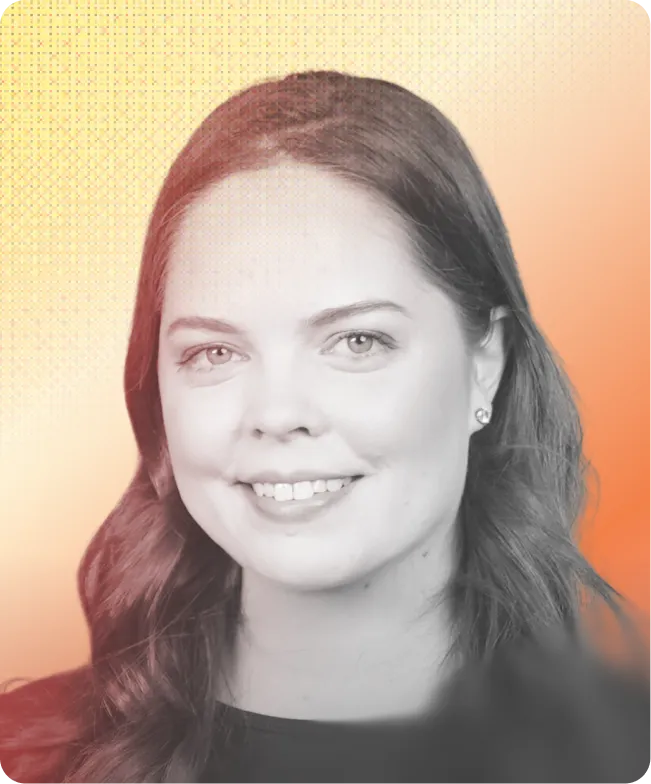
Head of the Work AI Institute, Glean
Dr. Hinds is the Head of the Work AI Institute at Glean, where she leads research on how AI is reshaping the way people and enterprises work.
Professor Emeritus at Stanford University
Dr. Sutton is an organizational psychologist and best-selling author who studies leadership, innovation, organizational change, and workplace dynamics.


The Work AI Institute is Glean’s research center, backed by leading experts in AI and the future of work. We help leaders redesign how their organizations operate in the AI era. By combining cutting-edge research with real-world practice, we move beyond hype to deliver practical insights and tools leaders can put to work today.