




AI による小売店の売上と収益性の向上
ビジネスを理解するWork AI により、収益を増やし、顧客を満足させ、利益を増やし、利益を増やし、業務効率を向上させましょう。


ビジネスを理解するWork AI により、収益を増やし、顧客を満足させ、利益を増やし、利益を増やし、業務効率を向上させましょう。

データ主導型の AI インサイトによる小売業務の変革

収益と顧客満足度の向上
さまざまなデータソースに分散した回答を即座に見つけ、チャットを活用して会社の口調と声で顧客からの回答を作成します。

AI の洞察を通じてイノベーションを促進
市場データを分析して傾向を見極め、製品を顧客のニーズに合わせて、リスクを軽減し、製品開発と展開の時間を短縮します。

従業員がより早く生産的になるのを助ける
オンボーディングを加速し、小売チームの効率を高め、質の高いカスタマーサービスを提供するために、リアルタイムのサポートとトレーニングを提供します。



AI for predictive maintenance
優れた顧客体験を提供
すべてのインタラクションで、オムニチャネルの顧客コンテキストを使用してパーソナライズされた回答を提供します。顧客、製品、運用データでチームを強化しましょう
Generative AI for manufacturing
すべての従業員は専門家になることができます
スタッフのトレーニングとオンボーディングをシームレスに行えます。新入社員や季節営業スタッフは、貴社の商品や顧客を素早く理解します。
AI for quality management
イノベーションと変革を加速
レポートと顧客データを解析して消費者の傾向を把握し、製品開発を市場のニーズに合わせて、SKUの解約率を減らします。
A Agentic AI for manufacturing
コンテンツの作成と転用による電子商取引ビジネスの促進
すべてのチャネルでコンテンツの下書き、転用、最適化を行い、一貫したメッセージとカスタマイズされたエンゲージメントを確保します。
AI solutions for manufacturing
Ramp new plant and corporate teams.
Give new employees one place to access training materials, work instructions, and plant-specific guidance.
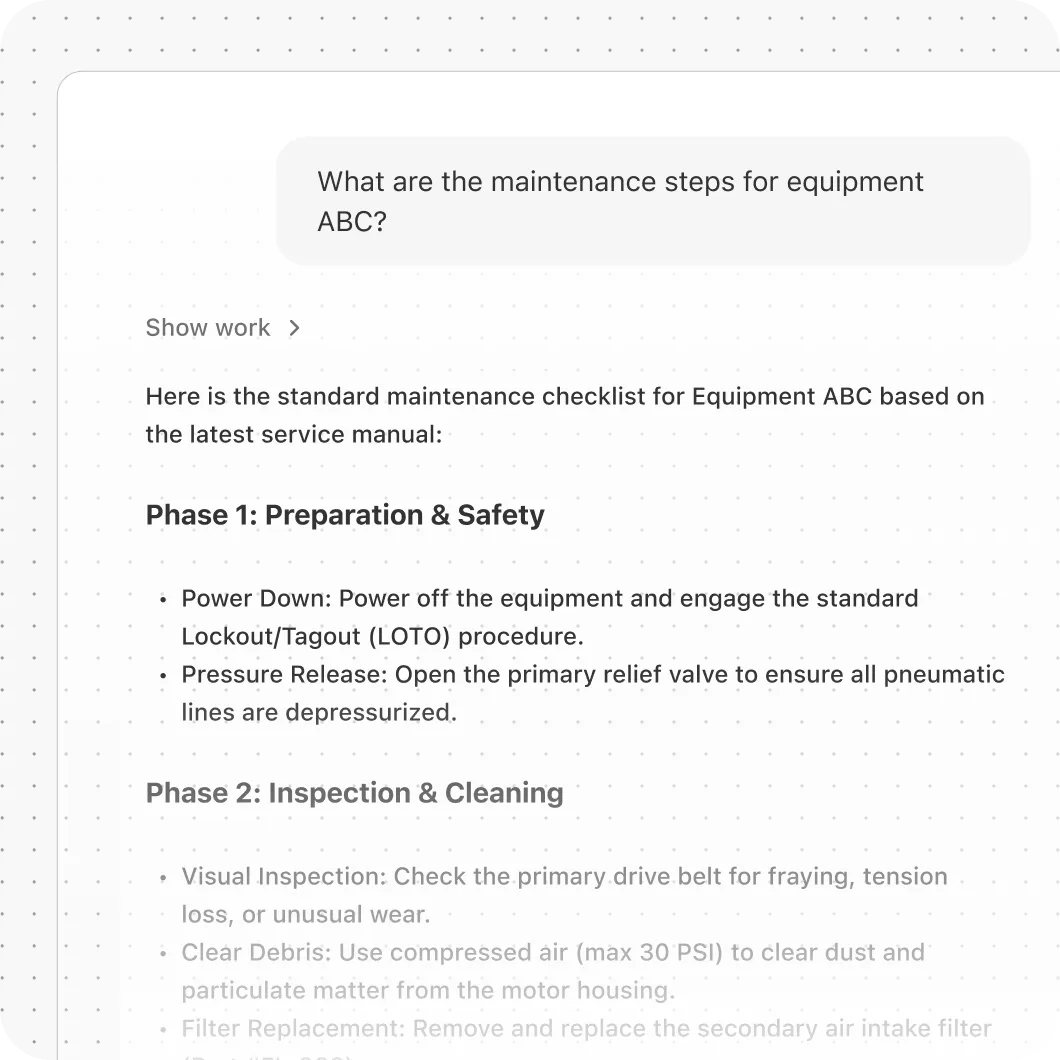
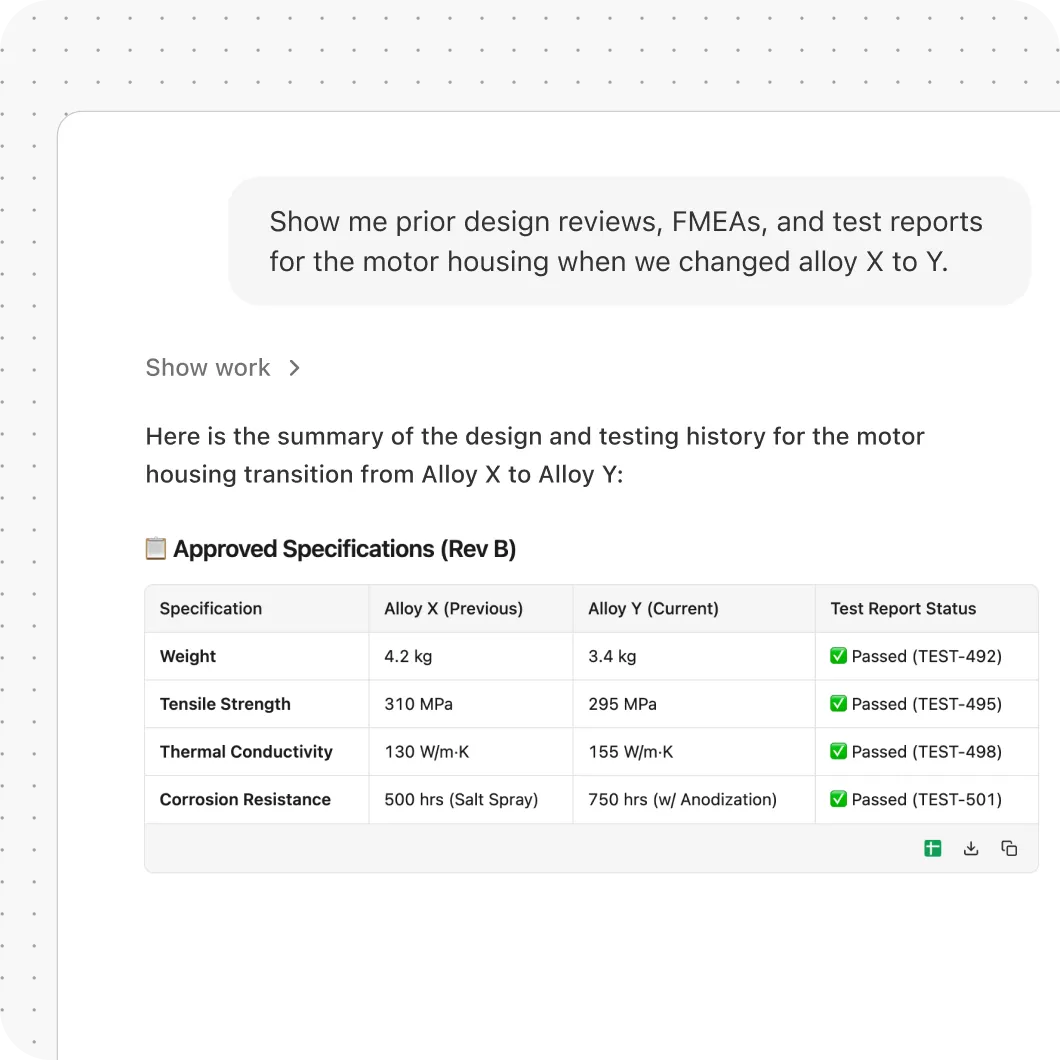

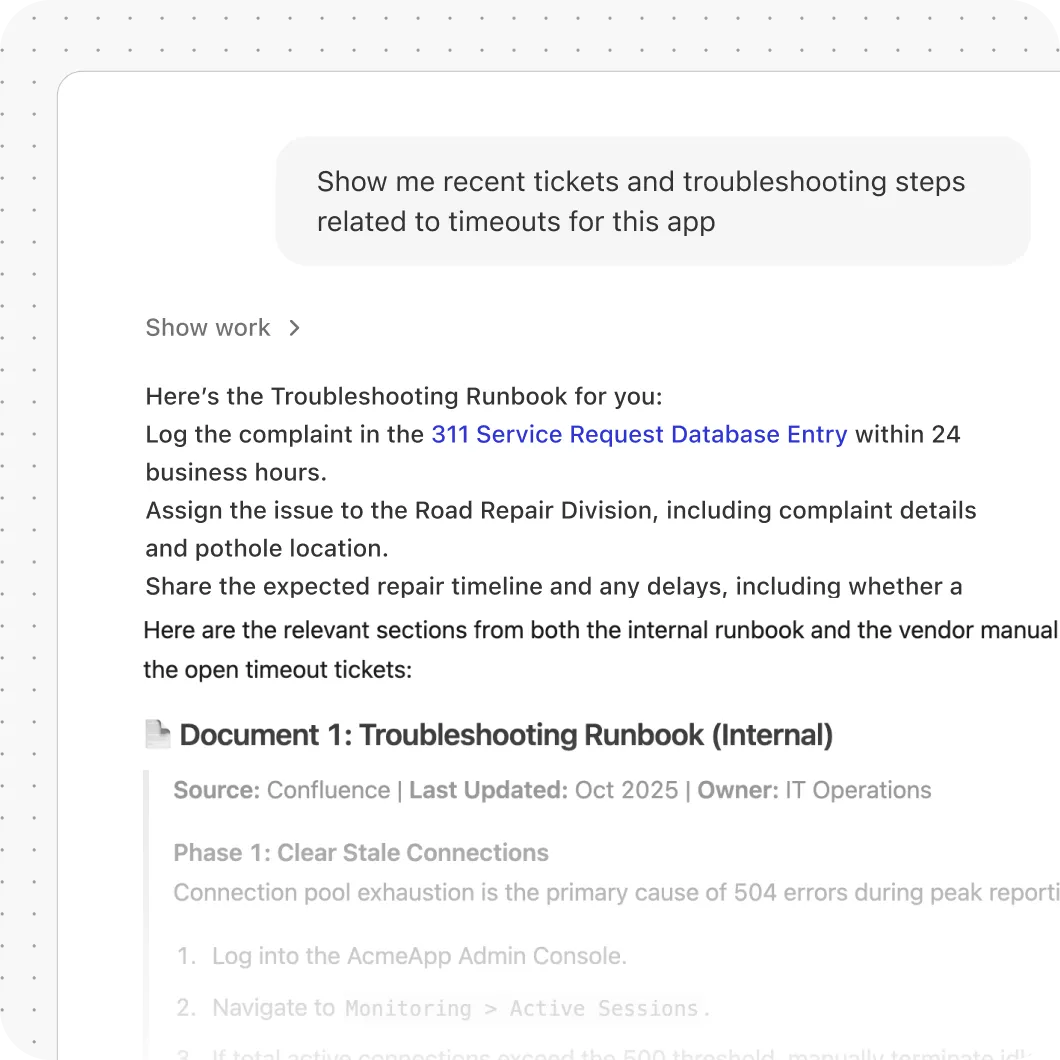
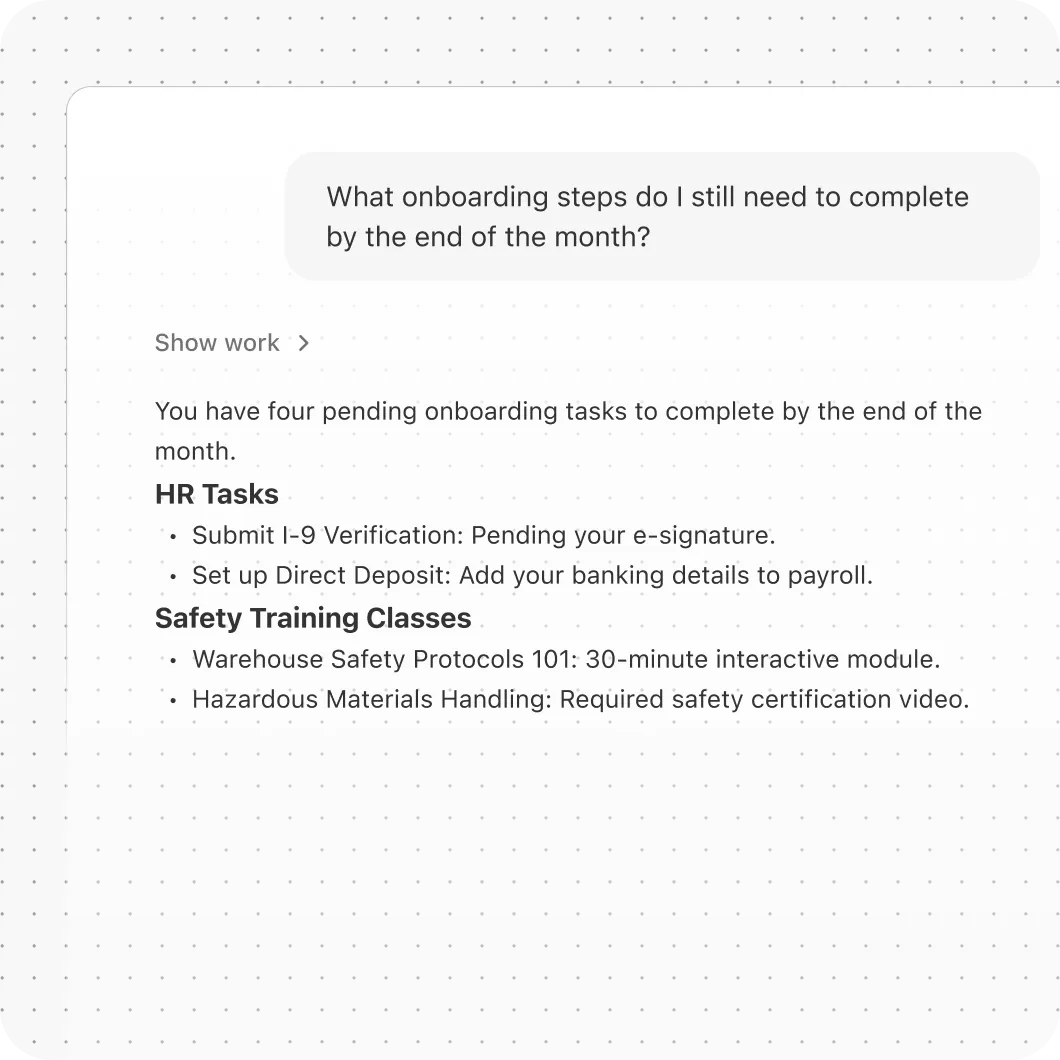

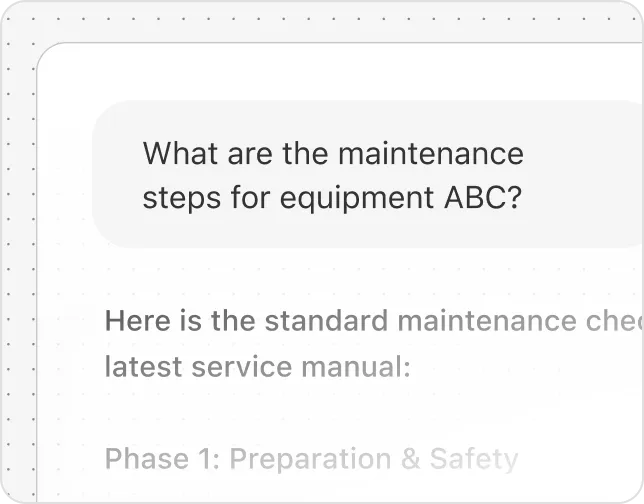
すべてのインタラクションで、オムニチャネルの顧客コンテキストを使用してパーソナライズされた回答を提供します。顧客、製品、運用データでチームを強化しましょう
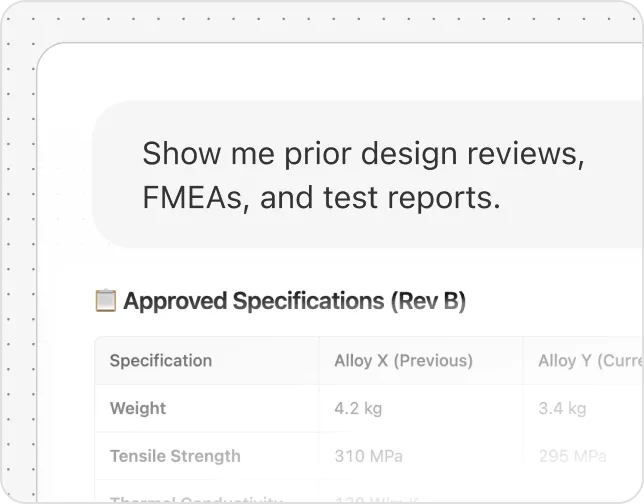
スタッフのトレーニングとオンボーディングをシームレスに行えます。新入社員や季節営業スタッフは、貴社の商品や顧客を素早く理解します。
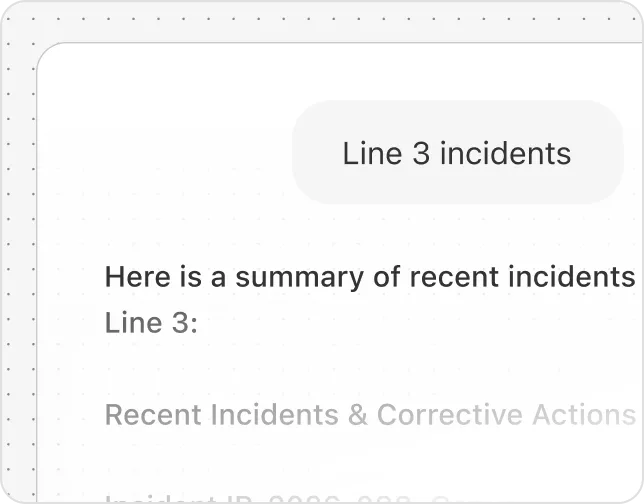
レポートと顧客データを解析して消費者の傾向を把握し、製品開発を市場のニーズに合わせて、SKUの解約率を減らします。
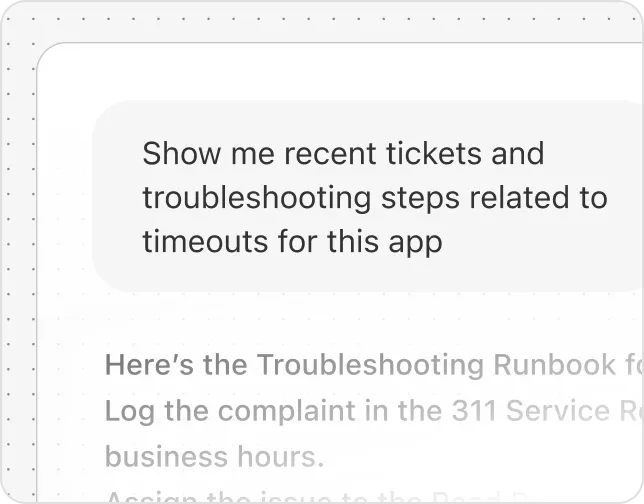
すべてのチャネルでコンテンツの下書き、転用、最適化を行い、一貫したメッセージとカスタマイズされたエンゲージメントを確保します。
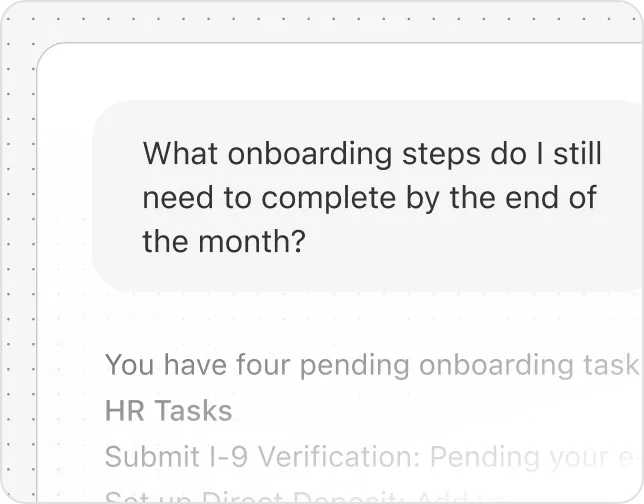
Give new employees one place to access training materials, work instructions, and plant-specific guidance.
Explore ready-to-use agents
よくある質問
Manufacturing teams move faster when they can work from the full context behind a problem. With Glean, teams can find relevant procedures, designs, maintenance history, operational records, and internal expertise across disconnected systems. That makes it easier to troubleshoot issues, compare similar incidents, and take the right next step with more confidence. Static SOPs still matter. Glean helps teams find and apply them faster, with the surrounding context needed to resolve issues.
The most practical AI platforms connect to the systems manufacturers already use, from document repositories and collaboration tools to ticketing, engineering, and operational systems. Glean offers broad connector coverage for common enterprise tools and supports APIs and integration layers for more complex environments. That helps teams start where knowledge already lives instead of waiting for a long integration program before seeing value.
AI is only useful at scale when it respects how access already works. Glean enforces source-system permissions, so employees only see information they’re authorized to access. It also adds governance, sensitive data protection, and security controls designed for enterprise use. That helps manufacturers make knowledge easier to use across plants and functions without loosening controls around supplier, product, or operational information.
The strongest early use cases are usually the ones where expertise is fragmented and delays are costly. Manufacturers often start with troubleshooting, maintenance knowledge access, onboarding, quality investigations, SOP lookup, engineering collaboration, and cross-site knowledge reuse. These workflows reduce time spent searching, make expertise easier to scale, and help teams respond faster to issues in daily operations.
Manufacturers should measure AI against the operational bottlenecks they want to improve. Useful metrics include time to resolve issues, time spent searching for procedures or expertise, repeated work avoided, downtime exposure, and ramp time for new engineers or plant staff. When those gains show up across recurring workflows, AI becomes more than a pilot. It becomes a practical capability that improves how the business runs.
In regulated or defense-related environments, manufacturers need clear answers on data control, deployment model, permission enforcement, auditability, and model interaction. They should understand where the system runs, how sensitive information is protected, how access is governed, and what oversight controls are available. Glean is built to help enterprises adopt AI while maintaining strong security, governance, and control over sensitive data.
The core question is whether your team wants to spend its time building AI infrastructure or solving business problems. Building in-house can make sense for highly specific workflows, but many teams underestimate the work required to connect systems, preserve permissions, rank information well, govern usage, and maintain the platform over time. An enterprise AI platform gives manufacturers a governed foundation so teams can focus on high-value use cases instead of rebuilding context, security, and retrieval from scratch.
Trust comes from usefulness, transparency, and control. Operators and engineers are more likely to adopt AI when it helps with real day-to-day work, shows where answers came from, and respects existing permissions and processes. Start with lower-risk, high-frequency use cases, let teams validate outputs, and expand once people see that AI can help them work faster without taking judgment out of their hands.
AI can help preserve hard-won expertise by making documents, records, prior work, and team knowledge easier to find and reuse. With Glean, employees can search across what the organization already knows and apply that context when they run into unfamiliar issues. That helps newer employees ramp faster, keeps best practices from getting lost, and makes expert knowledge more accessible across teams and locations.
A practical rollout usually starts with a focused pilot, not a plant-wide transformation on day one. Manufacturers often begin with a few connected systems and high-value workflows, then expand once adoption and outcomes are clear. The key stakeholders typically include operations leaders, plant or engineering users, IT, security, and system owners, because scaling depends on governance, workflow fit, and user trust as much as the technology itself.
その他のリソースを見る


成果を生み出すWork AI