





AI による小売店の売上と収益性の向上
ビジネスを理解するWork AI により、収益を増やし、顧客を満足させ、利益を増やし、利益を増やし、業務効率を向上させましょう。



ビジネスを理解するWork AI により、収益を増やし、顧客を満足させ、利益を増やし、利益を増やし、業務効率を向上させましょう。

データ主導型の AI インサイトによる小売業務の変革

収益と顧客満足度の向上
さまざまなデータソースに分散した回答を即座に見つけ、チャットを活用して会社の口調と声で顧客からの回答を作成します。

AI の洞察を通じてイノベーションを促進
市場データを分析して傾向を見極め、製品を顧客のニーズに合わせて、リスクを軽減し、製品開発と展開の時間を短縮します。

従業員がより早く生産的になるのを助ける
オンボーディングを加速し、小売チームの効率を高め、質の高いカスタマーサービスを提供するために、リアルタイムのサポートとトレーニングを提供します。

Supply chain disruption management
優れた顧客体験を提供
すべてのインタラクションで、オムニチャネルの顧客コンテキストを使用してパーソナライズされた回答を提供します。顧客、製品、運用データでチームを強化しましょう
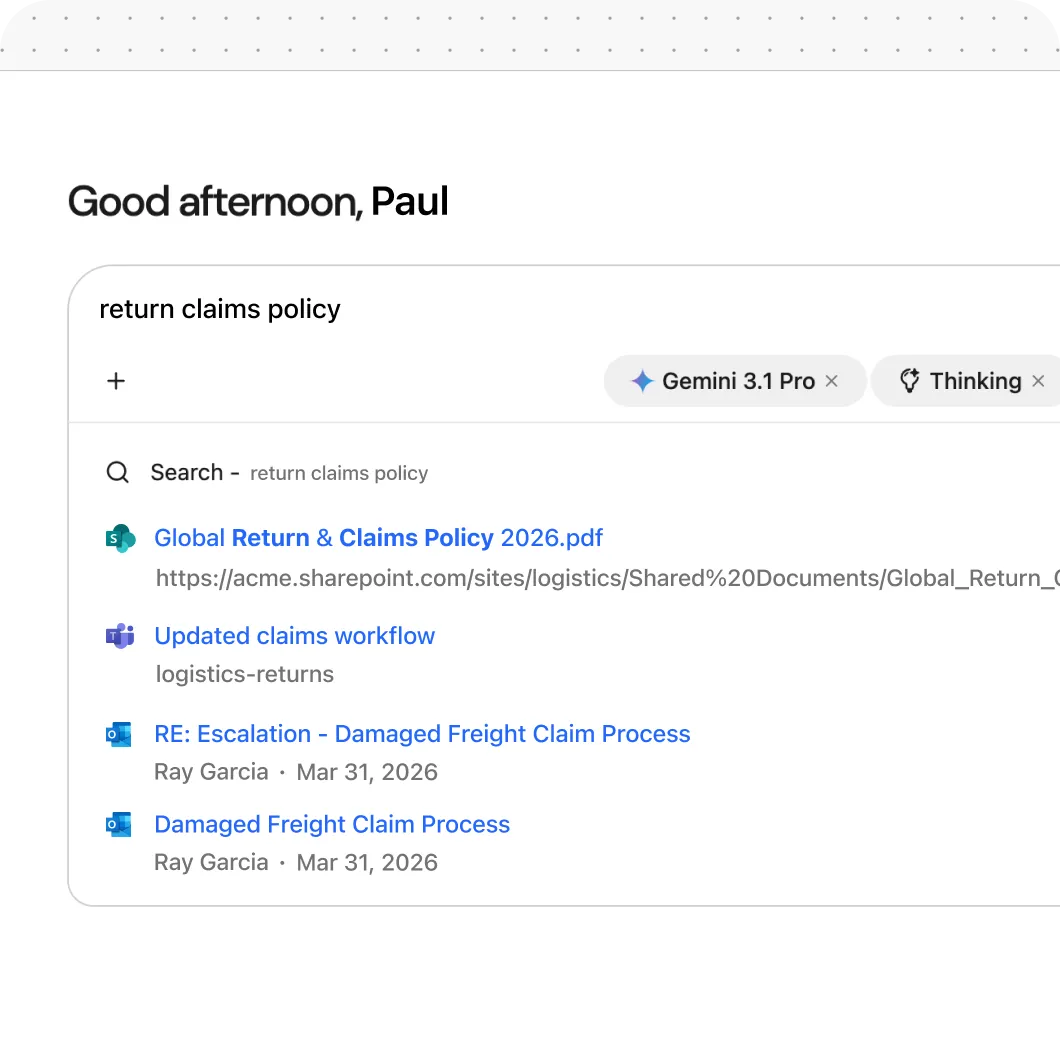
Supply chain automation
すべての従業員は専門家になることができます
スタッフのトレーニングとオンボーディングをシームレスに行えます。新入社員や季節営業スタッフは、貴社の商品や顧客を素早く理解します。
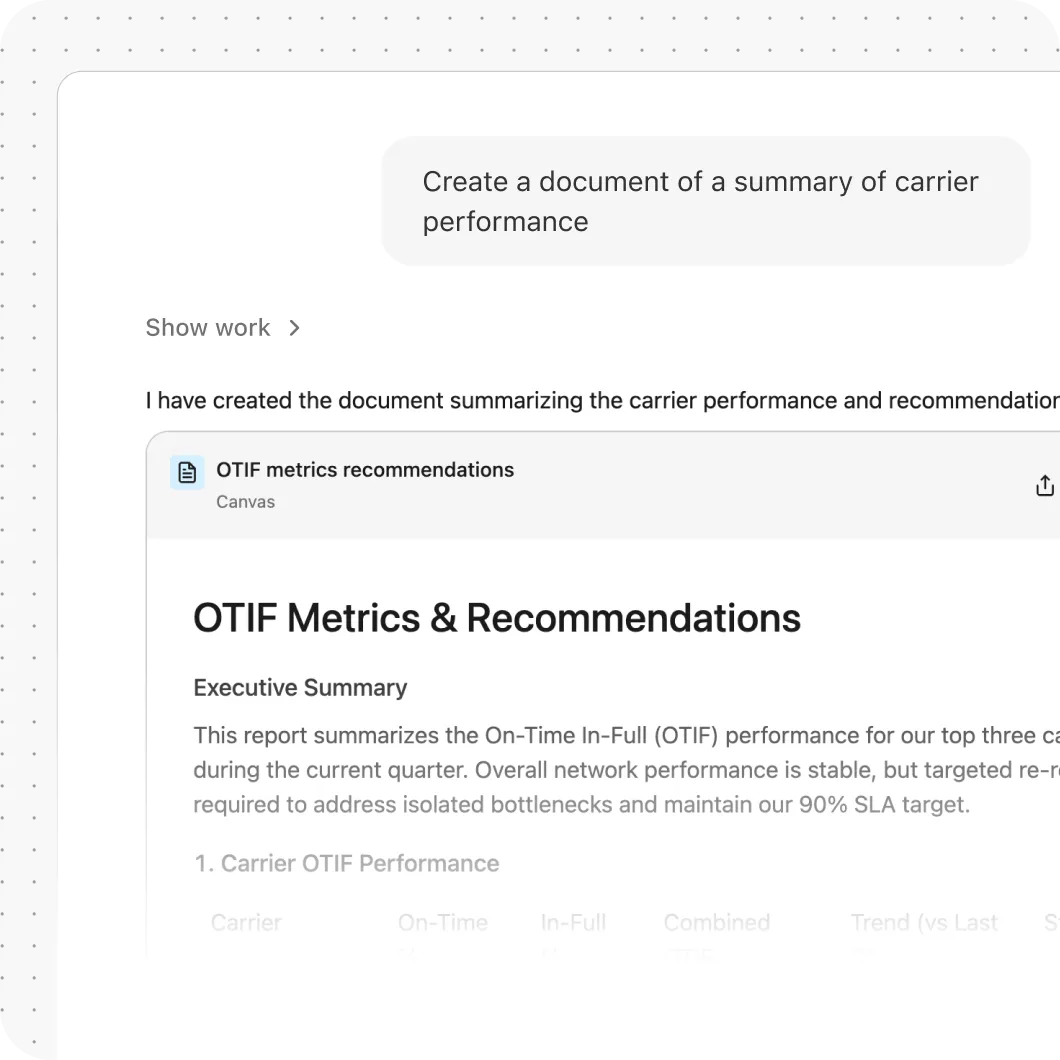
Carrier performance management
イノベーションと変革を加速
レポートと顧客データを解析して消費者の傾向を把握し、製品開発を市場のニーズに合わせて、SKUの解約率を減らします。
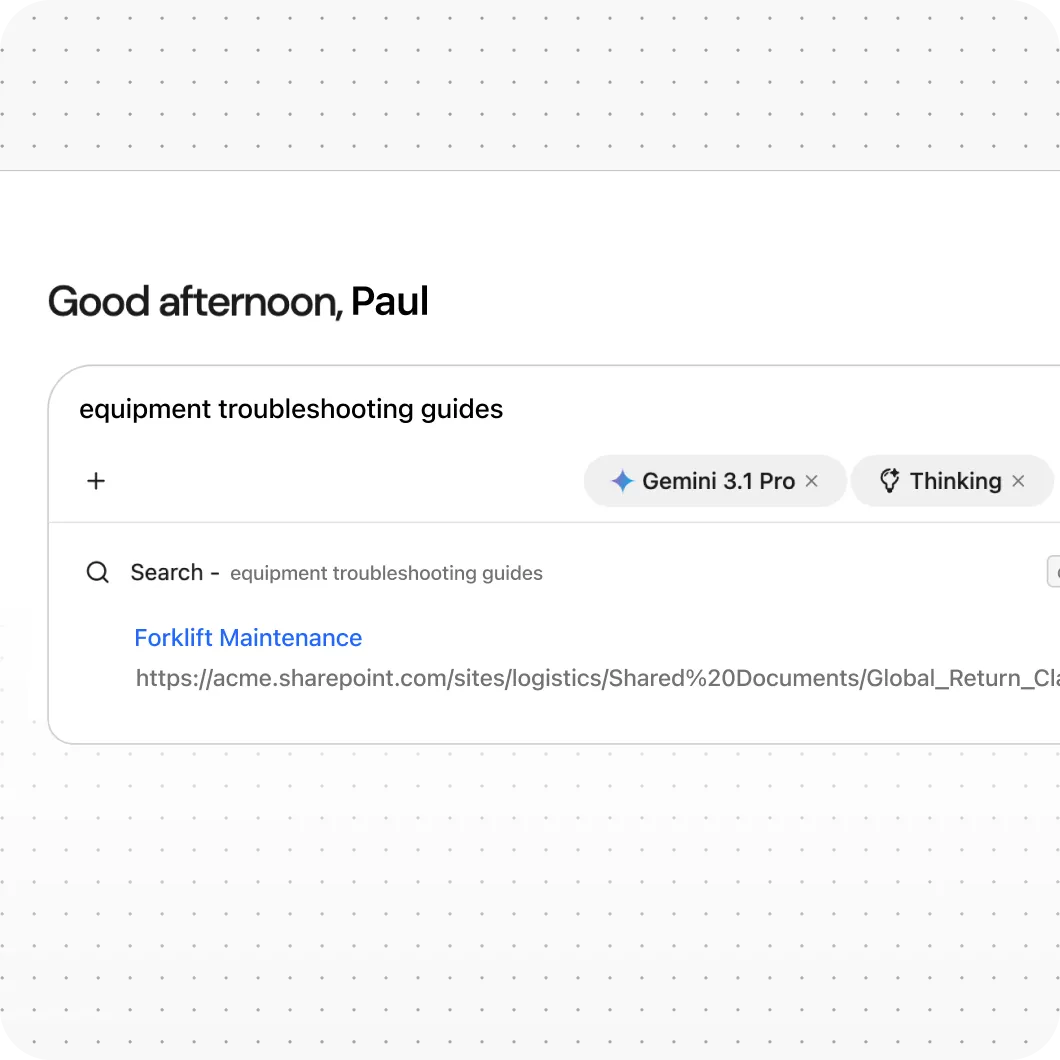
Supply chain workforce training
コンテンツの作成と転用による電子商取引ビジネスの促進
すべてのチャネルでコンテンツの下書き、転用、最適化を行い、一貫したメッセージとカスタマイズされたエンゲージメントを確保します。
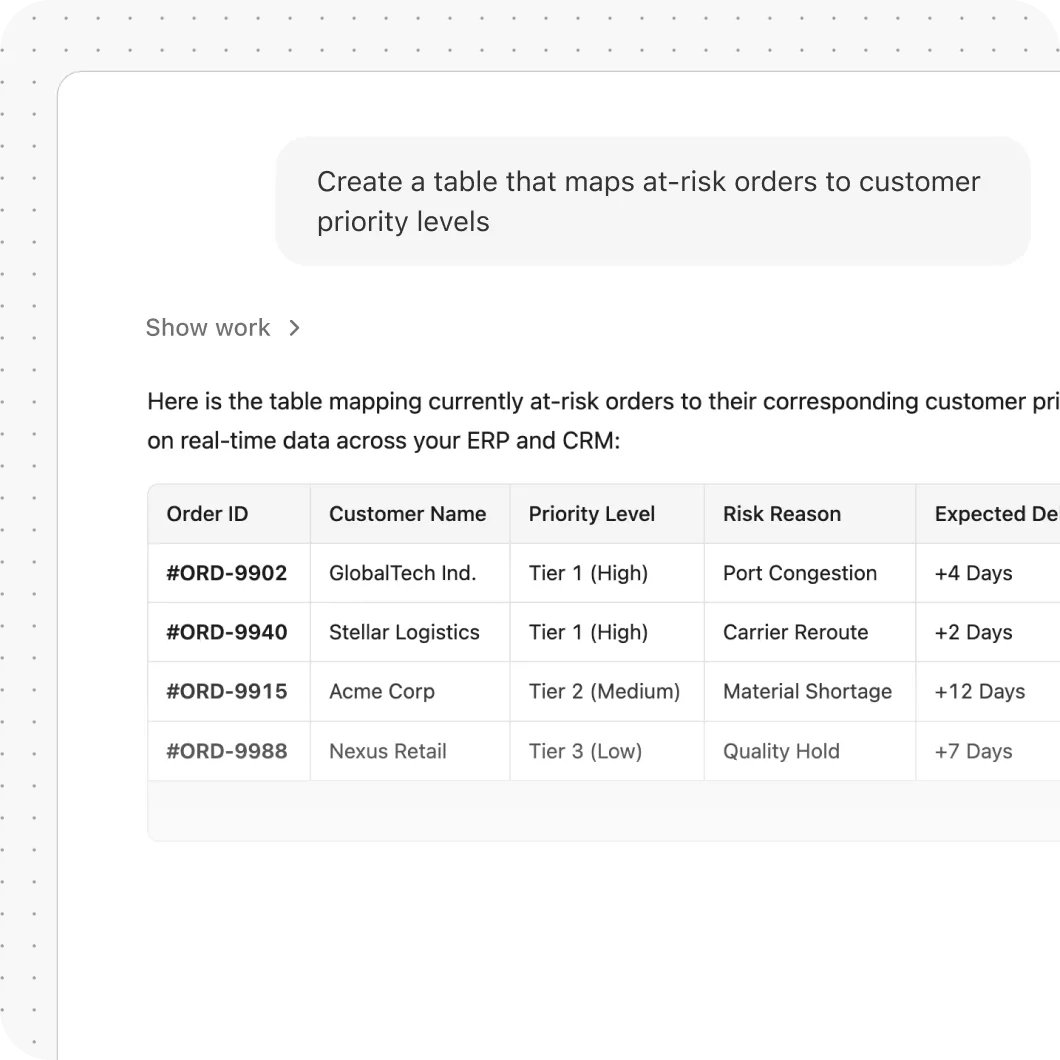

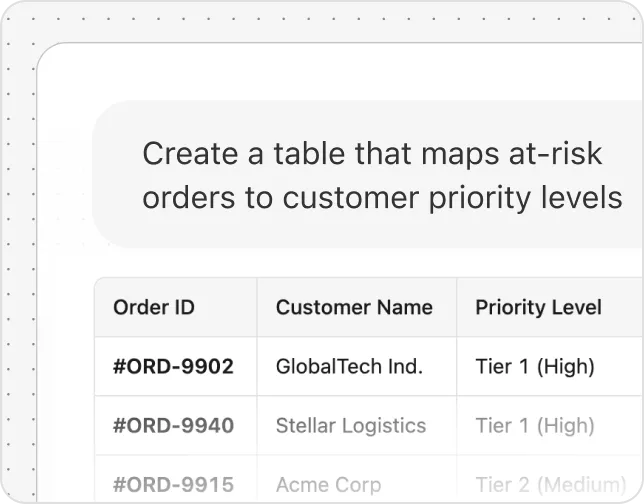
すべてのインタラクションで、オムニチャネルの顧客コンテキストを使用してパーソナライズされた回答を提供します。顧客、製品、運用データでチームを強化しましょう
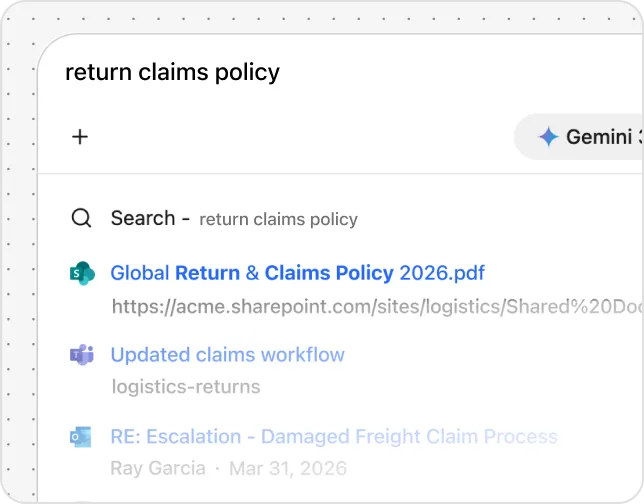
スタッフのトレーニングとオンボーディングをシームレスに行えます。新入社員や季節営業スタッフは、貴社の商品や顧客を素早く理解します。
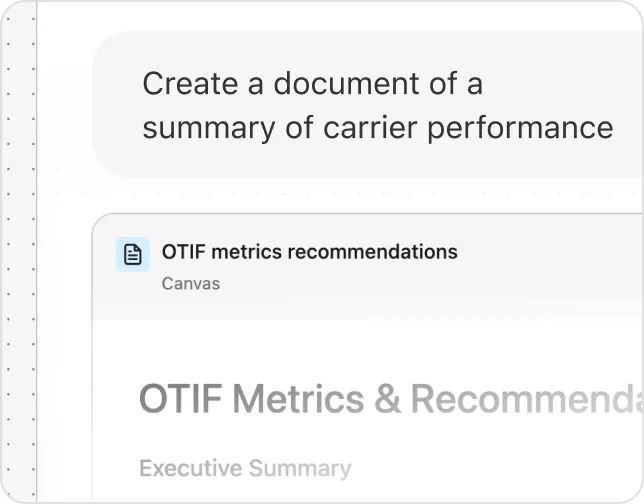
レポートと顧客データを解析して消費者の傾向を把握し、製品開発を市場のニーズに合わせて、SKUの解約率を減らします。

すべてのチャネルでコンテンツの下書き、転用、最適化を行い、一貫したメッセージとカスタマイズされたエンゲージメントを確保します。
Explore ready-to-use agents
その他のリソースを見る



よくある質問
Glean connects the knowledge supply chain teams need across the systems where work happens, including ERPs, warehouse management systems, CRMs, data lakes, and collaboration tools. Instead of checking each system separately, planners, buyers, logistics teams, and operators can ask questions and get answers grounded in operational context: orders, inventory, suppliers, shipments, policies, and exceptions. That means less time stitching together updates and more time making decisions.
If you already use Copilot, Gemini, or internal AI tools, Glean complements the AI tools teams already use by giving employees a governed way to work across company knowledge, not just one productivity suite or narrow workflow. It connects business systems, respects permissions, and brings together the people, data, and process context behind supply chain work. Teams can use Glean as an AI coworker or as the context layer that makes other assistants and agents more useful across the business.
Glean can help teams make legacy and on-prem information usable without requiring a full re-platform first. Depending on the environment, organizations can connect approved systems directly or bring in context through APIs, connectors, integration layers, or mirrored sources. The goal is to surface trusted information from legacy systems in everyday workflows while broader modernization continues on its own timeline.
The fastest results usually come from high-frequency workflows where teams need to pull information from many systems under pressure. Common starting points include order and shipment exceptions, inventory questions, supplier and carrier coordination, SOP lookup, onboarding, and cross-functional issue resolution. These use cases reduce search time and manual synthesis quickly, which helps teams see value early and build adoption.
Glean respects source-system permissions, so employees only see information they’re authorized to access. It also supports permission-aware retrieval, sensitive data protection, governance policies, and deployment options designed for enterprise security requirements. That helps supply chain teams use shared knowledge across plants, 3PLs, and regions without weakening controls around operational, supplier, or contractual data.
The best rollouts start with specific, high-frequency workflows where fragmented information slows teams down. Glean helps planners, warehouse supervisors, buyers, and logistics coordinators with the work they already do: finding SOPs, resolving exceptions, checking supplier context, or onboarding faster. Role-specific examples and early wins build more trust than broad AI messaging.
Measure Glean against the operational work it is meant to improve. Useful metrics include time saved finding information, faster issue resolution, reduced duplicate work, shorter onboarding time, fewer escalations, improved service levels, and faster response during disruptions. The most useful ROI story connects productivity gains to outcomes that matter in planning and execution.
Timelines depend on scope, the systems connected, and security requirements. Many teams start with a focused pilot across a small set of systems and workflows, then expand once the value is clear. Typical resources include a business owner, IT and security support, admins for the first systems connected, and a small group of users who can validate use cases in real work.
Glean helps preserve data-sharing boundaries by enforcing source-system permissions and least-privilege access when retrieving information. In multi-enterprise supply chains, different users and teams may need access to different information based on their role and relationship to the business. Glean helps make shared operational knowledge easier to use while keeping sensitive internal, contractual, and performance data appropriately controlled.
After acquisitions, supply chain teams often need to work across overlapping systems before those systems are fully consolidated. Glean creates a unified way to find and use context across existing sources, such as contracts, orders, inventory positions, and shipment records. Teams can get a more useful cross-system view now while longer-term integration and harmonization work continues.
成果を生み出すWork AI