





生成AIで
金融の意思決定を加速
データからリアルタイムにインサイトへアクセスすることは、金融における大きな競争優位です。案件分析、金融商品の販売、リスク評価、高付加価値投資家対応まで、Gleanは機密データを保護しながら、より速く賢い業務遂行を支援します。



金融の意思決定を加速
データからリアルタイムにインサイトへアクセスすることは、金融における大きな競争優位です。案件分析、金融商品の販売、リスク評価、高付加価値投資家対応まで、Gleanは機密データを保護しながら、より速く賢い業務遂行を支援します。

生成AIで競争優位を獲得

リテール・商業銀行
売上と顧客ロイヤルティを向上。金融商品の教育を迅速化し、顧客の安全なセルフサービス・自己解決を支援します。

投資会社
案件推進と高度な意思決定を加速。調査・分析ワークフローを支えるインサイトを提供し、高度にパーソナライズされた顧客体験を実現します。

保険
請求処理を迅速化し、コストを抑え、不正検知を強化。データとインサイトを引受業務へ統合します。

%201.webp)
%201%20(1).webp)
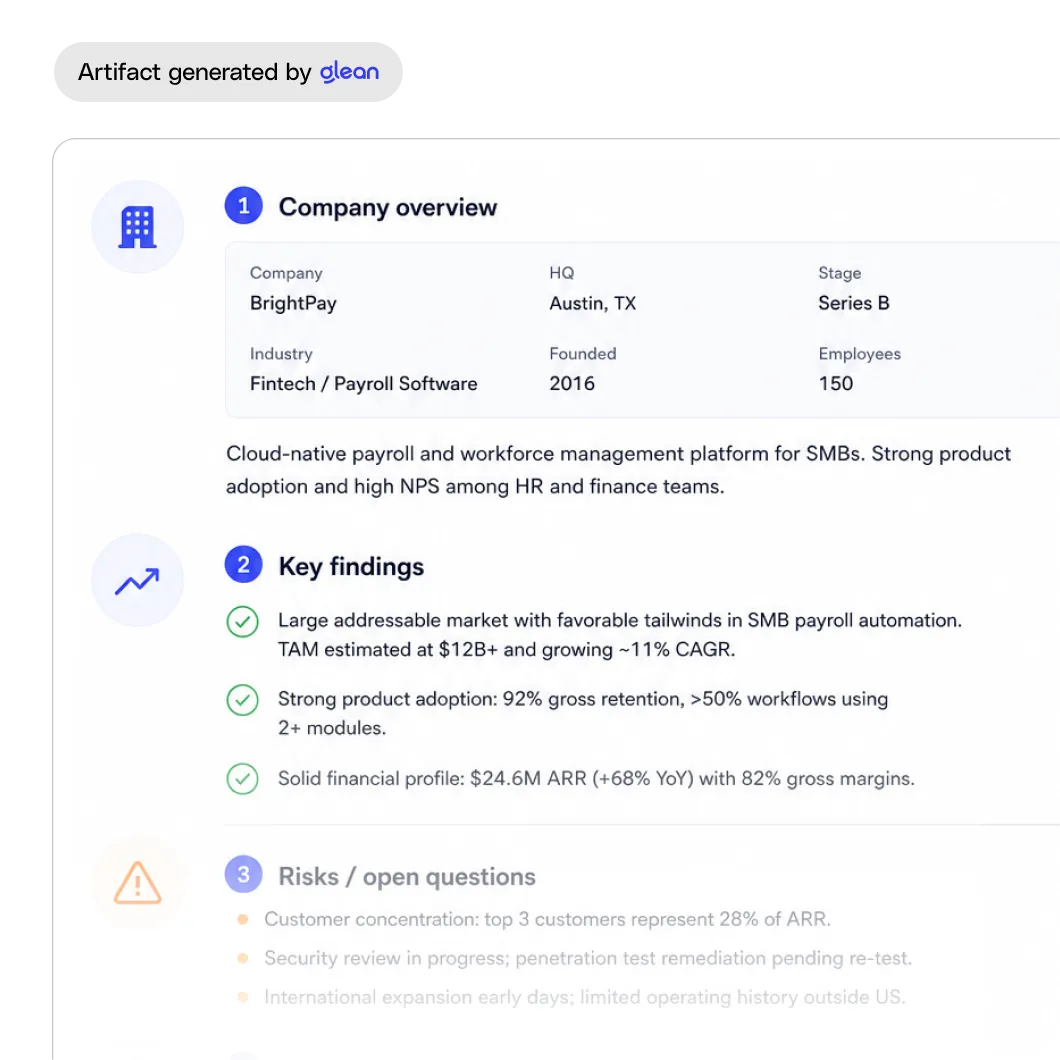
AI-powered due diligence
数千の金融商品を
担当者が即理解
商品要約と顧客データへリアルタイムアクセスし、より精度の高い提案を支援します。
Investment research
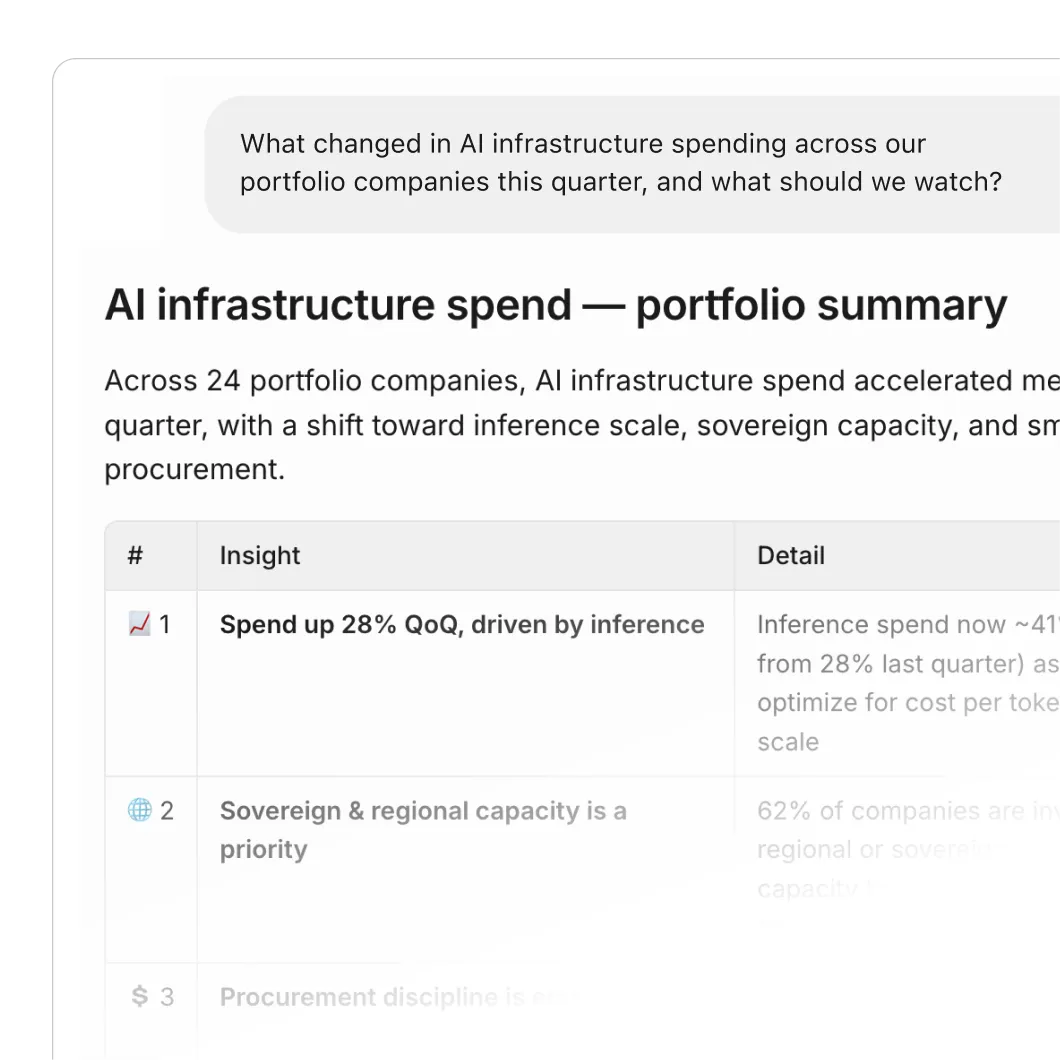
投資調査・分析を強化
データを統合し、金融情報、ニュース、市場動向を迅速に収集・分析して実行可能なインサイトを提供します。
Investor relations
顧客体験を大規模に
パーソナライズ
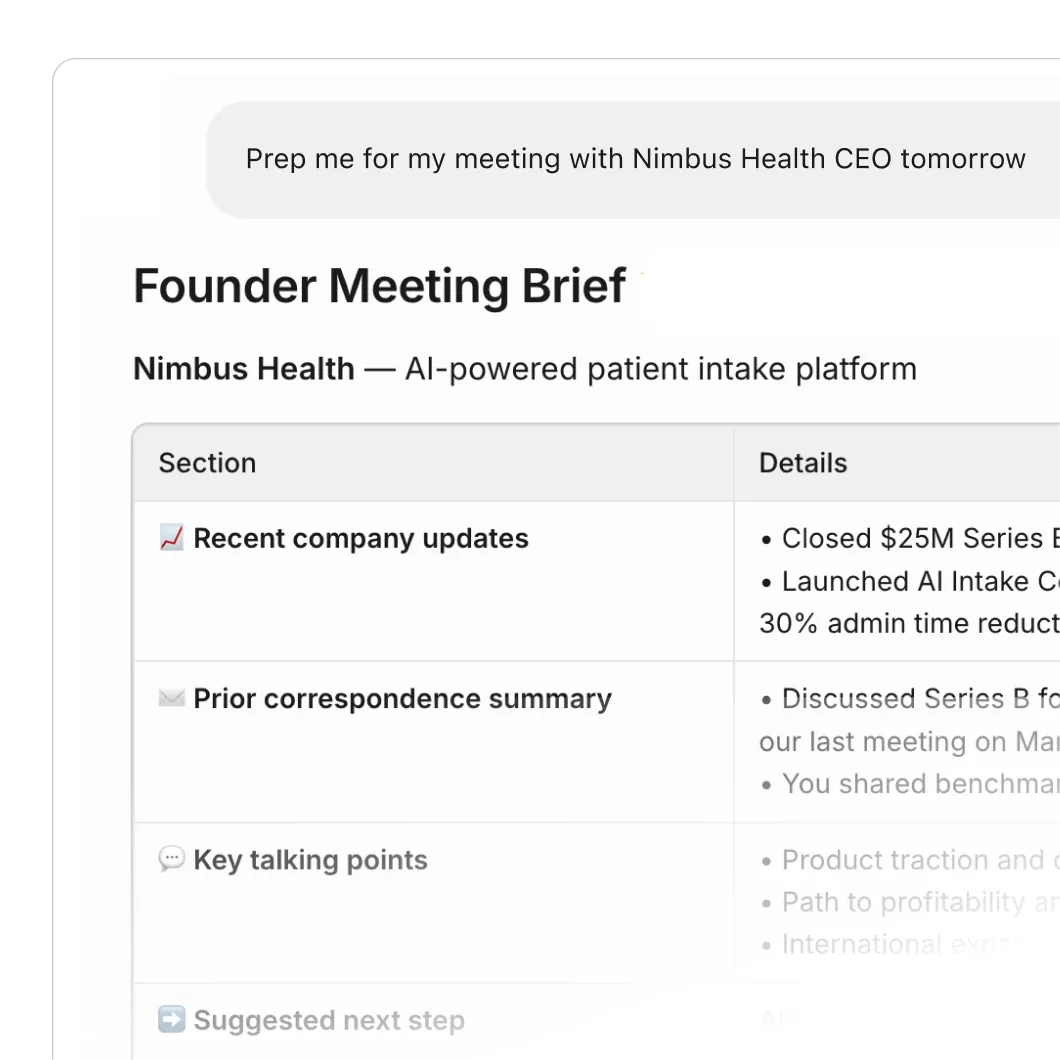
顧客行動、リスク許容度、財務目標に基づき、高付加価値顧客へ最適な提案と助言を提供します。
Portfolio value creation
コンテンツの作成と転用による電子商取引ビジネスの促進
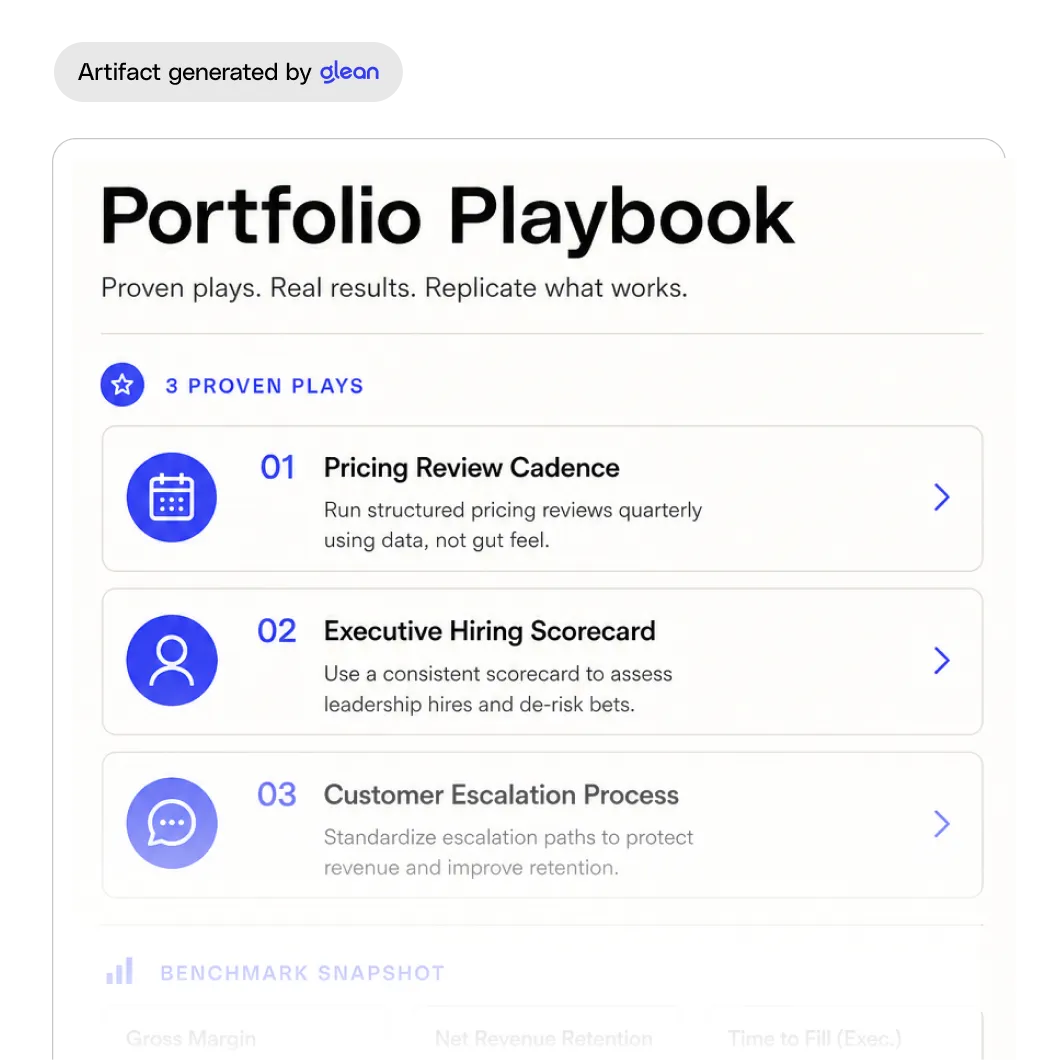
すべてのチャネルでコンテンツの下書き、転用、最適化を行い、一貫したメッセージとカスタマイズされたエンゲージメントを確保します。
Private equity operations
Support lean teams across the firm.
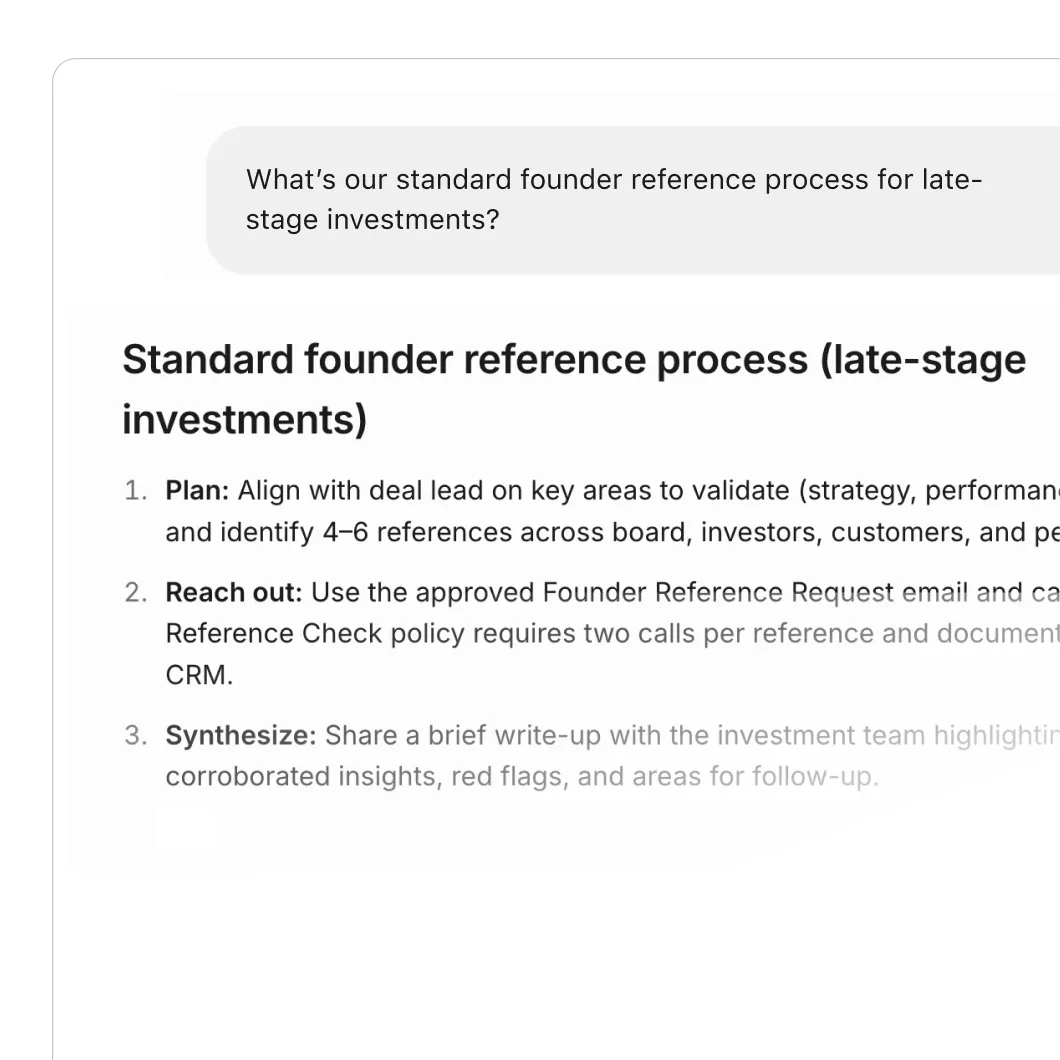
Make deal, legal, operations, and recruiting knowledge easier to access so teams can self-serve answers and stay focused on higher-value work.

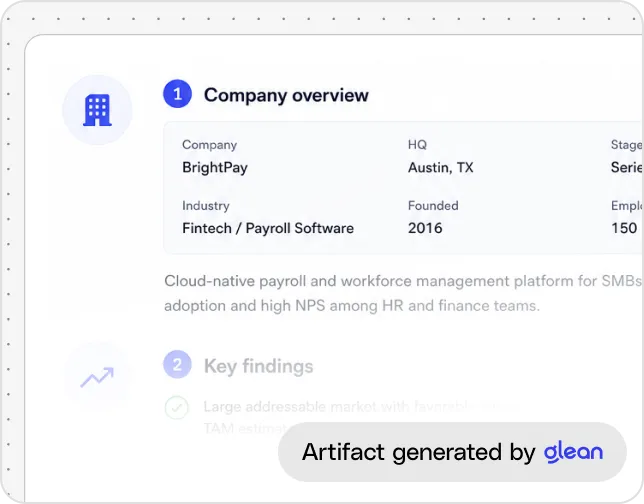
担当者が即理解
商品要約と顧客データへリアルタイムアクセスし、より精度の高い提案を支援します。
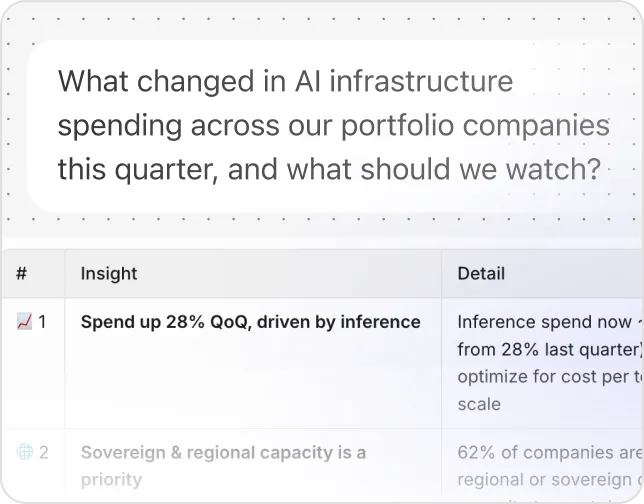
データを統合し、金融情報、ニュース、市場動向を迅速に収集・分析して実行可能なインサイトを提供します。
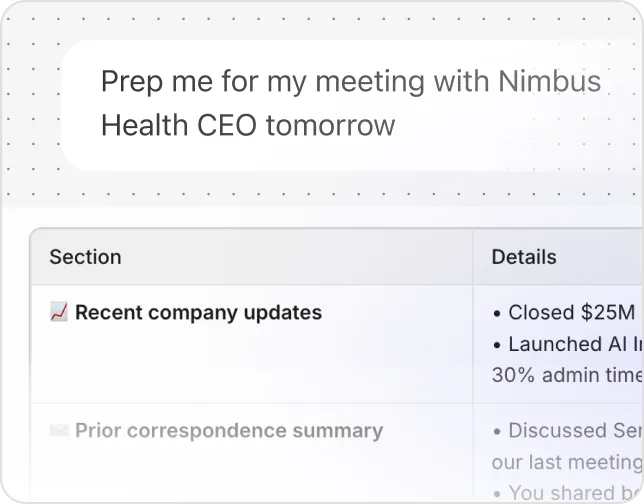
パーソナライズ
顧客行動、リスク許容度、財務目標に基づき、高付加価値顧客へ最適な提案と助言を提供します。
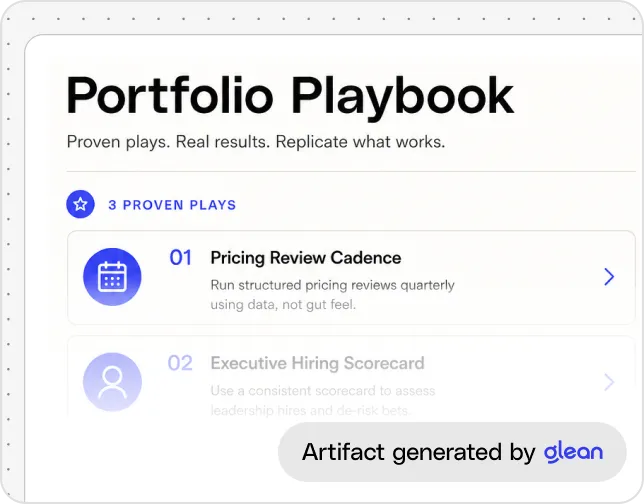
すべてのチャネルでコンテンツの下書き、転用、最適化を行い、一貫したメッセージとカスタマイズされたエンゲージメントを確保します。
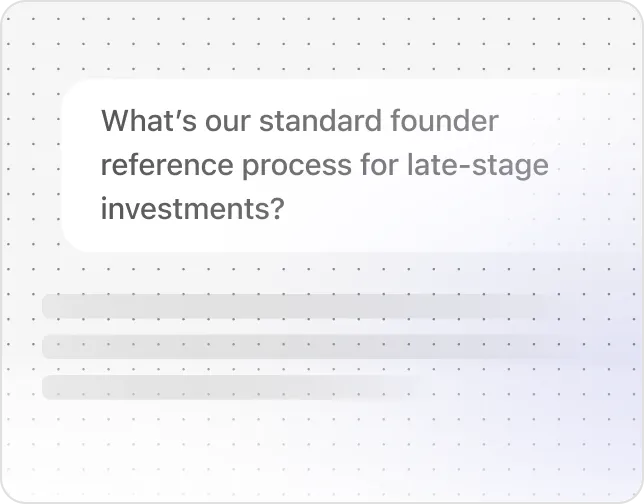
Make deal, legal, operations, and recruiting knowledge easier to access so teams can self-serve answers and stay focused on higher-value work.
Explore ready-to-use agents
パーソナライズされ、権限が適用されたエンタープライズ検索用。
その他のリソースを見る

How leading PE and VC firms are using AI to unlock value faster
How leading PE and VC firms are using AI to unlock value faster

How private equity can turn AI pilots into portfolio value
How private equity can turn AI pilots into portfolio value

Discover how AI is reshaping financial services operations
Discover how AI is reshaping financial services operations
よくある質問
Private equity and VC teams can use AI to search and work across the knowledge they already have, from deal notes and market research to side letters and portfolio company data, without rebuilding workflows in separate tools. That helps investment and operating teams move faster on diligence, research, and portfolio support while keeping work connected to the systems they already use.
AI can speed up the manual parts of diligence: summarizing large document sets, finding relevant prior deal knowledge, drafting first-pass diligence materials and DDQ responses, preparing meeting materials, and synthesizing market research.
Human review is still essential when teams move from synthesis to judgment. Investment professionals need to validate facts, pressure-test assumptions, and make the final decisions behind diligence conclusions, investment theses, and portfolio actions.
AI can bring internal deal history and trusted market research into one workflow, making it easier to spot patterns, compare past work, and build more consistent investment theses. It can also help teams create investment committee materials faster by surfacing relevant context from notes, decks, emails, and prior diligence files, reducing repeated work and giving teams more time for analysis.
Firms need an AI platform that connects to the systems where this information already lives and respects existing permissions. The right approach gives teams one place to find deal, portfolio, founder, LP, and operating context while keeping sensitive information protected through governed access, clear controls, and secure integrations.
Private equity firms should look for an AI platform that works across the tools they already use instead of creating another silo. The key question is whether teams can search, synthesize, and act on knowledge in Microsoft 365, Google Drive, Slack, Box, CRM systems, and other sources from one place, with the right access controls. That matters because deal, portfolio, and operating context rarely live in one system.
The best starting points are workflows that happen often, pull from multiple sources, and take time away from higher-value decision-making. DDQ responses, meeting prep, investor updates, market research summaries, and recurring portfolio reporting are all strong candidates. They give teams a practical way to reduce manual synthesis, create usable first drafts faster, and prove value before expanding into more advanced workflows.
Firms should measure AI against the outcomes they care about: shorter diligence cycles, less duplicated work across deals, faster research synthesis, and more time spent on judgment instead of manual prep. Useful metrics include time saved on diligence materials, reuse of prior deal knowledge, turnaround time for DDQs or investor updates, and adoption across investment, platform, and operating teams.
AI buying decisions often involve investment, operations, platform, IT, and security stakeholders. Investment teams care about diligence speed, research quality, and access to firm knowledge. Operations and platform teams look at repeatability, portfolio support, and scalable playbooks. IT and security teams focus on integrations, permissions, governance, and how sensitive information is protected.
Firms should look for controls that let teams use AI without changing how sensitive deal and portfolio information is protected. That includes permission-aware search, secure integrations, governed access, clear admin controls, and the ability to keep private documents private. These controls are especially important in workflows like diligence, DDQs, investor reporting, portfolio support, and legal review.
Private equity firms can use AI to make proven playbooks, benchmarks, and cross-portfolio expertise easier to find and apply. Instead of leaving best practices buried in decks, emails, or past projects, teams can surface relevant guidance and share it with portfolio companies through governed access. That helps operating teams scale what works across the portfolio while keeping firm knowledge protected.
成果を生み出すWork AI