


How AI reduces reconciliation time across finance tools
AI can reduce reconciliation time across finance tools by connecting scattered data sources, comparing records with shared business context, and surfacing only the exceptions that need human judgment. Instead of manually cross-referencing contracts, CRM updates, call notes, and spreadsheet trackers, finance teams get answers grounded in evidence from across their systems.
Reconciliation in most organizations still runs on manual processes: spreadsheet-based matching, sample reviews, and after-the-fact variance analysis. A CFO Connect report found that while 56% of finance leaders now use AI, only 17% have embedded it in core workflows. (AI for finance teams is changing that picture.) As transaction volumes grow and data streams multiply, these workflows break down. Month-end close drags past day 15, and teams end up reporting October performance in mid-November.
AI moves finance teams from manual execution to oversight, analysis, and judgment — by removing the lookup work that fills most of the close cycle. With 58% of finance functions already using AI according to Gartner, the shift is accelerating. That shift frees people to focus on the exceptions and insights that actually require expertise.
How to reduce reconciliation time across finance tools with AI
AI reduces reconciliation time by connecting finance inputs across systems, retrieving the latest source evidence, comparing records against shared business context, and routing only real exceptions to people. The biggest delay in reconciliation is rarely the calculation itself. It is the time spent hunting for a contract in the document management system, checking a CRM stage change, reading a Slack thread about a billing dispute, reviewing a Gong call where a customer confirmed revised terms, and updating the spreadsheet tracker so the next reviewer has context.
The practical outcome is fewer manual lookups, faster exception review, clearer audit trails, and more time for analysis instead of document chasing. To get there, the process follows a repeatable sequence: connect sources, normalize context, ground answers in evidence, automate exception handling, and govern the workflow. Teams looking for practical starting points can explore specific AI agents for finance workflows that address each of these steps.
When an invoice amount does not match the contract value, an AI system connected to your CRM, contract repository, and communication tools can surface the specific amendment, the sales call where the change was discussed, and the approval thread — in seconds rather than hours.
A critical requirement for AI in finance workflows is respecting existing permissions, so each user only sees data they are already authorized to access. Glean's Enterprise Graph makes this possible by indexing company knowledge across 100+ connectors while enforcing permission-aware access at every query.
Reducing reconciliation time requires a system grounded in company data, permissions, and workflows — generic text summarization cannot get you there. According to McKinsey's 2012 report on knowledge worker productivity, employees spend nearly 20% of their workweek searching for internal information or tracking down colleagues. For finance teams during close, that percentage climbs higher when reconciliation requires cross-referencing five or six systems for a single variance.
1. Connect the systems that hold finance inputs
Finance teams already work across CRM platforms for pipeline and account changes, ERPs for booked records, contract repositories for terms and amendments, chat tools for approvals and exceptions, call transcripts for deal context, and spreadsheets for offline adjustments. The problem is not a lack of data. The problem is that each system holds a fragment of the answer, and no single view ties them together. This fragmentation is a central challenge as AI in financial services continues to evolve.
A variance rarely lives in one tool. A renewal amount might differ because a contract was redlined after the CRM amount was locked, or because a spreadsheet tracker references an outdated close date that nobody corrected.
Tracking down the root cause means opening three or four applications, comparing timestamps, and hoping you find the right version of the right record. An AI reconciliation layer should connect to these systems through native connectors or APIs so finance works from live business context rather than stale exports. This aligns with findings that 82% of finance leaders consider AI and automation crucial for evolving their teams beyond manual execution.
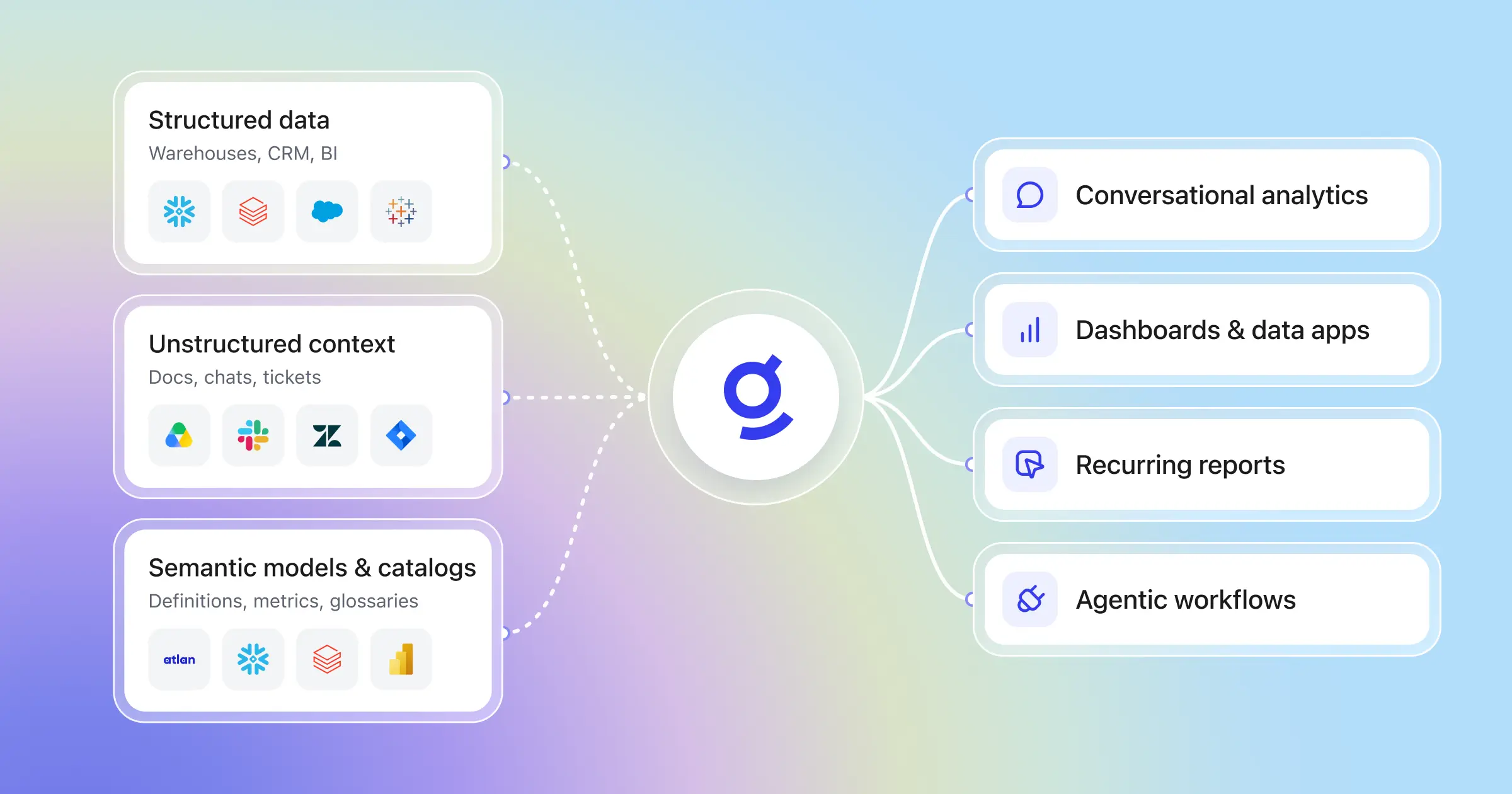
Before rolling out any AI reconciliation tool, inventory your highest-friction inputs: revenue booking changes, spend approvals, vendor terms, payment support tickets, and manual forecast adjustments. Start with the sources that generate the most back-and-forth between teams. Glean connects to structured systems like Salesforce and NetSuite alongside unstructured sources like Slack threads and Gong transcripts through its native connector library, retrieving content in a read-aware, permission-respecting way so access controls stay intact. Finance team efficiency improves fastest when the connected layer covers both systems of record and the conversations that explain why those records changed.
2. Normalize records, entities, and business definitions
The same customer, deal, or cost center often appears differently across tools. Sales might list an account as "Acme Corp," legal has it as "Acme Corporation LLC," and the ERP stores it under a numeric ID. If AI treats those as unrelated records, it cannot surface the connections that explain a mismatch.
Normalization means matching account names, mapping IDs across systems, aligning date logic (contract effective date versus revenue recognition start date), and resolving subsidiary relationships.
Consider commission inputs: they can differ from booked revenue because the opportunity owner changed late in the quarter and the CRM snapshot captured a different rep than the one compensation uses. Or vendor spend looks wrong because the approval thread in Slack references a project code that does not match the one in the ERP. The root cause is a context gap, not a calculation error. This is where agentic AI in financial services delivers outsized value — by autonomously tracing connections across systems that manual processes miss.
Glean's Enterprise Graph addresses normalization by understanding relationships between people, content, workflows, and records. It connects a contract clause to the CRM opportunity it references and then to the spreadsheet line item that tracks the same deal, grounding answers in source metadata and historical context rather than guessing.
Once that shared context layer exists, finance teams stop repeating the same manual cross-checks every close. Building this layer is fundamentally an enterprise knowledge management challenge — connecting scattered institutional knowledge into a unified, searchable resource. A practical guardrail: when definitions differ across teams, document the preferred finance definition and configure your AI to use it as the default reference point.
3. Ask the AI to retrieve evidence and explain mismatches
Once a finance team's systems are connected to a shared AI layer and records are normalized across tools, the team can ask plain-language questions instead of opening six applications to trace a single variance. The fastest visible win is removing the lookup step entirely.
Real prompts look like this: "Why does the forecast sheet show $420K when the booked amount is $380K?" or "Which contract change explains the revenue delta on the Meridian account?" or "What evidence supports the $12K spend variance in the Q2 marketing budget?" For more examples, see this collection of AI prompts for finance professionals.
The answer pattern matters as much as the question. A useful response returns a concise explanation with citations to the specific CRM field, the contract amendment language, the Slack message where the CFO approved the change, or the spreadsheet cell that holds the conflicting number. Glean Assistant delivers cited, permission-aware responses grounded in company knowledge, so a finance analyst reviewing a variance can inspect the source record directly rather than trusting a summary at face value.
The distinction between explanation and judgment is important here. AI can surface that a renewal price dropped because a customer negotiated a discount during a recorded call, link to the exact transcript timestamp, and show that the contract reflects the new amount while the CRM does not.
The decision about whether to adjust the forecast, post an accrual, or escalate to the controller stays with the finance team. When the reason for a variance lives in an unstructured source like a chat thread or call recording, AI retrieves that context next to the numeric difference so the analyst has everything in one place.
4. Automate exception triage instead of reviewing every mismatch
AI reduces reconciliation time most when it narrows the review queue. Not every line item needs the same level of scrutiny. A $3 rounding difference and a $50K booking discrepancy require different responses, but many teams still review them in the same batch. Given that AI agents have cut complex case handling time by 52%, automated triage represents one of the highest-impact applications for finance.
Automated triage should detect missing supporting documentation, group similar discrepancies by root cause, identify repeat patterns across periods, prioritize exceptions by materiality or risk, and route each one to the right owner.
A missing contract signature routes to legal ops, a booking date conflict goes to the deal desk, an unexplained spreadsheet override flags for FP&A review, and an approval gap escalates to the responsible manager. Rules-based systems catch known conditions well, but they break on messy edge cases where the explanation is spread across a redlined contract, a Slack approval, and a changed CRM field.
Glean Agents handle this multi-step triage by gathering inputs across connected systems, assembling the relevant evidence, and packaging each exception with the mismatch detail, source citations, likely cause, and a recommended next action. Finance teams move through exception queues faster when the preparatory work is already done.
By grouping recurring issues, the system exposes where upstream process fixes are needed, like inconsistent opportunity fields or missing contract metadata. High-confidence exceptions can be prepared automatically, but escalation rules and final approvals should remain explicit.
5. Turn recurring reconciliation work into governed AI workflows
After running AI-assisted reconciliation for a few close cycles, teams typically identify which questions and exception types recur predictably. Those tasks can move from ad hoc searching to structured, governed workflows. The pattern is straightforward: trigger on a new discrepancy, collect the latest evidence across connected systems, generate a cited summary, assign an owner, track resolution status, and surface unresolved blockers before the close deadline.
Consider monthly revenue reconciliation. Every period, FP&A checks booked revenue against the forecast, investigates the top variances, documents explanations, and follows up on missing inputs. With 86% of finance executives pursuing a faster, real-time close, automating this recurring sequence is a high-priority opportunity. That sequence involves the same systems, the same question types, and the same escalation paths each time.
Turning it into a governed workflow means defining who can run it, what sources it can access, what actions it can take, and when human review is required. Permission-aware execution matters here: the workflow should only retrieve and share information each participant is authorized to see.
For common patterns around variance explanation, close preparation, and cross-functional follow-up, Glean has documented finance AI agents that show how these workflows operate in practice.
Each resolved exception refines the workflow's prompts, routing logic, and preferred evidence sources. As prompts, routing logic, and evidence sources are refined over time, the system handles a growing share of routine reconciliation work without changing core controls. Removing the slow, repetitive work of finding, comparing, and explaining inputs frees teams to focus on the decisions that require expertise.
How AI reduces reconciliation time across finance tools: frequently asked questions
What specific AI tools can help with financial reconciliation?
AI platforms that connect to your existing finance stack and retrieve information with full source citations are the most practical starting point. Look for tools with broad native connectors covering CRMs, ERPs, contract repositories, chat platforms, and spreadsheets, along with permission-aware access so results respect your existing data controls.
How does AI automate reconciliation across different platforms?
AI automates reconciliation by indexing data across connected systems, normalizing records so the same entity is recognized regardless of where it appears, and surfacing cited evidence when values conflict. Instead of manually opening each tool to trace a discrepancy, finance teams ask a question and receive an answer grounded in the actual source records.
What are the benefits of using AI for reconciling financial data?
The primary benefits are reduced time spent on routine matching, earlier identification of material discrepancies, and stronger documentation for audit and compliance reviews. Teams that automate evidence gathering and exception triage redirect hours toward investigating the variances that actually require judgment.
How can AI improve data accuracy in financial reconciliations?
AI improves accuracy by tying answers to source metadata, historical record relationships, and current document context rather than relying on manual comparison. Normalization across systems reduces errors caused by mismatched names, IDs, or date logic, and cited responses let reviewers verify the underlying evidence directly.
What challenges might arise when implementing AI for reconciliation tasks?
The most common challenges are incomplete system connectivity, inconsistent data definitions across teams, and unclear governance around what the AI can access or act on. Starting with a focused inventory of high-friction reconciliation inputs and establishing preferred finance definitions before rollout helps avoid these issues.
The fastest way to cut reconciliation time is to stop chasing context across tools and start asking questions that return cited, source-linked answers. When your finance team spends less time on document hunting and more on the decisions that move the business forward, every close cycle gets shorter. Request a demo to explore how Glean and AI can transform your workplace.

.jpg)

.png)



.jpg)
.webp)