




Glean Intelligence
Optimize intelligence for work.
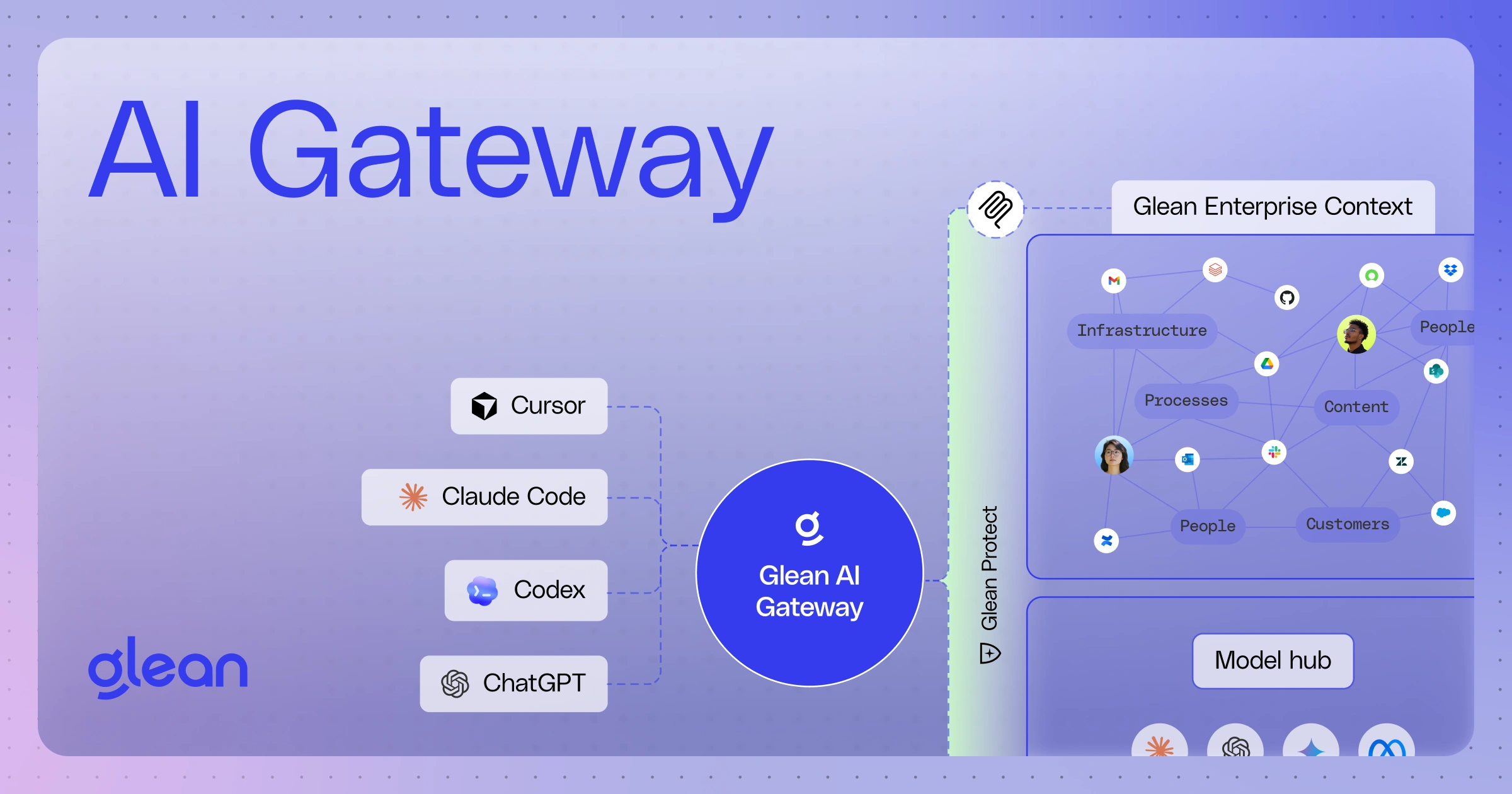
Route each task to the right model, improve AI with continual learning, and bring cost controls and governance to multiple AI front doors.
78% Win rate compared to Claude Cowork
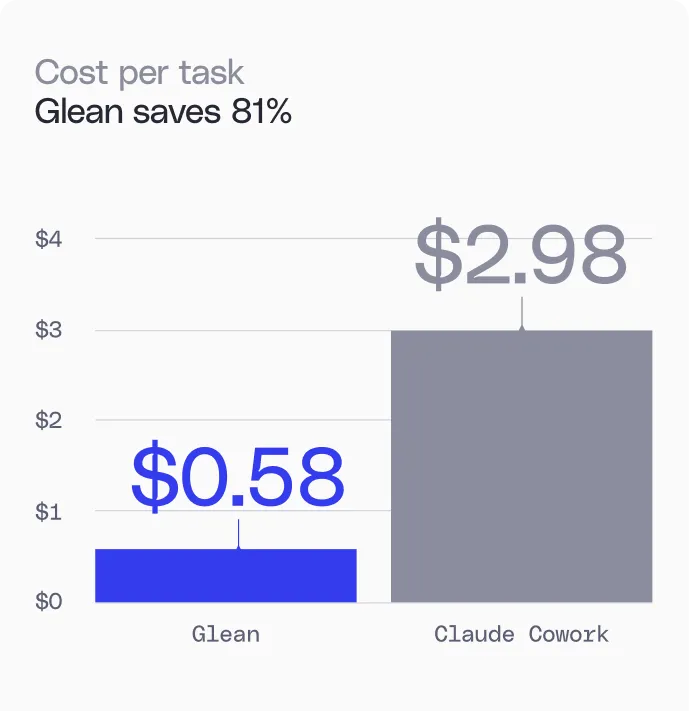
81% Lower cost per task compared to Claude Cowork
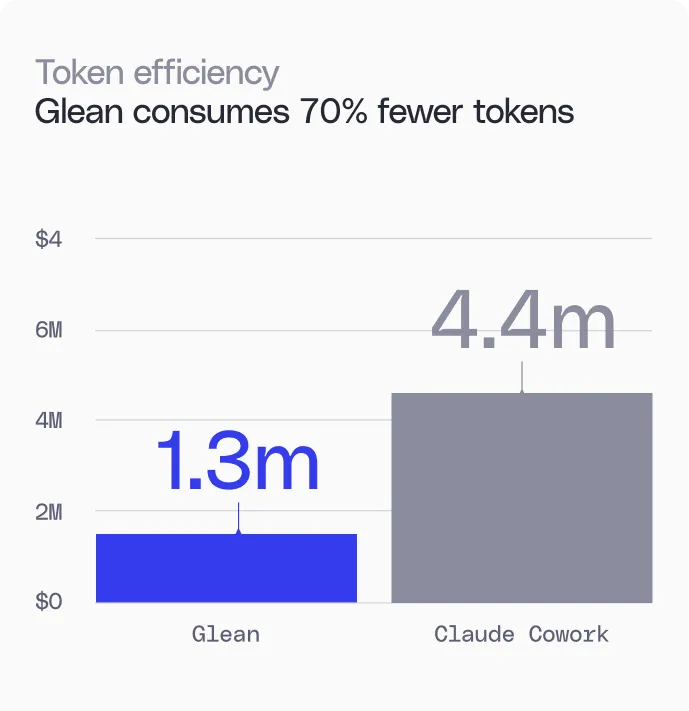
70% Higher token efficiency compared to Claude Cowork
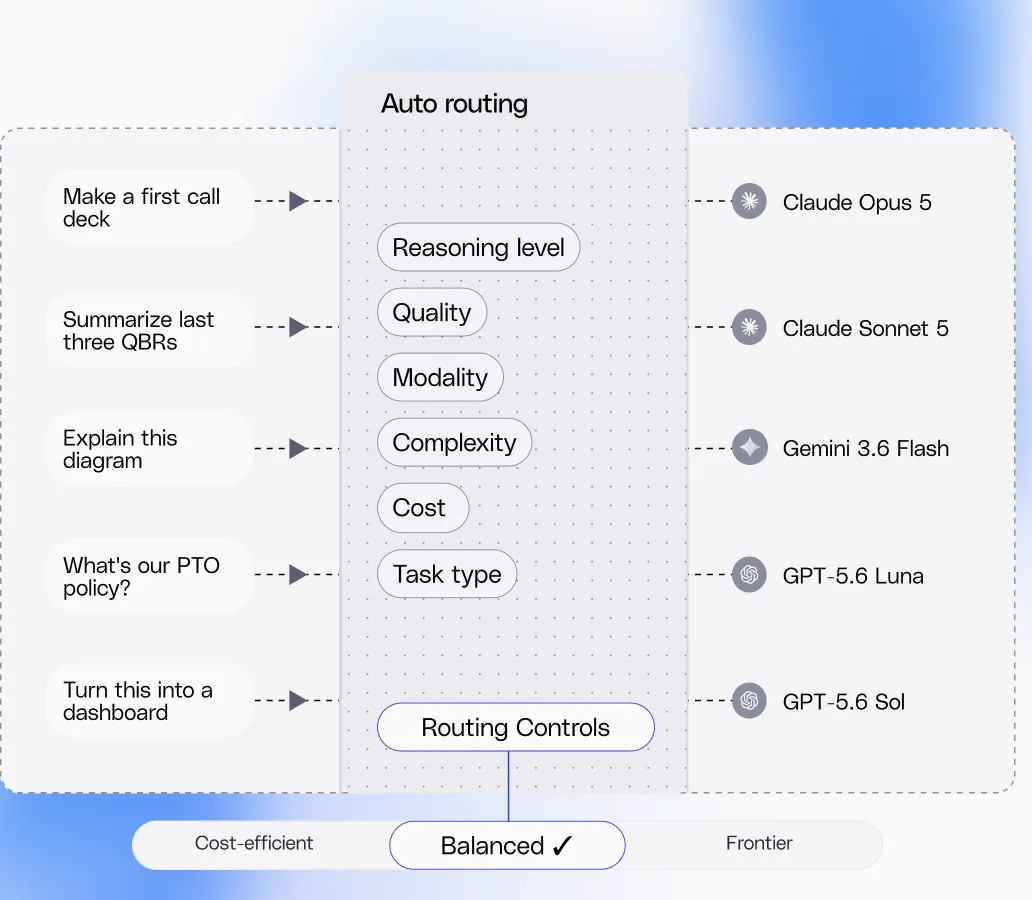
Auto routing
Frontier intelligence, without the frontier cost.
Not every task requires the largest model on max thinking. Glean evaluates 40+ LLMs on enterprise work (beta), then matches each request to the right one based on performance, cost, and capability (coming soon).
Continual learning
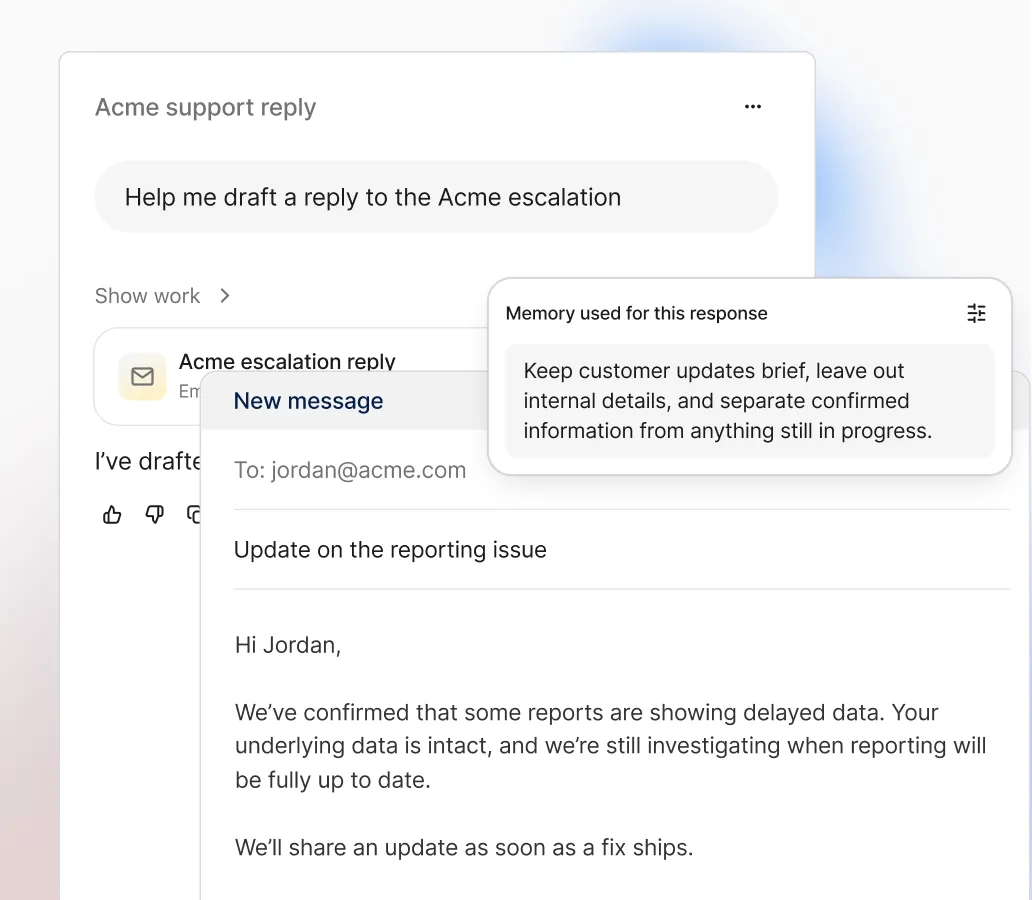
AI that learns and improves over time.
Most AI memory only sees fragments of enterprise workflows. Glean memory learns continuously from enterprise context, Assistant history, and AI activity across the gateway — and shares what it learns across surfaces via MCP.
Agent harness
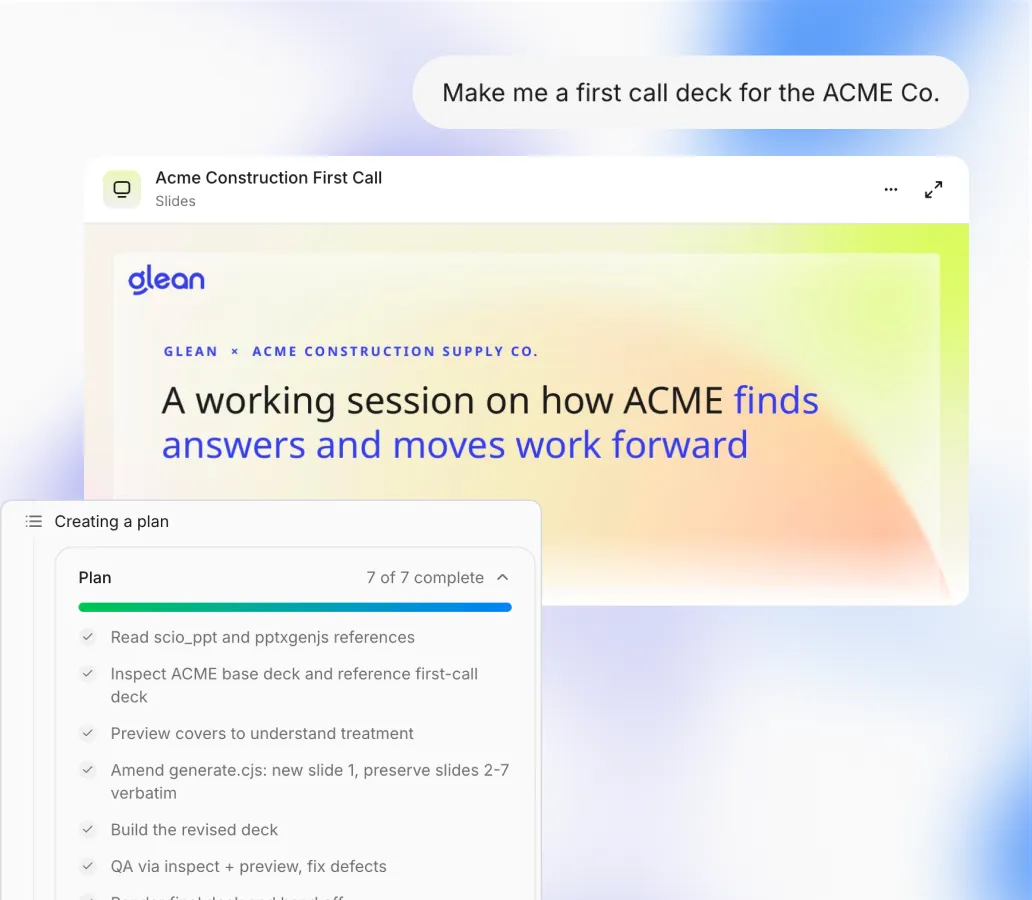
Reliably take on long-running work.
Glean’s efficient harness orchestrates tools with code and manages context with search and subagents, keeping AI reliable throughout long, complex work.


Benchmarks
Routing that drives better economics.
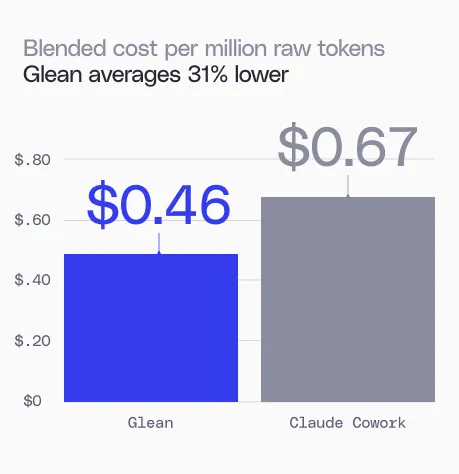
Glean auto routing uses multiple models in an efficient harness to drive 81% savings on token costs versus Claude Cowork, while Glean is preferred 78% of the time.