

Unlocking knowledge: AI's role in workplace transformation
The modern workplace generates an overwhelming amount of information every day. Emails, documents, chat messages, and databases scatter critical knowledge across dozens of applications, making it increasingly difficult for employees to find what they need. This fragmentation costs businesses dearly—employees lose at least two hours daily searching for information, equivalent to one full workday each week.
But artificial intelligence is fundamentally changing how we discover, access, and use workplace knowledge. The average large US company loses $47 million in productivity annually as a direct result of inefficient knowledge sharing. US knowledge workers waste 5.3 hours every week waiting for vital information from colleagues or recreating existing institutional knowledge. By transforming scattered data into accessible insights, AI-powered systems are revolutionizing productivity and reshaping how organizations operate.
But artificial intelligence is fundamentally changing how we discover, access, and use workplace knowledge. Among C-suite executives, 81% report losing over an hour daily searching for answers that should be readily accessible, with 54% losing more than two hours. One in twenty workers spends over half of their working day looking for information rather than engaging in productive work activities. By transforming scattered data into accessible insights, AI-powered systems are revolutionizing productivity and reshaping how organizations operate.
But artificial intelligence is fundamentally changing how we discover, access, and use workplace knowledge. Data silos alone cost the global economy a staggering $3.1 trillion annually according to IDC research. This represents one of the largest quantified inefficiencies in the modern economy. By transforming scattered data into accessible insights, AI-powered systems are revolutionizing productivity and reshaping how organizations operate.
What is AI-driven knowledge discovery in the workplace?
AI-driven knowledge discovery represents the convergence of artificial intelligence with enterprise search and knowledge management systems. It's a fundamental shift in how employees interact with organizational information.
Unlike traditional search that relies on keyword matching, AI understands context, intent, and relationships between information. When an engineer searches for "employee onboarding," the system knows to surface development environment setup guides and code repository access—not the sales enablement materials a new sales representative would need for the same query.
Modern AI-powered workplace search uses natural language processing to interpret queries the way humans naturally ask questions. Instead of forcing employees to think in keywords, they can ask "What's our parental leave policy?" or "How do I file expenses?" and receive accurate, contextual answers.
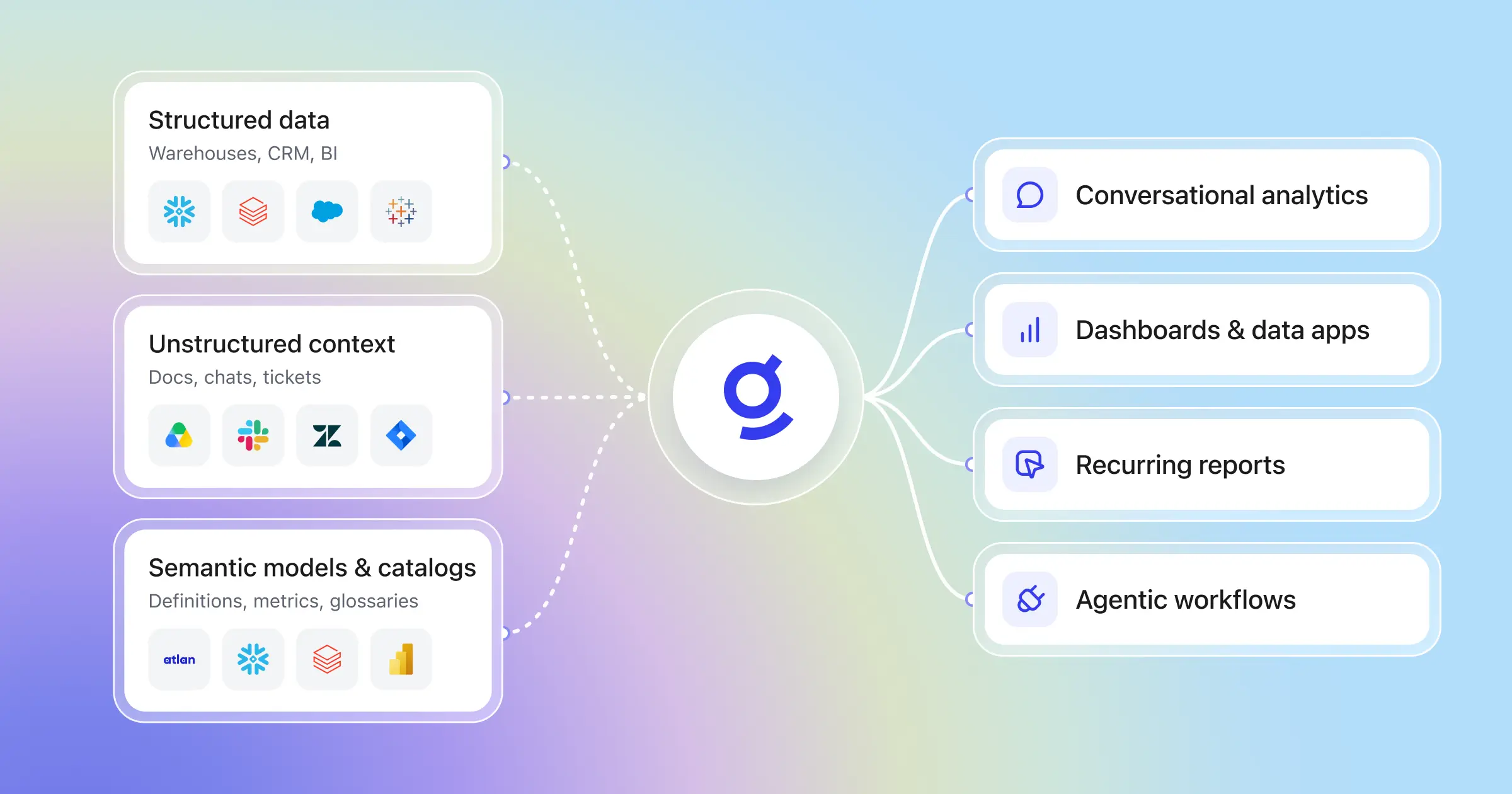
These systems connect to 100+ enterprise applications while maintaining strict security permissions. Whether information lives in Slack, email, cloud storage, or specialized databases, AI creates a unified access point. Importantly, permissions remain intact—employees only see what they're authorized to access, preventing data leaks while enabling discovery.
AI transforms scattered data across emails, documents, conversations, and databases into accessible, actionable insights. The technology moves beyond simple retrieval to provide synthesized answers with citations and context, turning hours of searching into seconds of finding.
How AI is transforming traditional knowledge management
Legacy knowledge management relied on manual tagging, rigid taxonomies, and siloed repositories. These systems required constant maintenance and often failed when employees couldn't remember the exact location or naming convention for needed information.
AI automates content classification and creates a knowledge graph of dynamic connections between related information. Instead of forcing data into predetermined categories, machine learning identifies patterns and relationships that humans might miss. A support ticket about a product bug automatically connects to relevant engineering documentation, feature specifications, and previous customer issues—without manual intervention.
Intelligent search platforms now understand organizational context and user roles to deliver personalized results. The same search query returns different results for different teams, ensuring relevance. A product manager searching for "roadmap" sees strategic planning documents, while an engineer sees technical implementation timelines.
Machine learning continuously improves search relevance based on user interactions and feedback. Every click, every document opened, and every query refinement teaches the system about your organization's unique language and priorities. Over time, search quality typically improves by 20% through this self-learning process.
AI eliminates the need for employees to remember where information lives or navigate complex folder structures. Knowledge becomes democratized—accessible to everyone who needs it, regardless of their familiarity with internal systems.
Real-time indexing ensures the most current information surfaces first, reducing outdated content issues. When policies update or projects evolve, employees automatically see the latest version without hunting through revision histories.
The evolution from search to intelligent reasoning
From basic retrieval to RAG
Retrieval Augmented Generation (RAG) combines search capabilities with large language models, creating a powerful synthesis of finding and understanding. Instead of just listing documents, RAG systems comprehend content and generate coherent answers.
RAG systems find relevant information and generate comprehensive, contextual answers. When asked "How do we handle customer refunds?", the system doesn't just point to the policy document—it extracts the specific process, summarizes key points, and provides step-by-step guidance.
This approach grounds AI responses in actual company data, reducing hallucinations. Unlike general-purpose AI that might invent plausible-sounding but incorrect information, RAG ensures every answer traces back to verified sources within your organization.
Permissions and security controls ensure users only see information they're authorized to access. The AI respects existing data governance, maintaining confidentiality while maximizing knowledge sharing.
The system plans queries, retrieves data, and generates responses with proper citations. Users can verify answers and dive deeper into source materials when needed, building trust in AI-generated insights.
The rise of agentic reasoning
Agentic AI breaks down complex requests into multiple actionable steps. When asked to "prepare a competitive analysis," the system doesn't just search—it identifies competitors, gathers recent updates, analyzes strengths and weaknesses, and synthesizes findings into actionable insights.
These systems self-reflect and adapt their approach based on results. If initial searches don't yield sufficient information, agents reformulate queries, explore related topics, and piece together answers from multiple sources.
Agents use various tools including search, analysis, and workflow automation. They might pull sales data, analyze trends, search for market reports, and compile everything into a comprehensive response—work that previously required hours of manual effort.
Architecture improvements show 24% better response relevance with agentic reasoning compared to simple retrieval. The ability to think through problems, rather than just fetch information, marks a fundamental advancement in AI capabilities.
Specialized agents handle repetitive tasks while humans focus on strategic work. Customer service agents draft responses using company knowledge, HR agents answer policy questions, and engineering agents help debug issues—all while learning from human feedback to improve over time.
Key benefits driving workplace transformation
The impact of AI-driven knowledge discovery extends far beyond time savings, though those alone justify adoption. Employees save hours weekly by finding information in seconds instead of minutes, reclaiming up to 20% of their workweek for higher-value activities.
Knowledge silos dissolve as AI connects information across departments and systems. Marketing teams discover engineering insights, sales accesses customer service patterns, and executives see ground-level realities—all through natural language queries. In fact, Stanford University research found that tasks previously requiring 90 minutes could be completed in just 30 minutes using AI assistance, representing a threefold improvement in task efficiency. Programmers using AI tools completed 126% more projects per week compared to control groups.
Team collaboration with AI improves through shared context and instant access to collective knowledge. Instead of repeatedly answering the same questions or searching for the same documents, teams build on each other's work seamlessly.
New employees onboard faster with immediate access to institutional knowledge. Rather than spending months learning where information lives and who knows what, they can be productive from day one. The typical 19-month journey to full productivity can be cut dramatically.
Decision-making accelerates with data-driven insights readily available. Leaders no longer wait for reports or rely on incomplete information. Real-time access to organizational knowledge enables faster, more informed choices.
Innovation increases as employees spend less time searching and more time creating. When finding information becomes effortless, mental energy shifts to problem-solving, creativity, and strategic thinking.
Critical technologies reshaping knowledge work
Multimodal AI Capabilities
Modern AI systems process text, images, audio, and video content simultaneously. This multimodal approach reflects how humans naturally consume information—through various formats and channels.
Visual information in presentations and diagrams becomes searchable and analyzable. Charts embedded in PDFs, architectural diagrams, and even handwritten whiteboard notes enter the searchable knowledge base.
Voice queries and audio content transcription expand accessibility. Employees can ask questions verbally while commuting or walking, and recorded meetings become searchable knowledge assets.
Cross-format understanding enables richer, more complete answers. AI might combine insights from a video presentation, email thread, and spreadsheet to provide comprehensive responses that no single source could offer.
Advanced language models and context windows
Expanded context windows allow AI to process entire documents or conversation histories. Modern systems can analyze contracts, technical specifications, or lengthy email chains without losing important details.
Models understand nuanced business terminology and company-specific language. They learn that "Project Titan" refers to your product launch, not Greek mythology, and adapt to industry jargon and internal acronyms.
Multilingual capabilities break down language barriers in global organizations. Employees can search in their preferred language and receive translated content from any source, fostering truly international collaboration.
Improved reasoning capabilities enable complex problem-solving support. AI doesn't just find information—it helps analyze options, identify patterns, and suggest solutions based on organizational knowledge.
Enterprise-grade security and governance
AI systems respect existing access controls and permissions. Integration happens at the infrastructure level, ensuring security isn't an afterthought but a foundational element.
Data sensitivity labels and classification systems integrate seamlessly. Confidential information remains protected while still being discoverable by authorized personnel.
Audit trails track information access and usage for compliance. Organizations maintain complete visibility into how knowledge flows through AI systems, satisfying regulatory requirements.
Encryption and secure processing protect confidential information. Data remains encrypted in transit and at rest, with AI processing happening within secure environments that meet enterprise standards.
Implementation strategies for organizations
Success with AI-driven knowledge discovery requires thoughtful planning and execution. Start by mapping current knowledge repositories and identifying pain points. Where do employees struggle most to find information? Which processes could benefit most from AI assistance?
Establish clear governance policies before deployment. Define what data AI can access, how it should handle sensitive information, and who oversees the system. Strong governance prevents problems before they arise.
Focus on high-impact use cases that demonstrate immediate value. Perhaps customer service could resolve tickets faster, or sales could access competitive intelligence more easily. Quick wins build momentum and justify broader rollout.
Build a network of champions across departments to drive adoption. These advocates understand their teams' needs and can translate AI capabilities into practical benefits. Their enthusiasm proves contagious.
Invest in comprehensive training programs that go beyond basic features. Employees need to understand not just how to use AI, but how to think differently about knowledge work. The goal is building AI fluency, not just familiarity.
Measure baseline metrics to quantify productivity improvements. Track time spent searching, employee satisfaction, and business outcomes. Concrete data validates the investment and guides optimization.
Create feedback loops to continuously improve AI performance. Regular user input helps refine search algorithms, identify gaps in knowledge coverage, and prioritize new features.
Ensure IT infrastructure can support real-time processing demands. AI-driven systems require robust connectivity, adequate computing resources, and scalable architecture to deliver instant results.
Preparing your workforce for AI-powered knowledge discovery
Building Essential Skills
The shift to AI-powered knowledge work demands new competencies across the organization. Employees need training in effective prompt engineering and query formulation. Knowing how to ask questions that yield useful results becomes as important as knowing the answers.
Critical thinking skills become crucial for evaluating AI-generated insights. Employees must assess whether responses make sense in context, identify potential biases, and know when to dig deeper.
Data literacy helps workers understand and interpret AI recommendations. Basic statistical knowledge and the ability to spot anomalies ensure AI augments rather than replaces human judgment.
Change management programs address concerns and build confidence. Many employees worry about job security or feel overwhelmed by new technology. Proactive communication and support ease the transition.
Regular skill assessments identify gaps and training needs. As AI capabilities evolve, so must workforce competencies. Continuous learning becomes embedded in organizational culture.
Creating an AI-ready culture
Cultural transformation proves as important as technical implementation. Leadership must model AI usage and champion its benefits. When executives actively use AI tools and share success stories, adoption accelerates throughout the organization.
Encourage experimentation and learning from failures. Not every AI application will succeed immediately. Organizations that treat setbacks as learning opportunities progress faster than those demanding perfection.
Recognize and reward innovative uses of AI tools. Celebrate employees who find creative applications or achieve significant productivity gains. Public recognition motivates others to explore possibilities.
Foster collaboration between technical and business teams. AI success requires both technological expertise and domain knowledge. Cross-functional partnerships yield the most impactful solutions.
Address privacy and job security concerns transparently. Be honest about AI's impact on roles while emphasizing how it enhances rather than replaces human work. Clear communication builds trust.
Celebrate success stories to build momentum. Share concrete examples of how AI helped teams achieve goals, solve problems, or serve customers better. Real stories resonate more than abstract benefits.
The future landscape of workplace knowledge
The trajectory of AI in knowledge discovery points toward even more transformative changes. AI will increasingly anticipate information needs before queries are made. Predictive systems will surface relevant documents as employees begin new projects or prepare for meetings.
Autonomous agents will handle routine knowledge tasks independently. They'll update documentation, route questions to experts, and maintain knowledge bases without constant human oversight.
Personalized AI assistants will learn individual work patterns and preferences. Each employee will have a customized AI partner that understands their role, projects, and information needs intimately.
Integration with enterprise AI resources will deepen organizational intelligence. Knowledge systems will connect with predictive analytics, process automation, and decision support tools, creating comprehensive AI ecosystems.
Real-time translation and cultural context will enable truly global collaboration. Language barriers will disappear as AI provides not just translation but cultural interpretation, ensuring ideas transcend borders effectively.
Predictive analytics will identify knowledge gaps before they impact productivity. Organizations will see where information is missing, which teams need training, and what knowledge should be captured proactively.
Continuous learning systems will keep pace with rapidly changing business environments. As markets shift and technologies evolve, AI will automatically update its understanding, keeping organizational knowledge current and relevant.
The future of work isn't about AI replacing human intelligence—it's about amplifying it. By unlocking the vast knowledge within our organizations, AI enables us to work smarter, collaborate better, and innovate faster. The organizations that embrace this transformation today will define the competitive landscape of tomorrow.
Ready to experience the future of workplace intelligence? Request a demo to explore how Glean and AI can transform your workplace and see firsthand how we can help you unlock the full potential of your organization's knowledge.



.jpg)

.png)