




Can AI agents replace human support? A 2025 perspective
Customer service stands at a critical juncture where artificial intelligence promises to revolutionize how businesses interact with their customers. The rapid advancement of AI agents — from simple chatbots to sophisticated systems capable of understanding context and emotion — has sparked intense debate about the future role of human support agents.
Companies worldwide are racing to implement AI solutions that can handle everything from basic inquiries to complex problem-solving, driven by customer demands for instant, accurate responses. Yet beneath the excitement lies a fundamental question: can these digital assistants truly replicate the nuanced understanding and empathy that human agents bring to customer interactions?
The answer shapes not just technology strategies but the very nature of customer relationships in the digital age. As businesses navigate this transformation, they must balance the efficiency gains of AI with the irreplaceable value of human connection — a challenge that defines the next era of customer service.
What Are AI agents in customer support?
AI agents represent a fundamental shift from traditional automated response systems to intelligent, adaptive solutions that understand and respond to customer needs with remarkable sophistication. These systems leverage natural language processing, machine learning algorithms, and deep contextual understanding to engage customers in ways that feel natural and productive. Unlike their predecessors — rigid chatbots confined to decision trees and pre-written scripts — modern AI agents interpret intent, recognize patterns, and adapt their responses based on each customer's unique history and current situation.
The technology behind these agents extends far beyond simple keyword matching. Today's AI agents employ transformer-based language models like BERT to understand the full context of customer queries, grasping subtle meanings and implications that earlier systems missed entirely. They operate seamlessly across multiple channels: voice calls, web chat, email, SMS, and social media platforms, maintaining conversation context as customers switch between touchpoints. This omnichannel capability ensures customers never have to repeat themselves or start over when moving from one communication method to another.
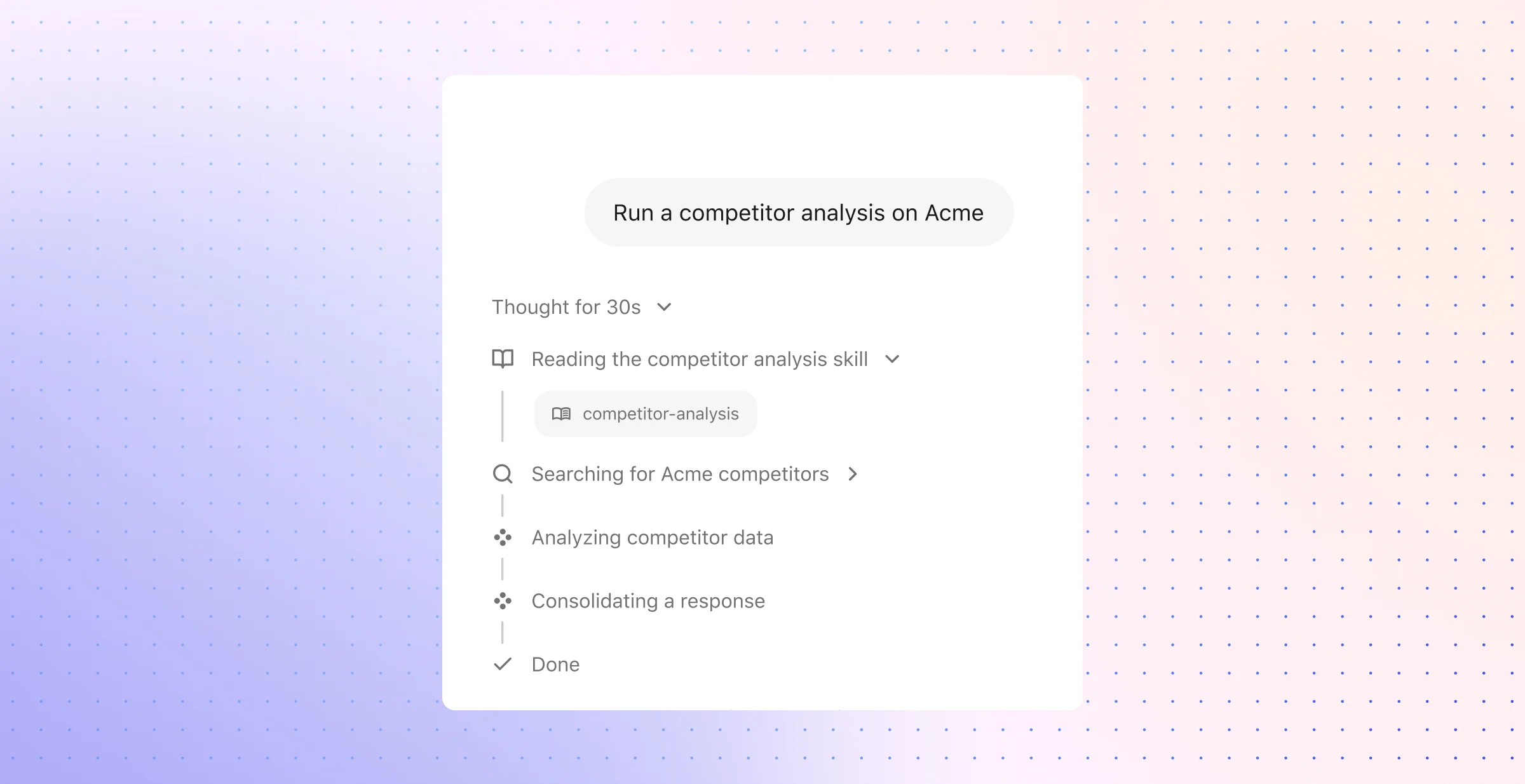
What truly sets modern AI agents apart is their autonomous workflow capabilities. These systems don't just answer questions; they take action. An AI agent can:
The continuous learning aspect transforms these agents from static tools into evolving team members. Through reinforcement learning and regular model updates, AI agents improve their accuracy with each interaction. They identify new question patterns, learn company-specific terminology, and adapt to changing customer preferences. This self-improvement cycle means that an AI agent deployed today will be measurably more effective six months later, having learned from thousands of real-world conversations without explicit reprogramming.
Current state of AI in customer service
The landscape of customer service continues to evolve, with AI becoming a cornerstone of support systems across industries. Leaders in customer service anticipate that AI chatbots will be essential within the next three years, significantly enhancing efficiency. These systems have already shown their value: reducing response times and streamlining interactions.
Beyond improving speed, AI now manages a substantial portion of customer service tasks, allowing human agents to focus on more intricate challenges. In fact, AI agents can now handle between 40–60% of business-to-business support tickets entirely autonomously, with some advanced implementations achieving automation rates reaching 50 percent of incoming customer queries. However, per-interaction costs show a twelve-fold difference: $0.50 for AI-handled conversations compared to $6.00 for human agent interactions. This shift has led to increased customer satisfaction, as businesses leverage AI to provide quicker resolutions and more personalized experiences. The focus is on enhancing service quality rather than merely accelerating processes.
Industries like retail and finance are deploying AI to automate routine inquiries, such as order tracking and account management. This strategic use of AI not only lowers operational expenses but also enables companies to allocate resources more effectively. By integrating intelligent systems, businesses create a dynamic service environment that supports both efficiency and customer satisfaction.
Benefits of AI agents in customer support
Operational efficiency
AI agents transform customer support by streamlining operations. They provide continuous availability, ensuring customer queries receive prompt attention without the constraints of shift scheduling. These systems adeptly manage vast volumes of interactions, delivering swift responses that minimize delays.
Intelligent ticket handling further optimizes efficiency by categorizing and addressing issues based on their urgency. This ensures that critical problems are prioritized, maintaining a balanced flow of service. Consistent interaction quality fosters trust and reliability, enhancing overall customer satisfaction.
Data-driven insights
AI agents offer profound insights that empower businesses to refine their support strategies. By analyzing customer sentiment in real-time, they detect dissatisfaction early, allowing for rapid intervention. Their ability to identify patterns helps preempt potential issues, enabling proactive solutions.
Detailed analytics on customer behavior provide a comprehensive view of preferences and needs. Leveraging historical data, AI agents offer predictive support, tailoring interactions to anticipate customer demands. Continuous updates to the knowledge base from resolved cases ensure that information remains accurate and beneficial, further enhancing support quality.
Integrating AI into customer support not only boosts operational effectiveness but also enriches the customer experience, creating a responsive and adaptive service environment.
Limitations of AI in customer support
Emotional intelligence gap
AI agents, despite their sophistication, often miss the mark when it comes to understanding human emotions fully. They lack the intrinsic ability to truly connect with customers in distress, which can result in interactions that feel cold or detached. This limitation becomes apparent in situations where emotional intelligence is crucial for resolving customer issues. Nearly one in five consumers who have used AI for customer service saw no benefits from the experience, representing a failure rate almost four times higher than for AI use in general. Consumers rank AI applications for customer service among the worst for convenience, time savings, and usefulness.
Complex issues requiring creative problem-solving are difficult for AI to navigate. Misinterpretations can occur with vague or poorly defined queries, highlighting limitations in processing ambiguous information. Research indicates that chatbots can hallucinate up to 27 percent of the time, generating plausible but false information with high confidence. Highly visible examples include Air Canada's chatbot providing false information about bereavement discounts and McDonald's AI drive-through systems making errors like adding bacon to ice cream orders. Additionally, managing sensitive customer data raises ongoing security and privacy concerns, emphasizing the need for robust safeguards.
Technical constraints
The effectiveness of AI systems depends significantly on the data they are trained with—outdated or biased data can lead to ineffective responses. Handling unique or unforeseen scenarios often proves challenging, as AI may lack the flexibility to adapt outside predefined parameters.
Complex issues requiring creative problem-solving are difficult for AI to navigate. Misinterpretations can occur with vague or poorly defined queries, highlighting limitations in processing ambiguous information. Additionally, managing sensitive customer data raises ongoing security and privacy concerns, emphasizing the need for robust safeguards.
The human element: What AI can't replace
While AI excels in efficiency, certain aspects of customer service require a distinctly human touch. A nationally representative survey of 1,011 U.S. consumers found that 93.4% prefer interacting with a human over AI for customer service. Additionally, 49.6% of respondents said they would cancel a service over AI-driven customer service without human alternatives, and 41.5% would pay extra for access to human representatives. Navigating complex scenarios often demands the nuanced understanding and adaptability that only humans can provide. In situations with significant emotional or financial implications, human agents bring a level of insight and empathy that AI cannot match.
While AI excels in efficiency, certain aspects of customer service require a distinctly human touch. Navigating complex scenarios often demands the nuanced understanding and adaptability that only humans can provide. In situations with significant emotional or financial implications, human agents bring a level of insight and empathy that AI cannot match. Gartner research predicts that no Fortune 500 company will have fully eliminated human agents from their service operations by 2028, despite widespread investment in AI-powered systems. By 2027, half of companies currently planning to reduce their service workforce significantly because of AI will abandon these plans after discovering that customer interaction complexity makes a fully agentless model unworkable.
Cultivating long-term relationships with key customers involves more than just fulfilling requests. Human agents possess the ability to connect personally, recognizing individual needs and preferences that foster loyalty. When managing critical issues that could influence brand reputation, human discretion and experience ensure sensitive handling and thoughtful solutions.
Offering support during challenging times involves more than providing answers. The ability to adjust communication to cultural contexts and individual sensitivities shows the genuine care that builds trust. In unique situations requiring personalized judgment, humans offer the awareness and flexibility needed to address customer concerns effectively, ensuring that service remains personal and meaningful.
Collaborative intelligence: the future model
Training and supervision
Human expertise remains vital in guiding AI systems. Training involves curating datasets that embody effective communication and align with brand values. This process ensures AI tools operate not only with efficiency but also with a tone that resonates with customers.
Ongoing oversight ensures AI functions ethically and adapts to new challenges. Regular updates allow systems to respond to evolving customer needs and feedback. Human involvement in reviewing AI interactions guarantees quality and identifies areas for enhancement, fostering continuous improvement.
Augmentation strategy
The integration of AI and human agents is reshaping customer service. AI efficiently manages routine queries, allowing human agents to focus on tasks requiring deeper analysis and empathy. This synergy maximizes resources and elevates service quality.
Real-time AI support empowers agents with contextual information, enabling them to deliver precise and timely solutions. Automated processes such as follow-up scheduling and task summarization reduce administrative tasks, enhancing overall productivity.
Smooth transitions between AI and human agents ensure customers receive the right level of support. This collaborative approach highlights how AI and human capabilities can be combined to create a responsive and empathetic service experience.
Industry implementation examples
Retail sector
To build a successful AI-human support strategy, start by analyzing customer interactions to identify where automation can make the most impact. Focus initially on automating repetitive inquiries such as order statuses and basic account updates, which can enhance efficiency and allow human agents to engage in more complex tasks. Keep in mind that only 26% of companies have developed the necessary capabilities to move beyond AI proofs of concept and generate tangible value, with 74% yet to show tangible value; just one in four AI projects delivers the ROI it promised, and only 16% are scaled across the enterprise.
Financial services
In financial services, banks like DNB are transforming their customer interactions with AI-first strategies. By automating routine tasks such as checking account balances and transaction histories, AI frees human agents to focus on delivering detailed financial advice and managing sensitive issues. This integration of AI not only enhances operational efficiency but also fosters a more personalized service experience for clients.
Insurance industry
The insurance sector benefits significantly from AI, as seen with Allianz's "Allie" chatbot, which efficiently manages a wide array of customer queries, including policy adjustments. With AI handling the majority of interactions outside traditional business hours, customers receive timely support when they need it most. This approach has contributed to an upward trend in customer satisfaction, as evidenced by a steady increase in Net Promoter Scores, reflecting a commitment to quality service.
Building an effective AI-human support strategy
Implementation roadmap
To build a successful AI-human support strategy, start by analyzing customer interactions to identify where automation can make the most impact. Focus initially on automating repetitive inquiries such as order statuses and basic account updates, which can enhance efficiency and allow human agents to engage in more complex tasks.
Choosing the right AI systems is essential for seamless integration with existing infrastructure. Prioritize platforms that offer robust compatibility with current CRM tools to ensure a unified approach to customer data. Begin with targeted pilot programs to test AI applications in specific areas, allowing for refinement and adjustment based on measured outcomes and customer insights.
Best practices for balance
Balancing AI and human support involves strategic role allocation. AI should handle straightforward requests, freeing human agents to tackle situations that require empathy and nuanced understanding. Clearly defined escalation processes ensure customers receive the appropriate level of care and attention.
Agents need training to effectively use AI tools as part of their workflow. Understanding when to intervene and how to leverage AI-provided data can significantly enhance service quality. Maintaining a coherent brand voice across AI and human interactions is key to delivering a consistent customer experience.
Regular assessments of AI effectiveness and customer feedback are crucial for ongoing improvement. By continuously evaluating performance metrics, businesses can ensure that both AI systems and human teams remain aligned with customer expectations and technological advancements.
The future of customer support isn't about choosing between AI and human agents — it's about creating intelligent partnerships that elevate both. As we move forward, the most successful organizations will be those that thoughtfully integrate AI capabilities while preserving the irreplaceable value of human connection and expertise. Ready to see how AI can enhance your team's capabilities? Request a demo to explore how Glean and AI can transform your workplace.