







Every enterprise wants agents that do more than answer questions — agents that take action, learn from what they do, and keep critical work moving without turning into a compliance headache. At Glean:GO, we're making that possible for everyone by unveiling a set of key improvements to Glean Agents that will make them more productive, easier to build, and even better partners for your enterprise.
Independent agents take on real work
Independent agents don't just answer a prompt — they own a workflow. Each one gets its own identity and provisioned access, so you can see exactly what it touched and why. It builds memory of your standard operating procedures from your company context, then gets sharper with every run. And it's proactive: it acts without being asked, and pulls in the right person only when a real decision is needed.
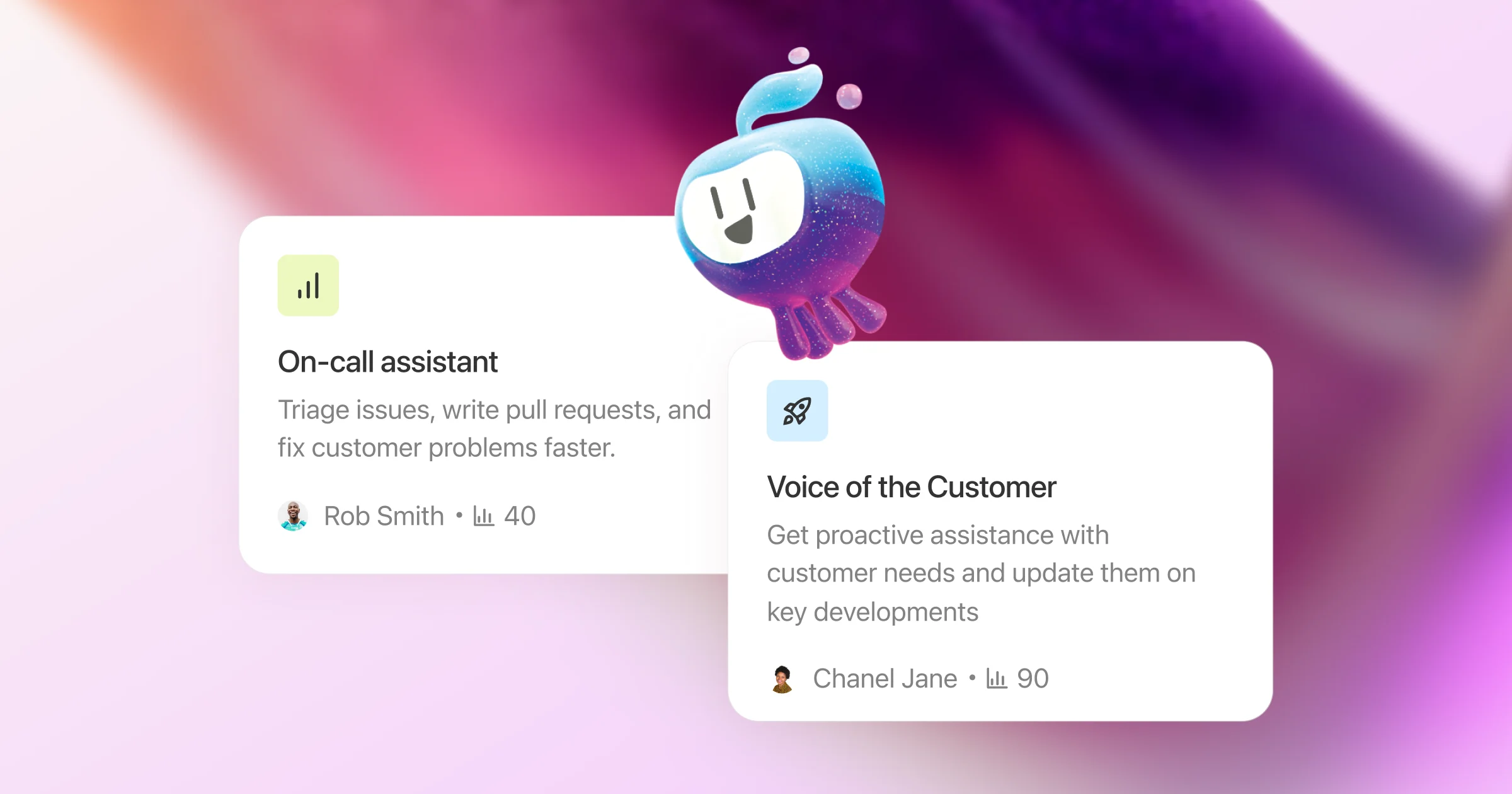
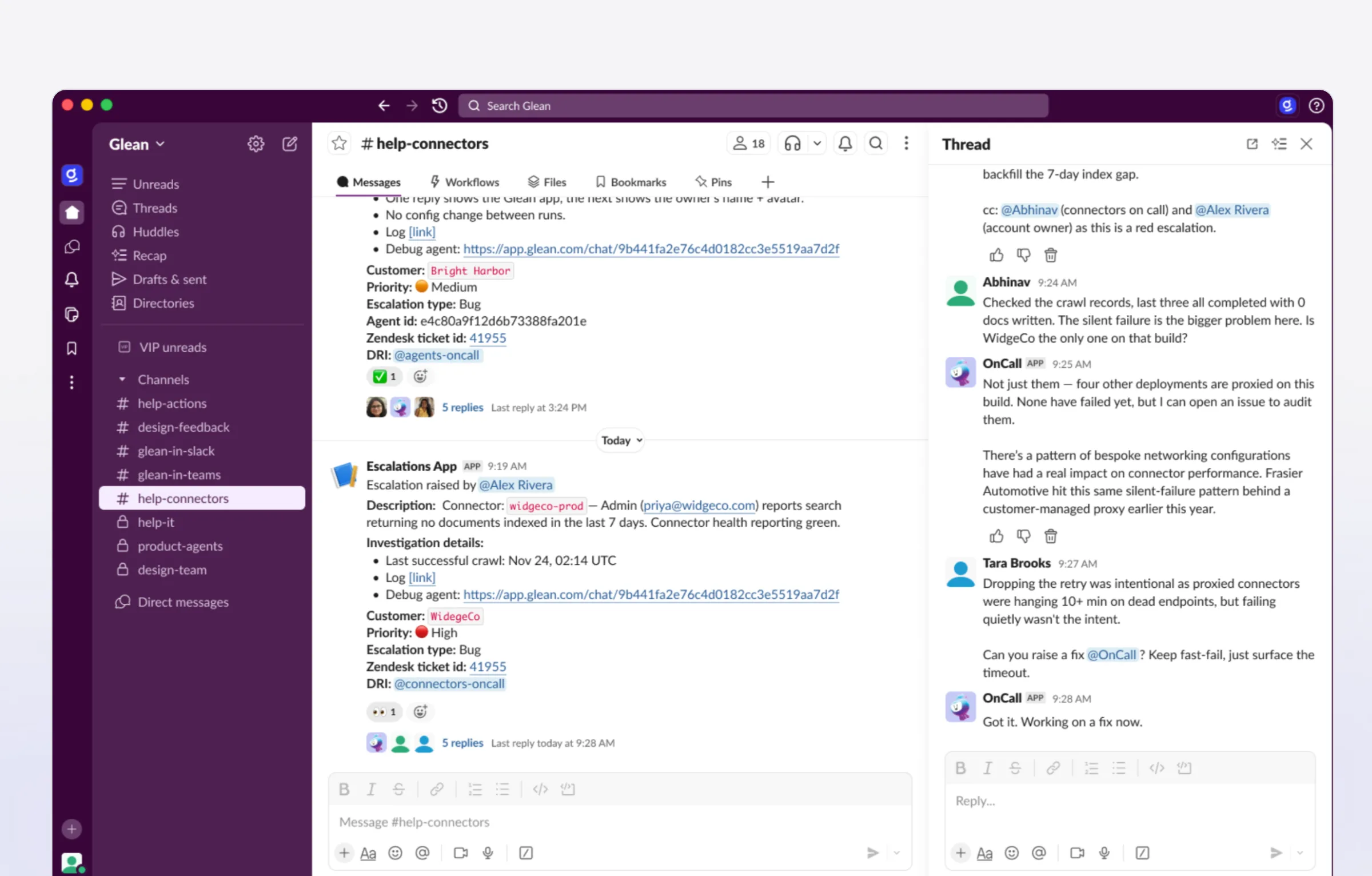
Our engineering on-call assistant was our first independent agent — reading escalations, investigating across Slack, Jira, and GitHub, and drafting fixes before a human even opens the ticket. At GO, we're expanding that lineup with new independent agents for on-call management, voice-of-the-customer synthesis, and sales — alongside agent identity, now in public beta, which lets any agent act under its own scoped credentials across more than a dozen connected tools.
Improved agent building
Agents are also now easier to build without leaving the tools engineers already live in. You can now build Glean agents in your favorite coding tools like Claude Code and Cursor, so builders can author, preview, and iterate on agents directly from their preferred tooling. Agents can be synced with Glean through Git, so builders can continue to iterate and collaborate where they want, while admins can observe and manage these agents like any others on the Glean platform.
We also now support version checkpoints and collaborative editing, so teams can iterate without fear of breaking a production agent. We've also shipped support for Agent2Agent (A2A) interoperability, so Glean agents can coordinate directly with agents built on other platforms.
Agent evals: ship with confidence
Shipping an agent used to mean finding out how it behaves after it was already live. Built-in agent evals — now in private beta — let builders understand how an agent will behave before publishing it. Glean can create eval sets to test an agent across a wide range of scenarios, enabling you to confirm it behaves properly before rolling it out to a team or company.
Governance that keeps up with autonomy
None of this matters if you can't trust AI at scale. Our new agent scanning feature (currently in beta) will review agent definitions when published — instructions, tools, data sources, sharing settings — and flag issues such as over-provisioned write tools or vague write instructions, with clear severity, gating anything risky behind moderator approval before it goes live.
New agent governance policies in Glean also let admins combine multiple rule types — access, behavior, usage limits — into a single policy scoped to specific groups or agents. Separate policies can be tested comprehensively before broad rollout. And the skills agents rely on get the same rigor: scanned for risk before they run and versioned with one-click rollback, so quality is enforced continuously, not configured once.
Where this is headed
That's where Glean Agents stands today: agents that act independently, get built faster, and stay governed as they scale. We'll be showing it all live at Glean:GO — see you there.
