







7 key benefits of mobile messaging integrations for AI support
Mobile messaging has become the default communication layer for modern work. With SMS open rates near 98% and most messages read within minutes, these channels command more attention than email, support portals, or any other digital touchpoint available to enterprise teams.
AI-powered support has matured well beyond simple chatbots. Today's enterprise AI platforms combine conversational intelligence with agentic capabilities — meaning they can not only answer questions but also take actions across connected systems, all while respecting organizational permissions and security requirements.
The convergence of these two forces — ubiquitous mobile messaging and increasingly capable AI — creates a powerful opportunity for organizations to deliver faster, smarter, and more accessible support. This article breaks down seven key benefits of mobile messaging integrations for AI support and offers a practical framework for adoption.
What are mobile messaging integrations for AI support?
Mobile messaging integrations connect AI-powered support systems directly to the channels employees and customers already use every day — SMS, in-app chat, and workplace messaging tools. Rather than force people to navigate separate portals, log into standalone dashboards, or submit tickets through disconnected systems, these integrations deliver AI-driven answers, actions, and workflows right inside the conversation thread where communication naturally occurs.
At their core, these integrations combine the benefits of conversational AI with the immediacy and familiarity of mobile messaging. The AI layer processes natural language queries, retrieves relevant information from connected knowledge sources, and generates context-aware responses — all within a persistent message thread that accumulates context over time. This persistent thread is what separates integrated messaging from traditional support channels; the AI doesn't start from scratch with every interaction. It builds on prior exchanges, understands who is asking, and tailors its response accordingly.
What sets integrated messaging apart from standalone chatbots
The distinction matters. A standalone chatbot lives on a single webpage or app screen, isolated from the broader communication ecosystem. An integrated mobile messaging solution operates within the tools teams already rely on, with a few critical differences:
- Organizational context: The AI draws on enterprise knowledge bases, documentation, and internal data — not just a scripted decision tree. It understands projects, teams, and terminology specific to the organization.
- Permissions-aware responses: Every answer respects existing access controls. An engineer and a sales rep can ask the same question in the same messaging channel and receive appropriately scoped responses based on what each person is authorized to see.
- Action beyond answers: Modern enterprise AI platforms — such as Glean — bundle assistant and agent capabilities together. Agents can file tickets, trigger approval workflows, pull data from connected systems, and execute multi-step tasks directly within the messaging thread. Support moves from passive Q&A to active resolution.
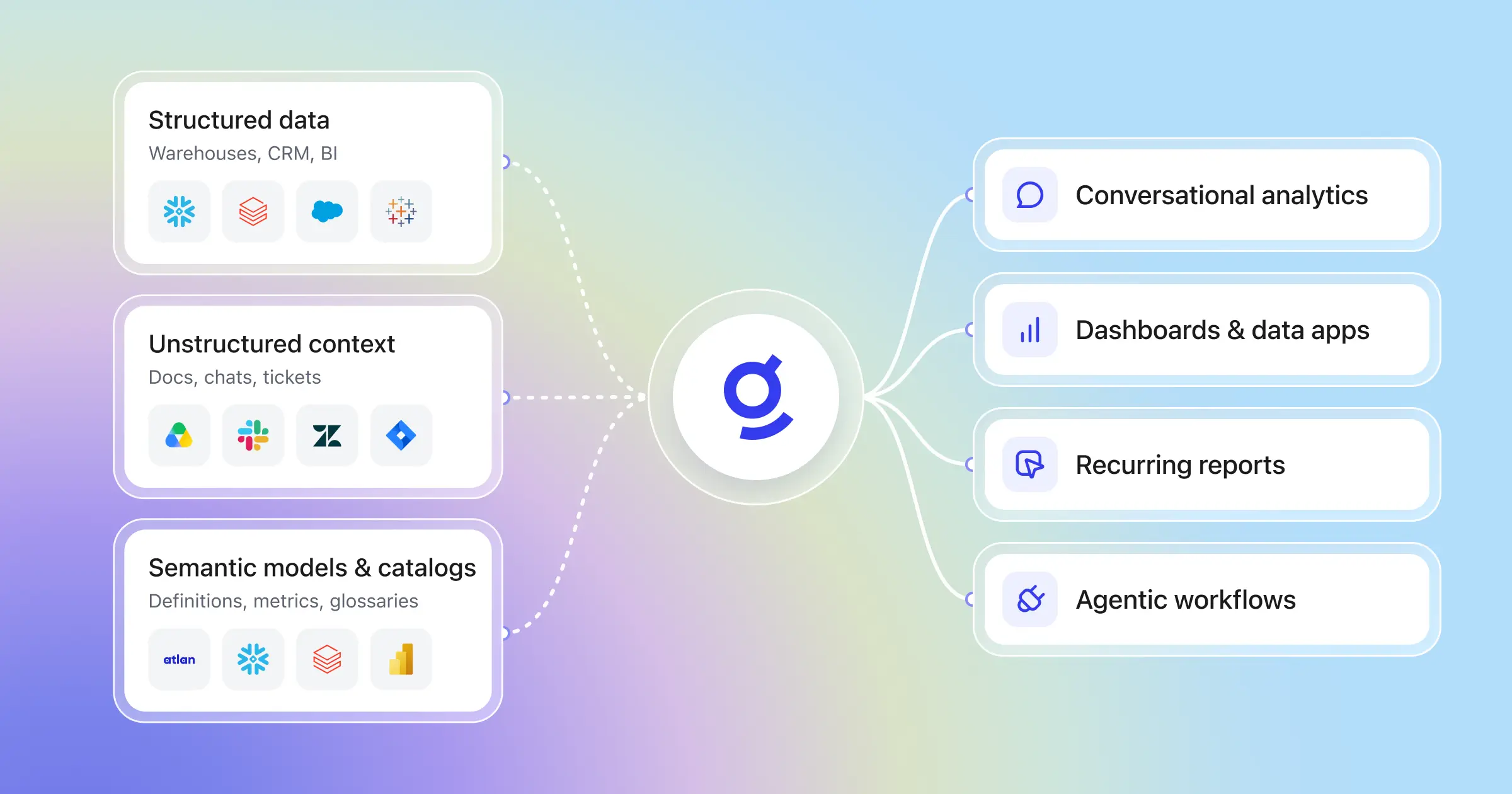
- Ecosystem integration: These solutions plug into the full stack of enterprise applications an organization already uses, from CRM and HRIS platforms to project management and documentation tools. The messaging channel becomes a unified surface for support that spans departments and systems.
The goal behind all of this is straightforward: meet people where they already are, with answers that arrive fast, stay accurate, and reflect the full context of the organization. For enterprise teams across IT, HR, sales, and customer service, that means fewer tool switches, less friction, and a support experience that fits naturally into the flow of work.
Why mobile messaging is a natural fit for AI-driven support
Attention and trust live in the inbox
Mobile inboxes capture attention in a way that email and web forms rarely match. Text messages tend to reach people fast, and they earn a response because they arrive in the same place as the conversations people treat as important.
That attention comes with built-in trust cues. A support message in a native inbox feels direct and personal, which helps AI support land with less skepticism and less hesitation.
Conversation matches how modern AI works
Conversational AI performs best with short exchanges that allow quick clarification and precise intent capture. Mobile messaging supports that pattern by default: a user states a need, the AI requests one missing detail, then it returns an answer or the next step without a multi-page workflow.
Rich mobile standards such as RCS add structure without friction—verified senders, quick-reply buttons, and rich cards. Those elements reduce ambiguity, keep intent clear, and help AI deliver consistent service across common support paths such as account help, order updates, and appointment changes.
Persistent threads cut through tool friction and data overload
Support rarely fits into a single turn. Message threads keep a running record of the issue—what the user shared, what the AI checked, and which option the user chose—so follow-ups keep continuity even when time passes between replies.
For teams that juggle high volumes of requests, mobile messaging also reduces the overhead that comes from channel sprawl. Customer service research and field experience point to the same constraint: more data and higher expectations push support toward context-rich channels where AI can surface the right details once, carry them forward for the next step, and reduce repeat explanations across handoffs.
Faster response times and always-on availability
Instant answers plus “support apps and actions” in the same thread
Mobile messaging integrations put AI on the fastest path to a useful first response: the same channel employees already check constantly. That speed matters most for repeatable support work, where a correct answer plus a clear next step prevents a ticket from ever entering a queue.
Common requests that fit this model include:- Ticket status and ownership: AI returns the current state, the assigned owner, and the next milestone so the requester knows what will happen next.
- Policy and process lookups: AI pulls the precise excerpt that applies to the request, then adds the required steps (forms, approvals, deadlines) in plain language.
- Access and account recovery: AI guides identity checks, initiates the approved reset path, and confirms completion with minimal back-and-forth.
Always-on coverage that removes time-zone bottlenecks
AI support through mobile messaging enables true after-hours responsiveness without a “wait until business hours” gap. For distributed teams, that means fewer blocked releases, fewer stalled customer conversations, and fewer delays that cascade across regions.
The operational effect shows up fast:- Faster time-to-first-response on routine questions, with consistent tone and consistent policy language
- Less pressure on peak hours because a portion of requests receives resolution before the next shift starts
- More stable service levels during spikes, since AI can handle many conversations at once
Seamless handoff when AI hits a boundary
Some cases demand judgment, empathy, or access that automation should not assume. In those moments, the best systems shift to a human agent with a concise case brief—customer intent, key facts, what the AI already tried, and the strongest knowledge-base references—so the customer shares details once.
In practice, this handoff design improves two support outcomes:- Resolution speed: the agent starts with verified inputs and recommended next actions, not a blank page.
- Agent readiness: new team members rely on AI-curated references and consistent workflows, which reduces ramp time on unfamiliar issue types.
Personalized, context-aware interactions at scale
Personalization that comes from channel-native signals
Mobile inboxes produce high-intent signals that AI can use for precise support without extra form fields. RCS features—quick-reply buttons, rich cards, and carousels—turn vague requests into clear choices that an AI system can act on with speed and accuracy.
This type of context stays close to the moment of need. A single tap on “Reschedule,” “Refund,” or “Show me options” communicates intent more clearly than a long text description, which reduces misroutes and shortens the path to a correct response.
Relevance that shows up as tone, language, and consistency
Personalization at enterprise scale depends on more than data. It requires a response style that feels human, clear, and consistent across every support interaction—especially when AI handles the first line of contact.
Practical forms of context-aware response include:- Language match: Automatic support for multiple languages so global teams and customers receive help in the language they use day to day.
- Consistent service: Standard policy and process guidance across every interaction, which reduces conflicting answers across agents and shifts.
- Human-feel phrasing: Short, natural messages that read like a real support rep, which lifts trust and response rates in a channel that people treat as personal.
Feedback loops that improve precision without manual upkeep
Mobile messaging creates a direct measurement surface: open, reply, option selection, drop-off, and resolution signals show what works. AI can use those signals to refine which response patterns, prompts, and flows fit each issue type—without constant rework from support teams.
Two mechanisms matter most:1. Flow adaptation from micro-choices: Quick replies and structured options allow the system to adjust the next step based on what the user selects, not on what the system guesses.
2. Optimization toward outcomes: Response variants compete on real support outcomes—fewer follow-ups, faster closure, higher satisfaction—so the best-performing path becomes the default for similar cases.
Streamlined workflows and task automation
From free-form chats to structured support flows
Mobile messaging works best when it acts as a “thread-first” system of record: one ongoing conversation that holds onboarding, support, updates, and follow-ups in a single place. RCS capabilities such as verified senders, rich cards, and quick-reply buttons turn that thread into a guided workflow surface where users choose next steps with one tap instead of a long back-and-forth.
That structure gives AI a cleaner signal set than open-ended chat alone. It supports consistent execution for repeatable processes—status notifications, preference capture, simple triage—without the brittleness of forms and without the ambiguity that forces extra follow-up questions.
Agentic workflows: multi-step tasks with playbooks, checks, and artifacts
When a request spans multiple decisions, AI agents can follow a playbook-based approach: break the work into discrete stages, apply policy and tone guidance, then produce the artifacts a human team expects. The messaging thread supplies the checkpoints—confirmations, options, and clarifications—so each stage stays auditable and easy to review.
A practical automation chain often looks like this:
1. Scope the request: The agent extracts intent, urgency, and category from the first message; it asks one targeted clarification when a missing detail blocks progress.
2. Select the right playbook: The agent chooses an approved procedure and response style for the scenario (billing dispute, product defect, HR policy request) to keep service consistent across teams and shifts.
3. Produce ready-to-use output: The agent drafts the next customer message, an internal note, or a handoff brief with key facts and recommended next actions.
4. Confirm, log, and refine: The agent captures the user’s selection via quick replies, records outcomes for reporting, and supports A/B tests on message variants to improve completion rates over time.
High-impact automations that fit enterprise support
Well-designed agent templates focus on workflows that carry high volume, clear success criteria, and meaningful customer or employee impact. Mobile messaging supports these workflows especially well because it combines immediacy with a durable transcript for quality review and coaching.
- Preference and consent management: The agent captures notification preferences, language choice, and contact permissions through quick replies; it reduces opt-outs and prevents noisy, mis-timed outreach.
- Proactive issue containment: The agent sends outage notices, delivery exceptions, or policy-change updates in a trusted, verified thread; it adds structured next steps that reduce inbound volume.
- Support response drafting with tone control: The agent produces customer-ready replies that stay consistent with brand voice, then adapts tone when the user signals frustration or urgency.
- Smart routing with context signals: The agent tags the case with a clear problem statement and context summary; it routes to the right specialist based on topic and interaction cues, not a generic queue.
- Knowledge capture from real conversations: The agent converts repeated questions into draft help articles or internal FAQs, so new documentation reflects real demand instead of guesses.
- Quality and coaching hooks: The agent flags gaps—confusing steps, missing documentation, unclear policy language—based on patterns in message transcripts, which supports continuous improvement without survey dependence.
Reduced operational costs without sacrificing quality
Lower cost per contact through high-volume automation
Mobile messaging shifts a large share of support demand away from higher-cost, synchronous channels such as phone trees and live calls. Each interaction that stays in a text thread reduces agent minutes, telecom charges, and the operational overhead that comes with real-time staffing.
It also reduces the hidden cost of missed connections. SMS and rich mobile messages earn fast attention, so customers and employees confirm details, approve steps, or share required information without long delays that extend case age and drive repeat contact.
Cost gains that compound as the system learns
Cost improvement does not rely only on model accuracy; it also comes from reusable support design. Once a team defines a structured mobile flow—clear prompts, approved options, and a standard resolution path—that same flow can serve thousands of similar requests with minimal incremental effort.
A second compounding lever comes from less manual work around each case. Structured replies and predefined options allow automatic capture of key fields (issue type, device, location, priority), which reduces the time agents spend on case notes, form entry, and follow-up clarification.
Quality control that protects trust while costs fall
Quality holds when the channel reduces ambiguity, not when the system tries to “sound smart.” RCS features such as verified senders, rich cards, and quick replies make the request and next step explicit; they cut misinterpretation that leads to wrong actions, unnecessary refunds, or repeat troubleshooting.
AI also brings steadiness that human teams cannot guarantee at scale. It maintains a calm tone, follows the same approved steps, and avoids fatigue-driven shortcuts—especially valuable in high-volume support environments.
Budget shift from repetitive coverage to higher-value work
As volume moves to mobile self-service and guided flows, support budgets can move away from constant coverage and toward durable improvements: simpler policies, clearer customer communications, and fewer product or process defects that drive ticket volume.
That shift also reduces spend on parallel systems. A single, well-integrated messaging surface can replace a patchwork of portals, forms, and one-off inboxes that require separate administration, separate reporting, and separate upkeep.
Stronger data insights and continuous improvement
Messaging transcripts as a high-signal dataset
Mobile messaging creates a dependable source of first‑party support data: what people ask, what details they share, and which outcomes follow. Unlike web analytics, this data comes from explicit conversation intent—often paired with identity, consent, and channel metadata that support reliable attribution.
This dataset also supports stronger operational controls. Teams can use message histories for quality review, policy adherence checks, and audit workflows that require proof of what the customer or employee saw and approved at each step.
Pattern detection that exposes friction across teams
A single messaging surface makes trends visible across departments that otherwise operate in separate queues and tools. With enough volume, patterns emerge that point to root causes—product gaps, unclear service boundaries, or process debt that support teams absorb day after day.
Signals that tend to prove useful in enterprise environments include:- Handoff reason drift: Shifts in why AI routes to humans (complexity, identity checks, exception handling) highlight where automation stops short and where better guardrails or workflow design can help.
- Clarification density: A rise in “one more question” loops indicates ambiguous intake, missing required fields, or poor categorization for a specific request type.
- Channel-specific failure modes: A flow that succeeds in web chat but fails in SMS often points to message length, link reliance, or poor use of quick replies and rich cards.
- Coverage gaps by language or region: Consistent escalation from a specific locale can signal translation issues, regulatory variance, or missing local procedures.
- Repeated identity or consent friction: A high rate of stalled verification suggests the need for a simpler, approved verification path that fits mobile behavior.
- Security anomalies: Unusual spikes in account-access requests, repeated verification failures, or suspicious phrasing patterns can support fraud detection and tighter escalation rules.
Closed-loop knowledge that improves with real demand
Support-oriented AI can “close the loop” without a heavy documentation project by turning repeated requests into standardized service assets—structured conversation flows, approved message templates, and consistent routing rules. This approach reduces variance across teams and shifts, while it preserves the flexibility of conversational support.
A practical loop that teams use looks like this:1. Cluster real requests into intents: Group messages by purpose (reset access, change address, cancel order) and capture the minimum set of fields that the workflow requires.
2. Define an outcome metric: Use operational measures such as containment with correct resolution, time to completion, or a business metric such as Value per Conversation for that workflow.
3. Build a reusable mobile flow: Create quick replies, rich-card steps, and concise templates that fit SMS or RCS constraints and match the approved service tone.
4. Run controlled tests: Compare variants of prompts, option sets, and escalation thresholds to see which path produces fewer exceptions and cleaner completions.
5. Promote the best pattern into the standard library: Treat proven flows as shared building blocks across IT, HR, and customer support so improvements propagate without retraining every team.
How to get started with mobile messaging integrations for AI support
Choose one workflow that hurts enough to measure
Select a workflow where mobile inbox behavior offers a clear advantage: fast reads, short replies, and easy confirmation. Appointment changes, delivery exceptions, password unlocks, and onboarding checkpoints fit well because they depend on tight back-and-forth, not long-form explanation.
Define the outcome in concrete terms before any build work: confirmation received, task completed, or exception routed to the right queue with the required details captured.
Map the current path end to end—then remove steps on purpose
Document the real experience from the user’s point of view, with timestamps. Focus on delays, context loss, and “channel hops” where someone switches from email to a portal to a phone call just to finish one request.
A lightweight map stays enough:- Moments of silence: where the user waits with no feedback; these gaps drive repeat pings and duplicate tickets.
- Re-entry points: where a user restarts the request because the prior interaction does not persist across tools.
- Decision bottlenecks: where a team asks for one missing detail after a long wait; these steps create the highest avoidable cycle time.
Use this map to redesign the first flow as a sequence of short confirmations rather than a single “submit and wait” event.
Connect the right systems, with guardrails that match enterprise reality
Treat the messaging program as a customer- and employee-facing data pipeline. Establish consent, retention, and verification rules first, then connect only the minimum set of systems needed for the chosen workflow.
Three setup tracks keep scope tight:- Conversation governance: opt-in and opt-out behavior, message frequency limits, and retention policy for transcripts; these choices shape trust as much as response quality.
- Verification and safety checks: a defined step for sensitive requests (account access, address changes, refunds) so the AI never assumes identity from a phone number alone.
- Operational hooks: the specific create/update actions the workflow requires (case creation, status updates, reschedule confirmations), with clear approval rules for any irreversible step.
This approach supports scale without a broad “connect everything” integration footprint.
Run a single-channel pilot that proves one outcome
Keep the pilot narrow: one channel, one workflow, one escalation path. Use the pilot to validate message design and operational readiness, not only model behavior.
Structure the pilot as a controlled rollout:1. Launch one guided thread: a short sequence that asks for the few details the workflow needs, then returns a clear next step or confirmation.
2. Test message variants: tone, length, and option framing; SMS performance often changes with small copy shifts because customers treat texts as personal.
3. Monitor conversation health: reply latency, drop-off points, and opt-out rate; these metrics reveal friction that a ticket dashboard never shows.
Maintain human coverage for edge cases during the pilot window so complex situations never stall.
Define success metrics that protect quality, not just volume
Use metrics that reflect mobile behavior and support outcomes, not raw message counts. Pair efficiency measures with trust signals so the program grows without noise.
A balanced set can include:- Read-to-reply time: a direct indicator of whether the flow fits the channel; it correlates with resolution speed in asynchronous support.
- Task completion rate: the percentage of threads that reach a clear confirmation state (rescheduled, unlocked, updated, answered).
- Repeat-contact rate: how often the same person reopens the issue within a defined window; this catches false “resolution.”
- Opt-out and complaint rate: the clearest measure of overreach; it flags poor frequency control or unclear consent language.
- Escalation quality: whether handoffs arrive with the key facts an agent needs; this influences handle time and customer sentiment.
Use prebuilt agent templates to compress setup time
Start with templates that already reflect common support patterns: triage, proactive updates, and standard follow-ups. Use them as scaffolding, then adapt them to policy constraints, brand voice, and approval rules.
Keep three controls in place during template adaptation:- Message discipline: short, direct texts that respect mobile attention and avoid long paragraphs that users skim past.
- Escalation clarity: explicit triggers for human takeover, with a consistent “what happened” brief for the agent.
- Preference capture: a built-in step that records how the user wants updates—channel, timing, and frequency—so outreach stays helpful.
Expand by repeating the same operating model across departments
Scale through adjacent workflows that share the same governance and verification rules, even when teams differ. This creates reuse in consent language, safety checks, and escalation playbooks while each department adds its own operational hooks.
Sequence expansion by journey stage rather than org chart: onboarding threads, change requests, exception handling, and proactive alerts. Each new workflow should reuse the same pilot discipline—tight scope, controlled variants, and metrics that reflect real behavior in the mobile inbox.
Mobile messaging integrations give AI support the reach, speed, and context it needs to deliver real value — not just faster replies, but smarter workflows and stronger outcomes across every team. The organizations that start now, with a single focused workflow and a clear success metric, will build the operational muscle to scale these capabilities well ahead of the curve.
Request a demo to explore how we can help you bring AI-powered support into the channels where your people already work.

.jpg)

.png)



.jpg)
.webp)

