




Best practices for avoiding data inconsistencies with AI in CRM
CRM systems hold some of the most valuable data in any enterprise — customer interactions, deal stages, renewal dates, account ownership, and support history. When AI enters the picture, the quality of that data stops being a minor housekeeping concern and becomes the foundation for every recommendation, summary, and automated action the system produces.
Most organizations already know their CRM data has gaps. Duplicate records, stale contact information, and inconsistent field formats are familiar problems. The difference now is that AI amplifies those issues at speed and scale, turning a single wrong account owner or outdated opportunity stage into a cascade of flawed outputs across workflows, forecasts, and customer-facing responses.
The good news: avoiding data inconsistencies with AI in CRM is not about achieving perfection in every field. It requires a practical, layered approach — clear data ownership, live system connections, automated validation, and governed write-backs — that keeps the records AI depends on trustworthy enough to drive real decisions.
What is CRM data consistency in AI workflows?
CRM data consistency refers to the practice of keeping customer records accurate, current, and aligned across every system that touches them — so AI operates from the same facts your teams do. When records, permissions, and updates stay in sync, the answers, automations, and decisions that flow from AI become far more reliable. When they don't, even a well-tuned model will confidently deliver wrong results.
In practice, most inconsistency originates well before the model does anything. The root causes tend to be structural: fragmented CRM data management, mismatched field definitions between systems, duplicate records created by different teams, stale exports that freeze a snapshot in time, and unclear ownership over which record should serve as the trusted source. A sales team might track opportunity stages one way while a finance team uses a different convention in the same CRM instance. Marketing may import contact lists without deduplication. Support might update account details in a ticketing system that never syncs back. These are process problems, not AI problems — but AI makes them visible faster and at greater cost.
That distinction matters because AI in CRM systems can scale small data issues into large operational failures. A wrong job title, an outdated account owner, a misclassified deal stage, or an incorrect renewal date does not stay isolated once summaries, lead scoring, routing logic, and workflow automation all depend on it. Research from Gartner estimates that bad data costs U.S. companies at least $12.9 million per year, and studies show duplicate records in CRM systems can reach 20% of total volume. When AI consumes that data to generate recommendations or trigger actions, the blast radius of each error expands significantly.
The goal is dependable data, not perfect data
Aiming for flawless records in every field across every object is neither realistic nor necessary. The practical objective is dependable data for the decisions that matter most — pipeline forecasting, customer health scoring, support resolution, renewal management, and account planning. That means establishing clear rules for:
- Validation at entry: Format checks, required-field enforcement, and stage-based logic that prevent bad data from entering the system in the first place
- Freshness standards: Defined thresholds for how current key fields must be, with automated alerts or enrichment triggers when records go stale
- Write-back governance: Confidence-based thresholds that determine when AI can auto-update a record versus when a change routes to human review
- Exception handling: Documented escalation paths for ambiguous updates, merge conflicts, and low-confidence AI suggestions
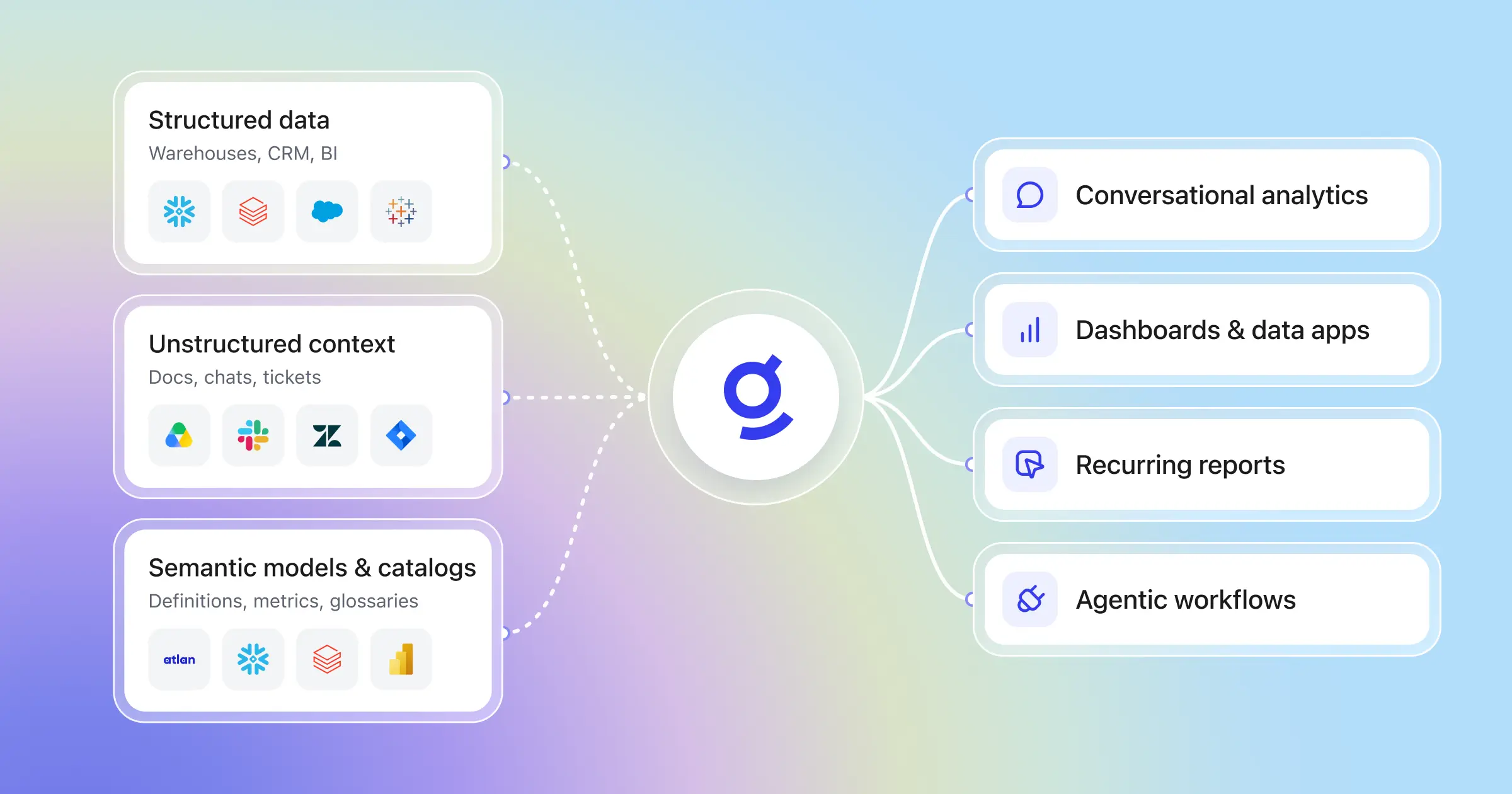
A strong approach combines CRM data quality standards, secure AI data integration, automated checks, and human oversight for high-impact changes. The most effective enterprise AI platforms — like the work AI platform we offer at Glean — treat this as a systems problem, not a model problem. High-quality connectors that respect source permissions, maintain live sync with enterprise applications, and preserve the full context of customer records are what make AI outputs trustworthy. Without that foundation, even the most advanced model will generate answers built on incomplete or contradictory information.
How to avoid data inconsistencies when using AI with CRM data?
The cleanest path starts with operating rules, not model tuning. AI will not reconcile mismatched lifecycle stages, broken parent-child account links, or conflicting customer IDs on its own; it will use whatever structure the business gives it and move faster than manual review can catch.
A durable rollout follows a practical order. Set a golden record for the few CRM fields that matter most, connect AI to current enterprise systems, normalize schemas, enforce pre-write checks, apply entity resolution for duplicates, use enrichment behind confidence thresholds, watch quality drift, and keep high-impact updates behind approval controls.
Define trusted data before you automate anything
Begin with the records that affect revenue visibility, service execution, and account planning. For most teams, that short list includes legal account name, parent account, billing contact, customer tier, renewal window, territory, support severity, consent status, and product usage tier.
Each field needs a clear survivorship rule. One system may own the legal entity name, another may hold the billing contact, and a support platform may own escalation status; without that map, AI has no consistent way to choose between competing values. This is where master data discipline matters: not as a large transformation project, but as a field-by-field decision on which value wins and why.
A practical setup should include:
- A golden-record policy for core objects: Pick the authoritative value for each critical field, then document how downstream systems should consume it.
- Survivorship rules for conflicts: Decide whether recency, completeness, source priority, or human approval resolves disagreements.
- A narrow first wave: Limit rollout to the objects that affect forecast quality, renewal execution, support handoffs, and account coverage.
- Named owners for rule changes: Someone must approve schema changes, merge logic, exception policies, and automation scope.
Connect AI to live context, not static snapshots
AI works best over current business state, not a CSV export from last week. Customer truth often sits across service cases, email threads, implementation notes, call summaries, contract systems, product events, and internal knowledge content; a CRM row alone rarely captures what the team needs to act with confidence.
That matters most in service and post-sale work. A renewal summary may look healthy inside the CRM while open escalations, poor adoption, and unresolved onboarding tasks point to real risk elsewhere. AI can only surface that risk when it has timely access to those systems and a reliable way to preserve identity across them.
When teams evaluate integration quality, a few details make the difference:
- Access inheritance from the source system: The AI layer should follow source-level access controls instead of re-creating them loosely.
- Freshness that matches the workflow: Case status and account risk need tighter update intervals than archival documents.
- Source provenance in every answer: Users should see which system supplied the detail and how current it is.
- Stable identity resolution across systems: Account, contact, and company records need durable joins, not brittle one-field matches.
Standardize fields and validate inputs before AI reads or writes
Once the right systems are connected, the schema needs consistency. AI will struggle with free-text regions, mixed currency formats, inconsistent abbreviations, and custom stage labels that mean different things across teams.
The fix starts with controlled values and rule-based checks. Use picklists where possible, map synonyms to canonical values, and enforce business logic that reflects how the company actually operates. A service case marked “critical” should meet a documented severity definition. A high-value account should not sit without an assigned segment or success owner. A customer marked “active” should not have an end date in the past.
The strongest controls usually include:
- Format rules: Normalize dates, phone numbers, addresses, currency, and country values before they enter downstream workflows.
- Cross-field validation: Check that related fields make sense together, such as support entitlement plus contract status or customer tier plus SLA level.
- Stage-aware requirements: Require more complete data as records move deeper into sales, onboarding, or support processes.
- Pre-write confidence checks for AI actions: Let low-risk corrections pass automatically; hold uncertain changes for review.
Prevent duplicates as part of daily workflow
Duplicate prevention should sit inside normal record creation and import flows. Once duplicate accounts, contacts, or tickets spread across teams, AI will score, summarize, and route work against an incomplete customer picture.
Exact-match rules catch only a small share of the real problem. Enterprise environments need multi-signal matching that combines email domain, company name variants, phone, address, account hierarchy, and relationship history. Probabilistic matching also helps with common edge cases such as subsidiaries, renamed companies, regional business units, or contacts who appear through multiple channels.
The most reliable patterns are straightforward:
- Search-first creation paths: Show likely matches before a new record enters the system.
- Pre-import duplicate screening: Run batch checks before marketing lists, partner data, or event leads land in production.
- Clear master-selection logic: Decide whether the oldest record, most complete record, or system-priority record becomes primary.
- Safe merge controls: Keep preview, rollback, and approval steps for high-risk merges.
Enrich carefully and govern every write-back
Enrichment should improve record completeness, not overwrite stable data with guesswork. Third-party firmographic data, inferred job roles, or AI-based classifications can add value, but only when the system treats them as evidence with a confidence level — not as automatic truth.
This is especially important for fields with legal, commercial, or operational impact. Consent flags, territory assignment, account status, contract type, and executive sponsor details need tighter handling than website domain cleanup or title normalization. The system should separate advisory suggestions from approved record changes.
A sound write policy usually includes:
- Risk tiers for fields: Low-risk formatting updates can auto-apply; commercially sensitive updates need approval.
- Confidence thresholds by use case: A threshold for email normalization should differ from one for account segmentation.
- Full change history: Keep old value, new value, timestamp, confidence score, source, and approver for every automated update.
- Rollback support for bulk actions: Batch enrichment should never become irreversible.
Track quality signals after launch
Data consistency does not stay fixed after go-live. New lead sources, schema edits, workflow changes, and model updates all introduce fresh ways for records to drift apart.
The right review cadence focuses on operational signals tied to business outcomes. Watch duplicate cluster growth, field completeness for revenue-critical objects, invalid contact rates, enrichment rejection rates, stale entitlement data, false merges, and exception volume from AI write-backs. Those metrics show where the stack needs adjustment — source mappings, validation rules, merge logic, connector freshness, or approval thresholds.
Model behavior also deserves scrutiny. A system trained on last quarter’s account patterns may misclassify records after a territory redesign, pricing change, or schema update. Periodic testing against current CRM and service data helps catch drift before it distorts routing, forecasting, or customer health decisions.
Frequently Asked Questions
What are the common causes of data inconsistencies in CRM systems using AI?
A large share of inconsistency starts with record collisions that happen quietly across imports, sync jobs, and regional process differences. One business unit may treat a parent company as the account, another may store the local subsidiary, and a third may attach contacts to both. AI then reads three versions of the same commercial relationship and turns that mismatch into flawed summaries, poor routing, or incorrect account plans.
Other failure points are less visible but just as costly. Common examples include survivorship rules that do not specify which field value should win after a merge, enrichment services that overwrite verified values with inferred ones, retry logic that creates near-duplicate records after API errors, and source systems that omit last-updated timestamps or record lineage. In enterprise environments, connector gaps make this worse: without reliable metadata, source context, and full object coverage, AI cannot tell whether a value is current, inferred, or obsolete.
How can I automate data validation in my CRM?
The strongest validation design uses risk tiers instead of one blanket rule set. Low-risk issues — such as phone formatting, postal normalization, or country-code cleanup — can auto-correct in real time. Higher-risk changes — such as account ownership, contract status, or renewal classification — need a quarantine path, a confidence score, and an approval step before the CRM accepts the update.
A practical validation stack usually includes five controls:
- Input validation by object type: Each object should have its own rules. Leads need contactability checks; opportunities need amount, close-date, and stage logic; accounts need legal-name and hierarchy checks.
- Cross-system reconciliation checks: Compare CRM values against support, billing, and contract systems when the field affects renewals, entitlement, or service quality.
- Batch import screening: Scan imports before load for schema mismatches, null spikes, malformed values, and duplicate clusters.
- Confidence-based write policies: Let AI update low-impact fields automatically, but require review for fields tied to revenue, compliance, or customer commitments.
- Post-update anomaly detection: Alert on unusual jumps in null rates, overwrite volume, or field-change frequency after an automation run.
This approach gives operations teams a clear boundary: automation handles routine corrections at scale, while humans retain control over changes that can alter customer experience or forecast quality.
What best practices should I follow to maintain data integrity with AI?
Treat CRM integrity as an operating model, not a cleanup project. The most durable programs assign an owner to each critical object, classify fields by business impact, define which system may author each field, and document what should happen when two sources disagree. That removes guesswork when AI reads across sales, service, finance, and account-management data.
It also helps to formalize a short set of controls that teams can enforce every day:
- Field criticality tiers: Separate informational fields from decision fields. Contact preference, legal entity, renewal date, deal amount, and support severity should never follow the same rules as casual notes.
- Freshness service levels: Set a maximum acceptable age for key fields, then flag or suppress values that fall outside that window.
- Survivorship policies: Define which source wins by field when records merge or sync conflicts appear.
- Rollback readiness: Keep a before-and-after record for automated changes so teams can reverse bad updates quickly.
- Quality metrics that reflect business risk: Track false merges, stale-record rates, overwrite rates, and human rejection rates for AI suggestions — not just generic completeness scores.
AI works best when these controls already exist. Without them, the system may still answer quickly, but speed will hide the fact that the underlying customer record has no stable authority.
How do I prevent duplicate entries in my CRM data?
Duplicate prevention requires more than a nightly dedupe job. The best programs stop bad record creation at the moment of entry — during form submission, CSV import, partner sync, or manual sales input — before the duplicate picks up activities, tasks, and pipeline value that make cleanup harder later.
That usually means a mix of exact-match and probabilistic controls:
- Stable-identifier checks: Use email, external account ID, tax ID, contract ID, or domain as hard signals where available.
- Context-aware matching: Compare company aliases, subsidiary names, billing addresses, phone numbers, and owner history to catch likely matches that do not share a single exact field.
- Conversion gates: Force a duplicate check before a lead becomes a contact or before a new opportunity attaches to an account.
- Import hygiene rules: Hold external lists in a review queue when match confidence falls into a gray zone.
- Merge approval paths: Require review for merges that involve active opportunities, open support cases, or parent-child account structures.
This matters more once AI spans revenue and service workflows. A duplicate contact does not just inflate record count — it can split conversation history, distort account health, and cause one customer to appear as two separate priorities.
What tools can help improve CRM data quality when using AI?
The most useful tools are not the ones with the flashiest interface. They are the ones that preserve source metadata, map access controls correctly, support delta sync instead of periodic full exports, and expose record lineage so teams can see where each value came from and when it changed.
In practice, a reliable stack includes a few core capabilities: a connector layer with object-level coverage and timestamp fidelity; a rule engine that checks records on create, import, and update; a match engine that supports both exact and fuzzy logic; an audit layer that stores before-and-after values plus approval history; and a monitoring layer that flags drift, spike events, and suspicious overwrite patterns. Tools with those capabilities improve CRM data quality because they reduce uncertainty at the record level rather than adding another isolated surface on top of inconsistent data.
CRM data consistency is not a one-time fix — it is an ongoing discipline that compounds in value as AI takes on more of the work your teams depend on every day. The organizations that get this right will not just avoid bad outputs; they will unlock faster decisions, stronger customer relationships, and AI they can actually trust.
If you're ready to see how a unified AI platform can help your team work from a single source of truth, request a demo to explore how we can transform your workplace.

.jpg)

.png)



.jpg)
.webp)