

Exploring 10 industries that benefit most from AI personal assistants
AI personal assistants have moved well beyond consumer novelties like setting timers or checking the weather. In enterprise settings, these tools now handle complex workflows — from resolving IT tickets and drafting customer responses to surfacing buried insights across thousands of documents and applications.
The industries that benefit most share a common profile: high volumes of communication, document-heavy processes, time-sensitive decisions, and teams that depend on fast access to specialized knowledge. Healthcare, financial services, retail, manufacturing, education, and IT all fit that description, which explains why adoption in these sectors has accelerated so rapidly.
This guide breaks down how AI personal assistants work, where they deliver the most value, and what separates a useful deployment from a forgettable one. Each industry faces distinct challenges, but the underlying principle remains the same — the right AI assistant eliminates friction between people and the information they need to do their best work.
What is an AI personal assistant?
An AI personal assistant is software that uses natural language processing (NLP), machine learning, and data integration to interpret human requests and act on them — whether through text, voice, or a combination of both. Unlike rule-based chatbots that depend on exact keyword matches and rigid decision trees, AI personal assistants understand intent. They parse variations in phrasing, maintain context across multiple interactions, and refine their outputs based on user behavior and feedback over time.
This distinction matters in practice. A traditional chatbot might fail when an employee types "how do I get reimbursed for a client dinner?" instead of the exact phrase "expense reimbursement policy." An AI personal assistant recognizes the underlying intent, retrieves the relevant policy, and can even walk the employee through the submission process — all within a single conversation thread.
What sets enterprise AI assistants apart
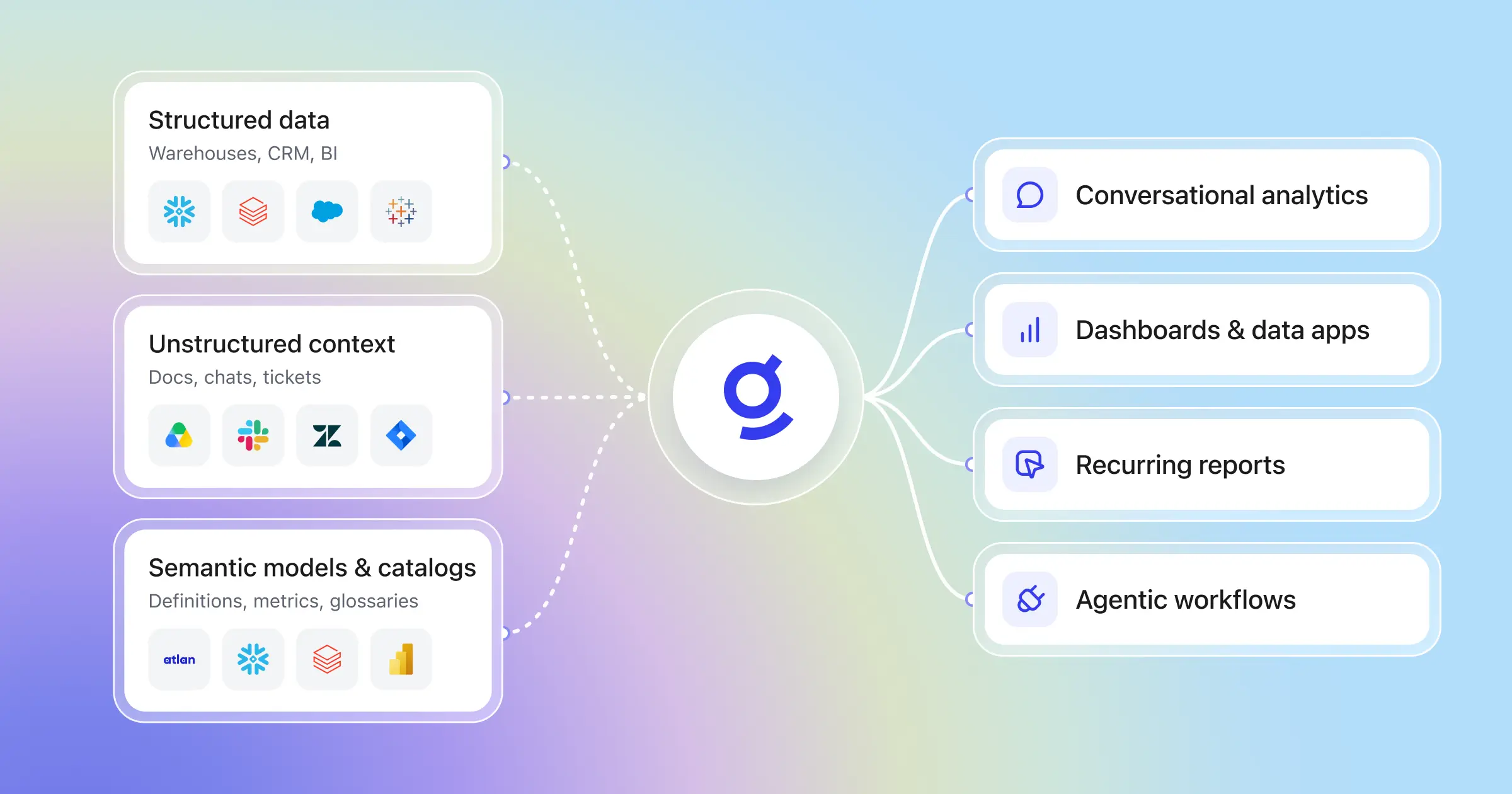
In enterprise environments, the bar is significantly higher than it is for consumer-grade assistants. Business AI personal assistants must connect with dozens — sometimes hundreds — of existing systems: CRMs, HRIS platforms, ticketing tools, knowledge bases, project management software, and communication channels. The ability to execute multi-step workflows across these systems is what transforms a simple Q&A tool into a genuine productivity multiplier.
Several core capabilities define the most effective enterprise AI assistants:
- Contextual retrieval: Rather than returning a generic answer, the assistant draws on organizational knowledge — team structures, project histories, internal terminology — to deliver responses tailored to the specific employee and situation. Platforms like Glean differentiate here by building a knowledge graph that links people, content, and activity across applications, so results reflect real-world relevance rather than keyword frequency alone.
- Permissions-aware access: Enterprise data carries sensitivity levels that consumer tools never encounter. A well-built AI assistant enforces the same access controls as the source applications, ensuring that employees only see information they are authorized to view. This is non-negotiable in regulated industries and large organizations with layered security requirements.
- Continuous learning: The best AI assistants improve with use. A self-learning language model adapts to each company's unique dialect — its acronyms, product names, team structures, and internal shorthand — which means search quality and response accuracy compound over time rather than plateau.
- Workflow execution: Answering a question is useful; completing a task is transformative. Advanced AI assistants can file tickets, schedule meetings, draft communications, approve requests, and trigger downstream actions without requiring the user to leave the conversation interface.
Beyond chat: the shift toward agentic capability
The most significant evolution in AI personal assistants is the move from reactive responders to proactive agents. Early assistants waited for a prompt and returned a single answer. Modern systems decompose complex requests into multi-step plans, select the right tools for each step, and self-evaluate their outputs before delivering a final response.
Consider an employee who asks the assistant to "prepare a summary of last quarter's customer churn data and draft talking points for the leadership review." That single request requires the assistant to identify the right data sources, pull permissioned reports, analyze trends, synthesize findings, and generate a structured document — a sequence that mirrors how a skilled analyst would approach the same task. This agentic reasoning capability represents the frontier of what AI personal assistants can deliver, and it explains why organizations that invest in robust search and retrieval infrastructure see outsized returns as these systems mature.
How AI personal assistants improve efficiency across industries
Efficiency improves first at the points where work stalls: routine questions, administrative follow-up, manual coordination, and slow access to information. AI personal assistants remove much of that drag by handling common requests instantly, which gives teams more time for analysis, service, and decisions that require judgment.
That impact extends well beyond back-office convenience. In customer-facing environments, these tools answer account questions, guide next steps, and support service teams after hours; inside the business, they reduce queue volume, shorten turnaround times, and help employees move through everyday tasks without waiting on another department.
Where the efficiency shows up first
A strong deployment usually improves four operational levers at once:
- Less manual overhead: Employees spend fewer hours on repetitive tasks such as scheduling, form handling, standard documentation, record checks, and routine internal support. That time returns to work that affects revenue, customer outcomes, or risk management.
- Round-the-clock responsiveness: AI assistants keep service available across time zones, weekends, and peak periods. Customers receive answers faster, and employees no longer need to wait until business hours for basic help.
- Clearer operational visibility: By reviewing activity across support systems, transactions, service logs, and internal records, assistants can highlight patterns that signal friction — repeated service issues, rising request volumes, delayed approvals, or unusual behavior that deserves attention.
- Lower marginal cost of growth: As volume rises, organizations can absorb more requests without matching every increase with more staff. Support quality holds steadier because the assistant takes on the repeatable work that would otherwise flood teams.
Accuracy depends on trusted business data
Speed only helps when the output holds up. The strongest results come from assistants that draw from approved internal sources and respect the access rules already in place across business systems. That approach keeps responses aligned with current policies, customer records, and role-specific information instead of generic model output.
This distinction matters in every sector, but it becomes especially important in regulated and service-heavy environments. A bank cannot surface the wrong customer data; a hospital cannot present outdated guidance; an insurer cannot improvise on policy language. The assistant must work from verified records, not guesswork, and it must return answers that match the user’s clearance and the task at hand.
From one-turn answers to real work completion
The next step in efficiency comes when the assistant does more than respond. Newer systems can break down a request, gather the necessary material, decide what action comes next, and complete part of the workflow on the user’s behalf. That shift changes the value proposition from simple assistance to measurable operational throughput.
A claims team, for example, may need to confirm coverage, review submitted documents, surface the relevant policy terms, and prepare a customer-ready update. An advanced assistant can support that sequence in one flow rather than leave an employee to move between tools and repeat the same context at each step. The same pattern applies in IT, HR, education, retail operations, and finance — fewer pauses, fewer handoffs, and a much shorter path from request to result.
Healthcare: streamlining patient care and administrative workflows
Healthcare puts unusual pressure on every handoff in the workday. A single patient visit can involve scheduling, intake, eligibility checks, symptom review, chart access, documentation, and billing follow-up — all before the organization closes the loop on care.
Where AI assistants have the strongest effect
- Pre-visit preparation: AI virtual assistants can collect symptoms, medication lists, insurance details, consent information, and appointment preferences before the patient arrives. Staff receive a cleaner record at the start of the visit, with missing fields and exceptions flagged early instead of during check-in.
- Symptom-based routing: In patient portals and mobile apps, assistants can sort symptom descriptions against approved care pathways and steer patients toward the right setting — telehealth, primary care, urgent care, or emergency services. That gives clinical teams a clearer view of urgency before a nurse reviews the case.
- Clinical support during the encounter: Nurses and physicians can pull drug interaction details, treatment protocols, discharge instructions, prior lab results, and relevant chart history without pausing the consultation for a manual lookup. The benefit shows up in continuity: fewer interruptions, fewer missed details, and a steadier pace inside the visit itself.
- Documentation and revenue-cycle support: Administrative teams can use AI assistants to draft visit summaries, prepare standardized reports, answer billing questions, and organize follow-up paperwork. That shortens turnaround time after the appointment and lowers the chance that key details slip between systems.
What makes healthcare a strong match for enterprise AI is the shape of the work itself. Patient portals, scheduling software, clinical references, medical records, and billing systems all hold part of the story, which means even simple requests often require a chain of lookups across disconnected tools.
That reality explains why healthcare remains a priority industry for enterprise assistants, including platforms such as Glean. The useful deployments are the ones that fit into the actual care journey — before the visit, during the encounter, and after the patient leaves.
Financial services: accelerating decisions and reducing risk
In financial services, a slow answer carries a measurable cost. A delayed fraud review can extend customer loss exposure; an incomplete compliance response can create audit pain; a missed policy detail can force rework across operations, service, and risk teams.
AI assistants deliver value here because the work depends on dense records, exact language, and fast cross-checks. Instead of forcing teams to jump between case systems, policy libraries, account platforms, and reporting tools, the assistant can assemble the relevant facts for a specific task — a suspicious transfer, a KYC refresh, a disclosure check, or a customer dispute — and present them in a form that supports a defensible decision.
Where AI assistants create the most value in finance
- Fraud case assembly: Fraud teams often need merchant data, device signals, prior disputes, transaction history, and account notes before they can make a call. An AI assistant can gather those elements into a single case view, which shortens investigation prep and helps analysts move through alert queues with more consistency.
- Compliance response and control work: Regulatory work rarely lives in one place. An assistant can pull the current policy, the related procedure, prior internal guidance, and the evidence tied to a control so compliance teams can prepare for audits, examiner requests, and internal reviews with less back-and-forth.
- Service and advisory support: Customers ask for precise answers on fees, eligibility, account terms, payment status, policy details, and product differences. An AI assistant can support those conversations with current account context and approved language, which helps service teams respond faster and helps advisors spend more time on client judgment rather than document hunting.
The strongest finance deployments also support internal specialists whose work depends on exact retrieval. Credit analysts need covenant language and exposure summaries. Operations teams need the right exception rule. Risk leaders need the latest assessment and the source behind it. When that material appears with the proper business context, review cycles shrink and handoffs become less error-prone.
Access, evidence, and auditability
Finance teams also need more than a fast answer; they need a traceable one. Every response should tie back to an approved source, whether that source sits in a policy repository, a reporting environment, a servicing platform, or an internal memo. That source trail matters during audits, customer escalations, and any decision that requires formal review.
Access discipline sits at the center of that model. A branch employee, a fraud investigator, a portfolio manager, and a compliance officer should not see the same record set, and the assistant has to reflect that reality at all times. In practice, the most effective systems combine secure retrieval, role-based visibility, and clear source attribution, which allows financial institutions to move faster without weakening control standards.
Retail and e-commerce: personalizing the customer experience at scale
Retail teams live inside narrow margins and fast customer decisions. An AI assistant creates value when it improves basket size, reduces avoidable returns, and helps each shopper reach the right product faster.
That value starts with context that is specific to commerce. Size history, past orders, loyalty status, local inventory, promotion rules, and delivery windows all shape what the assistant should say next; a generic answer leaves revenue on the table.
Better service across the full customer journey
In retail, the strongest assistants act like a skilled store associate with instant access to catalog data and customer history. They help a shopper compare two similar products, confirm whether an item fits a specific need, explain delivery cutoffs, apply loyalty rules, and surface substitutes when a preferred SKU is out of stock.
That creates value in several ways:
- Higher purchase confidence: Assistants answer pre-purchase questions that often block checkout — fit, compatibility, material details, shipping speed, warranty terms, and return conditions.
- Smarter recommendations: Product suggestions draw from browse history, prior purchases, price range, and category affinity, which helps retailers increase average order value without generic upsell prompts.
- Better agent allocation: Frontline support teams spend less time on order lookups and policy clarifications, which leaves specialists free for fraud disputes, damaged shipments, and exception cases.
- Stronger post-purchase support: Customers receive quick help with exchanges, order edits, delivery updates, and loyalty questions, which improves retention after the sale rather than only before it.
These retail use cases tie directly to revenue and service economics. Better product guidance lifts conversion; fewer avoidable contacts reduce support cost; better post-purchase care protects repeat business.
Operational insight behind the storefront
Retail assistants also support merchants, planners, and operations leaders with signals that standard dashboards often miss. Search terms with no results, repeated fit complaints, rising return codes for one style, and abrupt shifts in regional demand can reveal issues long before a weekly business review.
That matters for inventory and assortment decisions. When an assistant pulls together sales velocity, browse behavior, cart abandonment, return reasons, and store-level demand, teams can spot weak product pages, likely stockouts, and promotion mismatches with far more speed. A sudden rise in questions about delivery delays may point to a carrier problem; a wave of returns tied to one product family may point to inaccurate sizing guidance or poor imagery.
Store associates and customer support teams benefit as well. They need quick answers on promotion exclusions, inventory by location, order exceptions, and approved substitute products; an assistant that surfaces those answers inside daily workflows helps each channel stay aligned, even during peak season or major campaign launches.
Technology and IT: resolving issues before they become bottlenecks
In most organizations, the help desk spends too much of its day on work with a known fix: expired passwords after a holiday, MFA lockouts after a phone replacement, VPN failures before travel, missing software access before a deadline. An AI assistant removes much of that traffic at first contact; employees restore access, request approved tools, or fix basic connectivity issues in the same place where they ask for help.
That shift changes the shape of IT work. A queue packed with low-risk tickets makes it harder to spot the cases that carry real consequence — a payroll system outage, a suspicious login pattern, a failed rollout, or a service disruption that touches multiple teams. The most useful assistants sit inside the IT environment itself, where they can read CMDB records, ticket history, change logs, service catalogs, and internal runbooks, then act only within the limits that policy allows.
Where AI assistants deliver the most value in IT
- Close common requests from start to finish: Many support issues follow an approved path. Account unlocks, password resets, license requests, device setup steps, and standard software installs do not need a technician every time; the assistant can verify the request, check the policy, and complete the task inside the right system.
- Create cleaner escalations for complex cases: Some problems need a resolver group, but they do not need a blank ticket. A strong assistant can capture the operating system, device type, recent changes, error messages, affected applications, and steps already attempted, then send that package to the right team instead of forcing the employee to repeat the issue from scratch.
- Surface broader incidents sooner: IT operations depend on early pattern recognition. When an assistant reads alert streams, status updates, and sudden spikes in similar requests, it can expose a shared root cause fast — before dozens of duplicate tickets bury the signal.
IT support also tends to unfold in stages rather than one clean exchange. A message such as “email broke after the last laptop update” may require the assistant to check the device model, compare the timing against recent patches, review open incidents, inspect whether the user changed networks, and decide whether the next step is a rollback, a mailbox repair, or an endpoint case. That kind of stepwise tool use fits IT especially well because the work depends on sequence, evidence, and system state.
The result is a service desk with less noise and more precision. Employees solve straightforward problems without delay, specialists receive cases with the facts already assembled, and operations teams gain earlier visibility into the issues that threaten uptime.
Education: supporting students and scaling institutional knowledge
Education institutions operate on calendars, exceptions, and high-stakes deadlines. That environment makes AI assistants especially valuable in admissions, advising, registrar offices, student services, and academic administration.
Faster answers for students
Student support teams field a wide range of detailed requests that depend on timing and context: which forms apply to a transfer applicant, when a registration hold takes effect, how financial aid status changes after a schedule adjustment, or where a student can find tutoring, counseling, or disability resources. An AI assistant can address those requests with institution-specific guidance, which gives students clearer direction at moments that often carry stress and uncertainty.
The benefit shows up most clearly during academic milestones. Course registration, orientation, financial aid disbursement, and graduation review all create sharp demand spikes; an assistant helps institutions absorb that volume without forcing students into long email chains or office-to-office handoffs. Multilingual support adds practical value here because it helps schools serve international and multilingual populations with more clarity and less reliance on manual translation.
Less admin work for faculty and staff
The same systems can reduce administrative drag for faculty and campus teams. Instructors and administrators often need fast access to curriculum rules, accommodation procedures, committee documents, accreditation materials, and department-specific processes; an assistant can surface that information in a usable format and support tasks like report preparation, record checks, and document drafting.
That changes how work moves across the institution:
- Academic operations support: Department staff can verify prerequisites, catalog language, program requirements, and approval steps without searching through archived memos or outdated web pages.
- Reporting assistance: Administrators can assemble enrollment summaries, advising notes, compliance packets, and review materials with less manual compilation.
- Cross-campus coordination: Shared access to the same institutional guidance helps registrar, advising, financial aid, and student success teams stay aligned when a student issue crosses multiple offices.
A stronger institutional knowledge layer
Higher education depends on accumulated institutional memory. Degree pathways, committee decisions, policy exceptions, accreditation standards, and service processes all evolve over time, and much of that knowledge sits inside specialized offices or with a handful of experienced staff members. AI assistants help turn that expertise into a durable resource that students, faculty, and staff can actually use.
This matters in settings with frequent turnover, decentralized governance, and complex service models. When a new advisor joins midyear or a policy change affects several departments at once, the institution needs more than static documentation; it needs a system that reflects current guidance and makes it usable in plain language. That is one reason platforms such as Glean fit higher education well: they support knowledge access, service responsiveness, and administrative efficiency in environments where accuracy and context matter just as much as speed.
HR and professional services: making employee support seamless
People teams sit at the center of hundreds of small but time-sensitive requests. An AI assistant can absorb much of that load — not with vague policy summaries, but with exact answers on payroll cutoff dates, open enrollment windows, parental leave rules, reimbursement steps, visa support, and location-specific holiday schedules.
HR self-service with policy precision
The value shows up in the details. An employee who moves to a new state may need updated tax forms, a benefits change window, and new payroll guidance; a first-time manager may need the right review template and promotion policy; a part-time employee may need a different leave rule than a full-time peer. AI personal assistants for businesses handle those distinctions without a long wait for HR support, which improves accuracy and reduces preventable back-and-forth.
That shift also improves the employee experience in a more practical way. People receive clear next steps instead of a link dump, HR teams spend less time on repetitive clarification, and policy questions stop piling up in shared inboxes during peak periods such as open enrollment, performance review cycles, and year-end payroll changes.
New-hire ramp and recruiting operations
The same pattern applies to onboarding. New hires need a clear path through identity setup, compliance forms, benefits enrollment, role training, equipment requests, and internal introductions; an assistant can turn that sequence into a guided checklist that reflects office location, job function, and start date.
Recruiting teams gain a different advantage. AI assistants can sort résumés against required qualifications, flag promising candidates, line up interview panels, coordinate schedule changes, and keep applicants informed after each stage. That support shortens the hiring cycle and removes the small administrative delays that often cost teams strong candidates.
Professional services: knowledge access as margin protection
In professional services, the pressure lands on speed, reuse, and precision. A consultant may need the latest deck for a retail account, a lawyer may need an approved clause for a contract in a specific jurisdiction, and an accounting team may need a prior memo on a narrow reporting issue. AI assistants help teams locate those materials fast, along with the right subject-matter experts, which protects billable time and reduces duplicate work.
The financial impact is direct:
- Stronger utilization: Less time disappears into proposal hunts, clause searches, and internal message threads; more time goes to client delivery.
- Quicker draft quality: Teams can pull prior statements of work, case summaries, research notes, and approved language that match the matter at hand.
- Lower rework: Staff start from current firm-approved materials instead of old attachments that no longer reflect policy, pricing, or legal review.
Results improve most when the assistant can account for employment status, office location, practice area, and engagement history in the same exchange. In HR, that means precise answers for the employee in front of the screen; in professional services, it means the right precedent, document, or expert for the client work at hand.
Manufacturing and supply chain: connecting data across operations
Manufacturing teams work in environments where delay carries a direct cost. An AI assistant can give a line technician the latest torque spec, a revision-controlled work instruction, a lockout sequence, or the next preventive maintenance date at the exact point of need — including on shared floor devices or voice-enabled terminals where hands-free access matters.
The same pattern applies across the supply network. Buyers, planners, and logistics leads often need a single view of supplier status, in-transit inventory, warehouse constraints, production schedules, and shipment exceptions; an AI assistant can assemble that picture from ERP data, transportation systems, supplier records, and quality documents without the usual back-and-forth across disconnected tools. That makes it easier to spot a late shipment, a constrained component, or a vendor issue before it disrupts plant output.
Where agentic systems fit
In this environment, the highest-value use cases center on exception handling. A material shortage may require the system to check open demand, compare approved alternates, prepare a procurement packet, notify the supplier, update the schedule, and draft a note for operations leadership; a quality issue may require evidence collection, nonconformance paperwork, corrective-action routing, and vendor communication. Research on enterprise AI agents supports this shift toward coordinated operational flows, especially in settings where planning, retrieval, execution, and follow-through span many records and systems.
Insurance and utilities: handling complexity with speed
Insurance and utilities deal with branching workflows that can change by jurisdiction, service area, asset class, policy type, or event severity. A single request may trigger multiple downstream tasks — customer communication, internal review, document checks, and operational follow-through — which makes these sectors a strong fit for AI assistants built for structured, high-variance work.
That value shows up most clearly when the assistant can coordinate across records that rarely live in one place. Claims platforms, policy systems, billing tools, outage maps, inspection reports, meter data, and internal guidance all shape the next step, and speed depends on how quickly those pieces come together.
Insurance: faster service, better agent support
Insurance teams use AI assistants to reduce delay in moments that usually involve back-and-forth. After a storm, collision, or property loss, the assistant can guide policyholders through photo uploads, repair preferences, rental eligibility, and settlement milestones without forcing them through separate calls or portals. That creates a cleaner handoff for adjusters and gives customers clearer visibility into what happens next.
Inside the business, the same assistant can help service reps, brokers, and underwriting teams work through details that often sit across endorsements, renewal notes, inspection files, and prior claim records.
- Catastrophe surge handling: After hail, wildfire, or flood events, the assistant can sort inbound claims by geography, loss type, and urgency; that helps carriers assign the right team faster and spot duplicate submissions early.
- Policy interpretation at the point of service: Reps can retrieve rider language, lapse rules, waiting periods, and state-specific endorsements in seconds instead of paging through long policy files during a live conversation.
- Renewal and underwriting support: The assistant can surface inspection summaries, loss runs, exception histories, and appetite rules before a quote or renewal decision moves forward.
- Subrogation and recovery prep: It can gather police reports, third-party carrier details, invoices, and repair documentation into a usable case view for the teams that handle recovery.
This matters because insurance delays often come from sequence errors rather than lack of effort. A missed endorsement, the wrong renewal language, or an incomplete intake record can slow reserve decisions, trigger rework, and create avoidable friction for both staff and policyholders.
Utilities: high-stakes response across service and field operations
Utilities use AI assistants in a very different operating environment, but the need for speed is just as sharp. During storms, service interruptions, or safety incidents, the assistant can turn outage management data, meter signals, and crew status into plain-language updates for customers and dispatch teams. That helps contact centers respond with more precision during periods when volume spikes and information changes by the minute.
The value extends well beyond outage notices. Utilities can use AI assistants to support service start and stop requests, payment arrangements, appointment windows, and field coordination. For line crews and gas technicians, the assistant can surface switching orders, isolation steps, transformer details, vegetation notices, or district-specific permit requirements tied to the job at hand. For operations teams, it can pull restoration priorities, maintenance history, and escalation paths by region or asset type.
Governed retrieval is not optional
Both sectors rely on records that shift across territories, tariffs, forms, and operating procedures. An assistant cannot rely on plausible output alone; it has to return the right clause, the current script, or the approved procedure attached to the exact line of business or service district involved.
That puts the emphasis on source fidelity, traceability, and scoped access. Claims teams need to know which policy language informed a response; utilities teams need operator guidance tied to the correct equipment class and local rules. The result should feel fast, but the underlying system has to preserve document lineage, version accuracy, and role-specific visibility at every step.
How to evaluate which AI assistant fits your industry
Industry fit does not start with a product category. It starts with a pressure point inside the business — slow case resolution, weak self-service, fragmented knowledge, high support volume, or manual handoffs across teams.
That distinction matters during evaluation. A tool may look polished in a demo and still fail under real conditions such as stale source data, narrow connector coverage, coarse access rules, or weak task execution after the first reply.
Map the workflow before you compare products
Begin with one or two workflows that already carry cost, delay, or risk. Keep the scope tight enough to test, yet meaningful enough to expose whether the assistant can support real work inside your environment.
- Entry point: Define where the request begins — chat, email, web form, ticket, call summary, or case record. This shapes the user experience and the data the assistant must parse at the start.
- System path: List every business system the workflow touches. Many evaluations fail because the assistant reaches one knowledge source well but breaks once the task requires a second or third system of record.
- Decision rules: Identify where policy, approvals, compliance checks, or role-based logic affect the outcome. Industry fit often depends less on language fluency and more on how well the product handles those moments.
- Required output: Specify the exact result you need — a routed request, a drafted response, a completed update, a filed claim step, a scheduled interview, or a closed internal ticket.
This workflow map turns vague claims into testable requirements. It also shows whether the assistant can support one isolated use case or carry work across teams without extra manual coordination.
Check fit with your enterprise environment
A strong evaluation goes past surface-level chat quality. You need to know how the system handles source truth, identity, security, and operational scale inside the stack you already run.
Several signals matter more than an impressive first prompt:
- Authoritative reach: The assistant should pull from the systems that hold the real answer, not a partial copy or a narrow FAQ layer. In practice, that means broad connector coverage and dependable sync across content, identity, and activity data.
- Inherited access rules: Source-level permissions should remain intact from retrieval through response. This protects sensitive records in regulated environments and preserves trust across departments.
- Organization-specific adaptation: The system should absorb internal language, approval paths, naming conventions, and document structure over time. Generic reasoning alone rarely performs well in enterprises with dense process language and specialized terminology.
- Relationship-aware ranking: Relevance should reflect more than keyword overlap. Better systems account for relationships among teams, documents, experts, projects, and recent activity, which improves answer quality when several sources appear similar on the surface.
- Action depth: The product should do more than draft text. It should update records, route work, trigger workflows, and complete approved steps inside connected tools.
This is the difference between an assistant that acts as a thin chat layer and one that functions as part of the operating model. The strongest platforms combine retrieval quality, relationship-aware context, access fidelity, and secure write-back capability in the same system.
Run scenario-based trials, not prompt contests
Short prompt tests rarely reveal much. A better trial uses real requests from service queues, internal search logs, escalation records, or frontline team interviews.
Build a test set that reflects the shape of work in your industry:
- Simple retrieval: A straightforward request with one clear answer. This shows whether the assistant can find trusted information fast and present it cleanly.
- Cross-system lookup: A task that requires data from more than one application. This exposes connector quality and source coordination.
- Policy-sensitive request: A request with access limits, role nuance, or compliance rules. This tests whether the product can stay accurate without overexposing data.
- Multi-step task: A request that requires decomposition, tool choice, context assembly, and execution. This is the clearest test of whether the assistant can move past one-turn Q&A.
During these trials, watch the full chain — how the system interprets intent, which tools it selects, what records it uses, whether it preserves access controls, and how it records the result. That gives you a practical lens for agentic capability without reliance on marketing language.
Measure business value with operating metrics
A credible evaluation ends with operating metrics, not anecdotal praise. The right scorecard should reflect how the workflow performs before and after deployment.
- Time to first useful answer: Measure how quickly users receive something actionable, not just a generic reply.
- End-to-end cycle time: Track the full path from request to resolution, especially for workflows that span several systems or teams.
- Containment rate with quality checks: Measure how often the assistant resolves the task without human intervention, then pair that with accuracy review so deflection does not hide bad outcomes.
- Escalation quality: For tasks that require a human, assess whether the assistant passes along the right context, evidence, and next-step recommendation.
- User trust by role: Break feedback out by support agents, analysts, managers, clinicians, advisors, or recruiters. Averages can hide weak fit in high-value roles.
- Expansion cost: Track what it takes to extend the system to a new team, a new workflow, or a new geography. A product that performs in one pilot but requires rework for every expansion will struggle at enterprise scale.
The most reliable evaluation result comes from a system that improves service quality, shortens work cycles, respects enterprise controls, and expands without architectural churn.
The industries that gain the most from AI personal assistants are the ones where speed, accuracy, and access to the right knowledge directly shape outcomes — for customers, employees, and the business itself. The gap between organizations that treat AI assistants as a surface-level convenience and those that embed them into real workflows will only widen from here. If you're ready to see what that looks like in practice, request a demo to explore how we can help transform your workplace.

.jpg)

.png)



.jpg)
.webp)