

How do RAG models scale in enterprise AI?
RAG models scale in enterprise AI by separating the knowledge base from the model itself, so organizations can add new data sources, teams, and use cases without retraining the underlying LLM — keeping answers current, cited, and permission-controlled as usage grows.
Retrieval-augmented generation (RAG) connects a large language model (LLM) to your external knowledge sources at the moment of the query. Instead of answering only from patterns baked into its training weights, the model retrieves relevant company information first, then generates a response grounded in that material. If you want a deeper primer, start with what RAG models are.
This matters because enterprise knowledge changes daily, and a standalone LLM has a fixed knowledge cutoff. RAG keeps the generative strength of the model while grounding every answer in verifiable, permission-aware data you control, which is what makes it practical for real enterprise AI applications. This post covers how RAG works, how it differs from standalone LLMs, its core benefits, and how to evaluate and implement it at scale.
What is retrieval-augmented generation (RAG)?
Retrieval-augmented generation (RAG) is an architecture that links an LLM to external data sources at query time, so responses draw on current, authoritative information rather than training data alone. The workflow is retrieve-then-generate: the system searches your knowledge sources for relevant content, assembles that content into the prompt, and the model produces an answer conditioned on real reference material.
A key property is that this workflow leaves the base model unchanged. New information enters through the retrieval layer, not through retraining or fine-tuning, so you can update what the system knows by updating your data.
Four core components make the pattern work:
- Knowledge base: the external data the system can draw on, such as documents, tickets, and records.
- Retriever: the search component that finds the most relevant content for a given query.
- Integration layer: the step that assembles retrieved content into an augmented prompt.
- Generator: the LLM that produces the final response from that prompt.
Because retrieval sits upstream of generation, hybrid search combining semantic and keyword matching can handle diverse query types, and permission-aware retrieval can surface only what the requesting user is authorized to see.
How RAG differs from standalone LLMs in enterprise settings
A standalone LLM answers from patterns fixed in its training weights, so it hallucinates, goes stale, and can't reach your internal systems. RAG models in enterprise AI close that gap by adding a non-parametric memory layer, an external knowledge base the model consults at inference time. The generative strength stays intact, but every answer draws on verifiable, up-to-date sources instead of frozen training data. For a side-by-side breakdown, see how retrieval-augmented systems compare to a bare language model.
Separating knowledge from model weights is what makes RAG practical at enterprise scale. Policies, product specs, and customer records change constantly, and retraining a model each time is slow and expensive, while evaluations find retrieval more cost-effective than fine-tuning. When the knowledge lives outside the model, you update the data and the next query reflects it.
That boundary between model and data also gives you control. You decide what the system can reference, and you can revoke access to a document or a source without touching model parameters. Upstream permission enforcement means a query returns only what the requesting user is cleared to see, which standalone LLMs have no way to do.
Key benefits of RAG models for enterprise AI
RAG model benefits cluster around three enterprise AI advantages: timeliness, transparency, and scalability. Each one addresses a specific reason large organizations stall on AI: nearly nine in ten now use AI in some form, yet only about a third have scaled it across the enterprise. Each traces back to the same design choice of retrieving knowledge at query time rather than baking it into the model.
How RAG keeps answers current without retraining
An LLM ships with a knowledge cutoff, and its answers drift out of date as the world moves past that date. Retrieval solves the timeliness problem in AI by connecting the model to live, continuously updated sources at the moment of the query.
Enterprise data changes daily. A new pricing sheet, a revised compliance policy, or a shifting market condition all need to reach the model without a retraining cycle. Because current information retrieval happens at inference, an answer about EMEA pricing reflects the version published this morning, not last quarter. You skip the cost and delay of retraining every time business-critical information changes.
How RAG produces cited, verifiable answers
Transparency in AI systems comes from showing your work. RAG can cite the specific documents or passages behind each response, giving users an evidence trail they can open and check.
Source attribution matters most in regulated fields. A compliance officer in financial services, a clinician in healthcare, or a lawyer reviewing a contract needs to confirm where an answer came from before acting on it. Cited answers grounded in company knowledge make that verification a click, and permission-aware retrieval keeps the trail honest by surfacing only information the reader is authorized to see.
How RAG expands use cases without expanding model complexity
The scalability of RAG models rests on a simple split: you grow the knowledge base, not the model. Adding a new source or a new team means connecting more data, not enlarging the model footprint or paying for another training run.
An organization can start with support ticket deflection, then extend the same retrieval infrastructure to sales prep and engineering onboarding. Multi-tenant deployments let different teams reach different knowledge bases through one platform, so scaling out is an integration task rather than a modeling project.
How RAG reduces hallucination risk in enterprise AI
Hallucinations happen when a model generates confident but wrong information, filling gaps in its training with plausible-sounding patterns. RAG reduces that risk by anchoring output in retrieved content, the actual documents and records that answer the question, so the model has less room to invent. Research reviews of retrieval-augmented systems credit this design with reducing hallucinations.
When retrieval returns relevant, high-quality context, the model improvises less because its response is conditioned on real reference material. Retrieval quality does the heavy lifting here: feed the generator the right passage from an onboarding doc, and it summarizes what's there instead of guessing. A 2024 study in the NAACL Industry Track (ACL Anthology) found that RAG significantly reduced hallucinations in structured outputs and improved generalization in out-of-domain settings.
RAG isn't error-proof. Retrieval can miss, and a model can still misread good context. Grounded retrieval paired with citations creates a verification loop that helps: users spot an inaccuracy, trace it to the source, and fix the underlying document so the next answer improves. AI data accuracy becomes something you can inspect and correct rather than trust blindly.
How to scale RAG across enterprise teams and workflows
A well-architected RAG system reaches the tools where work already lives: document repositories, CRMs, ticketing systems, and communication platforms, connected through 100+ native connectors and APIs. One retrieval layer then serves many jobs at once. A support agent resolving a ticket, a salesperson prepping for a call, an engineer ramping on a new codebase, and an HR partner answering a policy question all draw on the same infrastructure.
Retrieval quality determines whether that shared layer holds up. Hybrid search combining semantic vector search with keyword matching handles the range of enterprise queries, from an exact document title to a fuzzy question about best practices. Chunking strategy, embedding models, and re-ranking all shape the result, and chunk size is a real lever: chunks that are too large return generic passages, and chunks that are too small lose semantic coherence. For a closer look at the retrieval features that matter most, review the RAG capabilities worth prioritizing in enterprise search.
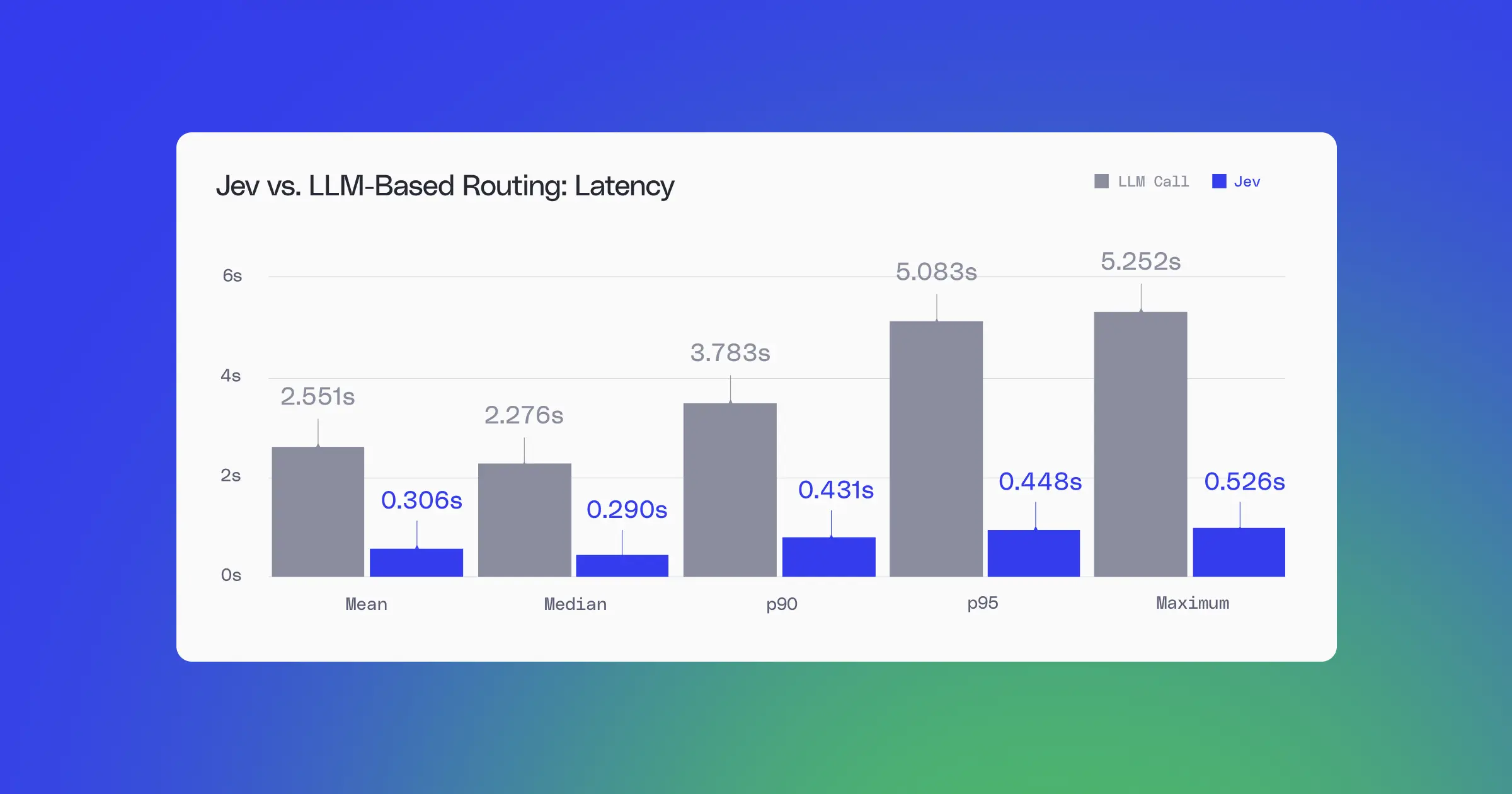
Volume adds its own demands. Serving thousands of employees means low-latency retrieval across millions of documents, which calls for high-throughput vector search infrastructure built to keep response times fast as the corpus and the user base grow.
Security and governance considerations for scalable RAG
Scalable RAG lives or dies on access control enforced upstream of the LLM. An unauthorized document should never reach the model, no matter how relevant it looks to the query. When permission enforcement sits before generation, every added source stays inside the boundaries each user is already cleared for.
Permission-aware retrieval is the foundation of safe scaling. Without it, connecting another repository widens your exposure with every integration. With it, you can keep adding sources while each person still sees only what their role permits. On top of that boundary, enterprise baselines apply: encryption at rest and in transit, audit logging, and contractual zero-day data retention with LLM providers so your content never trains an outside model.
Governance also means visibility. Administrators need insight into what the system retrieved and generated to support SOC 2, ISO 27001, and industry-specific regulations. Because retrieval keeps the model separate from the knowledge base, you retain ownership of your data and can grant, modify, or revoke access without altering model parameters.
How to evaluate and implement RAG for your organization
Start with one high-value use case where knowledge is scattered or changes often, such as support ticket deflection, employee onboarding, or sales call prep. A focused first project proves value faster than a broad rollout and gives you a clear baseline to measure against.
A practical implementation strategy for enterprise AI follows a repeatable order:
- Audit your data sources and connect the highest-value systems first, confirming the data is clean, structured, and access-controlled, since poor-quality data is one of the biggest barriers to enterprise AI.
- Measure baseline performance, such as time to find an answer and current accuracy, so return on investment is tangible rather than assumed.
- Evaluate retrieval quality on precision, recall, and relevance ranking, then evaluate generation quality on groundedness, coherence, and instruction-following.
- Plan for iteration and scale gradually, moving from one team to more connectors and more use cases as results hold up.
Treat the first deployment as a learning system, not a finished product. A narrow, measurable win on time-to-answer builds momentum as you expand to more teams, connectors, and use cases.
Frequently asked questions
How does RAG improve timeliness compared to fine-tuning an LLM?
Fine-tuning retrains a model on new data, which is expensive and always lags behind real changes. RAG retrieves current information at query time from continuously updated sources, so responses stay current without touching model weights or waiting on a training run.
Can RAG systems scale across thousands of users with different permissions?
Yes. Production-grade RAG enforces permission-aware retrieval, so each user's results reflect only what they're authorized to access. That access model lets one platform serve thousands of users securely, because adding people or sources never overrides the underlying permissions.
What transparency features do RAG models offer that standalone LLMs do not?
RAG can cite the specific sources behind each response, giving users a verifiable evidence trail they can open and check. A standalone LLM generates from internal parameters and cannot point to where a claim came from, so its answers resist independent verification.
How do RAG models reduce hallucination in enterprise AI applications?
RAG grounds generation in retrieved, authoritative content instead of statistical pattern completion. Because the model is conditioned on real documents, it invents less, and citations let users verify each answer against its source and correct the knowledge base when something is off.
Is RAG more cost-effective than retraining LLMs for enterprise use?
Significantly. Updating a knowledge base costs far less than retraining or fine-tuning a model. Organizations scale by expanding the retrieval layer rather than the model's compute, so new use cases add data and connectors instead of expensive training cycles.
The teams that get the most from RAG treat it as infrastructure you grow into, starting with one clear win and connecting more sources as results hold. We built Glean on that same principle, pairing hybrid search and retrieval-augmented generation with permission-aware access so your answers stay current, cited, and grounded in your company's knowledge. See how it works in your own environment when you book a Glean demo.
.jpg)

.png)



.jpg)
.webp)




.webp)