



How AI tools personalize customer outreach using company data
Most enterprise sales and marketing teams sit on a wealth of customer data spread across CRM platforms, support systems, product analytics, and dozens of other tools. Yet the gap between collecting that data and turning it into outreach that actually resonates remains stubbornly wide — McKinsey research found that 71 percent of consumers expect personalized interactions, and 76 percent get frustrated when companies fail to deliver.
AI has emerged as the practical bridge between scattered company data and meaningful, tailored customer engagement at scale. Rather than replace human judgment, AI accelerates the research, drafting, and prioritization work that previously consumed hours per account — and it does so while maintaining the accuracy and compliance standards enterprise teams require.
This guide covers how AI tools personalize customer outreach based on company data: what data to use, how to structure it for AI-driven customer engagement, how to generate messages that feel genuinely relevant, and how to measure results without eroding trust. The focus is on enterprise realities — permissions, messy systems, cross-team coordination — not theoretical possibilities.
What is AI-powered personalization for customer outreach based on company data?
AI-powered personalization for customer outreach is the practice of using artificial intelligence to tailor messages, timing, channels, and next-best actions based on the customer context your organization already owns. That context includes CRM fields, product usage patterns, support history, past conversations, engagement data, and internal knowledge like battlecards or pricing guidance. The goal: outreach that feels relevant, accurate, and consistent — without requiring a rep to spend 30 minutes researching every account before hitting send.
The term "company data" here refers specifically to first-party data — the information your organization generates and controls through its own systems. This spans a broad range of sources:
- CRM and account records: Firmographics, lifecycle stage, opportunity notes, deal history, and contact details that form the foundation of any outreach strategy.
- Sales engagement activity: Emails sent, replies received, meetings booked, and sequences completed — the behavioral trail of your sales motion.
- Support and service systems: Ticket themes, escalation patterns, CSAT scores, and resolution timelines that reveal how a customer actually experiences your product.
- Product analytics: Feature adoption rates, usage trends, trial activity, errors encountered, and activation milestones that signal where a customer stands in their journey.
- Marketing systems: Campaign touches, web events, content downloads, and email engagement that indicate interest and intent.
- Internal knowledge: Approved case studies, security documentation, competitive positioning, and pricing frameworks that keep outbound messaging consistent and accurate.
Third-party enrichment data — firmographic databases, intent signals from external providers, technographic profiles — can supplement this foundation, but the core of effective CRM and AI personalization starts with what you already have.
What AI actually does (and what it doesn't)
AI's role in personalized outreach is best understood as a set of specific capabilities, not a magic layer that replaces strategy. At its strongest, AI handles fast account research across fragmented systems, behavioral segmentation based on real usage and intent signals, first-draft messaging that a human can refine, and automated low-risk follow-ups and routing. It excels at synthesizing scattered context into a coherent picture of an account — the kind of work that previously required toggling between five or six tools and still missing something.
At the same time, AI does not own the relationship. Strategy, approvals, tone judgment for high-stakes accounts, and the nuanced understanding of why a particular customer cares about a particular outcome — these remain human responsibilities. The most effective AI customer outreach strategies treat AI as an accelerator for the research-to-draft cycle, not a replacement for the people who understand the account. In financial services and other regulated industries, for example, AI-driven personalization has been linked to improved retention and loyalty precisely because it pairs relevance with compliance — two priorities that demand human oversight alongside intelligent automation.
Why this matters now for enterprise teams
The shift from generic "batch and blast" outreach to context-aware personalization in marketing is not new as an aspiration. What has changed is feasibility. Advances in retrieval-augmented generation allow AI to ground its outputs in your actual company data — pulling the right support ticket summary, the correct product usage trend, or the most recent account note — rather than fabricating plausible-sounding but inaccurate claims. Combined with permission-aware architectures that respect existing access controls, enterprise teams can now scale personalized marketing techniques without the data leakage risks or embarrassing errors that plagued earlier automation efforts.
The practical path forward involves equal parts data integration, governance, and workflow design. Strong personalization depends on clean, connected data sources; clear rules about what AI can and cannot reference in external communications; and workflows that embed AI assistance into the tools sales, marketing, and customer success teams already use every day.
How to personalize customer outreach using company data (with AI tools)
Personalized outreach works best when one set of customer facts drives every touchpoint—sales emails, lifecycle campaigns, success check-ins, and service recovery notes. AI can enforce that consistency by standardizing what teams “know” about an account at the moment outreach happens.
The goal is not more personalization tokens. The goal is fewer mismatches—wrong message, wrong timing, wrong owner—plus a clear path from signal to outreach to next step.
Define “good” as evidence + relevance + one decision
High-quality outreach has a simple backbone that teams can review and approve at scale:
- Evidence: One or two account-level facts with a clear source and timestamp (for example: renewal date within a defined window, repeat visits to security documentation, error-rate spike, unresolved case category).
- Relevance: A value statement that matches the evidence and the customer’s stage (trial enablement, expansion readiness, risk recovery, renewal readiness).
- One decision: A single next action that fits the channel—book time, confirm stakeholders, select an onboarding path, or share a specific artifact.
This standard prevents the common failure mode where marketing pushes a generic narrative while sales references a different storyline from a separate tool.
Put AI to work on decisions, not just copy
AI adds leverage when it reduces human effort in the “decide” phase—who to contact, what to say, and when to say it—before it drafts a sentence. Four capabilities matter most in enterprise outreach:
- Profile unification and identity resolution: AI systems rely on clean joins across customer records so outreach targets the right account and the right contact. This work includes deduped accounts, contact-role mapping, and consistent lifecycle definitions.
- Signal scoring with predictive models: Propensity and risk models can rank accounts by likelihood to convert, expand, churn, or renew, then select the right play. Timing models can recommend outreach windows based on prior engagement patterns, not gut feel.
- Content assembly from approved building blocks: Generative AI performs best when it receives structured inputs—segment, objective, offer, tone rules, and a small context set—then assembles language from approved claims and assets. Retrieval can pull the right case study, security statement, or implementation guide so copy stays aligned to internal guidance.
- Safe automation for routine exchanges: AI can draft meeting recaps, send clarification questions, route a product-qualified signal to the right owner, and schedule follow-through steps, while hard rules block high-stakes areas such as pricing commitments or legal assertions.
This approach keeps human expertise where it matters—relationship nuance and judgment—while AI handles repeatable decision logic and first drafts.
Use customer data that feels expected in context
Personalization can increase response rates and still erode trust if it exposes surveillance. A practical rule set can keep outreach useful and predictable:
- Prefer account-level context over individual traces: Product adoption milestones, onboarding stage, open issue categories, and renewal timelines usually feel fair to reference; granular individual browsing paths often do not.
- Match detail to channel: A CSM note can reference service history with care; a cold outbound email should stick to broad, defensible signals and public context.
- Avoid “proof of tracking” language: Replace “we saw you did X” with customer-centered framing such as “teams often evaluate Y after Z” unless the customer explicitly requested follow-up.
These constraints also improve message quality by forcing specificity and reducing speculation.
Make it operational: data plumbing, policy, and daily workflow
Successful AI customer outreach strategies depend on three execution layers that teams often treat as afterthoughts:
- Data plumbing: A realistic integration plan that starts with the systems that carry the highest signal—often CRM plus support plus product usage—then expands after quality holds.
- Policy: Permission mirroring and outbound-safe rules so AI can reference what a user can access internally, while external messaging stays within approved boundaries. Audit logs and fact traceability help regulated teams validate what influenced an outreach recommendation.
- Daily workflow: AI outputs should land inside existing revenue tools as concise briefs, recommended plays, and editable drafts—plus reason codes that explain why the system suggested outreach.
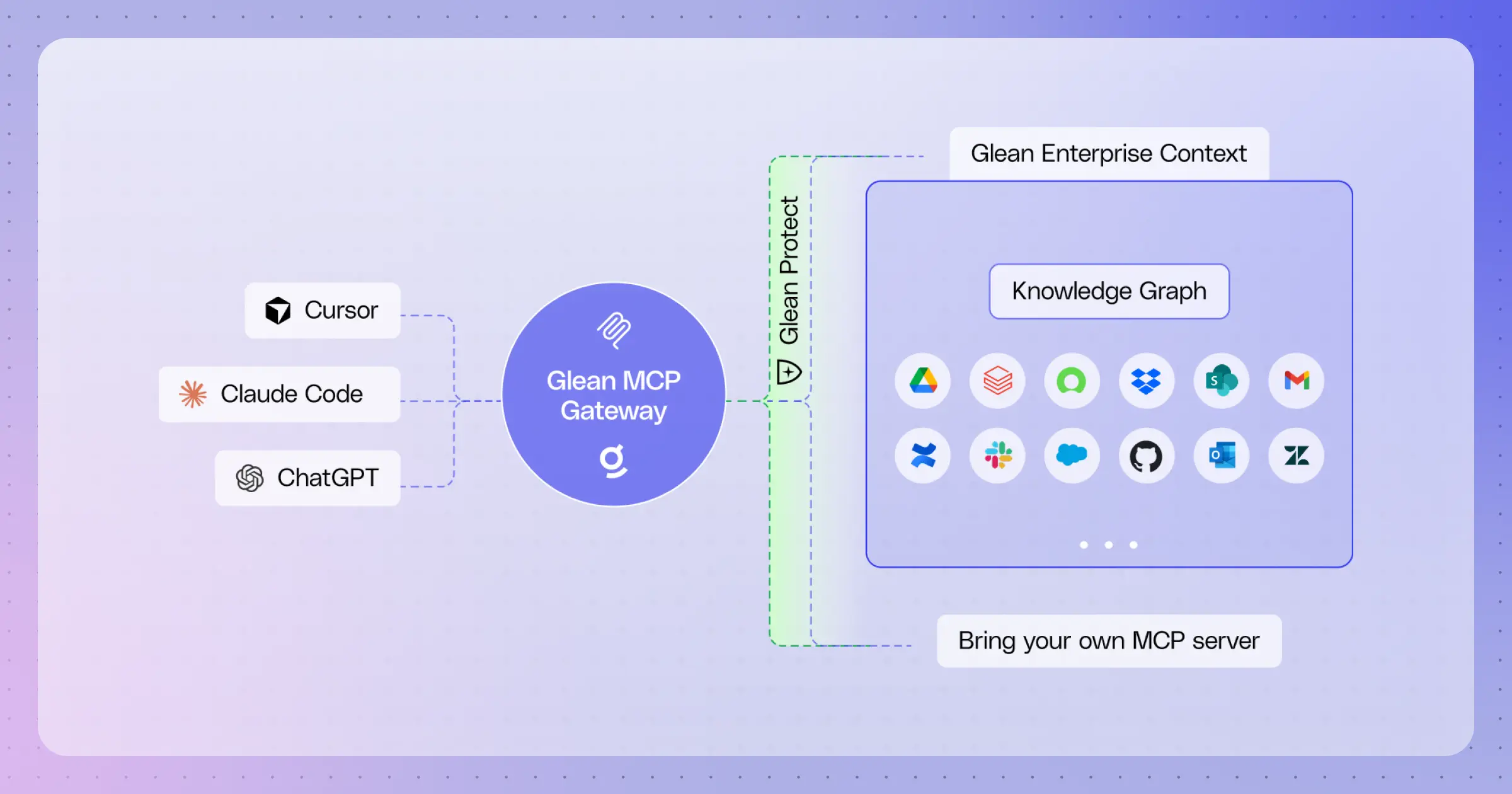
Personalized assistants can also raise internal productivity when they operate with strong context and constraints, since they adapt to real company workflows and knowledge rather than generic web patterns, such as Glean. Under that model, the assistant acts as a consistent teammate that retrieves the right internal guidance for the moment, drafts within policy, and keeps outreach aligned across sales and marketing.
Frequently Asked Questions
1. What specific data can AI tools use to personalize outreach?
The highest-performing personalization uses decision-grade data: signals that stay current, map to a customer outcome, and hold up under review. That typically includes both structured records (fields and events) and controlled unstructured inputs (approved knowledge and summarized conversations).
Common data inputs that add personalization value without forcing “deep surveillance”:
- Customer profile and commercial context: account hierarchy, contract entitlements, renewal and expansion terms, active products, regional constraints, consent and preference-center choices (zero-party data where available).
- Experience and interaction artifacts: email thread state (replied, bounced, out-of-office), meeting outcomes, call notes or transcript summaries, and content topic affinity derived from multiple touches instead of single clicks.
- Service and delivery posture: SLA status, incident or outage impact tags, implementation checklist status, and trend-level satisfaction movement (aggregated, not quote-level detail).
- Outbound-safe internal references: approved positioning statements, security language, proof points by industry, and validated value narratives that keep outreach consistent across teams.
2. How does AI improve customer engagement in outreach efforts?
AI can increase engagement by improving message selection, not only message writing. Selection includes offer choice, channel fit, timing precision, and continuity across touches so a customer does not receive disjointed outreach from multiple teams.
Where AI tends to create the biggest lift:
- Next-best content and offer selection: targeted promotions or resources that align to observed needs at the cohort level, with controls that prevent random discounting or off-message claims.
- Send-time and channel fit: delivery choices based on prior responsiveness patterns and channel preference, which can reduce low-intent touches that dilute trust.
- Continuity across the journey: consistent “state” across marketing, sales, and success so each touch builds on the prior interaction rather than restating context.
3. What are best practices for implementing AI in customer outreach?
Implementation success depends on disciplined operations: a clear scope, reliable inputs, and measurable rules that teams can audit. The fastest path to durable value uses strong evaluation and change control from day one, not only prompt tuning.
Practices that reduce risk and raise quality:
- Define a “truth set” before rollout: a small library of real accounts and scenarios with agreed expected outputs; use it for regression tests after any model, policy, or play change.
- Separate drafting from decisioning: treat “who should receive outreach and why” as a governed decision layer; treat “how the message sounds” as a controlled content layer.
- Add automated evaluation plus spot checks: routine checks for policy violations, unsupported claims, and stale facts—paired with weekly human sampling for high-impact segments.
- Use a maintained prompt pack for repeatable jobs: meeting recap, procurement follow-up, renewal checkpoint note, post-incident recovery message; each job includes required inputs, forbidden content, and an approval tier, as described in “Leverage AI’s full potential for sales workflows with better prompts.”
4. How can AI tools analyze customer behavior for better targeting?
Behavior analysis works best when AI recognizes patterns over sequences, not isolated events. That approach supports intent detection, risk identification, and lifecycle transitions without overreacting to noise.
Methods that improve targeting accuracy:
- Sequence and funnel analysis: identify common paths that precede conversion or expansion (for example: technical evaluation steps that often appear in a fixed order), then target outreach to unblock the next step.
- Anomaly detection against an account baseline: detect unusual shifts relative to the account’s own norms, which reduces false alarms caused by seasonality or uneven usage patterns across segments.
- Time-to-event models for lifecycle outcomes: estimate likelihood within a window (renewal risk within 60 days, conversion likelihood within 14 days) so teams can prioritize outreach that has a realistic chance to help.
5. What are the potential challenges of using AI for personalization?
Personalization can fail quietly: the program may produce fluent outreach that customers ignore, or it may create small trust fractures that only appear later as attrition or preference changes. The risks extend beyond data quality into governance, measurement, and customer perception.
Challenges that enterprise teams should plan for:
- Attribution confusion: unclear credit across channels and teams can lead to “optimization” that rewards activity instead of outcomes, especially when multiple touches occur in parallel.
- Bias and uneven coverage: models can prioritize accounts with richer instrumentation and neglect quieter segments, which can skew pipeline and service attention.
- Data handling and residency constraints: legal and security requirements can limit where data can flow and how long it can persist; weak controls can block scale even when early pilots perform well.
- Trust erosion through over-specificity: even accurate details can feel inappropriate in outbound context; careful abstraction and customer-expected framing protect brand trust while still enabling relevance.
The difference between outreach that earns attention and outreach that gets archived comes down to whether your data, signals, and governance work together as a system — not as disconnected projects. Every framework in this guide points to the same principle: AI performs best when it operates within clear boundaries, draws on trustworthy context, and keeps humans in control of the decisions that matter most.
If you're ready to put your company data to work across every team and workflow, request a demo to explore how we can help transform your workplace.
.png)