



5 ways AI tools help identify recurring customer problems
Customer service teams face an unprecedented volume of feedback across multiple channels, making it nearly impossible to manually identify patterns in customer complaints. Traditional methods of analyzing support tickets and feedback forms often miss critical insights buried in thousands of interactions.
AI technologies now enable businesses to automatically detect recurring issues by analyzing vast amounts of customer data in real time. These systems use advanced algorithms to spot trends that human agents might overlook, transforming raw feedback into actionable insights.
The shift from reactive to proactive customer support represents a fundamental change in how enterprises approach problem resolution. By identifying patterns before they escalate into widespread issues, companies can address root causes and significantly improve customer satisfaction rates.
What is agentic reasoning in AI?
Agentic reasoning in AI represents a sophisticated approach where systems autonomously plan, execute, and adapt based on specific tasks and goals. Unlike traditional AI that follows predetermined rules, agentic AI systems can break down complex problems into manageable steps, make decisions about which tools to use, and adjust their approach based on results — much like a skilled human agent would. In practice, organizations implementing AI-powered customer service systems report customer satisfaction improvements from 89% to 99%. Additionally, 78% of organizations now use AI in at least one business function, with 71% regularly employing generative AI specifically for customer service applications.
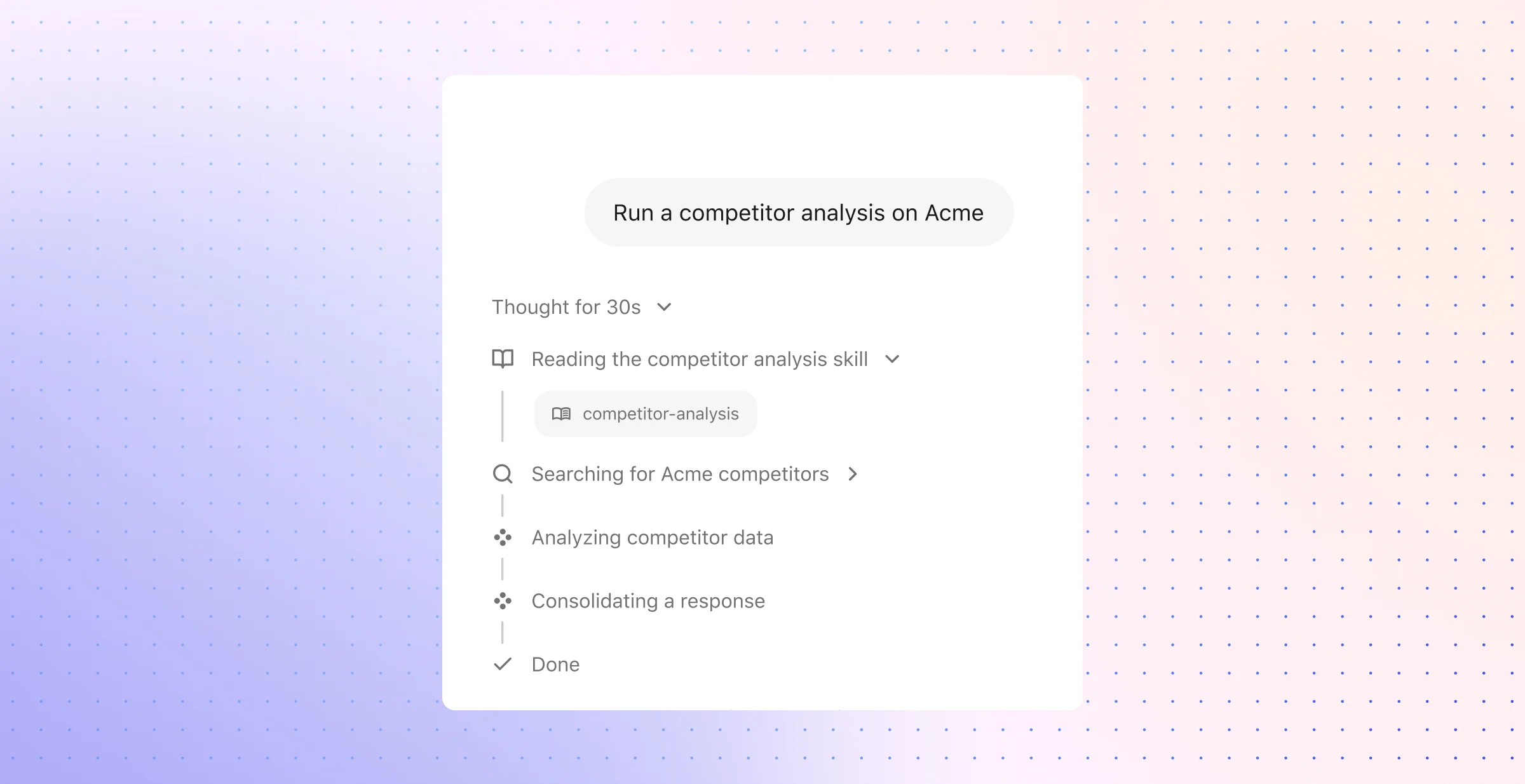
These systems combine multiple AI capabilities: natural language processing to understand requests, machine learning to improve over time, and decision-making algorithms to choose optimal paths. When applied to customer service, agentic reasoning enables AI to handle multi-faceted support issues that previously required human intervention. For instance, resolving a billing dispute might involve understanding the customer's complaint, searching through transaction records, analyzing account history, and crafting a personalized response — all executed autonomously by the AI agent.
The power of agentic reasoning lies in its ability to self-reflect and optimize. After completing a task, these systems evaluate their performance and adjust future approaches accordingly. This continuous improvement cycle means that agentic AI becomes more effective at identifying and resolving customer issues over time, learning from each interaction to provide increasingly sophisticated support solutions.
How AI tools help identify recurring customer problems
1. AI-driven feedback analysis
AI tools efficiently process large volumes of customer feedback to reveal underlying issues. By utilizing sophisticated models, they examine data from multiple channels, such as emails and social media. Sentiment analysis enhances this process by detecting subtle signs of dissatisfaction, allowing businesses to fine-tune their feedback mechanisms for more precise interventions.
2. Predictive analytics for issue forecasting
With predictive analytics, businesses gain insights into potential customer challenges by examining historical trends. AI analyzes previous interactions to forecast emerging issues, enabling companies to take preventative measures. This approach not only minimizes future complaints but also bolsters customer loyalty.
3. AI-powered sentiment analysis
AI aggregates information from various sources to create a detailed picture of customer interactions. This comprehensive analysis enables businesses to pinpoint recurring issues and devise strategic solutions. By addressing these challenges strategically, companies can prevent future disruptions and improve overall customer experience. AI implementations show 148% returns based on $25,000 investments generating $62,000 in benefits within the first year, and leading AI chatbot implementations achieve deflection rates exceeding 45% of incoming queries, with retail and travel companies seeing rates above 50%.
4. Automating customer support with AI
AI-powered chatbots and virtual assistants deliver immediate responses to routine inquiries. This technology streamlines support processes, freeing human agents to tackle more complex cases that benefit from personal engagement. Consequently, support teams enhance their productivity while customers receive quicker assistance.
5. Enhanced data integration and insights
AI aggregates information from various sources to create a detailed picture of customer interactions. This comprehensive analysis enables businesses to pinpoint recurring issues and devise strategic solutions. By addressing these challenges strategically, companies can prevent future disruptions and improve overall customer experience.
Tips on implementing AI for customer issue identification
Choose the right AI tools
As customer expectations continue to evolve, implementing AI-driven solutions for identifying recurring problems has become essential for maintaining competitive advantage. The right AI tools not only help you understand what your customers are experiencing today but also anticipate what they'll need tomorrow. According to research, two-thirds of business leaders report that AI adoption has boosted their revenue growth rate by over 25%, and the banking and finance sectors could see productivity enhancements of 3% to 5% and cost reductions of $300 billion through AI implementation.
Train your team
As customer expectations continue to evolve, implementing AI-driven solutions for identifying recurring problems has become essential for maintaining competitive advantage. The customer service AI market is projected to expand from $12.06 billion in 2024 to $47.82 billion by 2030, representing a compound annual growth rate of 25.8%. Some organizations report dramatic response time improvements from over six hours to less than four minutes. The right AI tools not only help you understand what your customers are experiencing today but also anticipate what they'll need tomorrow.
Monitor and continuously improve
Consistent evaluation of AI systems is essential for sustained success. Collect insights from users and analyze performance data to refine algorithms and processes. This proactive approach ensures your AI adapts to evolving customer demands, keeping your operations efficient and effective.
As customer expectations continue to evolve, implementing AI-driven solutions for identifying recurring problems has become essential for maintaining competitive advantage. The right AI tools not only help you understand what your customers are experiencing today but also anticipate what they'll need tomorrow.
Ready to see how AI can revolutionize your customer support operations? Request a demo to explore how Glean and AI can transform your workplace and discover how we can help you build a more responsive, intelligent support system.