



How marketing teams leverage AI for influencer data analysis
Marketing teams spend hours each week hunting through spreadsheets, platform dashboards, and old campaign reports to piece together a clear picture of which creators actually fit their next campaign. With influencer marketing spend projected to reach $33 billion in 2025, the cost of slow, fragmented discovery compounds fast—wasted budget on mismatched partnerships, missed niche creators, and decisions grounded in vanity metrics rather than real audience fit.
AI search changes that equation. It gives marketing teams a single, natural-language interface to surface creator profiles, audience data, engagement patterns, and past campaign outcomes from across every tool and dataset the team already uses. The result: faster shortlists, sharper analysis, and a defensible rationale behind every partnership decision.
This article breaks down the practical mechanics—what AI search for influencer data actually means, how teams apply it across the discovery-to-measurement lifecycle, and how to build the data foundation that makes it all work.
What Is AI Search for Influencer Data?
AI search for influencer data is a method of finding, unifying, and analyzing creator information through natural-language queries across your existing tools and datasets. Rather than toggling between browser tabs, exported CSVs, and siloed dashboards, a team member can type a plain-English request—"mid-tier skincare creators with strong save rates and a US-majority audience"—and get a consolidated, permissioned answer drawn from internal campaign records, platform exports, and shared documents. The underlying technology combines semantic search (understanding the meaning behind a query, not just matching keywords) with a knowledge graph that maps relationships between people, content, and activity across connected systems.
What "influencer data" actually covers
The term is broad, so it helps to define the specific data types marketing teams need to search against:
- Creator profile details: Platform handles, management contacts, content categories, geographic base, and posting cadence across Instagram, TikTok, YouTube, and LinkedIn.
- Audience demographics: Top geographies, age and gender breakdowns, language distribution, and interest clusters—the raw material for audience demographics analysis that determines whether a creator's followers match a campaign's target segment.
- Engagement metrics: Saves, shares, comment depth, story completion rates, and click-through rates. These influencer engagement metrics separate genuine influence from inflated numbers; a 2022 academic study found that artificial engagement tactics accounted for over 20% of total engagement for some mega-influencers.
- Historical campaign outcomes: Past partnership performance—landing-page sessions, email signups, affiliate revenue, cost per acquisition—stored in briefs, post-campaign reports, and analytics dashboards.
- Brand-safety signals: Content themes, prior partnerships, compliance notes, and any exclusion flags that protect the brand from reputational risk.
Where AI search fits—and where it doesn't
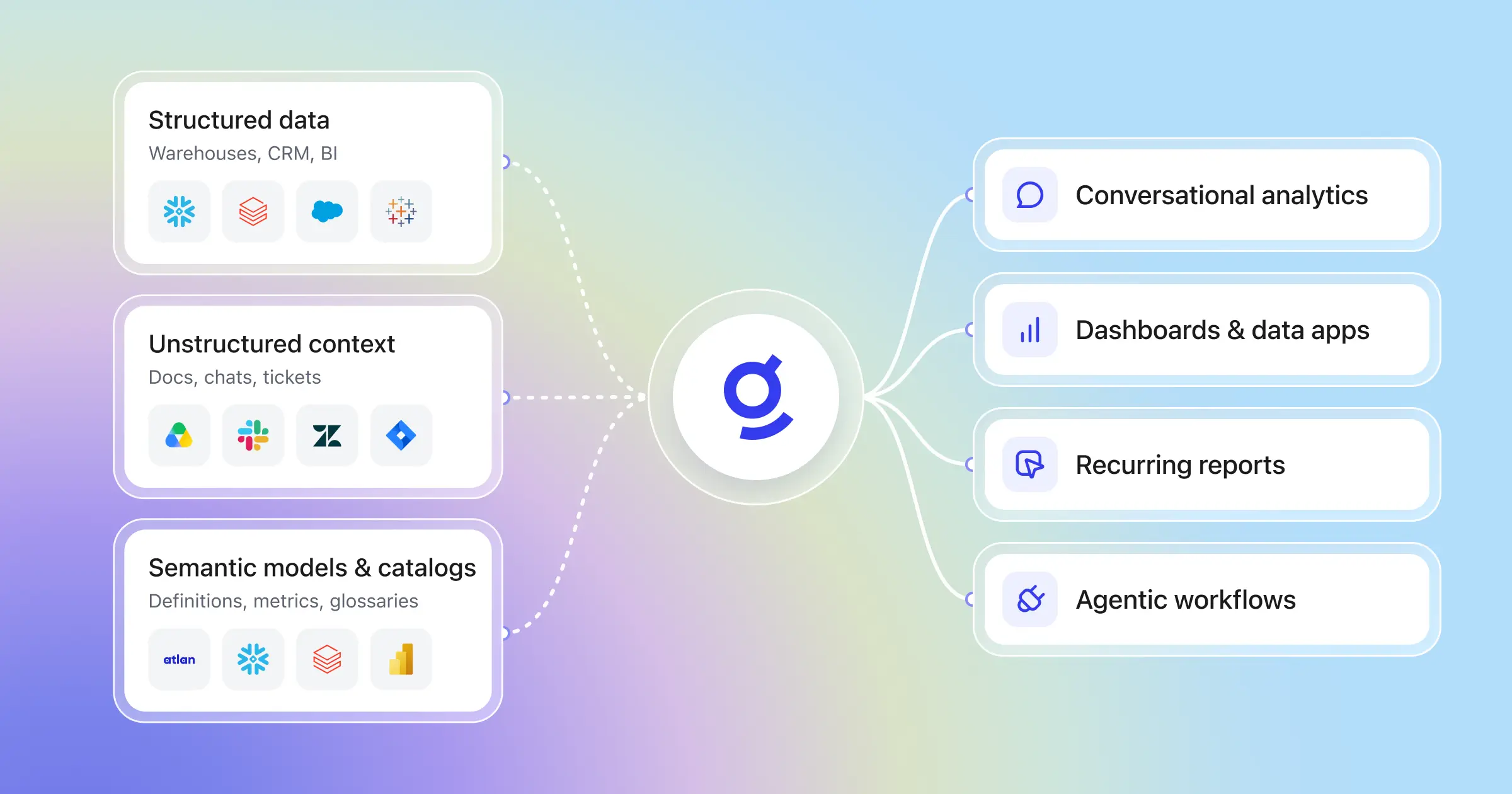
AI search acts as a unifying layer, not a replacement for strategy or relationships. It excels at speed and coverage: connecting fragmented data sources, surfacing niche creators a manual scan would miss, and delivering side-by-side comparisons in seconds. Organizations across industries consistently cite "fragmented data sources" as the core blocker to fast, confident decision-making; an AI search layer that connects to permissioned internal knowledge—such as the enterprise search and knowledge graph capabilities available in platforms like Glean—directly addresses that bottleneck.
That said, AI outputs are decision support, not final answers. Every recommendation should trace back to a verifiable source: a platform export, a campaign report, a media kit snapshot. Human review remains essential for brand fit, compliance checks, contract terms, and FTC disclosure requirements. The most effective teams treat AI search the way a senior analyst treats a research brief—trust the data, verify the interpretation, and own the final call.
Setting this expectation early matters. AI-driven influencer data analysis delivers the most value when teams pair it with a repeatable influencer selection process: clear criteria for what "good" looks like, standardized fields across creator records, and explicit guardrails around which claims require manual verification. Without that structure, even the best search technology returns noise instead of signal.
How marketing teams use AI search to find influencer data
AI search delivers the most leverage when the team treats it as a production workflow: inputs, checks, approvals, and a record that finance and legal teams can audit. That mindset keeps creator selection consistent across regions, agencies, and quarter-to-quarter turnover.
Start with the outcome: a shortlist that holds up in reviews
Define the approval artifact upfront, then let AI search fill it. Most stakeholder pushback comes from gaps in rationale, weak authenticity checks, or unclear measurement intent—problems that a structured shortlist can prevent.
- Audience alignment: A verified match to target geography, language, and interest clusters; strict confirmation for regulated launches and region-specific offers.
- Creative alignment: Evidence of repeatable category authority—routine formats, consistent themes, and audience behavior that fits the brief (for example, high saves on tutorials rather than one viral spike).
- Commercial signal: A view of outcome potential that goes beyond averages—engagement distribution, velocity patterns, and any trackable downstream actions such as clicks or redemptions.
- Audit-ready evidence bundle: Saved source artifacts for key claims (audience breakdown, recent top posts, prior partnership history) plus a short note that states why the team trusts each data point; this step matters because research on influencer fraud shows material distortion in surface metrics for some large accounts.
Use AI search as an orchestration layer across systems
Treat AI search as the coordinator between marketing ops systems, creator data tools, and internal knowledge—so work moves with minimal copy/paste and fewer “version-of-truth” debates. This setup also reduces operational drag once legal, procurement, and regional teams enter the process.
- Pull context from internal systems: Prior briefs, post-campaign learnings, spend approvals, brand guidelines, and risk notes—so new decisions reflect what already happened.
- Add external creator signals: Platform exports, audience snapshots, affiliate dashboards, and web analytics—so shortlist logic reflects current creator behavior, not outdated bios.
- Push outputs into execution tools: A creator CRM record, an approval ticket, and a campaign workspace doc—so each handoff carries the same fields, the same evidence, and the same next steps.
Aim for three wins from day one
Early wins build trust with teams that already feel overload from creator operations. The strongest results come from a tight focus on speed, decision quality, and workflow continuity.
- Shorter time-to-shortlist without niche loss: Semantic queries plus adjacent-interest expansion increase coverage versus hashtag search; teams often report major time savings once they rely on AI for initial filtering rather than manual scanning.
- Higher-quality influencer data analysis: Authenticity checks, engagement-shape reviews, and audience-fit validation reduce dependence on follower count and headline engagement rate; this matters in a market where bot-like patterns and engagement pods can skew results.
- Smoother research-to-report pipeline: One record that travels from evaluation to approvals to measurement reduces “rebuild the deck” work and keeps campaign performance insights tied to the original hypothesis.
Establish guardrails before the first prompt
Guardrails define what AI search can treat as trustworthy, what requires a second source, and what requires human confirmation. They also prevent accidental policy drift across agencies and regions.
- Approved source list: Define which exports, dashboards, and internal docs count as authoritative for audience, performance, and prior partnership history.
- Verification rules for high-risk claims: Require manual validation for audience geography, age ranges for restricted categories, and any claim that implies regulated outcomes.
- Human confirmation fields: Contract scope, usage rights, exclusivity windows, payment terms, and FTC disclosure language; add platform-specific disclosure requirements where relevant, including labels that platforms require for synthetic or AI-generated assets.
- Escalation owners: Assign named reviewers for brand safety and compliance so exceptions route to the right inbox without delays or ambiguity.
Standardize prompt-driven workflows so outputs stay comparable
A shared prompt library creates consistent outputs across analysts, agencies, and regions. The goal: comparable creator evaluation, not one-off answers that vary by who types the query.
- Semantic discovery prompt: “Return creators in [category] with audiences concentrated in [geo], content in [format], and strength in [quality signal]; include disqualifiers for [risk]; output a ranked list with structured fields.”
- Lookalike expansion prompt: “Find creators similar to [top performer] based on audience overlap, content themes, and engagement distribution; exclude creators with suspicious growth anomalies.”
- Authenticity and risk prompt: “Scan recent activity for inorganic patterns—spikes, repetitive comment structures, and mismatch between reach and engagement; label each risk with confidence and required human checks.”
- Outcome forecast prompt: “Estimate expected reach and action rates based on historical patterns for similar creators and formats; state assumptions and list the metrics that require post-launch validation.”
Frequently Asked Questions
What are the benefits of using AI for influencer discovery?
AI adds leverage in places where manual review breaks down—scale, noise, and distorted signals. Research on influencer fraud and crowd-sourced manipulation shows that surface metrics can hide material artificial activity, so discovery value comes from both reach expansion and risk reduction.
- Wider creator coverage with fewer false positives: semantic retrieval can surface niche creators based on content themes, visual cues, and audience behavior—well beyond what hashtag and category lists expose.
- Stronger pre-spend confidence: predictive models can estimate expected reach, engagement velocity, and cost-per-outcome ranges before a contract, which helps teams avoid “looks good in a dashboard, under-delivers in market.”
- Earlier fraud and suitability detection: anomaly detection on follower growth and engagement shape, plus text and image classifiers for brand safety, can filter out risky candidates before stakeholder review time starts.
How can AI analyze influencer audience demographics?
AI can turn audience exports into structured comparisons, but the most useful output includes a confidence level that reflects source quality and recency. Audience makeup can shift fast after a viral post or a platform algorithm change, so a single snapshot rarely holds.
- Triangulation across inputs: compare platform-reported geo and language splits with media-kit claims, affiliate/customer geo (when available), and prior campaign cohorts to reduce reliance on one source.
- Audience drift detection: flag sharp changes in top geos, language distribution, or interest clusters across recent periods; treat major shifts as a re-verify trigger, not as a rounding error.
- Overlap and deduped reach estimates: identify shared follower bases across shortlisted creators so teams can plan unique reach, not double-counted impressions.
What tools are available for AI-driven influencer marketing?
Teams typically combine creator data systems with AI capabilities that parse unstructured media, forecast outcomes, and standardize workflows. The most effective setups include AI that can read captions, comments, and video frames—not only numeric dashboards.
- Content intelligence tools: NLP for topic and sentiment classification; computer vision for logo, product, and scene detection; both support suitability checks and creative pattern analysis at scale.
- Predictive and measurement tools: performance models for expected outcomes; lift tests and modeling frameworks that separate creator impact from baseline demand and seasonality.
- Workflow and governance tools: contract and deliverable tracking, disclosure requirement enforcement, and a shared prompt library that produces consistent creator briefs, evaluation tables, and reporting outputs across teams.
What metrics should marketing teams consider when selecting influencers?
A metric set should reflect two realities: attention does not equal intent, and averages can hide risk. Use measures that capture quality, authenticity, and incremental impact—especially in categories where influencer fraud can distort top-line engagement.
- Fit metrics: audience-to-ICP match, category consistency over time, and suitability signals from historical themes and partnership context.
- Quality metrics: saves and shares as intent proxies, comment intent signals (questions, comparisons, troubleshooting), engagement distribution across posts, and “true reach” versus inflated follower counts.
- Outcome metrics (when trackable): incremental lift, CTR, conversion rate, CPA, trial starts, affiliate revenue, and saturation effects when multiple creators target the same cohort.
How does AI improve the efficiency of influencer marketing campaigns?
Efficiency gains show up when AI reduces operational friction and shortens the feedback loop between creative output and performance signal. This matters because influencer programs often fail at scale due to manual coordination, slow approvals, and late insight delivery.
- Less manual ops work across the lifecycle: automated outreach drafts, deliverable tracking, disclosure checks, and payment support can reduce the administrative load that caps program scale.
- Faster iteration during active flights: real-time detection of creative fatigue, sentiment shifts in comments, or weak CTA response can guide asset swaps and budget reallocation while the campaign still has leverage.
- More consistent reporting with fewer rebuilds: AI can generate standardized weekly insights that tie creative patterns to outcomes, which keeps learnings usable for the next brief rather than trapped in one-off wrap decks.
The teams that move fastest in influencer marketing aren't the ones with the most data—they're the ones who can actually find, trust, and act on it. A unified AI layer that connects your creator records, campaign history, and audience insights turns fragmented information into confident decisions at the speed your program demands.
If you're ready to see how that works in practice, request a demo to explore how we can help AI transform your workplace.

.jpg)

.png)



.jpg)
.webp)