







How to compare knowledge management tools for enhanced customer support
Customer support teams face a persistent challenge: the knowledge needed to resolve issues fast rarely lives in one place. It sits across help centers, ticketing systems, CRM records, internal wikis, chat threads, and product documentation — scattered in ways that slow agents down and frustrate customers.
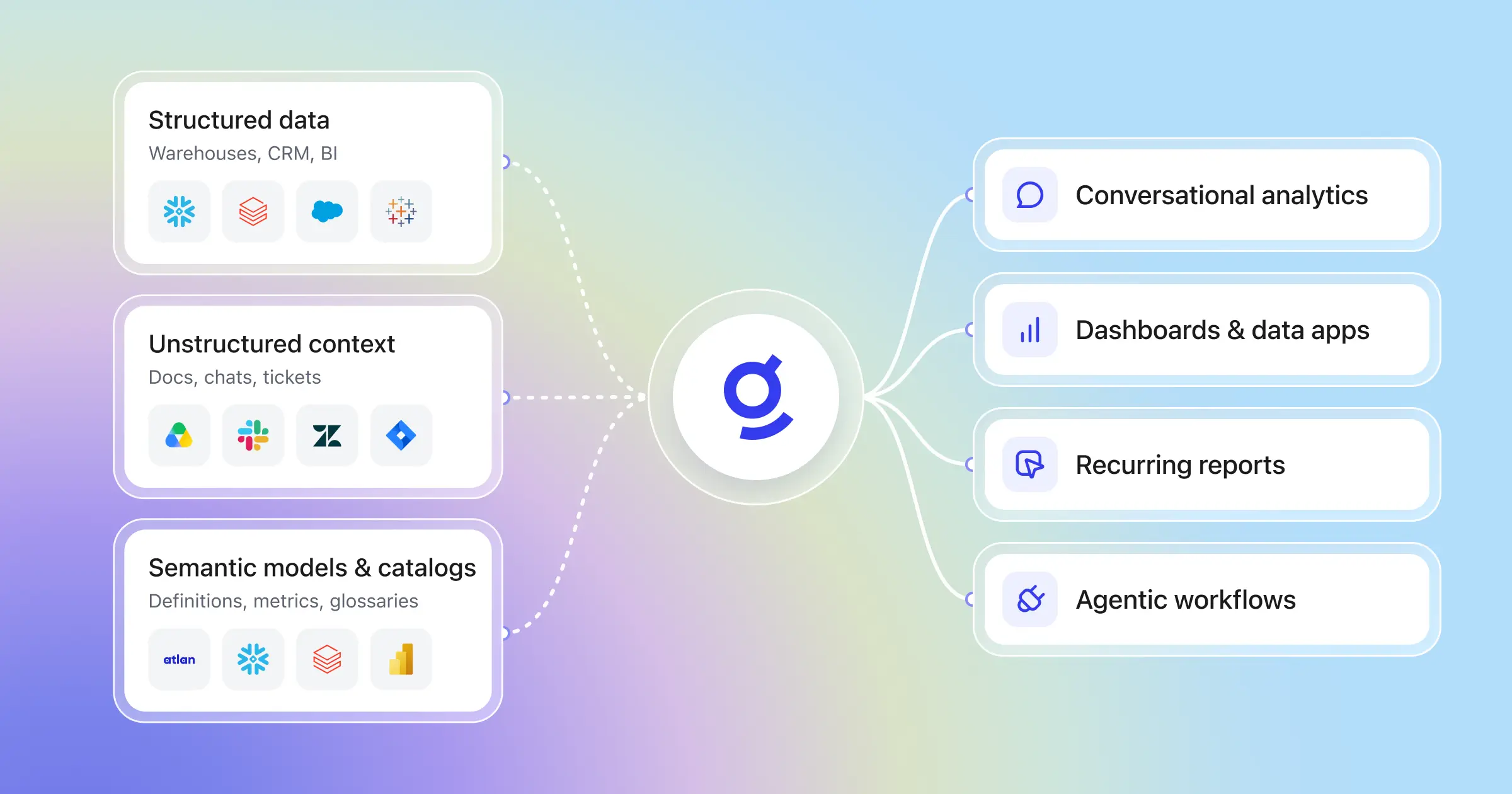
A knowledge discovery platform addresses this problem at its root. Rather than ask teams to consolidate everything into a single repository, it connects distributed knowledge, understands natural-language questions, and delivers grounded, permission-aware answers where support work actually happens.
This guide walks through how to compare knowledge management tools built for customer support — not by feature count, but by the outcomes that matter: faster resolution, stronger self-service, better governance, and measurable improvement in customer experience.
What Is a Knowledge Discovery Platform for Customer Support?
A knowledge discovery platform for customer support is a system that connects information across business tools, understands the intent behind a question, respects existing access controls, and surfaces trustworthy answers for both agents and customers. It goes well beyond static document storage. The core purpose is to help support teams find, trust, and act on the right knowledge — fast — without toggling between a half-dozen applications or relying on tribal expertise that only a few senior agents possess.
Traditional knowledge management software typically centers on a single help center or internal wiki. Teams publish articles, organize them into categories, and hope that keyword search does the rest. That model breaks down quickly in enterprise environments where support answers span ticketing systems, engineering notes, shared drives, product changelogs, escalation playbooks, and CRM data. A knowledge discovery platform pulls from all of these sources, treating the entire enterprise knowledge landscape as a connected system rather than a collection of isolated silos.
What separates discovery from storage
The distinction matters for day-to-day support operations. A basic AI knowledge base stores content and returns documents that match a query. A discovery platform does something fundamentally different:
- Cross-system retrieval: It indexes and searches across enterprise knowledge platforms — help desks, documentation tools, chat history, internal wikis, and more — so agents do not have to guess where an answer lives.
- Natural-language understanding: Instead of forcing exact keyword matches, it interprets questions the way a person would ask them. An agent typing "customer can't access billing portal after migration" should get relevant troubleshooting content even if no article uses that exact phrase.
- Permission-aware answers: The platform mirrors source permissions in real time. Agents see only what they are authorized to access; customer-facing self-service support surfaces only public content. This is not optional for enterprise teams — it is foundational.
- Grounded, cited responses: Answers link back to their source material, so agents can verify accuracy before sharing information with a customer. Grounding reduces hallucination risk and builds the kind of trust that drives adoption.
- Contextual relevance: The best results account for who is asking, their role, their team, and the situation — not just text similarity. A support engineer and a billing specialist may ask the same question but need different answers drawn from different sources.
Why this matters for support teams specifically
For customer support, the practical payoff is direct. Better knowledge discovery features translate into shorter average handle time, higher first-contact resolution, and a smoother ramp for new hires who lack years of institutional context. Self-service improves because customers encounter accurate, up-to-date answers instead of outdated FAQ pages that create more confusion than they resolve.
Support documentation management also shifts from a manual, reactive process to something the platform helps maintain. When a discovery system tracks which queries return no results, which articles drive successful resolutions, and which content has gone stale, knowledge teams can prioritize updates based on real impact rather than guesswork. That feedback loop — where support interactions continuously improve the knowledge layer — is what separates a modern discovery platform from a static repository that degrades the moment it launches.
How to choose a knowledge discovery platform for customer support?
Choose a comparison method before you review a single product. A support organization needs a system that improves service outcomes in day-to-day work, not one that wins on feature volume or a polished sales script.
That shift changes the whole buying process. Instead of asking which platform offers the most capabilities, ask which one helps your team close cases with less rework, serve customers with more consistency, keep sensitive information under control, reduce upkeep on support content, and show clear operational lift after launch.
Set the scorecard around business outcomes
A useful scorecard should reflect the pressure points support teams deal with every week. Keep the categories narrow, practical, and tied to service performance:
- Case resolution speed: Measure whether agents can move from question to confirmed answer with less delay. Look at case duration, transfer volume, and the time it takes a new hire to handle common issues without help from senior staff.
- Customer self-service quality: Judge whether customers reach the right answer on their own, whether search results match real language, and whether the system knows when to route a harder issue to a person instead of forcing a dead end.
- Control and risk management: Review how the platform handles restricted material, source-level access, audit needs, and answer traceability. Support teams need a system that protects internal notes, policy exceptions, and escalation records without extra manual policing.
- Knowledge operations effort: Check whether the product helps your team spot duplicate material, weak articles, unanswered topics, and stale instructions. This matters more than article count because support content changes fast.
- Service impact you can prove: Tie the evaluation to concrete indicators such as repeat contact rate, escalation rate, first-response quality, successful self-service sessions, and agent confidence in the answers they use.
A framework like this gives every team the same language for review. It also prevents a common mistake: a platform may look impressive in a broad demo, yet still fail the work that support teams need most.
Put the right team in the room
This decision should not sit with procurement or support leadership alone. The people closest to the work often spot the issues that broad product tours miss: frontline agents know where answers break down under time pressure, knowledge owners know where content decay creates risk, and operations leaders know which process gaps add cost at scale.
IT and security should join early, not at the end. They need to test source connectivity, identity controls, data handling, and rollout constraints before the shortlist narrows. That early review helps avoid a late-stage surprise where a promising tool fails a security check or cannot support the systems your agents rely on every day.
Compare every option against the same criteria
Once the group agrees on the scorecard, apply it without exceptions. Give each vendor the same set of support scenarios, the same sample sources, and the same success thresholds. Test common requests, messy edge cases, policy lookups, and situations where the right result should be no answer at all because the user lacks access.
A strong pilot scorecard usually covers answer accuracy, source authority, response clarity, search precision, sync freshness, and ease of use inside the support workflow. Ask each vendor to show the exact product experience, not a slide or a mockup. Real dashboards matter too; a platform should reveal what agents cannot find, what customers abandon, and which knowledge gaps drive repeat work.
For a practical reference point, the Glean knowledge discovery guide offers a clear benchmark for enterprise retrieval quality: strong discoverability across business systems, governance that stands up to enterprise controls, and usage signals that show whether the platform earns trust after deployment.
1. Start with your support model and knowledge gaps
Vendor comparison should start with service design, not software categories. A platform that fits a high-volume consumer help desk may fail in a B2B support team that handles long email threads, account-specific exceptions, and frequent product escalations.
Define the support environment
Document the support model as it exists today: channel mix, case complexity, ownership paths, and service-level expectations. Note where requests begin, where they change hands, and which teams shape the final answer — support, product, finance, legal, or engineering.
A useful way to frame this step is to break the environment into four operating conditions:
- Channel mix: Separate live channels from asynchronous ones. Chat and phone require short, decisive answers; email and community cases often require more context, policy detail, and follow-up.
- Case depth: Identify which requests stay within frontline support and which ones require specialist review. Password resets and shipment status checks demand a different knowledge pattern than billing disputes or integration failures.
- Approval points: Mark every moment where an agent cannot respond without confirmation from another team. Those handoffs often reveal where knowledge lacks structure or where exception rules live outside formal documentation.
- Audience tiers: Split public help content, agent-only operating guidance, and restricted exception material into separate classes. Each class needs its own retrieval rules, review model, and answer format.
This exercise makes the evaluation sharper. Some platforms suit FAQ retrieval; others fit policy interpretation, guided troubleshooting, or cross-team casework.
Find the questions that expose the real gaps
Next, pull a sample of recent cases that took too long, bounced across teams, or produced inconsistent answers. Use real support traffic from the last quarter — not curated examples from enablement decks.
Group those cases by question type. In most enterprise teams, a small set of patterns drives a large share of friction:
- Policy interpretation: Refund terms, renewal terms, service credits, and entitlement checks often break down when agents must reconcile multiple versions of the same rule.
- Diagnostic triage: Product issues rarely map to one article. Agents need error detail, known issue context, workaround notes, and prior case history in one path.
- Account-state questions: Setup status, provisioning delays, user access problems, and billing state checks often depend on CRM fields, admin notes, and product data rather than article text alone.
- Change explanation: Product launches, deprecations, and incident follow-up require agents to explain what changed, who it affects, and what action the customer should take.
- Exception handling: The hardest cases sit outside the standard script. Credits outside policy, region-specific terms, or custom contract behavior often expose where expert knowledge has no durable home.
These categories reveal the actual failure points: version drift, weak search precision, missing ownership, poor article coverage, or overreliance on senior staff memory. The goal is not a longer content inventory; the goal is a clearer view of where support work slows down because the answer path breaks.
Set a baseline before vendor review
Map the workflows that consume the most effort and carry the most customer risk. Common examples include refund review, account setup, integration troubleshooting, product-change communication, and engineer handoff after incident impact.
Then capture a baseline with operational metrics tied to those workflows. Average handle time and first-contact resolution still matter, but they rarely tell the full story on their own. Add search success rate, query reformulation rate, no-result rate, transfer rate, escalation lag, self-service resolution by issue type, and the number of days until a new agent can close common cases without help from a senior teammate.
This baseline gives the comparison discipline. A vendor demo can make any interface look polished; a measured workflow test shows whether the platform reduces repeat touches, shortens answer paths, and lowers the amount of support work that stalls in review queues.
2. Map the systems the platform needs to connect to
Treat source mapping as an operational exercise, not a product tour. Support relies on a core set of systems for live case work and a second layer for policy, product, and account context; the platform should work with that stack as it stands today.
Keep the scope disciplined. Build a source inventory, rank each system by support value, then test the platform against that list in the same order agents use those systems during a case. This keeps the evaluation tied to customer support tools your team already depends on.
Rank sources by support value
Not every source deserves equal weight. A public help center may answer common setup questions, but a billing rule in the CRM or a defect note in an engineering system may decide whether an agent can resolve the case correctly.
Use three tiers to sort the stack:
- Frontline sources: ticket records, chat history, macros, and internal runbooks that agents consult during active cases.
- Decision sources: CRM fields, policy documents, contract terms, billing records, release notes, and service status updates that define what an agent can say or do.
- Escalation sources: incident reviews, defect trackers, engineering docs, and specialist notes that support unusual or high-risk issues.
This model gives the comparison structure. It also reveals a common weakness early: some platforms handle published articles well, then lose depth once a question depends on operational records or specialist context.
Look past connector count
Connector volume can hide shallow coverage. A useful integration should preserve thread context, document structure, source ownership, dates, tags, and access rules; without those signals, search quality drops fast.
Review each priority source at a technical level:
- Sync cadence: support needs fresh data for outages, policy changes, and recently closed cases.
- Indexed content types: article bodies alone are not enough; comments, attachments, PDFs, spreadsheets, transcripts, and slide decks matter too.
- Metadata retention: product line, severity, region, customer tier, and document status often shape the right answer.
- Update behavior: edits, deletions, and access changes should flow through without manual cleanup.
- Permission fidelity: the platform should respect the visibility rules already in place inside each source system.
This is where strong knowledge management software separates itself from a basic search layer. Broad coverage matters, but integration depth decides whether the answer stays trustworthy.
Evaluate relationship awareness
Support cases rarely depend on one record in isolation. A solid answer may require a case history, the customer’s plan details, a recent product change, and the team that owns the issue. The platform should understand those relationships instead of treating each file as a disconnected result.
Test that with real scenarios from your queue. A refund exception may require policy text, contract terms, and an internal note from finance. An account-access issue may depend on identity settings, a service incident, and the latest workaround from engineering. Platforms such as Glean model these links across people, content, conversations, and tasks, which gives enterprise teams a more reliable knowledge discovery layer than a system built around standalone documents alone.
3. Compare search and knowledge discovery features
After system coverage comes the harder test: whether the platform can turn messy enterprise data into a dependable support answer. This is where the widest gaps tend to appear, because support teams do not work from clean article libraries alone. They work from short chat exchanges, ticket notes, policy pages, bug threads, release updates, spreadsheets, and internal docs that vary widely in format, quality, and length.
That data mix exposes weak retrieval fast. A platform may look capable in a demo, then fall apart once an agent searches for a half-remembered acronym, a product codename, or a policy exception buried in a comment thread. Strong knowledge discovery features account for that reality from the start.
Look for hybrid retrieval, not one search method
Enterprise support needs more than one kind of search. Exact-match retrieval still matters because support work relies on specific terms — error codes, feature flags, subscription names, internal queue labels, and contract language. At the same time, agents often search in plain language, especially under time pressure, and the system has to understand that phrasing without a perfect keyword match.
The strongest platforms combine several methods inside one retrieval layer:
- Lexical retrieval: This handles exact strings with precision. It matters most for short enterprise content, where one product term or identifier can change the answer completely.
- Semantic retrieval: This handles intent and paraphrase. It helps when a user asks for the answer in everyday language while the source material uses formal documentation language.
- Query planning: This rewrites the search before retrieval starts. In practice, that can mean expansion of shorthand, product aliases, internal acronyms, or support terminology so the system looks for what the user meant, not only what they typed.
This matters because enterprise data rarely behaves like web content. A Slack reply has no title; a troubleshooting note may sit in a private ticket; a product update may appear in a changelog with no support framing at all. Hybrid retrieval gives the platform a better shot at finding the right source across that uneven terrain.
Ask how relevance works in practice
Search quality depends less on retrieval volume than on ranking discipline. In support, the best result is often not the document with the closest wording. It is the current, approved, support-safe source that fits the case and reflects how the company actually works.
Ask vendors what drives rank order, and ask for concrete examples. A useful answer should explain why a current escalation runbook beats an old workaround, why a validated internal note outranks a casual chat mention, and how the system treats duplicate answers across different repositories.
Three ranking signals deserve close review:
- Authority and ownership: The engine should favor approved sources, maintained content, and material tied to the right team or process owner. This cuts down on answers from unofficial copies or outdated side documents.
- Freshness with context: Recent content is not always better, but stale support guidance creates risk. Good systems weigh recency in a way that fits the source — incident updates need very high freshness; evergreen policy docs need stable rank until a new version replaces them.
- Company language adaptation: Enterprise support runs on internal vocabulary. Product codenames, queue names, abbreviations, and support shorthand all shape query meaning. Platforms that adapt to company-specific language tend to improve retrieval quality over time because they learn how teams actually describe work.
Evaluate the answer experience, not just the result list
Support agents rarely need a stack of links and a guess. They need a system that can assemble the answer from the right evidence, preserve context across follow-up questions, and reduce the amount of manual synthesis required during a live case.
This is where answer design matters. Compare how each platform handles the jump from retrieval to response:
- Passage-level evidence: The system should point to the exact excerpt, field, or note that supports the answer. That saves time and makes verification much easier than a generic document reference.
- Follow-up continuity: Multi-step support work often starts broad, then narrows fast. The platform should hold context across the exchange so the agent can refine the request without a reset.
- Cross-source synthesis: Many support answers require more than one source — a policy doc, a recent incident note, and a product update, for example. Strong systems can assemble those inputs without flattening important differences between them.
- Expertise discovery: Some cases need human judgment. The platform should help surface the right team, owner, or subject matter expert when the answer depends on specialized knowledge rather than published documentation.
This part of the evaluation usually reveals whether a product can support real troubleshooting or only basic lookup. A platform that handles passage evidence, multi-turn context, and expert routing will feel much more useful in queues where cases span product behavior, account history, and internal process rules.
Treat permission-aware retrieval as part of search quality
Permission controls affect more than access. They affect whether the answer itself can be trusted. In support, restricted content often sits next to public content — internal notes attached to a customer case, finance exceptions tied to a billing article, or escalation guidance that should never appear in self-service.
That means retrieval tests should go beyond simple visibility checks. Look at how the platform behaves in edge cases:
- Partial access scenarios: Can it exclude restricted sections inside a broadly visible source, or does it treat the whole item as one unit?
- Mixed-source answers: When an answer draws from both public and private material, does it suppress the restricted portion cleanly?
- Role-based variation: Do the answer and supporting evidence change correctly for a frontline agent, a specialist, and a customer-facing help experience?
- Negative retrieval cases: When a user lacks access, the platform should return no answer rather than an unsafe summary based on hidden content.
This is one of the most practical pilot tests a support team can run. It shows whether the retrieval layer respects enterprise boundaries under real conditions, not only in product slides.
Separate substance from AI packaging
Many vendors lead with assistant language, but the interface is only the surface. The more useful questions sit underneath: how the platform plans a query, how it retrieves evidence, how it generates the response, and how it checks quality after the answer appears.
Ask whether the product relies mainly on a vector database and a large language model, or whether it includes stronger retrieval controls such as query rewriting, source-aware ranking, evidence selection, and answer grading. In real support environments, those details shape reliability far more than the label attached to the chatbot.
The strongest products can also explain how they evaluate answer quality. Look for evidence that the vendor measures retrieval and response quality as separate problems, tracks failed searches, and monitors where the system returns incomplete or weak support answers. That level of discipline usually says more about long-term fit than broad AI claims ever will.
4. Evaluate how well it supports agents in the flow of work
At this point, the comparison should shift from retrieval alone to case execution. A strong platform should shorten the distance between intake and resolution inside the agent workspace itself.
The best products act like an active support layer, not a document shelf with a chat box on top. They should turn live case data into usable support moves — a clean issue brief, a likely resolution path, a reply draft, and the evidence an agent needs before they send or escalate anything.
Look for assistance that shortens case work
A product demo often makes every interaction look simple. Real support work is messier: long threads, partial customer details, edge-case policies, and internal steps that vary by team.
Compare each platform on tasks that agents repeat all day:
- Case intake support: The system should condense a long email chain, chat transcript, or ticket thread into a short problem statement with the key facts pulled forward. This saves several minutes at the start of each case and cuts the risk of a missed detail.
- Reply preparation: Look for editable drafts for customer replies, internal notes, and escalation messages. The useful test is not whether the system can write text; it is whether the draft matches policy, reflects the case facts, and needs only light revision from the agent.
- Guided troubleshooting: Some issues need a sequence rather than a single answer. The better tools present ordered checks, decision points, and branch logic so an agent can move through a diagnosis without guesswork.
- Handoff support: When a case moves to engineering, billing, or product, the platform should help package the issue clearly. Good handoff support includes a concise summary, prior steps taken, customer impact, and the right internal references already attached.
- Post-resolution help: Strong systems also help after the answer. They can suggest macros, closeout notes, follow-up language, or knowledge updates tied to the case that just closed.
These details matter because support teams do not measure success by search alone. They measure it by how much work an agent can finish with less rework, less manual note assembly, and fewer avoidable escalations.
Test both quick lookup and structured reasoning
Not every case needs the same kind of assistance. Some cases call for a fast answer with almost no interpretation. Others require the system to pull several facts together before the agent can respond safely.
Test both modes during evaluation:
- Single-answer cases: Examples include a subscription cutoff date, the location of an admin control, a current outage statement, or the correct return window for a standard order. In these cases, the platform should respond with speed and precision.
- Composite cases: Examples include a failed account migration after a plan change, a refund exception tied to contract terms, or a product defect that overlaps with a temporary internal workaround. These cases require the platform to assemble a usable path from several inputs instead of surfacing one isolated article.
The comparison should focus on operational friction: how many steps the agent must take after the answer appears, how much manual cleanup the draft needs, how long the system takes to respond, and how often the agent must leave the case view to finish the job. Products that handle both direct lookup and structured reasoning tend to hold up better as support volume rises and case mix becomes less predictable.
Judge whether it can support different agent skill levels
The right platform should help a less-experienced agent stay composed on an unfamiliar case without slowing down a specialist who already knows the terrain. That means the system should not just surface a recommendation; it should show enough logic, structure, and confidence signals for the agent to decide what to do next.
During pilots, ask team leads to compare outputs across skill levels. A newer agent may need a clearer path, stronger explanation, and a safer draft. A senior agent may care more about speed, edge-case coverage, and whether the system can prepare a clean escalation package in seconds. A strong product can serve both without forcing one group into the workflow of the other.
This is also where broader support design comes into view. Some tools treat knowledge discovery as a side feature next to ticketing and chat. More mature platforms treat it as part of the support engine itself — tightly tied to triage, response prep, escalation, and case closure. That difference tends to shape day-to-day performance far more than a long list of standalone AI features.
5. Review governance, security, and content quality controls
Once a platform enters live support, the standard changes. The question is no longer whether it can produce an answer; the question is whether your team can control how that answer gets produced, which data can shape it, and what happens when the evidence is weak.
In enterprise support, governance is operational. Teams need clear rules for access, model use, source approval, auditability, and knowledge quality across regions, business units, and support tiers. A platform that answers well in a demo but fails under real policy constraints will create more review work than it removes.
Access control must match the source, not a simplified copy
Support environments mix data with very different risk levels — refund rules, account records, internal bug threads, legal exceptions, and customer-safe help content often sit side by side. A strong platform should preserve those boundaries without a second round of manual access mapping inside a new admin console.
When you compare platforms, focus on control behavior that holds up after rollout:
- Identity alignment: The system should tie into your identity layer — SSO, group membership, role changes, and offboarding events should shape access automatically.
- Source-scoped AI policies: Teams should be able to decide which repositories can feed agent assist, which can power self-service support, and which should stay searchable but never appear in generated answers.
- Fast permission updates: Access changes should reflect quickly after team moves, revocation events, or contractor expiry; long lag windows create avoidable exposure.
- Safe failure behavior: When the platform cannot confirm access or source status, it should withhold content rather than guess.
This is where weak systems show their limits. They often look clean at the interface level, then break when support leaders ask for different controls across internal notes, case history, regulated records, and public help content.
Grounding and freshness shape answer quality
Most support errors do not come from a total lack of documentation. They come from old exceptions, duplicate policies, draft guidance that never got retired, or a chat reply that outranks the approved article. That makes source discipline just as important as retrieval quality.
Ask vendors how the platform decides between competing evidence. In support, the right answer may exist in several places at once — a policy page, a resolved case, a release note, and an engineer comment — but those sources should not carry equal weight.
- Source hierarchy: Admins should be able to rank approved documentation above drafts, chat messages, or historical tickets when answer quality depends on authority.
- Version and review signals: The system should surface revision date, review state, expiration windows, and owner information so agents can judge whether a source still holds.
- Contradiction detection: Platforms should help teams spot mismatches across sources instead of quietly blending them into a single vague reply.
- Citation precision: The best systems point to the exact excerpt, field, or note that supports a response — not just a broad document title.
- No-answer discipline: When evidence is thin or conflicting, the platform should abstain, route to an expert, or ask for more context.
That last point matters more than many buyers expect. A support tool that knows when to stop is usually safer than one that tries to smooth over every gap with fluent text.
Admin controls should support scale without friction
Enterprise rollout fails when every source change, review workflow, or policy adjustment requires vendor services. Support operations, IT, and knowledge teams need controls they can use directly, plus enough visibility to catch drift before it affects customers.
Look for admin capabilities that support real maintenance over time:
- Connector policy controls: Teams should be able to set crawl scope, exclude spaces or folders, classify sources by trust level, and choose refresh schedules based on business value.
- Audit and trace logs: The platform should record which sources informed an answer, what guardrails applied, and which policy determined the final output.
- Data handling rules: Review tenant isolation, encryption, regional storage options, subprocessors, and whether model providers offer zero-retention terms for enterprise data.
- Quality oversight: Strong systems expose stale-content alerts, review queues, failed-search clusters, article usage trends, and owner workflows that help teams keep support documentation current.
- Model governance: Enterprises should be able to choose approved models, restrict certain AI features, and test prompt or guardrail changes before broad release.
Security review should cover the full path of enterprise data — ingestion, indexing, prompt construction, response generation, storage, and deletion. In customer support, trust comes from predictable control at each step, not from a generic security page or a short list of certifications.
6. Measure analytics, adoption, and customer impact
After relevance, workflow fit, and governance come into focus, measurement becomes the real test. A strong platform should show not only query volume, but also whether knowledge helped a person complete a task, answer a customer correctly, or avoid unnecessary back-and-forth.
That standard matters because support leaders rarely struggle to collect activity data. They struggle to connect knowledge use to service quality, team efficiency, and self-service performance. The best platforms close that gap with reporting that links retrieval, answer use, and support outcomes in one view.
Look for outcome-aware reporting
Basic knowledge systems stop at article traffic, popular terms, and top searches. That helps with content planning, but it does not tell a support organization much about operational value. A better system shows what happened after the answer appeared: whether the user accepted it, whether the case moved faster, whether the issue stayed contained, and whether the same gap kept surfacing across teams.
Useful reporting usually includes a mix of operational and knowledge signals:
- Resolved-use patterns: which answers, documents, or generated responses show up most often in solved cases rather than just in viewed sessions.
- Coverage gaps: where the platform returns weak evidence, conflicting material, or nothing useful at all for common support questions.
- Abandon points: where customers leave self-service or agents stop relying on the system and switch to chat, email, or peer escalation.
- Content influence: which sources reduce repeat work, cut policy confusion, or support accurate case closure.
- Source health: which repositories create noise because of duplication, age, or poor structure.
This is the difference between a repository that logs searches and a platform that helps support teams improve service delivery over time.
Separate service-team signals from self-service signals
Internal and external usage should not sit in the same bucket. An agent who needs troubleshooting context during a live case has different needs from a customer who wants a quick answer to a billing or setup question. Reporting should reflect that split clearly.
For support teams, the most useful measures tend to center on operational lift:
- Initial-case completion: whether agents close more issues within the first exchange instead of requiring follow-up contacts.
- Time spent per solved issue: whether trusted retrieval cuts the minutes lost to tab switching, backchannel questions, and manual digging.
- Tier-two transfer volume: whether frontline staff solve more cases without handing work to specialists.
- Speed to independent performance for new hires: whether new team members reach confident case handling sooner because critical knowledge is easier to access.
- Consistency across shifts and regions: whether teams in different locations rely on the same approved guidance instead of local workarounds.
For customer-facing experiences, the emphasis should stay on resolution quality, not ticket suppression. Good self-service helps people complete simple tasks on their own, then moves complex or risky situations to a human without friction. Reporting should show where that handoff works well and where customers stall, loop, or submit a case after a failed attempt.
Use analytics to drive adoption and content decisions
Adoption should appear in the data as a behavior pattern, not as a vanity metric. When agents return to the platform during busy periods, reuse grounded answers, and rely less on side messages for common questions, that usually signals trust. When usage stays shallow or drops after rollout, the cause often sits in one of four places: weak retrieval, poor source coverage, bad placement inside the workflow, or low confidence in the answer trail.
Knowledge teams also need reporting that helps them decide what to fix next. That means more than article popularity. They need to see which topics generate repeated friction, which answer paths lead to successful outcomes, and which parts of the knowledge estate create ongoing support overhead. Tools with strong analytics make that prioritization visible through live dashboards rather than exported spreadsheets or one-off reports.
During product review, ask to see the reporting layer in action. A support manager should be able to spot a rising issue category, a knowledge lead should be able to isolate weak source material, and an operations team should be able to connect answer use with service performance without a custom data project. When those insights sit too far from daily work, they rarely shape how the support organization improves.
7. Compare total cost, rollout effort, and long-term fit
At this stage, the decision shifts from product appeal to operating reality. The right choice needs to hold up under procurement review, budget pressure, and the way support organizations expand over the next two to three years.
Look past license price
The contract number matters, but the pricing model matters more. A platform can look affordable at signature time and become expensive once usage grows, teams expand, or core capabilities sit behind separate bundles.
A practical comparison should model how spend changes under real support conditions. That means more than annual subscription price:
- Pricing unit: Some vendors charge by seat; others by usage, resolved interactions, or AI credits. Those models behave very differently once automation improves and self-service volume rises.
- Included scope: Confirm whether analytics, multilingual support, sandbox access, premium service levels, and advanced AI functions sit inside the base package or require upgrades.
- Service costs: Migration help, taxonomy design, training, and change management often appear outside the headline quote. Those line items can rival the software cost in year one.
- Expansion cost: Check what happens when you add new regions, brands, business units, or customer-facing traffic. A low starting price can turn steep once the rollout moves past the pilot team.
This is also where pricing philosophy starts to matter. A platform that charges in ways that punish adoption can discourage the very behavior you want — broader self-service, wider agent usage, and more consistent knowledge access across the organization.
Estimate rollout effort in your environment
Rollout effort rarely comes from installation alone. The real work sits in content migration, cleanup, article retirement, language variants, workflow design, and team enablement after launch. That work needs owners, hours, and a realistic sequence.
Ask each vendor for a deployment plan based on your actual environment, not a standard template. A strong plan should spell out the first 30, 60, and 90 days; name the internal roles required; and show how much work falls on support operations, knowledge managers, and IT. Current enterprise benchmarks often span from a few days to several weeks for well-prepared environments. Multi-quarter timelines usually point to heavy service dependency, extensive customization, or weak out-of-box maturity.
A useful vendor conversation sounds less like a sales call and more like project planning. Ask how many admin hours the first phase will require, what migration tools exist, how legacy content gets mapped, how multilingual content gets handled, and what training frontline teams will need before usage becomes routine.
Choose for the next phase, not just the first use case
Many teams start with a narrow objective such as agent assist, then expand the requirement once the system proves value. The next phase often includes customer self-service, shared knowledge for customer success, policy access for operations, or broader internal discovery across product and IT. A platform that cannot absorb those moves can force a second buying cycle far too soon.
Long-term fit comes down to architectural headroom and organizational reach. Look for a platform that supports more content volume, more audiences, and more channels without a full rebuild. Multi-brand support, multi-language growth, separate audience views, and cross-team administration become important fast in enterprise environments. So does the ability to create value outside support, since knowledge rarely stays within one department for long.
One practical lens helps here: does this purchase replace other spend, or does it create parallel systems with separate budgets, separate admins, and separate search habits. The best enterprise knowledge platforms create leverage across support, success, product, IT, and operations because one retrieval layer can serve many workflows without fragmenting the experience or the budget.
8. Run a real pilot before you decide
A purchase decision needs evidence from production-like conditions, not a curated walk-through. Use a time-boxed trial with your own support corpus, your own channel mix, and the same identity rules that govern internal and external knowledge.
Scope the trial tightly. Pull a recent slice of tickets, connect the sources that shape frontline work, and limit the pilot to the queues where answer quality has the clearest operational impact. That setup shows whether the platform can handle messy source material, uneven documentation quality, and the pace of support updates without extra cleanup from your team.
Build a test set that reflects real support work
Start with a benchmark set drawn from actual support volume, not invented prompts. A good sample usually spans recent tickets from email, chat, and escalation queues, then groups them by issue type so you can see where the platform performs well and where it breaks down.
Include a balanced mix such as:
- High-frequency requests: Account access problems, billing policy checks, product setup steps, and plan-change questions. These cases show whether the system can reduce repetitive effort where volume is highest.
- Cross-source investigations: Issues that require support articles, prior cases, release notes, and internal guidance in the same answer. These cases reveal whether the platform can assemble a usable response from fragmented enterprise data.
- Restricted-content checks: Requests that touch support-only procedures, finance rules, or internal exception paths. These cases expose whether the system can keep sensitive material out of the wrong hands.
- Expected-null results: Prompts where the right outcome is no answer, an escalation, or a request for more context. This matters in support because false confidence often creates more work than an explicit gap.
- Action-oriented scenarios: Cases where an agent must validate a rule, tailor a response to the customer situation, and decide the next operational step. These cases show whether retrieval actually helps case progress.
To keep the benchmark credible, tag each query with an agreed reference answer or approved source set before the trial begins. That prevents hindsight bias and gives every vendor the same standard.
Score the platform on operational criteria
A pilot works best when the review team uses one rubric and one scoring scale. Otherwise, feedback drifts toward personal preference, interface polish, or whatever happened in the most recent test session.
Use a rubric that measures support usefulness, not abstract model quality:
- Decision-grade accuracy: Could an agent rely on the response without extra correction before replying to a customer?
- Source authority: Did the answer draw from the source your organization would treat as official for that issue type?
- Evidence readability: Could a reviewer inspect the supporting material fast, without extra hunting across tabs or tools?
- Response time under queue pressure: Was the system fast enough for live case work at normal support pace?
- Access-rule adherence: Did the output match the visibility rules of the connected systems in every test case?
- Frontline usability: Could agents apply the result with minimal training and without a separate search ritual?
Add thresholds where possible. For example, define an acceptable response window for chat use, set a minimum pass rate for restricted-content tests, and require a target score for agent confidence before broader rollout.
Test confidence under live conditions
Structured benchmarks matter, but live queue behavior tells a different story. Run part of the pilot in a controlled production setting where selected agents use the platform during normal case work, then capture what changed in how they resolved issues.
Ask pilot users to mark the moments where the system helped them move faster, the moments where they paused to double-check, and the moments where they abandoned it altogether. Those notes often reveal the issues that matter most: weak answer framing, missing business context, poor handoff signals, or responses that look complete but fail to support a clear next step.
The strongest platform tends to show up in agent behavior, not in product marketing. You will see fewer workaround habits, fewer manual cross-checks, and less dependence on side-channel expertise in the queues that matter most.
How to choose a knowledge discovery platform for customer support: Frequently Asked Questions
The final comparison usually comes down to operational details, not broad claims. These questions help expose where a platform will hold up under real support pressure and where it will fall short.
1. What features should I look for in a knowledge discovery platform?
Focus on the capabilities that change answer reliability inside live support work. Search should handle product aliases, acronyms, misspellings, and short ticket-style phrasing; many support questions arrive as fragments, not polished sentences. The system should also show the exact passage behind an answer, know when to stay silent, and make it easy for admins to tune which sources count as approved support knowledge.
A strong platform should also support the operating model around the answer. That includes source-level scoping for internal versus customer-visible content, multilingual content support where needed, analytics that group unanswered queries into useful themes, and controls for article review or AI-drafted updates before anything reaches customers. In practice, the best feature set looks less like a long checklist and more like a tight system for retrieval, verification, and upkeep.
2. How can a knowledge discovery platform improve customer support?
The biggest improvement often appears in the middle of the support process, not just at the first search box. A better discovery layer helps agents assemble a complete response faster when the answer spans policy, product behavior, prior cases, and account context. That reduces partial replies, weak handoffs, and the kind of inconsistent guidance that forces customers to repeat themselves across channels.
It also strengthens team coverage. Newer agents gain access to the same high-quality support context as tenured specialists, weekend shifts can work with less dependence on a few experts, and knowledge managers get a clearer view of where documentation fails under real demand. Over time, the platform becomes a way to reduce rework across the queue, not just a faster way to retrieve documents.
3. What are the key differences between knowledge management systems?
The sharpest differences usually sit below the interface. Some systems work well as publishing tools but search only their own article library. Others layer answer generation on top of a basic vector index, which can struggle with short support content, exact product terms, or mixed sources such as chats, PDFs, tickets, and CRM records. More mature platforms use hybrid retrieval — lexical signals, semantic understanding, metadata, and organizational relationships — so they can rank the right support source with more precision.
Another major difference sits in how the platform treats enterprise context. One product may flatten everything into generic chunks of text; another may preserve source structure, timestamps, permissions, and links between people, documents, and work objects. For support teams, that architectural choice affects far more than search quality; it shapes whether the system can handle complex cases, edge conditions, and trust-sensitive answers at scale.
4. How do I evaluate the effectiveness of a knowledge base?
A useful evaluation starts with a controlled test set, not a general demo. Pull a sample of recent support issues across several categories: routine questions, policy-heavy cases, troubleshooting paths, multilingual requests, and edge cases where the correct outcome is no answer at all. Then score each platform against the same dimensions: source precision, response safety, abstention quality, latency, and whether an agent could use the result without extra interpretation.
After that, watch what happens in actual queue work. The strongest signals often come from reopen rates, repeated clarifications, article abandonment, and how often agents bypass the platform even when it sits in front of them. A system can look strong in isolated tests and still miss the mark if it produces answers that feel technically correct but operationally unusable.
5. What are the costs associated with implementing a knowledge discovery platform?
The real cost profile usually spreads across three layers: launch, operation, and expansion. Launch costs include source mapping, security and legal review, connector configuration, content cleanup, and the internal time required from support ops, IT, and knowledge owners. Operational costs come from admin oversight, model or usage fees, multilingual support, content review, and the work needed to maintain source quality as products and policies change. Expansion costs appear later — new departments, more sources, customer-facing deployments, or additional workflow automation.
A practical cost review should also examine how the vendor charges for value. Pricing by seat, by search volume, by AI usage, or by resolved interaction can produce very different economics once adoption rises. The right comparison asks a simple question: which option lowers the ongoing labor behind support knowledge, rather than shifting that labor into manual maintenance, add-on purchases, or extra governance work hidden outside the contract?
The right knowledge discovery platform does not just store what your team knows — it turns that knowledge into faster, more consistent support outcomes every day. The comparison process outlined here gives you a practical framework to cut through marketing noise and find the platform that actually holds up under the pressure of real customer work.
If you're ready to see how a unified AI platform handles enterprise knowledge at scale, request a demo to explore how we can transform your workplace.

.jpg)

.png)



.jpg)
.webp)

