







Leveraging AI insights to boost post-call survey effectiveness
Post-call surveys remain one of the most direct ways to capture customer sentiment — yet most programs underperform. Low response rates, nonresponse bias, and scores that lack operational context leave teams with data that looks useful but rarely drives meaningful change.
AI shifts the equation. Rather than collecting more feedback, AI-driven insights help teams understand what happened during the interaction, why the customer responded the way they did, and what should happen next. The result is a tighter feedback loop that connects a brief survey moment to the full customer journey.
This guide walks through a practical, step-by-step approach to improving after-call surveys with AI — from defining the right outcomes and connecting interaction context, to surfacing themes, prioritizing actionable metrics, and automating follow-up at scale.
What is improving after-call surveys with AI insights?
Improving after-call surveys with AI insights is the practice of applying artificial intelligence to design sharper questions, analyze customer signals across multiple data sources, and trigger follow-up actions based on what the data actually reveals. Done well, it transforms survey responses, call context, and operational data into faster decisions that raise service quality — not just reporting volume.
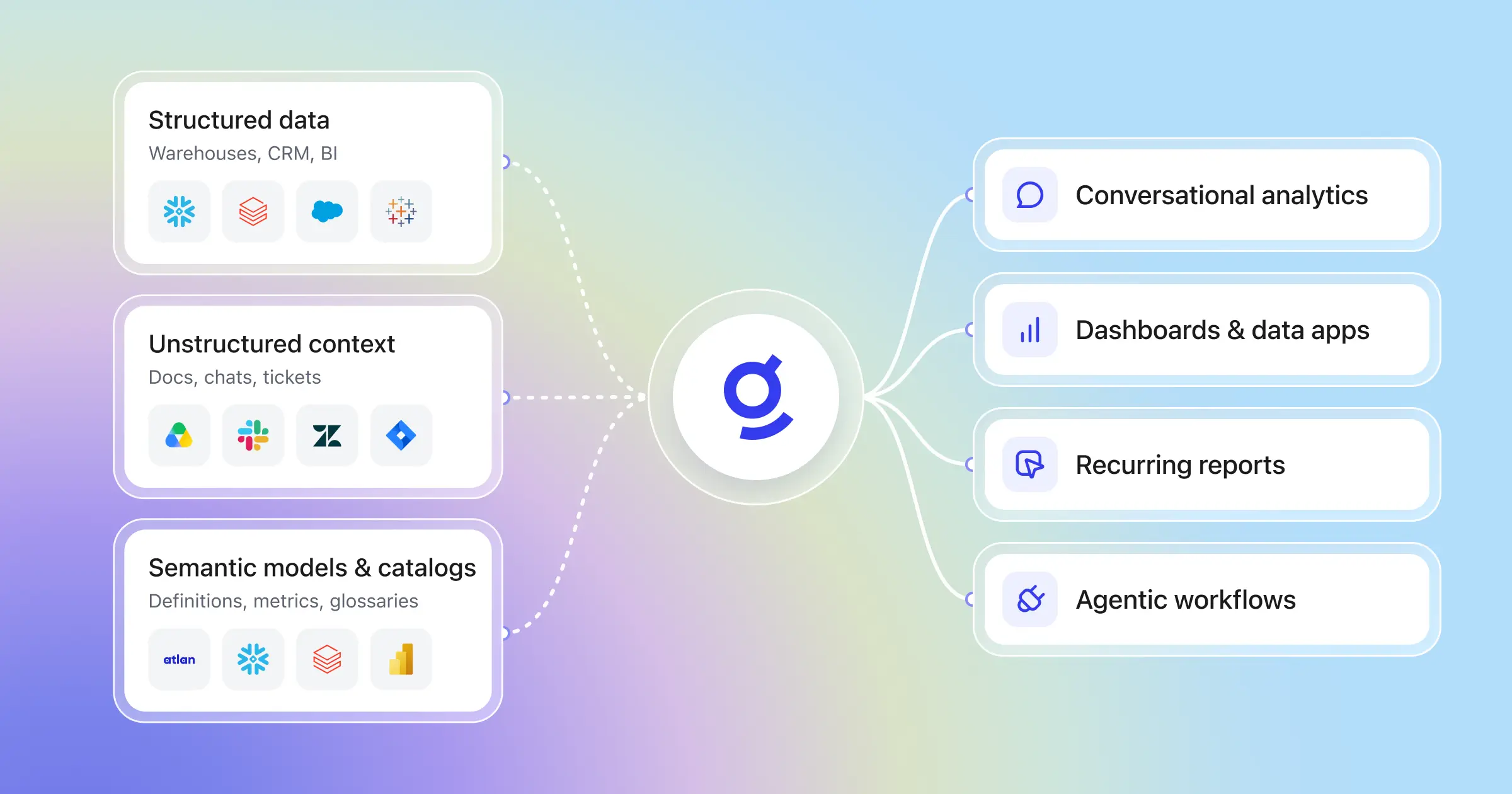
The core challenge is familiar to most enterprise teams. Customer feedback lives in separate systems: survey platforms, CRM records, call transcripts, ticket histories, knowledge bases. A CSAT score of 3 out of 5 tells you something went wrong, but it does not tell you whether the issue was a long hold time, an unclear policy explanation, a failed transfer, or a knowledge gap the agent could not fill. AI bridges that gap by pulling scattered signals together, making them easier to interpret, and supporting more consistent customer experience management across departments.
What this looks like in practice
A strong AI-enhanced survey program answers three questions fast:
- What does AI actually do here? Natural language processing clusters open-text comments into themes. Sentiment analysis detects emotional tone. Summarization models condense call transcripts so managers can review context in seconds rather than minutes. Workflow automation routes high-risk responses to the right team with enough detail to act immediately.
- Which metrics matter most? The best programs track both perception and consequence — customer satisfaction alongside repeat contact rate, escalation frequency, first-contact resolution, and time to close the feedback loop. AI reveals which metrics move together, so teams can prioritize the signals that predict real service issues rather than chasing headline scores.
- How do teams turn feedback into measurable improvement? AI connects a low score to its likely cause, the affected workflow, and specific moments in the interaction worth reviewing. That precision helps leaders coach more effectively, update knowledge content where agents get stuck, and fix broken processes before they generate the next wave of complaints.
Why this matters for enterprise teams
In large organizations — especially those in financial services, technology, retail, and professional services — the volume of customer interactions makes manual survey review impractical. A support team handling thousands of calls per week cannot read every comment, cross-reference every transcript, and still respond within a reasonable window. AI handles the pattern recognition at scale while preserving the access controls and data governance that enterprise environments require.
The strongest implementations match search intent by staying concrete. Teams that succeed with AI in customer feedback do not adopt it as a general promise of improvement. They apply it to a specific friction point — low response quality, delayed analysis, inconsistent follow-up, weak links between survey data and operational change — and measure whether the intervention actually improved actionability. That discipline is what separates a useful survey program from one that simply produces more dashboards no one opens.
How to improve after-call surveys using AI insights
A stronger after-call survey program starts with a narrow aim: help teams spot service issues sooner and respond with less delay. AI has value here because it can reduce review time, improve survey design, and expose patterns that a raw score cannot show on its own.
Most survey programs do not fail from lack of input. They fail from poor timing, generic question sets, weak respondent coverage, and a long gap between feedback collection and operational response. AI helps most when it fixes those gaps in sequence, with clear rules that support better decisions instead of more dashboard noise.
Focus AI on friction that already exists
Survey fatigue is one of the clearest places to start. Many teams ask too often, ask too much, or ask the same questions after very different interactions. AI can correct that by selecting the right moment, the right channel, and the right question set based on call intent, prior contact history, transfer count, escalation status, or whether the issue appears resolved.
A second friction point sits in response quality. Numeric ratings without explanation rarely tell managers enough to coach an agent, review a policy, or update a workflow. AI can improve signal quality in a few concrete ways:
- Smarter survey triggers: Suppress outreach after repeated recent contacts; prioritize underrepresented customer groups; send follow-up only after interactions that can produce useful feedback.
- Adaptive question design: Ask billing questions after a billing call; ask about clarity of next steps after a technical escalation; shorten the form when the interaction was simple and direct.
- Better use of open text: Pair one or two scaled questions with a short comment field; AI can then sort comments by topic, detect recurring friction, and surface the strongest examples for review.
- Bias checks: Compare respondent mix by queue, region, issue type, or customer tier so teams do not mistake a narrow sample for a broad service trend.
This is where AI in customer feedback proves its value. It helps teams collect feedback that is more relevant, more representative, and easier to interpret without asking customers to do more work.
Use a sequence that supports action
A reliable method follows a clear order. Teams need enough structure to move from survey design to service change without gaps in the middle.
- Pick one decision the survey should inform: Start with a concrete use case such as effort reduction, transfer reduction, resolution quality, or clarity of agent communication. A survey should point to a business action, not just a score trend.
- Set the survey around the interaction type: Segment by call reason, service journey stage, product area, or customer tier. A generic form weakens signal quality because it treats every conversation as the same.
- Keep the survey short: A brief form usually performs better than a long one after a support call. One satisfaction or effort measure plus a small free-text field often gives enough signal for automated survey analysis.
- Blend survey data with call analytics: Add transcript review, hold time, transfer count, repeat contact history, and case outcome. This is what turns opinion into root-cause analysis.
- Track measures that predict action: Response rate and satisfaction matter, but so do comment rate, first-contact resolution, escalation frequency, repeat contacts, and time to case review after negative feedback.
- Route issues by severity and business impact: A severe low-score case may need manager review or customer recovery. A cluster of similar comments may point to a broken process, policy confusion, or missing knowledge content.
- Re-test the system on a schedule: Review wording, timing, thresholds, and channel choice so the program keeps pace with product changes, policy updates, and customer expectations.
That sequence gives teams a practical path to better post-call survey best practices. It also improves feedback loop optimization because each stage has a clear purpose: collect the right signal, interpret it with context, and send it to the team best placed to act.
Keep the system practical, secure, and easy to evaluate
Enterprise teams need more than insight; they need controls that hold up under scrutiny. Survey analysis that touches call recordings, case notes, or customer records should include redaction rules, retention policies, role-based visibility, and a clear audit trail for automated routing decisions. Sensitive cases — especially those tied to compliance, vulnerability, or employee performance — should stay under human review.
Trust also depends on steady measurement. Teams should test whether AI classifications match real service issues, whether survey changes improve completion rates, and whether intervention rules reduce repeat contacts or speed up service recovery. A useful review cadence looks at false positives in alerting, weak spots in topic detection, and gaps in respondent coverage across segments.
Channel choice deserves the same discipline. An SMS survey may work after a short support call; email may suit a more complex case that needs reflection; an in-app prompt may fit digital service journeys better than either. AI tools for surveys can help compare these formats and identify which option produces stronger feedback quality for each interaction type.
How can after-call surveys be improved using AI insights? Frequently Asked Questions
The questions below focus on operating choices that shape feedback quality after the core program is in place. Each answer adds practical detail that helps teams tighten survey design, reduce blind spots, and extract stronger signals from high call volume.
1. What specific AI technologies can enhance after-call surveys?
Several technologies matter here, but each serves a different job. The strongest programs combine them so one tool captures interaction signals, another interprets language, and a third decides where the insight should go next.
- Speech analytics: Detects silence, interruption, hold patterns, pace shifts, and escalation cues inside the call itself. These signals often explain survey reactions that customers never write out.
- Intent and resolution detection: Identifies why the customer called and whether the issue appears complete at call close. This helps separate dissatisfaction with the answer from dissatisfaction with the process.
- Topic discovery models: Find new complaint categories without a prebuilt label set. This is useful after product launches, policy changes, or service disruptions.
- Comment intelligence: Reads short free-text responses and extracts product names, policy references, service defects, and other concrete entities.
- Response propensity models: Estimate who is likely to answer a survey. Teams can use this to correct for nonresponse bias instead of hearing only from the loudest extremes.
In enterprise environments, these technologies perform best when they work across transcripts, case records, and interaction metadata as one evidence set. A survey alone rarely contains enough detail to support sound decisions at scale.
2. How can AI automate the survey process effectively?
Useful automation improves sampling quality and lowers customer effort. It should decide when outreach will add value, how much to ask, and when enough feedback has already been collected from a given journey or segment.
A practical automation layer usually handles four jobs:
- Send-window selection: Choose the delivery time based on customer behavior, channel history, and interaction type rather than a fixed rule for every call.
- Adaptive survey length: Shorten or stop the questionnaire once the system has enough signal to classify the outcome with confidence.
- Question branching: Swap questions based on intent, issue class, or service path so the customer sees items that match the actual interaction.
- Sample balancing: Increase outreach to underheard call types, customer tiers, or regions so results reflect the operation more accurately.
Automation can also prepare data for analysis before any reviewer sees it. That includes transcript cleanup, removal of duplicate comments, and masking of sensitive details in open-text fields. The result is a survey process that produces cleaner input without adding more manual steps for service teams.
3. What metrics should be analyzed to improve survey responses?
The most useful metrics show whether the survey program itself is healthy, not just whether customers liked the call. That means teams should inspect signal quality, sample quality, and analysis speed alongside service outcomes.
A stronger metric set often includes:
- Representativeness index: Compares survey respondents with the full caller population by queue, issue type, customer segment, or region.
- Question drop-off rate: Shows where customers leave the survey, which helps teams cut weak wording or unnecessary items.
- Open-comment yield: Measures how often free-text responses contain enough detail for issue classification.
- Survey-to-call agreement: Tracks whether the survey result aligns with signals from the transcript, such as unresolved language or repeated transfer markers.
- Issue discovery lag: Measures how long it takes to detect a new pattern after it first appears in calls and comments.
- Recovery coverage: Shows what share of serious negative responses receive a documented service response.
These metrics expose problems that standard satisfaction reporting can miss. A survey program may look stable on the surface while still under-sampling one queue, losing respondents at the same question every week, or failing to catch an issue until complaints have already spread.
4. How can AI insights lead to actionable changes in customer service?
AI becomes useful when it points to service design changes that teams would not spot from raw scores alone. The value often appears in operational adjustments rather than in one-off review.
For example, survey comments paired with speech analytics may show that customer frustration rises after long hold segments, which can justify a callback option or a staffing adjustment in one queue. A cluster of low-scoring calls with repeated authentication language may point to an identity flow that adds effort before the real issue even starts. A sudden rise in confusion after a release may suggest that the product changed faster than internal guidance or customer messaging.
AI also helps teams detect dissatisfaction beyond direct survey respondents. When transcript signals from nonresponders match the patterns inside poor survey results, leaders gain a broader view of risk across the full interaction set. That makes customer service changes more reliable because they rest on more than the small portion of callers who completed the form.
5. What are the best practices for implementing AI in after-call surveys?
The best implementations keep the survey narrow, the analysis disciplined, and the operating model easy to inspect. Teams should treat the survey as one listening instrument inside a larger quality system, not as a standalone verdict on service performance.
A practical set of best practices looks like this:
- Separate transaction feedback from relationship measurement: A post-call survey should capture the interaction, not attempt to measure every dimension of long-term loyalty.
- Write for plain language and short recall: Customers answer these surveys moments after a call; questions should reflect that time frame and avoid internal service terms.
- Design for multilingual reality: Topic models, sentiment models, and question wording should account for the languages customers actually use.
- Check low-volume edge cases by hand: Rare complaint types, specialized queues, and sensitive interactions need direct review because model confidence often drops there.
- Use call analysis to balance survey blind spots: Survey data should not stand alone when large portions of callers never respond.
- Keep an audit trail of changes: Teams should record what survey rule, prompt, or routing logic changed, along with what happened after the change.
The strongest programs also show evidence of internal learning. When teams can trace a survey signal to a queue adjustment, script revision, policy clarification, or product fix, the survey becomes part of service operations rather than a passive reporting exercise.
The difference between a survey program that reports and one that improves service comes down to whether feedback reaches the right team with enough context to act. Every step outlined here — from defining outcomes to automating follow-up to governing the system over time — exists to close that gap between customer signal and operational response.
If you're ready to move from passive feedback collection to a connected, AI-powered approach, request a demo to explore how we can help transform your workplace.

.jpg)

.png)



.jpg)
.webp)

