




Presenting the ROI of internal knowledge solutions to stakeholders
Every enterprise sits on a wealth of internal knowledge — scattered across dozens of apps, buried in chat threads, locked inside documents that only a handful of people know exist. The cost of that fragmentation rarely appears as a line item, but it shows up every day in slower decisions, duplicated effort, and employees who spend more time searching than doing.
For decision-makers evaluating an internal knowledge search solution, the central question is straightforward: does better access to information produce measurable business outcomes? The answer requires more than intuition. It demands a clear framework that connects knowledge discovery to productivity, cost reduction, and operational performance.
This guide breaks down how to calculate, present, and defend the ROI of internal knowledge solutions in terms stakeholders already trust — time saved, support costs avoided, and real gains in employee efficiency across engineering, sales, IT, HR, and customer service teams.
What is the ROI of implementing an internal knowledge search solution?
Internal knowledge search ROI is the measurable value an organization gains when employees can find trusted, permission-aware answers faster across company systems. In practice, that value appears as reduced time-to-answer, fewer repeat questions, less duplicated work, faster onboarding, and stronger decision quality — all weighed against the cost to deploy, manage, and improve the solution.
The strongest ROI case combines hard financial returns with operational gains. Productivity improvements are the most visible: employees spend less time hunting for information and more time on work that moves the business forward. But the returns extend further — into support deflection, knowledge reuse, consistency of answers across teams, and reduced dependence on a small group of subject-matter experts who field the same questions week after week. McKinsey research has found that employees spend roughly 20% of their workday searching for the information they need. For a 1,000-person organization with an average salary of $60,000, that translates to approximately $12 million per year in labor dedicated to finding — not applying — knowledge.
What a modern solution should deliver
Not all internal search tools produce meaningful ROI. The difference lies in how the solution handles the complexity of enterprise knowledge. A modern platform should:
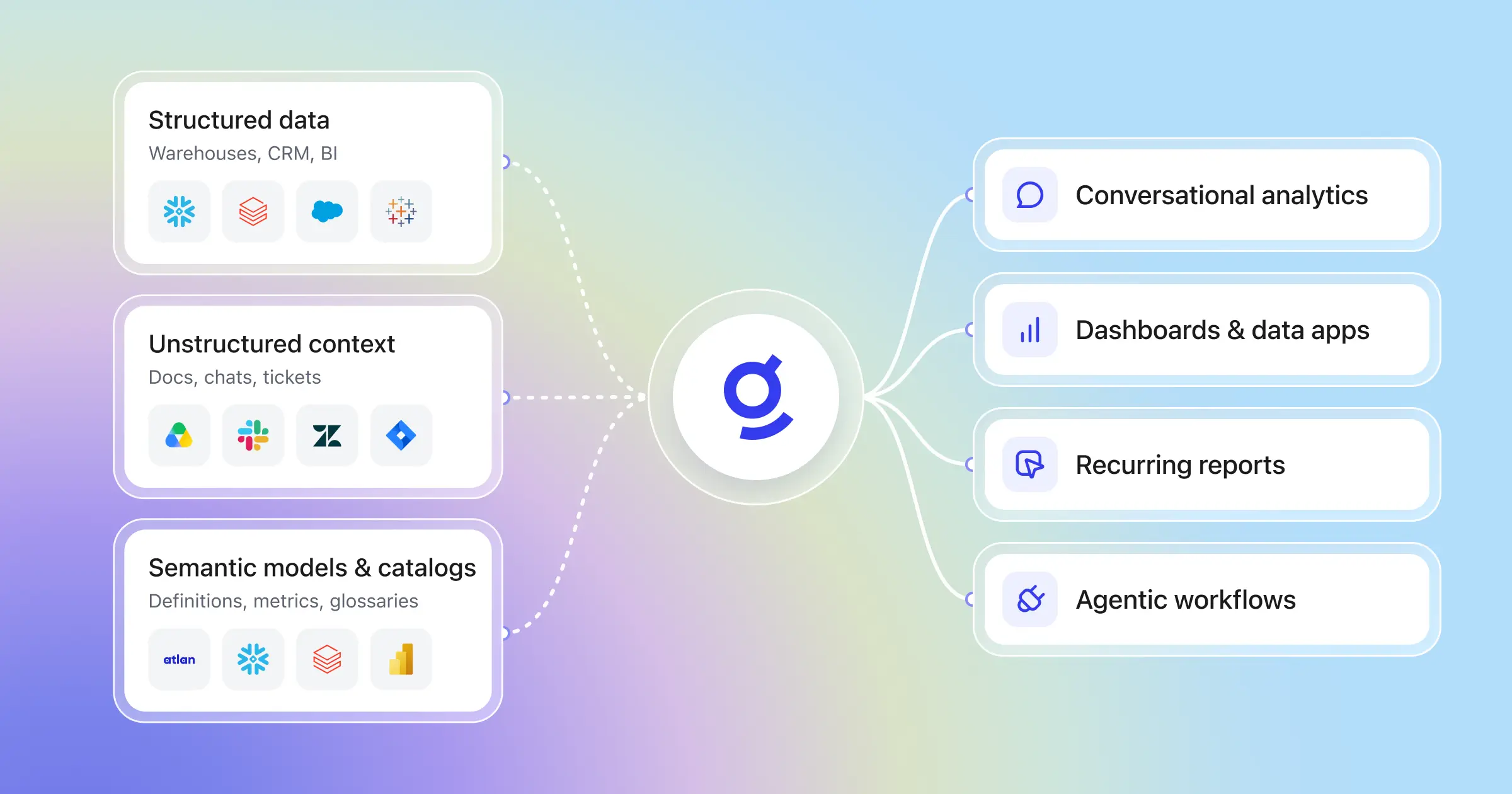
- Unify information across tools: Connect content from chat, wikis, drives, ticketing systems, CRM platforms, and team-specific repositories into a single search experience — without forcing employees to remember where something lives.
- Respect existing access controls: Enforce permissions at the source level so employees only see information they are authorized to access. This is a non-negotiable requirement for enterprise-grade deployment.
- Return contextual, relevant answers: Go beyond keyword matching to understand intent, surface authoritative content, and account for relationships between people, teams, and activity data.
Without these capabilities, search improvements tend to stall at surface-level convenience rather than producing durable business value.
Why fragmented knowledge creates hidden costs
The cost of poor knowledge discoverability compounds in ways that rarely surface in a quarterly review. Engineers rebuild solutions that already exist elsewhere. Sales teams send outdated collateral because the approved version is buried three folders deep. Support agents escalate tickets that could have been resolved with a single knowledge base article — if they had known it existed.
These patterns create a drag on performance that grows with organizational complexity. Fortune 500 companies lose an estimated $31.5 billion annually by failing to share knowledge effectively, according to research published by the Society for Human Resource Management. Even at smaller scale, the math is unfavorable: if 1,000 employees each waste just 10 minutes per day on failed searches, that adds up to more than 40,000 hours of lost productivity per year.
The real risk for stakeholders is not whether search matters — it is whether the current approach to knowledge access is quietly eroding the returns on every other investment the organization makes in its people, tools, and processes. A well-structured ROI model, like the one we offer at Glean, makes that cost visible and positions internal knowledge search as a productivity layer that strengthens the entire operation.
How to Present the ROI of Internal Knowledge Solutions to Stakeholders
Once the value model is clear, the work shifts from analysis to persuasion. Stakeholders approve operating leverage, not isolated software.
Present internal knowledge search as a system that improves execution across knowledge-heavy work. When teams reach the right material with less delay, project cycles tighten, service desks absorb less avoidable demand, and managers spend less time on repeat guidance.
Start with the business problem, not the tool
Lead with the cost of slow knowledge access in terms the business already tracks. That means cycle time, service quality, labor efficiency, onboarding speed, and support capacity — not search features, interface details, or repository counts.
A strong opening keeps the story plain: work slows down when answers sit behind unclear ownership, inconsistent sources, and hard-to-navigate systems. A better internal search layer shortens the path from request to resolution; the gains then spread across departments that rely on accurate internal knowledge every day.
Three benefits usually make the case clear without oversell:
- Shorter path to completion: Employees finish recurring tasks with fewer stops for clarification, approval checks, or source validation. That matters in work that depends on policies, technical guidance, or approved customer-facing materials.
- Lower coordination overhead: Teams spend less time in back-and-forth messages, side-channel requests, and manual confirmation of which source reflects the current answer. That reduction shows up as smoother handoffs and fewer avoidable delays.
- Broader self-service coverage: More routine questions shift away from inboxes, queue-based support, and manager interruptions. The result is more capacity for work that requires judgment rather than lookup.
That framing lands well because it connects knowledge search to outcomes that executives already fund. It also places the discussion inside a broader transformation agenda — one focused on throughput, consistency, and measurable operating improvement.
Use three questions to structure the case
A stakeholder discussion works best when it follows a strict logic. Instead of a feature tour, organize the case around three questions that move from pain to proof to return.
-
Where does knowledge friction show up today?
Point to concrete places where work stalls: slow ramp for new hires, duplicate research, inconsistent policy interpretation, repeated requests to specialists, or delayed decisions because teams cannot confirm which source to trust. This anchors the case in current operating conditions rather than abstract potential. -
What evidence will prove improvement?
Define the measurement plan before you estimate upside. Time-to-answer, first-answer resolution, ticket deflection, repeat-query rate, expert interruptions, and workflow completion time all provide stronger evidence than usage counts alone. Where company-wide data is thin, a pilot in IT, HR, support, or engineering can supply a credible baseline. -
What does the return look like after full cost?
Show expected benefit alongside license cost, integration work, governance effort, training, and ongoing quality review. A conservative case, an expected case, and an upside case help finance teams test the model without distrust.
This sequence keeps the conversation out of feature checklists and inside business logic. It also gives finance, IT, and functional leaders a common structure for review, even when each group values different outcomes.
Make the cross-functional value explicit
A search business case weakens when it sits inside one function’s budget alone. Internal knowledge solutions create value across multiple teams at once, so the presentation should show how each group converts better knowledge access into a different form of operational gain.
Examples help here, but they should reflect the work each function already owns:
- Engineering and product: Teams need architecture decision records, incident postmortems, service ownership maps, and design notes. Better discovery cuts duplicate investigation, reduces dependency on long-tenured staff, and speeds ramp on unfamiliar systems.
- People, operations, and policy teams: Staff need consistent guidance for leave rules, mobility policies, manager procedures, and onboarding steps. Better search reduces interpretation drift and lowers the volume of routine internal requests.
- Revenue teams: Sellers and account teams need approved proposal language, pricing exception guidance, renewal terms, and current enablement assets. Better access reduces late-stage deal friction and limits the use of outdated materials.
- Service organizations: Agents need runbooks, troubleshooting history, escalation thresholds, and internal process steps. Better search lowers answer variance between agents and reduces rework after handoff.
That cross-functional view strengthens the case because it aligns with how stakeholders think. Finance looks for shared return and payback logic; IT looks for governance, security, and implementation realism; business leaders look for speed and service impact; HR looks for smoother onboarding and less dependence on tribal knowledge.
1. Start with the cost of the current search experience
Start with the systems employees already use every day. Company knowledge tends to live in places built for authorship or communication, not retrieval: project docs, chat channels, case systems, file shares, CRM records, and department portals. The issue is not scarcity. The issue is the amount of effort required to reach a reliable answer.
That effort creates a hidden operating cost. Each search begins with uncertainty — which tool holds the source of record, which document reflects the latest policy, which answer still applies after the last process change. Even routine work takes longer when employees must verify the answer before they can use it.
What poor discoverability looks like in day-to-day work
The pattern becomes clear inside common workflows. A search starts in one system, shifts to another, then ends with a message to a coworker because the employee cannot tell which source carries authority.
A few examples make the cost easier to see:
- Engineering: During a production issue, an SRE needs rollback notes from a similar incident six months earlier. The runbook covers the system at a high level, but the useful detail sits in an old case comment and a project thread. Two senior engineers stop current work to reconstruct the path.
- People operations: A recruiter checks relocation guidance for a late-stage candidate. The handbook says one thing, a manager memo says another, and finance approved a newer exception. The process stalls because no one can confirm which version controls.
- Revenue teams: An account executive needs the latest security review summary and fallback contract language before a procurement call. Three versions appear in shared folders, all with credible names. The rep sends the wrong file for approval and loses a day in review cycles.
- Customer support: A team lead needs the current refund exception workflow for a premium account. The help article predates the last policy update, so the case moves through multiple queues before it reaches the right owner.
These are not edge cases. They reflect what happens when retrieval depends on tribal memory, manual validation, and luck.
Translate search friction into business language
Stakeholders respond to operational signals, not abstract complaints about search. Frame the current experience in terms that map to cost, capacity, and execution quality.
- Longer task cycle times: Simple requests take more steps because employees must identify the right source before they can act.
- Higher subject-matter expert load: Specialists become approval checkpoints for information other teams should retrieve on their own.
- More queue churn: Requests enter the wrong workflow, bounce between teams, or reopen later because the original answer came from stale guidance.
- Lower first-pass accuracy: Work completes with partial context, then requires correction after someone spots the mismatch.
- Heavier manager dependence during ramp: New hires need live help for tasks that should become self-serve early in their tenure.
This framing keeps the discussion grounded. Poor discoverability affects labor utilization, service operations, and quality control at the same time.
Use evidence from current workflows, not inflated claims
A strong business case starts with observed behavior. Broad benchmarks can support the discussion later, but internal evidence carries more weight at the start.
- Map a small set of recurring tasks: Pick ten to twenty repeat workflows across engineering, HR, sales, support, and IT. Track how many systems employees check, how long it takes to reach a trusted answer, and whether a person has to step in.
- Review search detours: Look for repeat queries, zero-result searches, abandoned sessions, and copied questions in chat. These signals show where retrieval breaks before work moves forward.
- Inspect internal queue data: Pull requests tied to policy clarification, document retrieval, access instructions, and process questions. Flag the ones that should have ended in self-service.
- Audit source trust: For high-use content, check ownership, freshness, and source-of-record status. Weak ROI often starts with weak confidence, not weak usage.
This method exposes the current cost without overstatement. It shows how the organization already absorbs the impact through extra handoffs, validation work, and process delays that no team plans for but every team feels.
2. Establish baseline metrics before you estimate ROI
Before you assign value to a new knowledge solution, set a reference point that stakeholders can inspect later. Finance leaders, operations teams, and business owners will all test the same issue: what changed, by how much, and across which workflows.
That reference point should come from evidence already inside the business. Search logs, service records, onboarding data, content analytics, and a small set of timed task checks usually provide enough signal to start. A baseline does not need perfect coverage; it needs enough rigor to support a before-and-after comparison.
Measure where work breaks down
Raw activity counts rarely help on their own. A high query total may signal strong adoption, or it may show that employees must search three times before they trust an answer.
A stronger baseline tracks points of friction across the full path from question to resolution:
- Average answer time for recurring tasks: Measure the elapsed time for common requests such as policy checks, account access steps, escalation rules, contract language, or technical reference lookups.
- Share of searches that end in a usable answer: Focus on completion, not clicks. The key question is whether an employee can finish the task without a second system or a follow-up message.
- Query retry and abandonment patterns: Look for reformulated searches, repeated attempts, and sessions that stop with no useful result. These signals often expose weak relevance or weak content structure.
- First-result usefulness: Check whether the first surfaced answer resolves the need, especially for high-frequency requests with a clear source of truth.
- Support requests after search: Tag tickets that follow a search attempt for a routine question. This metric shows where self-service fails and human support absorbs the cost.
This mix answers the stakeholder question with more precision than a generic dashboard. Measure speed, answer quality, self-service containment, and the operational work that follows when search falls short.
Add team-level metrics where the impact is easiest to trace
Enterprise-wide figures matter, but functional baselines often carry more weight because the effect appears in day-to-day work with less debate. Internal support, HR, sales, engineering, and customer service teams usually provide the clearest early data because each team depends on current, trusted knowledge across many systems.
A useful team-level baseline may include:
- Ramp time for new hires: Track how long it takes a new employee to complete core tasks without constant help from a manager or peer.
- Average case or request duration: For internal support teams, measure the full time required to resolve common requests, not just ticket volume.
- Subject-matter-expert contact frequency: Count how often specialists receive direct requests for information that should already exist in a shared source.
- Time to assemble approved materials: For sales and account teams, measure the minutes required to locate current decks, pricing notes, policy language, or enablement assets.
These measures strengthen the ROI model because they tie knowledge access to labor use, service capacity, and workflow reliability rather than to search behavior alone.
Use a pilot when enterprise-wide data is patchy
Some organizations lack clean company-wide measurement at the start. In that case, a pilot offers a stronger foundation than a broad estimate built on rough averages.
Choose one or two teams with visible friction and stable workflows. Set a short review window — often 30, 60, or 90 days — and capture the pre-pilot state with task timing, ticket tags, search-session reviews, and a small sample of employee feedback. This approach works well in IT, HR, support, sales, and engineering because those teams tend to produce clear operational records and repeatable knowledge tasks.
A disciplined pilot should document more than usage. Record the starting task path, the number of systems checked, the point where the user loses confidence, and the cost of the fallback step. That structure gives stakeholders a cleaner line between baseline conditions and measurable improvement.
Separate discovery issues from knowledge issues
A weak result does not always point to the search layer. In many cases, the deeper problem sits inside the knowledge estate itself — duplicate articles, stale policies, missing owners, or several versions of the same answer spread across different tools.
That distinction matters because the fix depends on the source of the failure. Search tuning may improve ranking, query understanding, or permissions behavior. Content work may require owner assignment, freshness reviews, archival rules, or consolidation of conflicting sources. Baseline work should capture both sides so the ROI model reflects reality instead of assigning every problem to search.
3. Quantify productivity gains in dollars, not just minutes
Once the baseline is set, the next step is a value model that finance teams can audit. The core formula stays simple: minutes saved per task × task volume × affected employees × fully loaded hourly rate. In most cases, it helps to add a realization factor as well, so the estimate reflects actual benefit capture rather than theoretical maximum output.
That adjustment matters. A model that assumes full adoption on day one, perfect relevance, and zero workflow variation will not survive review. A tighter approach uses observed task frequency, a conservative adoption rate, and a partial realization rate tied to the first year of rollout.
Turn time savings into a labor-value model
Start with a workflow that has stable volume and a clear before-and-after path. Good candidates include compliance lookup, implementation handoff review, internal policy retrieval, or release-note verification before customer communication.
A sample model might look like this:
- Time saved per lookup: 6 minutes
- Lookups per week: 4
- Employees affected: 900
- Fully loaded hourly rate: $70
- Workweeks per year: 48
- Realization factor: 60%
That yields:
6 ÷ 60 × 4 × 48 × 900 × $70 × 0.60 = $725,760 in annual productivity value
This method gives stakeholders a clean line from search improvement to labor capacity. It also keeps the discussion grounded in measurable employee efficiency metrics rather than abstract claims about better access to knowledge.
Include gains beyond direct search time
Direct retrieval savings are only one part of the model. A stronger business case also accounts for work that no longer needs to happen at all once internal knowledge becomes easier to reuse.
Three categories often add substantial value:
- Asset reuse rate: Teams reuse prior deliverables more often when prior work is easy to locate. That includes implementation notes, response templates, technical writeups, project briefs, and internal playbooks. Measure how many net-new tasks can shift to reuse or adaptation, then apply the average labor cost for each task.
- Queue delay compression: Work slows down when employees need another person to supply context before they can move. Better knowledge access cuts idle time inside approvals, escalations, and cross-functional reviews. This does not just save minutes on search; it shortens the time work sits still.
- Role-transition resilience: Output often drops after team changes because historical context is hard to reconstruct. Searchable decisions, prior resolutions, and documented exceptions reduce that dip. This matters in technical operations, regulated environments, and client-facing teams where continuity has direct labor value.
This is where the ROI of internal knowledge solutions becomes easier to defend. The value does not rest on one faster search result; it comes from a broader reduction in friction across recurring work.
Add workflow outcomes that finance can recognize
Finance leaders usually respond well to productivity gains when those gains map to operating capacity. Instead of stopping at hours saved, connect the model to work units the business already tracks: cases closed, implementation tasks completed, approvals processed, or internal requests resolved.
A few examples make that shift clear:
- Higher throughput without added headcount: When analysts or operators spend less time locating background material, they can complete more work within the same staffing level. This is one of the clearest forms of knowledge management ROI.
- Lower temporary labor pressure: Teams with stronger internal knowledge access can often absorb peaks in demand with less reliance on contractors or short-term backfill.
- Smaller output drops after employee exits or transfers: When prior context stays accessible, teams recover faster from staffing changes. That protects productivity in ways that standard search-time models often miss.
For knowledge-heavy groups, this last point deserves special attention. Software teams, support organizations, and specialized operations functions often carry years of decisions inside ticket history, project notes, and internal docs. When that record stays accessible, the business avoids the labor cost of rediscovery each time ownership shifts.
4. Capture savings from self-service and reduced support demand
The support side of the ROI model deserves its own line of analysis because every avoidable internal request carries a real service cost. Each one draws agent time, adds queue pressure, and delays work that requires judgment, approval, or exception handling.
This part of the case works best when it starts with internal service records rather than broad assumptions. Look for high-volume, low-complexity request types such as travel reimbursement rules, procurement steps, benefits enrollment deadlines, device replacement instructions, or VPN setup guidance; those categories often reveal how much support labor goes to answer retrieval rather than problem solving.
Where self-service savings show up first
Shared service teams usually expose the clearest financial signal because their work already runs through queues, service levels, and case management systems. A better knowledge layer changes the economics of those teams: fewer requests reach an agent, fewer cases move across queues, and fewer specialists need to step in for a basic answer.
The same effect appears in customer-facing operations, though the value shows up in a different form. When a rep can pull current escalation criteria, warranty language, release notes, or account procedure details at once, case flow becomes cleaner; less rework follows, fewer transfers occur, and service-level targets become easier to hit without added headcount.
Metrics that capture the real effect
A support-focused business case should track service efficiency, not search activity. The goal is to show what changes inside the service operation after employees gain fast access to reliable internal knowledge.
- Cost per resolved request: Measure the average labor cost attached to a completed internal case before and after rollout. This number captures the combined effect of shorter cases, less rework, and lower specialist involvement.
- Transfer rate between queues: Track how often a request moves from one team to another. A lower transfer rate usually means the first team can act with better context.
- Reopen rate: Count cases that return after an initial close. A drop here points to more complete answers and less downstream correction work.
- Specialist touch rate: Measure how often a subject-matter expert must join a case. This metric matters in environments where a small group of experts absorbs a disproportionate share of interruptions.
- SLA attainment: Review service-level performance for routine request categories. Faster access to trusted guidance often improves response and resolution compliance without process redesign.
A practical formula keeps this section grounded: annual support benefit = reduction in cost per resolved request × request volume + reduction in specialist touches × specialist hourly cost + reduction in reopened cases × average rework cost. That approach gives finance and operations leaders a cleaner view of support-side value because it ties the model to queue performance, labor mix, and service delivery.
5. Show the full cost picture, not just license price
A strong ROI model does not hide the investment side of the equation. License price is only the most visible number; it does not show what the organization must fund to move from purchase to measurable impact.
This is the point where many business cases lose credibility. Leaders want a view of knowledge search implementation costs that reflects actual deployment conditions inside the enterprise — system complexity, internal labor, rollout scope, and the level of support required after launch.
Separate one-time costs from recurring costs
The clearest way to present cost is to divide it into one-time setup work and ongoing operating expense. That split makes the model easier to review and helps stakeholders see which costs belong to initial approval versus annual planning.
One-time costs often sit in areas such as solution configuration, connector activation, project management, legal and privacy review, rollout planning, and any vendor or internal services required to launch the system. Recurring costs usually include subscription fees, platform administration, user support, enablement for new teams, and periodic measurement work to confirm the system still meets business goals.
A practical cost model often includes:
- Implementation services: Project planning, technical setup, connector configuration, and launch support. The amount varies by application footprint, security requirements, and the number of teams in scope.
- Internal labor: Time from IT, security, legal, operations, and business leads. This cost often goes uncounted even though it affects the real budget impact of the project.
- Rollout and enablement: Team communications, documentation, office hours, and manager support. These efforts help move usage from trial behavior to routine use.
- Ongoing administration: Day-to-day oversight, access management, issue response, and reporting. This is part of the operating cost, not a one-time launch task.
Account for the operational work behind AI answers
AI-generated answers can improve the user experience, but they also introduce new operating requirements that belong in the budget model. Teams may need resources for answer validation standards, escalation paths for poor responses, model usage oversight, and periodic reviews of how well answers align with policy, legal, or regulated content.
This does not require an oversized support structure. It does require explicit ownership. A mature cost model reflects the small but necessary amount of work that keeps trust high once employees start to rely on generated answers in daily workflows.
Include cleanup where it matters, not everywhere
Content fragmentation can raise implementation cost, but it should not force a broad cleanup program unless the business case truly depends on one. In many enterprises, the better approach is selective: address the systems and content sets that create the most friction first, then expand only where the added value is clear.
That keeps the budget aligned with business priority. A sales organization may need targeted cleanup around approved decks, pricing notes, and proposal content. An IT or HR team may need limited work on policy repositories or service documentation. This approach supports faster time-to-value and avoids unnecessary migration expense.
A complete cost view makes the ROI model more durable because it reflects how enterprise software actually lands inside an organization. It also gives finance, procurement, and operating leaders a cleaner way to compare expected return against the full investment required over time.
6. Add strategic outcomes that matter beyond cost savings
After the financial model, add the outcomes that shape leadership priorities but resist neat pricing. These gains rarely fit into a single spreadsheet cell, yet they influence how fast the organization can act, how reliably teams follow standards, and how well the business absorbs change.
This part of the case shifts the discussion from narrow internal knowledge base ROI to broader digital transformation ROI. The point is not to replace the financial model; it is to show that stronger knowledge access improves execution in places where poor visibility creates delay, inconsistency, and avoidable rework.
Faster decisions, better alignment
One of the clearest strategic gains is lower decision latency. Teams spend less time in review loops when they can pull the current policy, prior decision rationale, approved template, or source-of-record document without a long verification chain across email, chat, and shared folders.
That effect becomes visible in cross-functional work that depends on speed and precision. Product launch reviews move with fewer document disputes. Risk and compliance checks require less backtracking. Quarterly planning stays closer to schedule because teams do not debate which numbers, assumptions, or process notes reflect the latest approved state.
A few signals help make this value concrete for leadership:
- Shorter review cycles: Fewer rounds of clarification before an approval, exception, or launch decision.
- Less decision reversal: Lower chance that a team acts on stale guidance and then has to reopen the work.
- Stronger operating alignment: Shared reference points across regions, business units, and functions reduce local workarounds that drift from standard practice.
Better employee experience and faster onboarding
Employee experience improves when the path to a reliable answer feels predictable. People do not need a perfect system; they need a source they can trust without a scavenger hunt through disconnected tools or private team archives.
That trust matters because poor discoverability changes behavior. Employees create personal copies of documents, save unofficial cheat sheets, or depend on a small informal network for answers. Over time, those habits weaken standardization and make knowledge harder to maintain. A strong internal knowledge layer reverses that pattern by making the official answer easier to use than the workaround.
For newer employees, the benefit shows up as a more consistent ramp. Instead of uneven handoffs between managers or heavy dependence on whoever sits nearby, new hires can access the context that helps them join real work sooner: team norms, prior decisions, common workflows, and role-specific guidance. That creates a more uniform onboarding experience across offices, functions, and managers — a strategic advantage for enterprises that scale quickly or operate across multiple regions.
Keep revenue claims disciplined
Revenue impact deserves a careful frame. Internal knowledge search supports revenue-producing work, but it should not sit in the model as a direct revenue engine unless the organization can prove a clean line of attribution.
A stronger approach is to connect search improvements to leading indicators that commercial leaders already track. Examples include shorter proposal assembly time, faster access to approved pricing and legal language, lower delay in deal-desk reviews, and more consistent handoff quality between sales, implementation, and support. In service environments, the same logic applies to case quality, escalation accuracy, and response consistency in high-volume queues.
This keeps the case credible. Instead of overstating causation, it shows how better discoverability removes friction from the workflows that influence readiness, customer response quality, and the pace of execution across knowledge-heavy teams.
7. Turn the analysis into a stakeholder-ready story
A solid model still fails when the presentation asks leaders to do too much interpretive work. The case should read like an operating decision, not a research dump: one page for the business issue, one page for the economic logic, one page for execution reality, and one page for what success looks like after launch.
That structure works best when each page answers a different executive concern. Start with the cost of the current state in plain operational terms. Move next to the evidence base behind the estimate; then lay out the investment range, the return range, and the business effects that matter outside the spreadsheet. A short current-state snapshot beside a future-state workflow helps here. Show the present pattern of delays, handoffs, and duplicated effort; then show the shorter path once employees can retrieve approved information from a single access point with source permissions intact.
Match the message to the audience
The core analysis stays the same, but the emphasis should shift by stakeholder. A CFO usually looks for financial discipline — what assumptions drive the model, which benefits count as hard savings, where partial realization may occur, and how long it takes for the investment to pay back. A CIO or IT leader will inspect a different layer: access controls, connector coverage, governance ownership, content freshness, and the level of effort required from admins after launch.
Functional leaders need a more concrete view of operating impact. A support executive will care about queue pressure, handle time, repeat escalations, and answer consistency across teams. A sales or revenue leader will care about how fast reps can locate current messaging, pricing guidance, and approved material. People leaders will focus on how quickly new hires become self-sufficient and how often employees can solve policy or process questions without direct help.
Use a forecast range rather than one headline number. A floor case, a target case, and a stretch case usually create a better discussion because they show uncertainty without weakening the argument. Put known constraints on the table as part of the deck, not as footnotes: scattered data, stale content, uneven adoption, and limits in attribution across shared workflows. Leaders trust a model more when the dependencies are visible.
Close with a pilot and a review plan
The last part of the story should convert interest into a testable operating plan. A limited-scope pilot gives stakeholders a way to validate the assumptions with internal evidence instead of broad benchmarks alone. The best pilot groups tend to have high search volume, clear workflow repetition, and measurable downstream effects — internal support, HR operations, technical teams, sales enablement, and customer-facing service functions often fit that profile.
Keep the pilot design tight:
- Choose a narrow set of workflows: Pick a small group of recurring tasks with visible friction — policy lookups, access requests, technical documentation searches, escalation guidance, or approved content retrieval.
- Define the scorecard before launch: Select a fixed metric set such as search success, time to first useful answer, repeat requests, escalation frequency, or expert interruptions. Resist the urge to expand the scorecard midstream.
- Set a review cadence and ownership model: Name who tracks results, who resolves content gaps, and who owns governance decisions during the test window.
- Document what changed and why: Capture whether the gains came from better retrieval, cleaner content, stronger permissions alignment, or a simpler user path. That detail matters for scale decisions later.
This approach gives stakeholders more than a projection. It gives them a decision framework with evidence thresholds, execution ownership, and a clear basis for expansion or revision.
Presenting the ROI of Internal Knowledge Solutions to Stakeholders: Frequently Asked Questions
The strongest FAQ sections do not restate the business case. They answer the practical questions that surface once stakeholders start pressure-testing the model.
1. What metrics can I use to measure the ROI of an internal knowledge search solution?
Use a mix of leading indicators and business outcome metrics. Leading indicators show whether the system works well enough to earn trust; outcome metrics show whether that trust turns into measurable value.
A useful mix looks like this:
- Zero-result and low-confidence queries: These expose where search fails outright or returns weak answers, which often reveals the biggest friction points.
- Content freshness and ownership coverage: Track how much high-value content has a clear owner and recent review date. Stale content weakens ROI even when search quality is strong.
- Knowledge reuse rate: Measure how often existing documents, playbooks, or answers support new work instead of teams recreating them.
- Resolution quality metrics: For support-heavy teams, look at escalation reduction, follow-up volume, and SLA adherence rather than search activity alone.
- Decision-speed indicators: In functions such as sales operations, legal, or product, track how long it takes to move from question to approved action.
This approach gives stakeholders a fuller picture. It shows not only whether employees searched, but whether the knowledge layer improved execution quality, response consistency, and workflow reliability.
2. How does implementing a knowledge search solution improve employee productivity?
The productivity lift comes from faster knowledge reuse and less dependency on informal workarounds. Teams stop relying on private messages, personal bookmarks, and tribal knowledge to complete routine tasks.
That change improves output in ways that standard time-saved estimates often miss:
- Shorter time to confidence: Employees can act sooner because they find authoritative answers without extra validation.
- Less re-creation of prior work: Existing materials, prior analyses, and approved language stay visible and usable.
- Lower interruption load on experienced staff: Senior employees spend less of the day as human routing systems for institutional knowledge.
- Stronger continuity across role changes: Work does not slow down as sharply when someone transfers teams or leaves the company.
For knowledge-dense organizations, this matters because productivity loss rarely comes from one large delay. It comes from dozens of small stalls across the day, each tied to missing context or hard-to-find information.
3. What are the potential cost savings from reducing time spent searching for information?
The obvious savings sit in labor recovery, but the broader financial impact usually reaches further. Strong internal knowledge access can reduce rework, lower service costs, and protect against the hidden expense of knowledge loss.
Common savings categories include:
- Avoided repeat effort: Teams spend less time rebuilding decks, research, process documents, or technical fixes that already exist.
- Lower cost per internal request: Routine questions require less manual handling, which improves support economics even when total ticket volume stays flat.
- Reduced training burden: Managers and experienced peers spend less time on repeat explanations during ramp periods.
- Smaller turnover shock: When key knowledge lives in shared systems rather than in individual memory, exits create less operational disruption.
- Fewer quality-related costs: Better access to current guidance can reduce errors, policy exceptions, and avoidable rework.
This is why small search improvements can produce outsized returns. The value does not come from one metric alone; it comes from a cluster of cost reductions that sit across labor, service delivery, and organizational resilience.
4. What challenges might I face when calculating the ROI of a knowledge search solution?
One common problem is double-counting. A company may count the same benefit twice — once as employee time saved and again as support savings — which weakens credibility fast under finance review.
Other challenges tend to show up in the model design itself:
- Soft benefits mixed with hard savings: Improved employee experience matters, but it should sit apart from direct financial returns.
- Weak comparison points: Before-and-after claims fall apart when the baseline period includes unusual staffing changes, process redesigns, or seasonal volume swings.
- Survey-heavy estimates without operational data: Employee surveys help, but they should support system logs, service metrics, and workflow data rather than replace them.
- Slow adoption curves: Value rarely appears on day one. Teams need time to change habits, trust the system, and shift away from informal channels.
- Fragmented ownership: ROI models become harder to defend when no team owns content quality, analytics, and search governance together.
A durable model accounts for these realities up front. It separates measurable savings from directional value, uses conservative assumptions, and shows where the numbers come from.
5. How can I present the ROI findings to stakeholders effectively?
Present the findings in the format stakeholders already use for operational investments: baseline, assumptions, value drivers, cost categories, risk controls, and review cadence. This keeps the conversation disciplined and makes the proposal easier to compare with other enterprise initiatives.
A practical stakeholder deck often works best with five clear components:
- A one-slide baseline snapshot: Show the current state with a few high-signal numbers, such as unresolved search gaps, repeat requests, or slow knowledge-dependent workflows.
- A hard-benefits model: Isolate savings that can tie directly to labor, service cost, or efficiency improvement.
- A soft-benefits section: Include outcomes such as better employee experience, stronger compliance posture, or improved knowledge continuity — but keep them separate from the ROI math.
- A sensitivity view: Show conservative, expected, and upside cases so finance and procurement can judge the range rather than debate one headline figure.
- A post-launch scorecard: Define what success looks like after 30, 90, and 180 days, including which metrics will be reviewed and who owns them.
This structure works because it answers the questions stakeholders tend to ask in sequence: what is broken, what changes, what it is worth, what it costs, and how progress will be checked.
The difference between a funded initiative and a stalled proposal often comes down to how clearly the value story connects to the way stakeholders already evaluate investments. A disciplined model — grounded in baseline evidence, honest cost assumptions, and a pilot-ready execution plan — gives leaders the confidence to act rather than defer. If you're ready to see how a unified AI-powered knowledge platform can deliver measurable ROI across your organization, request a demo to explore how we can transform your workplace.

.jpg)

.png)



.jpg)
.webp)