




Essential features for enterprise search platforms in 2025
The modern enterprise generates vast amounts of data across hundreds of applications. 80% of enterprise data is unstructured and expanding at a compound annual growth rate of 61%, making up the vast majority of enterprise data housed across various systems. Without the right search capabilities, this wealth of knowledge becomes a burden rather than an asset. That's where enterprise search platforms come in — transforming how organizations access, understand, and act on their collective intelligence.
The modern enterprise generates vast amounts of data across hundreds of applications. Global data creation has reached 328.77 million terabytes daily, forming a total of 0.33 zettabytes per day, representing a 791.94% increase since 2015. Without the right search capabilities, this wealth of knowledge becomes a burden rather than an asset. That's where enterprise search platforms come in — transforming how organizations access, understand, and act on their collective intelligence.
The modern enterprise generates vast amounts of data across hundreds of applications. Without the right search capabilities, this wealth of knowledge becomes a burden rather than an asset. In fact, 43% of employees would consider leaving their job if their company didn't have an efficient way to access the records they need, with this percentage rising to 57% for employees aged 35-44. That's where enterprise search platforms come in — transforming how organizations access, understand, and act on their collective intelligence.
Finding critical information shouldn't feel like searching for a needle in a haystack. Yet for many organizations, that's exactly what it's become. With employees spending up to 2 hours daily hunting for documents, data, and answers across dozens of disconnected systems (Americans spend an average of two hours per day searching for documents, which amounts to 25% of an entire 40-hour work week), the need for intelligent enterprise search has never been more urgent.
The modern enterprise generates vast amounts of data across hundreds of applications. Without the right search capabilities, this wealth of knowledge becomes a burden rather than an asset. That's where enterprise search platforms come in — transforming how organizations access, understand, and act on their collective intelligence.
What is an enterprise search platform?
Today's platforms serve as the foundation for AI adoption, enabling employees to find answers, automate workflows, and make data-driven decisions. They're not just search engines — they're productivity accelerators that transform how work gets done. AI spending surged to $13.8 billion in 2024, more than six times the $2.3 billion spent in 2023, while 95% of US companies now use generative AI.
Unlike basic search tools, modern platforms understand context, permissions, and user intent to deliver relevant results. They don't just match keywords; they comprehend the meaning behind queries and the relationships between different pieces of information.
These platforms index structured data (databases), unstructured data (documents, emails), and conversational data (chat messages, meeting notes). By creating a unified view of organizational knowledge, they break down the silos that traditionally hamper productivity.
Enterprise search has evolved from keyword matching to intelligent systems that understand natural language queries and provide actionable insights. Where legacy platforms required exact search terms and returned lists of documents, today's solutions answer questions, summarize complex information, and even recommend related resources.
Today's platforms serve as the foundation for AI adoption, enabling employees to find answers, automate workflows, and make data-driven decisions. They're not just search engines — they're productivity accelerators that transform how work gets done.
AI-powered search capabilities
Natural language processing
In the realm of enterprise search, natural language processing (NLP) revolutionizes how information retrieval systems comprehend user queries. By leveraging advanced NLP techniques, these platforms capture the nuances of human language, facilitating a more intuitive communication style. Rather than relying on precise keyword matches, employees engage in a more natural dialogue, enabling the system to grasp the context and intent behind their inquiries.
When users request insights like "Compile last quarter’s customer feedback," semantic search techniques intelligently connect the dots between query context and relevant data, even if the words don’t align perfectly. This depth of understanding ensures the platform delivers comprehensive results, drawing from a wealth of internal knowledge. Additionally, the system caters to a multilingual workforce by supporting searches in various languages, ensuring that teams across geographical boundaries seamlessly access the same critical insights.
Machine learning and personalization
Machine learning underpins the evolution of enterprise search by continuously refining search outcomes based on user interactions. By analyzing behavioral patterns and search histories, platforms tailor experiences to individual user needs, presenting results that align closely with their specific roles and contexts. This personalized approach significantly enhances efficiency, directing users to the most pertinent information swiftly.
The system's self-optimizing algorithms effortlessly adapt to the unique linguistic landscape of any organization, incorporating industry-specific jargon and terminologies without additional configuration. Predictive search capabilities further elevate productivity by proactively suggesting relevant queries and resources, drawing upon established usage patterns. This foresight empowers employees to swiftly access critical data, fueling informed decision-making and driving innovation throughout the organization.
Comprehensive data connectivity
Integration architecture
For an enterprise search platform to truly excel, it must offer robust integration capabilities that unify the diverse tools used across an organization. By harmonizing with platforms like Slack, Microsoft 365, Salesforce, and Google Workspace, the search ecosystem becomes a central hub of organizational knowledge. These integrations are further enhanced through flexible API connections, which support seamless incorporation of bespoke systems and databases unique to each enterprise.
Maintaining real-time data integrity is critical — as changes occur within these interconnected systems, the search platform must dynamically update to reflect the most current information. This ensures that users always have access to the latest insights, facilitating informed decision-making. The cloud-native infrastructure plays a crucial role here, allowing the platform to efficiently manage escalating data volumes without compromising on speed or reliability.
Unified indexing
Unified indexing is where the magic of comprehensive search capabilities comes to life. By creating a centralized repository that amalgamates data from disparate systems, the platform offers users a panoramic view of their organizational landscape. This approach not only enhances search accuracy but also reveals the intricate web of connections between people, documents, and activities within the organization.
Advanced indexing capabilities ensure that all forms of content — from textual documents and presentations to code snippets and multimedia — are searchable, thereby maximizing the richness of the search experience. Through continuous, incremental indexing, new data is promptly integrated into the system, ensuring that search results are always reflective of the most recent developments. This approach empowers users to act on the freshest data available, driving agile responses and strategic initiatives across the enterprise.
Security and compliance features
Granular access controls
Modern enterprise search platforms must implement precise access management to maintain organizational security. These platforms integrate seamlessly with existing security protocols, ensuring that employees access only the data they are permitted to view. This precise control is essential in environments where data sensitivity varies significantly across divisions. By employing role-based access management, platforms effectively delineate access levels, ensuring that each team member has the appropriate data visibility based on their position.
Adaptable permissions represent a leap forward in access management. As roles and responsibilities evolve within an organization — whether through promotions, lateral moves, or project-based assignments — these permissions dynamically adjust to reflect the current access requirements. This flexibility not only fortifies security but also minimizes the need for manual updates by IT administrators. Furthermore, comprehensive logging of all search activities provides a transparent record for compliance audits and security assessments. These logs are invaluable for identifying potential security incidents and ensuring adherence to regulatory requirements.
Data protection
Advanced data protection mechanisms are foundational to the security framework of enterprise search solutions. Utilizing industry-leading encryption standards, such as AES-256 and TLS 1.3, these platforms secure information both as it is transmitted and when stored. Such encryption protocols provide robust defense against unauthorized access and data breaches. Certifications like SOC2 and ISO 27001 further affirm a platform's dedication to maintaining the highest security standards, offering assurance that data handling practices align with global benchmarks.
A robust security architecture emphasizes continuous verification of user identities and access permissions, effectively mitigating risks associated with unauthorized access. This approach ensures that only authenticated users can access sensitive information, reducing the potential for internal security lapses. Additionally, platforms offering flexible data residency choices empower organizations to determine the geographic location of their data storage, aligning with regional data protection regulations and ensuring compliance with international privacy mandates.
Advanced search intelligence
Retrieval augmented generation (RAG)
Retrieval Augmented Generation (RAG) represents a sophisticated leap in enterprise search, integrating search engine capabilities with large language models (LLMs) to deliver precise and contextually rich responses. This approach harnesses the ability to pull relevant data from vast repositories, applying sophisticated algorithms to evaluate user permissions and synthesize comprehensive answers backed by the organization's data resources. The structured methodology ensures responses are not only accurate but also deeply aligned with corporate knowledge bases.
The system incorporates robust mechanisms to avert inaccuracies often seen in AI outputs, ensuring coherence with verified company data. RAG's architecture emphasizes continuous improvement through advanced AI-driven quality checks, refining its outputs to enhance reliability and user trust over time. This dynamic monitoring and adjustment process fortify the system’s ability to deliver consistently high-quality information tailored to enterprise needs.
Agentic reasoning
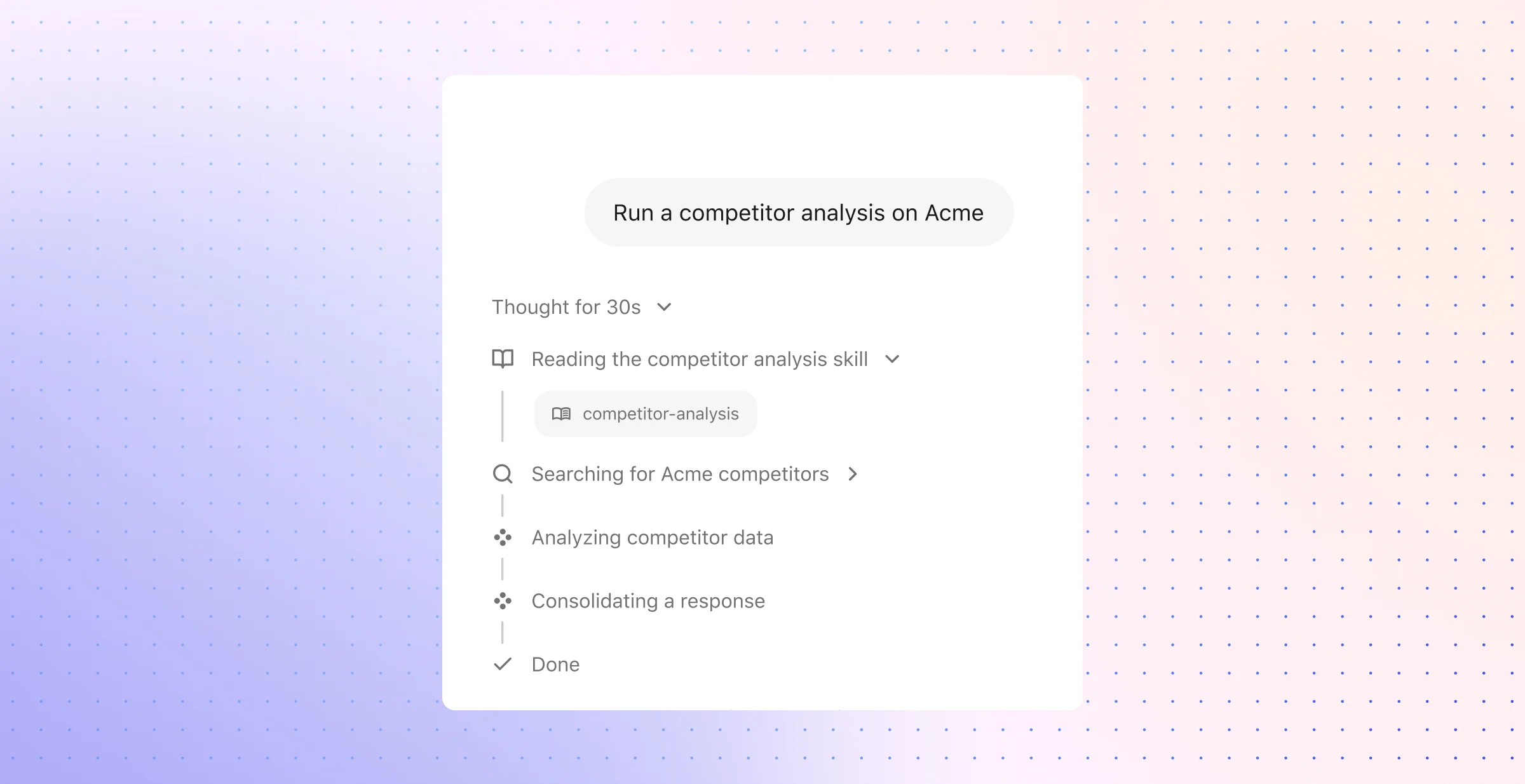
Agentic reasoning elevates search capabilities by enabling AI agents to tackle complex inquiries through a multi-faceted approach. These agents dissect queries into essential components, utilizing a suite of specialized tools designed to address each aspect efficiently. The process may involve initial data retrieval, followed by analytical assessments, ultimately culminating in a synthesized output that meets user requirements with precision and clarity.
These AI agents are designed with adaptive learning capabilities, allowing them to self-assess and refine their strategies based on past outcomes. This adaptability ensures a continual enhancement of their operational effectiveness, making them well-suited to manage specific, high-stakes workflows such as customer support optimization or strategic market evaluations. By automating intricate processes and evolving with organizational demands, agentic reasoning significantly boosts operational agility and informed decision-making within enterprises.
User experience and adoption
Intuitive interface design
An effective enterprise search platform should present a user-friendly interface that feels intuitive and familiar, similar to consumer-grade applications. This design ensures that employees can locate and engage with the information they need swiftly and effortlessly. Such a platform minimizes any learning curve, allowing employees to dive right into their tasks without unnecessary delays.
To enhance productivity, the platform includes features that provide a glimpse into results, enabling users to quickly determine their relevance. These features reduce the need to open multiple tabs, thereby preserving focus and efficiency. Moreover, advanced filtering options enable users to narrow down search results based on various criteria, such as timeframes, authors, or other metadata, ensuring they access the most pertinent data. A design that adapts to any screen size ensures that employees remain connected and informed, regardless of their location or device.
Workflow integration
Seamless integration of search capabilities within existing business tools transforms how employees interact with data. By embedding search functionality directly into software like email clients and project management platforms, the need to switch between applications is significantly reduced, allowing for a more cohesive workflow.
Extensions and integrations bring search capabilities to every corner of the digital workspace, whether within documents, emails, or chats. This ensures that the power of search is always just a click away, enhancing productivity across tasks. Additionally, the ability to customize elements like search bars within internal portals empowers organizations to tailor the search experience to their specific needs. API access provides flexibility for developers to embed search functions into tailored applications, aligning the platform's capabilities with the evolving demands of the enterprise.
Analytics and insights
Search analytics
In the realm of enterprise search, analytics serves as the compass guiding optimization efforts by illuminating user interactions and content engagement. By delving into detailed metrics on search behaviors, organizations gain a clearer picture of popular queries, valuable resources, and potential shortfalls in knowledge accessibility. This granular insight allows companies to address deficiencies in their knowledge repository, ensuring critical information is both available and easily retrievable.
Evaluating content effectiveness is key to maximizing the impact of the search platform. By tracking which resources resonate most with users, IT teams can prioritize updates and highlight underutilized documents that may benefit from increased visibility or restructuring. Furthermore, a thorough query analysis uncovers areas lacking robust content, directing efforts to enhance the company's knowledge framework strategically.
By offering insights specific to various departments, organizations can tailor the search experience to meet the unique needs of each team. This targeted approach enables IT to customize the platform's interface and functionality, ensuring every department benefits from the search tool's capabilities and enhancing overall productivity.
Business intelligence
Business intelligence harnessed from search analytics provides strategic advantages by uncovering patterns and trends within organizational data flows. By examining search patterns, businesses can identify emerging topics and areas of interest, allowing them to proactively address potential challenges and seize new opportunities. This proactive stance enables leadership to align strategic initiatives with evolving workforce dynamics.
The synthesis of search data offers a comprehensive view of how information circulates within the enterprise, highlighting inefficiencies in knowledge sharing. Integrating this data with existing business intelligence tools allows for a nuanced analysis of search behaviors and content interactions, leading to informed decision-making across the organization. This integration ensures that search activities align with broader business objectives.
Utilizing predictive analytics, organizations can anticipate future information demands, positioning themselves to effectively address upcoming needs. By forecasting interest in specific topics or resources, companies can strategically allocate resources and prepare content, enhancing user experience and organizational responsiveness in a rapidly changing environment.
Implementation best practices
Choosing the right platform
Finding the right enterprise search platform involves a thorough assessment of its compatibility with your organization's digital ecosystem. Focus on solutions that seamlessly integrate with your existing suite of applications and data repositories, ensuring they can access and process all necessary information efficiently. Look for platforms that provide robust API support and a vast array of connectors to facilitate this integration without extensive modification.
When selecting a platform, prioritize those that demonstrate a strong foundation in AI capabilities and maintain a high standard of security through certifications like SOC2 and ISO 27001. Scalability is crucial; the chosen solution should efficiently manage increasing data loads and user demands without degrading performance. Consider platforms that are built with cloud-native architectures to easily handle growth and adaptation.
Support from the vendor is a critical factor for successful implementation. Opt for providers offering comprehensive resources, including detailed documentation, training materials, and a responsive support system. A vendor known for excellent customer service can significantly streamline both the deployment phase and ongoing platform management.
Deployment strategy
Crafting a deployment strategy that aligns with organizational goals is essential for maximizing the platform's potential. Begin by targeting specific use cases where search capabilities can deliver immediate improvements, thereby showcasing quick wins and fostering enthusiasm for broader adoption.
Ensure the platform's configuration adheres to your organization's established security protocols and access rules. This involves integrating the search solution's permissions with your existing frameworks to maintain data integrity and confidentiality. Tailor the relevance settings to reflect organizational priorities and context, ensuring search results are precise and meaningful.
Regularly monitoring the platform's impact through defined success metrics is key to understanding its effectiveness. Evaluate these metrics to gauge search performance, user satisfaction, and overall utilization rates. This continuous assessment allows for informed adjustments that refine the platform's capabilities and ensure it continues to fulfill the organization's evolving requirements.
The journey to finding the right enterprise search platform starts with understanding these essential features and how they align with your organization's unique needs. We're here to help you navigate this transformation and unlock the full potential of your organizational knowledge. Request a demo to explore how Glean and AI can transform your workplace.