


Evaluating AI coding tools: key features beyond speed
The most meaningful differences between AI coding tools show up not in autocomplete speed but in six broader capabilities: organizational context awareness, code quality and maintainability, workflow integration, collaboration support, security and governance, and measurable impact on delivery outcomes.
Engineering teams adopting AI tools often fixate on tokens-per-second benchmarks, yet generation speed rarely reflects the actual bottleneck in software delivery. The harder problems — understanding an unfamiliar codebase, aligning a fix with team conventions, and coordinating across services during an incident — demand a different kind of intelligence from a tool.
A structured evaluation framework helps teams avoid the trap of optimizing for a narrow slice of the developer workday while ignoring the activities that consume most of an engineer's time.
What should engineering teams look for in an AI coding tool beyond code generation speed?
Speed matters, but writing new code accounts for a small fraction of an engineer's day. The majority of time goes to reading existing code, reviewing pull requests, debugging failures, coordinating with teammates, searching documentation, and navigating incident response. Evaluating an AI coding tool on generation speed alone is like judging a hire by typing speed — it misses the competencies that actually move projects forward.
The evaluation criteria that separate effective tools from flashy ones center on organizational context. A tool that can generate a function in isolation is useful; a tool that understands your team's naming conventions, references the right internal API docs, and flags a dependency conflict specific to your monorepo is materially different.
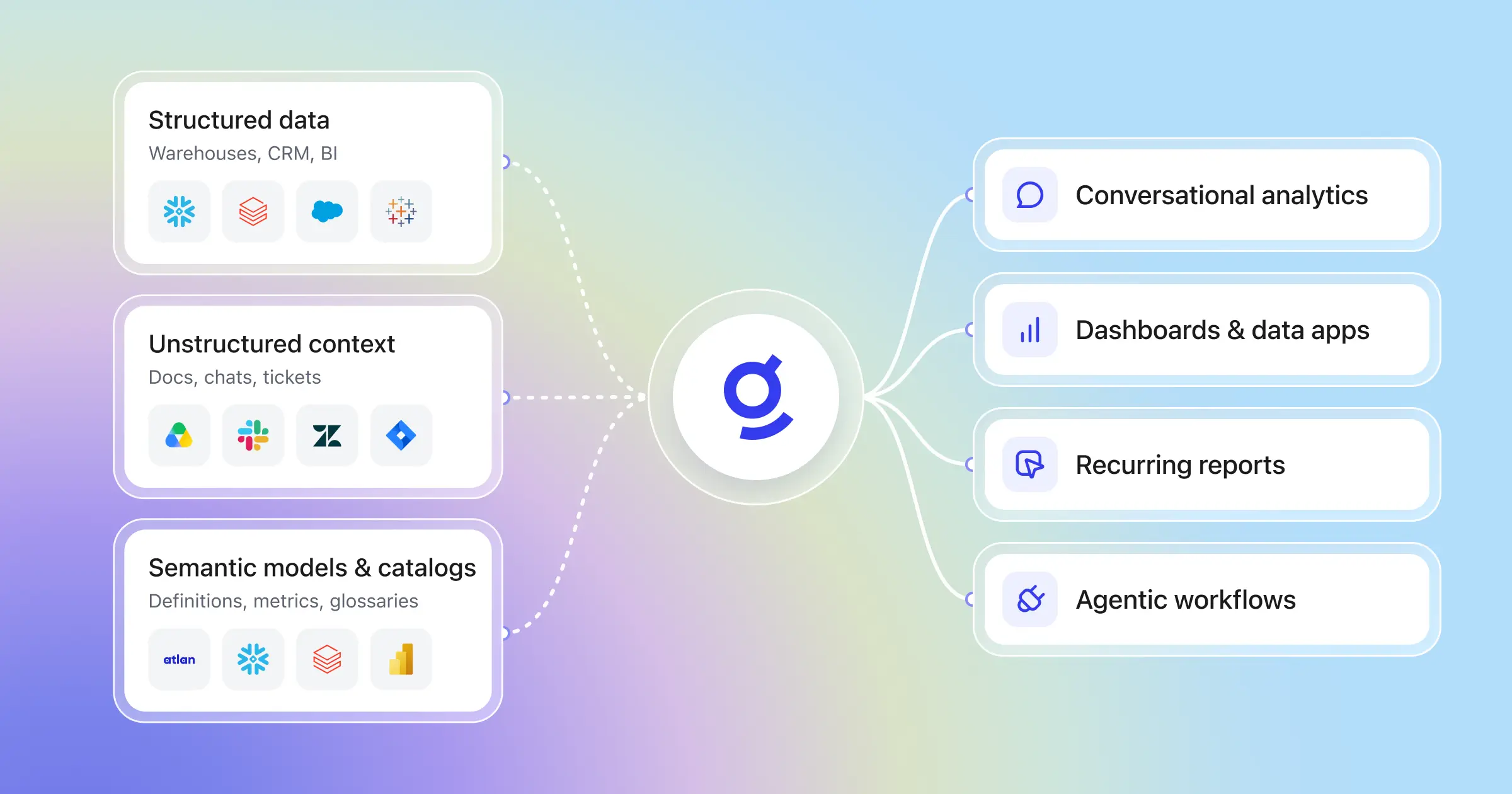
When the tool already knows how your codebase is organized, it spends less time guessing and more time applying knowledge that already exists inside the company. Glean's Enterprise Graph, for example, connects code repositories, documentation, and communication channels so that an assistant can ground its suggestions in the patterns and decisions your team has already made.
Practical evaluation should weight six capabilities equally against speed: how well the tool absorbs your organization's systems and conventions, whether it improves code quality beyond first-draft generation, how deeply it integrates into existing review and CI/CD workflows, whether it supports collaboration across a team rather than just individual productivity, how it handles security and governance requirements, and whether you can measure its impact on delivery outcomes with real data. A tool that scores well across these dimensions reduces friction at every stage of the development lifecycle — not just the minutes spent typing.
Why organizational context separates useful tools from fast ones
An AI coding tool that generates syntactically correct code without understanding your architecture, naming conventions, internal APIs, or team standards creates more rework than it saves. The output looks right in isolation but breaks the moment it touches your actual system — wrong abstraction layers, misnamed variables, calls to deprecated endpoints.
Context-aware tools close that gap by drawing on existing repositories, documentation, design decisions, and internal knowledge. Instead of producing generic suggestions that a developer must manually adapt, these tools generate code that aligns with how your organization actually builds software. The result: less time spent translating AI output into something shippable.
When evaluating any tool's context capabilities, three questions cut through the marketing. Does it understand your codebase structure, including monorepo boundaries and service dependencies?
Can it reference internal documentation and past architectural decisions? Does it respect your team's patterns rather than imposing its own?
Glean's Personal Graph offers one approach to this problem. It maps each engineer's work patterns, recent files, and project relationships so that suggestions draw on both the organization's collective knowledge and the individual engineer's current project focus. A developer working on the payments service gets context from payments-related documentation and code, not a generic response drawn from the entire codebase.
How AI coding tools affect code quality and maintainability
Faster code generation without quality guardrails accelerates technical debt. A tool that helps a team produce twice as many pull requests per week is a liability if those PRs introduce inconsistent patterns, skip edge cases, or bypass established testing conventions. The real value of genAI in software engineering extends well beyond code completion — it includes the ability to catch and prevent the kinds of issues that slow teams down months later.
Automated testing and bug detection
Effective AI coding tools generate test cases grounded in your codebase, not boilerplate stubs from generic training data. That means tests that reference your actual data models, hit your real API contracts, and cover the edge cases your team has encountered before.
Beyond test generation, the stronger tools detect logical issues, security vulnerabilities, and patterns that have caused incidents in your organization's history. A tool that flags a race condition similar to one your team fixed six months ago is materially more valuable than one that only catches syntax errors.
Code review augmentation
AI-assisted code reviews that learn from your team's review history reduce review cycle time without sacrificing rigor. The tool can flag deviations from team standards — naming conventions violated, error handling patterns skipped, logging requirements missed — before a human reviewer spends time on them.
The shift moves human review time from catching mechanical issues to evaluating design decisions, architectural fit, and business logic. Glean Search surfaces relevant past review discussions and architectural decision records during code review, giving reviewers immediate access to the reasoning behind existing patterns rather than relying on institutional memory.
Refactoring support
Legacy code is a constant in enterprise engineering. AI tools that restructure existing code — reducing duplication, improving readability, consolidating related logic — help teams maintain velocity without accumulating the kind of debt that eventually forces a rewrite. Sonar's 2026 State of Code survey found that 53% of developers attributed a negative impact on technical debt due to AI creating code that looked correct but was unreliable — making quality-aware refactoring tools even more critical.
The most useful refactoring suggestions draw on your codebase's history. A tool that understands which modules have high churn rates or frequent bug fixes can prioritize refactoring recommendations where the impact is highest.
What role does workflow integration play in AI tool effectiveness?
A tool that lives only inside the code editor misses most of the engineering workflow. Engineers move constantly between ticketing systems, documentation platforms, communication tools, CI/CD pipelines, and incident management systems. Each context switch carries a cost, and a tool that can only assist during the "writing code" phase leaves the majority of that friction untouched.
The integration areas that matter most for engineering teams span five categories:
| Integration area | What it enables |
|---|---|
| Source control | PR summaries, commit context, change impact analysis |
| Documentation | Design doc references, wiki lookups, ADR retrieval |
| CI/CD pipelines | Build failure analysis, deployment risk assessment |
| Communication tools | Thread-aware context from Slack and Teams discussions |
| Ticketing systems | Issue context, requirement traceability, sprint awareness |
Tools with broad connector coverage eliminate the "copy information into a separate window" workflow that strips organizational context from every interaction. When an engineer can ask a question about a failed build and get an answer grounded in the CI logs, the related Jira ticket, and the Slack thread where the team discussed the deployment — without manually gathering those inputs — the entire engineering stack becomes the AI's context.
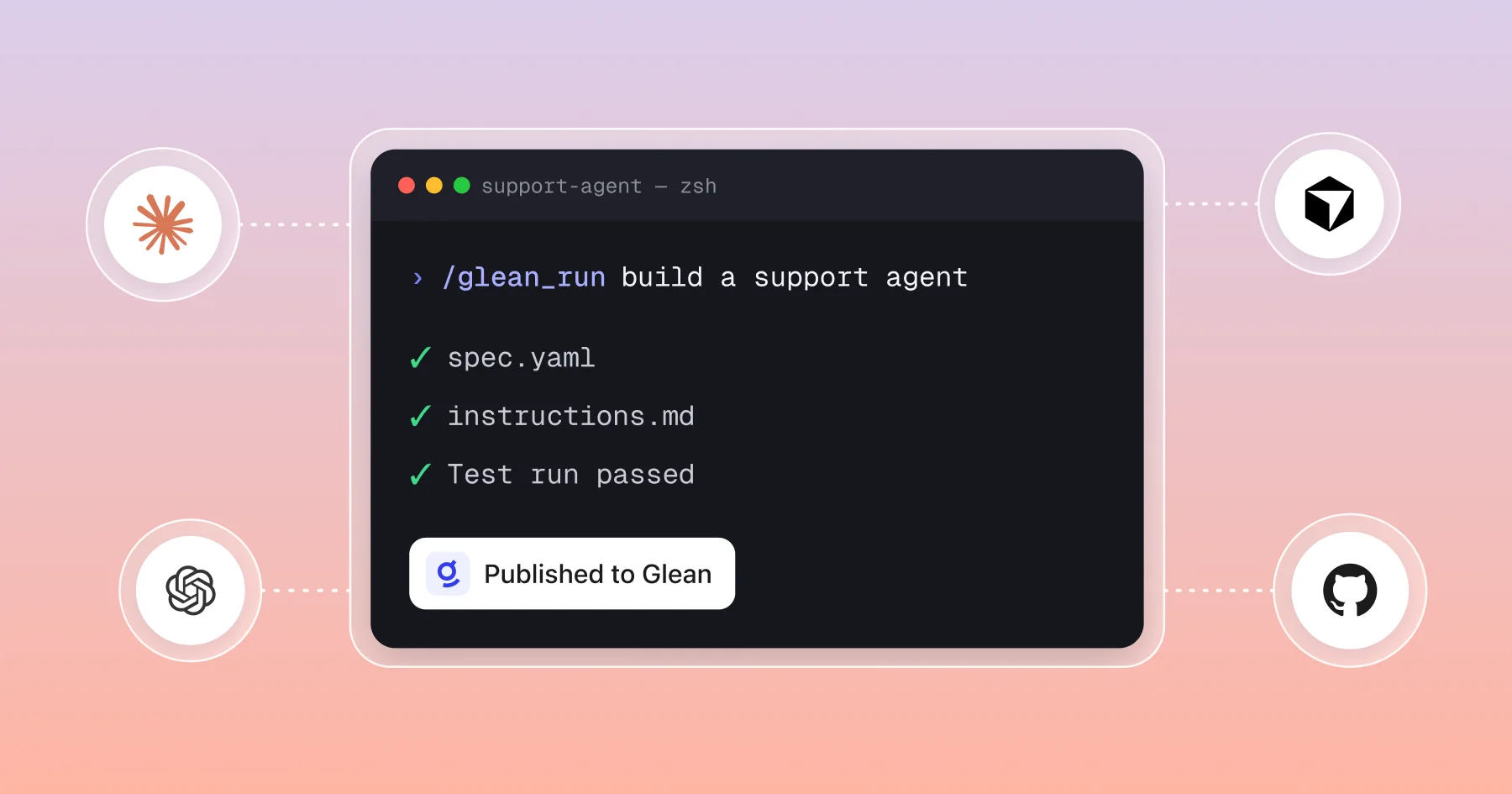
Glean Agents operate across these integration surfaces, pulling context from connected systems to execute multi-step workflows. An agent can trace a build failure back to a specific commit, identify the relevant documentation, and draft a summary for the team — all within the tools engineers already use.
How AI tools improve collaboration across engineering teams
Software development is a team activity, yet most AI coding tools optimize for individual output. The collaboration tax — waiting on code reviews, searching for service owners, duplicating work across teams, losing context during handoffs — often exceeds the time spent writing code itself. Maximizing coding time and efficiency requires reducing this coordination overhead, not just accelerating code generation.
AI tools that surface expertise and ownership across the organization reduce coordination overhead directly. When an engineer can identify who owns a service, what decisions shaped its architecture, and what recent changes have been made — without pinging three people on Slack — the entire team moves faster.
Onboarding is where the impact shows up first. New engineers typically spend weeks building mental models of the codebase, tracking down documentation, and learning unwritten conventions. AI tools connected to organizational knowledge dramatically shorten the ramp-up period by giving new team members immediate, contextual access to answers that would otherwise require interrupting senior engineers. Accelerating new engineer onboarding through contextual prompting is one of the highest-leverage applications of AI in engineering today.
Glean Assistant, when connected to an organization's code repositories and internal documentation, lets engineers ask natural-language questions about the codebase and receive cited answers grounded in actual company knowledge. A new team member asking "how does the authentication service handle token refresh?" gets a response drawn from the relevant source code, design documents, and past discussions — not a generic explanation.
Smaller, more agile teams become practical when AI handles the "work around the work." Status updates, meeting summaries, knowledge sharing, and cross-team alignment all consume hours that could go toward building. Automating these coordination tasks lets teams stay lean without sacrificing visibility.
What security and governance features matter for enterprise teams?
Permission-aware AI is non-negotiable for any tool with access to source code and internal systems. A coding assistant that surfaces proprietary code, security configurations, or access credentials to engineers who shouldn't see them creates a compliance exposure that no productivity gain can justify. Understanding the fundamentals of AI security is essential before deploying any tool with access to your codebase.
The baseline requirement: the tool should respect your existing access controls without requiring a parallel permission system. If an engineer doesn't have access to a repository in your source control system, the AI tool shouldn't surface that repository's code in its suggestions or answers. Building the right permissions structure ensures secure generative AI in complex enterprise environments.
Beyond permissions, four governance capabilities separate enterprise-ready tools from tools designed for individual use. Data residency and retention policies need to match your compliance requirements — contractual zero-day data retention with underlying model providers protects intellectual property.
Audit trails should track who asked what, when, and what the tool returned. Acceptable use controls let administrators define boundaries for how the tool operates within the organization. Robust AI governance that flags and remediates accidentally overshared sensitive data is critical for safely deploying agents at scale. Model flexibility means you aren't locked into a single provider's model when a better option emerges or a compliance requirement changes.
Glean's Agentic Engine enforces permission-aware results across every surface — search, assistant, and agent interactions all respect the same access controls that govern the underlying systems. Engineers interact with the same permission layer they already use — there is no secondary configuration and no gap between what a user can access directly and what the AI surfaces.
How to measure the real impact of AI coding tools on engineering team productivity
Adoption metrics alone — active seats, daily queries, lines of generated code — don't indicate whether a tool improves engineering outcomes. A tool with 90% daily active usage that produces code requiring extensive rework is worse than a tool with 60% adoption that reduces cycle time. The question of whether AI can truly double developer productivity depends on measuring the right outcomes, not just activity.
Start with baseline metrics. Collect three to six months of historical data before any AI tool rollout. Without a baseline, you can't isolate the tool's impact from other changes — new hires, process improvements, infrastructure upgrades — happening in parallel.
Delivery and quality metrics
The DORA framework (deployment frequency, lead time for changes, change failure rate, and time to restore service) provides a well-established starting point. Track these metrics before, during, and after your pilot to measure delivery impact. However, recent DORA research on generative AI reveals a paradox: while AI tools improve documentation quality by 7.5% and code review speed by 3.1%, they simultaneously cause a 7.2% reduction in delivery stability.
Add AI-specific metrics: code acceptance rate (what percentage of AI-generated suggestions make it into production without modification), rework rate on AI-assisted PRs versus unassisted ones, and defect density in AI-generated code versus human-written code. These numbers tell you whether the tool is producing shippable output or just increasing volume.
Developer experience metrics
Quantitative metrics miss half the picture. Developer satisfaction surveys, cognitive load assessments, and voluntary adoption rates capture whether engineers find the tool genuinely useful or merely tolerate it because leadership rolled it out.
Pay attention to voluntary adoption in particular. When engineers who aren't required to use a tool choose to use it anyway, that signal carries more weight than any usage dashboard. The 2025 Stack Overflow Developer Survey found that while 80% of developers now use AI tools, trust in AI accuracy has fallen to just 29% — a gap between adoption and confidence that voluntary usage patterns can help you detect early.
Cost and ROI metrics
Net time gain — hours saved minus hours spent correcting AI output, configuring the tool, and managing its governance — is the metric that matters for ROI. License costs measured against productivity improvements give you the financial case, but only if productivity is measured in outcomes (features shipped, incidents resolved, cycle time reduced) rather than activity (lines generated, queries made).
McKinsey's 2023 analysis of developer productivity across enterprise software teams found that AI tools can reduce time spent on documentation by up to 50% and code generation time by 35–45%, but the total productivity impact depends heavily on how well the tool integrates with existing workflows and organizational context.
Glean Search can surface code review acceptance patterns, documentation usage trends, and query frequency data across connected systems — giving engineering leaders the raw signal they need to calculate net time gain rather than relying on self-reported estimates.
Building an evaluation framework for your team
Every engineering organization has different architectural patterns, team structures, compliance requirements, and workflow tools. A one-size-fits-all evaluation checklist misses the factors that determine whether a tool works for your specific context.
Start with a weighted scorecard across the six capabilities covered in this article: organizational context awareness, code quality and maintainability, workflow integration, collaboration support, security and governance, and measurable impact. Weight each capability based on your team's priorities. A heavily regulated financial services team might weight security and governance at 30%, while a fast-moving startup might weight workflow integration and collaboration higher.
Run a structured pilot before committing to a full rollout. Deploy the tool with a small team for eight to 12 weeks, establish a control group that doesn't use the tool, and measure the delivery, experience, and cost metrics outlined above. A year-long enterprise study of 300 engineers demonstrated the importance of sustained adoption: teams saw a 31.8% reduction in PR review cycle time, but only among high-adoption users — low-engagement engineers saw no measurable improvement. The pilot should be long enough to capture steady-state usage — the novelty effect in the first two weeks inflates adoption numbers and skews satisfaction data.
Revisit your evaluation quarterly. AI tools evolve rapidly, and a tool that scored well six months ago may have fallen behind on capabilities that matter to your team.
Glean Agents can automate parts of the evaluation process itself — collecting usage metrics across connected systems, compiling review cycle time data, and surfacing adoption patterns without manual reporting. Continuous evaluation backed by automated data collection — not a one-time selection — is what keeps your engineering organization equipped with tools that genuinely improve outcomes.
Frequently asked questions
What features should I prioritize in an AI coding tool?
Prioritize organizational context awareness, workflow integration depth, and security governance over raw generation speed. A tool that understands your codebase, connects to your existing systems, and respects your access controls delivers more value than one that generates code faster in isolation. Glean Search, for instance, surfaces cited answers grounded in your organization's knowledge rather than returning generic results — a concrete example of what organizational context awareness looks like in practice.
How can AI tools improve team collaboration in software development?
AI tools improve collaboration by surfacing expertise and ownership across the organization, reducing onboarding time for new engineers, and automating coordination tasks like status updates and knowledge sharing. The biggest gains come when the tool connects to communication platforms, documentation, and code repositories simultaneously. Effective knowledge management is the foundation that makes these collaboration improvements possible.
What metrics should I use to evaluate AI coding tool effectiveness?
Use a combination of delivery metrics (DORA framework), developer experience metrics (satisfaction, cognitive load, voluntary adoption), and cost metrics (net time gain, license costs versus productivity improvements). Establish baseline measurements three to six months before rollout to isolate the tool's impact.
How do AI coding tools impact code quality and maintainability?
The impact depends on the tool's quality guardrails. Tools that generate tests grounded in your codebase, flag deviations from team standards during review, and suggest targeted refactoring improve maintainability. Tools that only accelerate generation without these guardrails can increase technical debt. The key is integrating generative AI in ways that enhance the full development lifecycle rather than just the code-writing phase.
What are best practices for integrating AI tools into existing engineering workflows?
Start with a structured pilot: deploy to a small team for eight to 12 weeks with a control group. Measure outcomes rather than activity. Prioritize tools with broad connector coverage across your existing systems.
Revisit your evaluation quarterly as capabilities evolve.
The right AI coding tool fits the way your engineering team already works, protects your intellectual property, and produces outcomes you can measure. Evaluating context, quality, integration, collaboration, security, and impact as connected capabilities — rather than isolated checkboxes — gives your team the clarity to choose well. Request a demo to explore how Glean and AI can transform your workplace.

.jpg)

.png)



.jpg)
.webp)