


Explaining Token Efficiency: ROI and Risk for Executives
Token efficiency is the ratio of useful business outcome to total AI compute consumed, and it has become a defining variable in whether your AI investments generate returns or drain budgets. With enterprise generative AI spending reaching $37 billion in 2025 alone — a 3.2x year-over-year increase — understanding this metric gives executives a concrete way to evaluate AI spending the same way they evaluate any other capital allocation decision.
Two related concepts matter here. Token efficiency measures how few tokens a system needs to complete a task. Token yield measures the business value produced per token consumed.
Together, these metrics give you a financial lens for AI that goes beyond vague promises of productivity gains. Deloitte's 2025 Tech Value Survey found that organizations now allocate an average of 36% of their digital initiative budgets to AI. When that much capital flows into usage-based systems, the difference between high and low token efficiency can mean millions of dollars in annual spend.
Why AI costs behave differently than traditional software costs
Traditional SaaS charges a flat per-seat fee. You know what 500 licenses cost before the fiscal year starts, and that number doesn't change if your team runs one report or one thousand.
AI flips that model. Every query, every agent action, and every reasoning step consumes tokens, and tokens are metered. Your costs compound with usage in ways that per-seat software never did. Gartner predicts that by 2028, AI coding costs alone will surpass the average developer's salary as token consumption surges and consumption-based licensing becomes the norm.
That compounding accelerates fast with agentic workflows. A simple chat prompt might consume a few hundred tokens, but a multi-step agent that plans, retrieves context, reasons across sources, and takes action can consume five to thirty times more tokens per task than a simple chat interaction (FinOps Foundation, 2026). AT&T publicly reported scaling from roughly 8 billion to 27 billion tokens per day after deploying multi-agent systems.
Many AI-native tools sold as monthly subscriptions function as token aggregators. The seat fee is the floor, but variable consumption drives the actual bill. Procurement teams that treat these tools as standard SaaS line items inherit metered obligations without corresponding controls, paying what amounts to a hidden cost of AI that compounds across every team and workflow.
The result is a productivity paradox: budgets designed to last a year can be exhausted in months. Uber burned through its entire 2026 AI coding tools budget in four months as rapid employee adoption outpaced forecasts.
Per-token list prices have fallen at commodity tiers, but enterprise spend keeps rising because reasoning-heavy workloads consume far more tokens per outcome. Architecture choices drive this gap. Weaker retrieval systems consume roughly 30% more tokens for the same answer quality, and when they do produce correct results, they need nearly twice the token budget.
Glean's knowledge graph addresses this by grounding retrieval in company-specific context and permissions, so the system sends fewer, more relevant tokens to the model instead of over-fetching and hoping for the right answer.
How to measure token yield in business terms executives already use
Token yield becomes actionable when you map it to metrics your finance team already tracks. Cost per resolved support ticket, cost per sales document generated, cost per employee question answered. These are unit economics, and token spend is now a variable inside each one. When you express AI costs as a line item within an existing KPI, the budget conversation shifts from "how much are we spending on AI?" to "what is each AI-assisted outcome costing us?"
The distinction between raw throughput and useful output matters here. Borrowing from network engineering, "goodput" counts only the tokens that contributed to a completed, quality-checked outcome. It excludes retries, abandoned reasoning paths, and context the model never used. A system that processes 50,000 tokens to resolve a ticket and one that processes 20,000 tokens to resolve the same ticket at the same quality have very different yield profiles, even if both "work."
Attribute token spend per team and workflow the same way cloud FinOps allocates compute. The State of FinOps 2026 survey found that 98% of organizations now manage AI spend, up from just 31% two years ago — a signal that token cost governance is rapidly becoming a baseline expectation. Tag consumption by department, use case, and model tier so you can identify which workflows improve over time and which ones plateau. Improving yield quarter over quarter signals good architecture. The system is learning, caching, and routing more efficiently. Flat or declining yield signals architectural debt. Glean supports this through a self-learning language model that accumulates per-user and per-company context over time, so repeat queries and related follow-ups require fewer retrieval tokens to reach the same answer quality. Report AI ROI as a unit economic: outcome value divided by total token cost, broken out by use case.
Where the real risks hide: cost, quality, and governance exposure
The most common cost risk in production AI is recursive reasoning. When an agent encounters ambiguity, it can enter a loop: re-planning, re-retrieving, and re-reasoning, consuming thousands of tokens without progressing toward an answer. Over-fetched context compounds the problem: systems that pull entire documents instead of relevant paragraphs send the model a wall of text to parse, burning tokens on content that adds no value to the response.
Quality risk emerges when organizations respond to cost overruns with blunt cuts. Restricting context windows, capping token budgets per query, or downgrading models across the board reduces spend but degrades output. A customer service agent that loses access to order history or product documentation starts generating vague, unhelpful responses. The savings show up in the AI budget; the costs show up in CSAT scores and escalation rates. Establishing the right foundational requirements for integrating AI agents can help organizations avoid these trade-offs from the start.
Shadow AI creates a third category of exposure. When employees adopt unsanctioned tools (personal ChatGPT accounts, browser-based coding assistants, unauthorized API integrations), the organization loses visibility into what data is being processed, what tokens are being consumed, and whether outputs meet quality or compliance standards. Vendor lock-in amplifies all of these risks. When switching AI providers is difficult, you lose the ability to reroute workloads when pricing, quality, or compliance requirements change. Glean Agents address governance exposure by enforcing permission-aware retrieval upstream of the model, so the AI layer never processes data a user is not authorized to see, regardless of which model runs the task.
Four architecture levers that determine token economics
Token costs are not fixed by the model provider's price sheet. Four architectural decisions, made once and compounding over time, determine how many tokens each outcome actually requires.
Context precision
Token waste starts at retrieval. Systems that fetch entire documents, full Slack threads, or complete wiki pages when the model only needs two paragraphs force the reasoning step to sift through irrelevant content. The result is higher token consumption and, paradoxically, lower answer quality because the model's attention spreads across noise. This is why enterprise AI search architectures that combine semantic understanding with structured retrieval are essential for controlling both cost and quality.
A context layer that understands the relationships between people, content, and organizational structure can scope retrieval to the specific paragraphs, messages, or data points the model needs. Glean does this by combining semantic search with a knowledge graph that maps relationships between people, content, and activity, so each retrieval step returns precise, permission-checked content rather than bulk document dumps.
Model routing
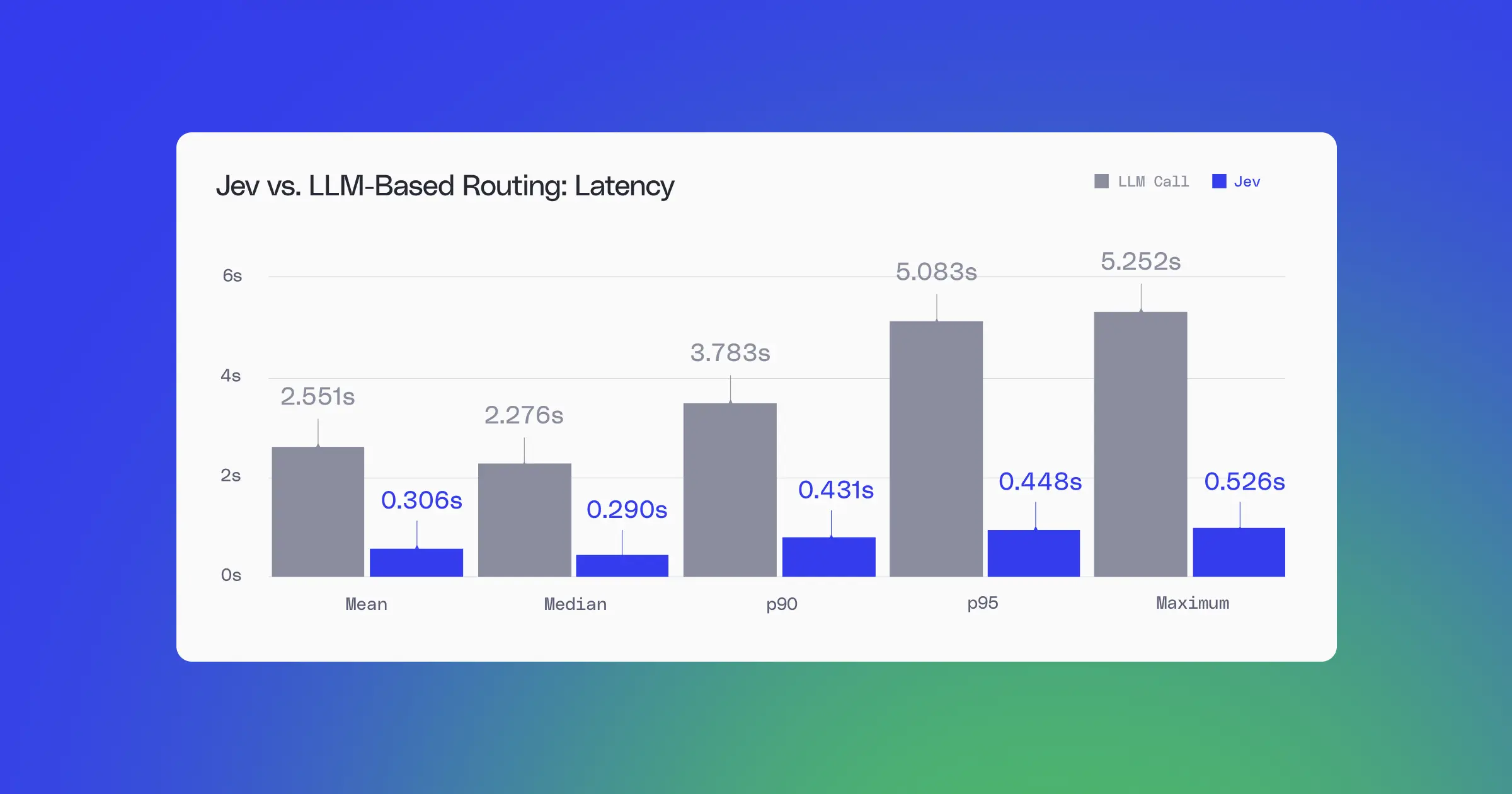
Not every step in a workflow requires a frontier reasoning model. Summarizing a document, extracting structured fields from a form, or classifying a support ticket by category are tasks where a smaller, faster, cheaper model performs just as well.
Intelligent routing preserves frontier reasoning for high-value steps like complex multi-source synthesis, nuanced judgment calls, and ambiguous queries, then right-sizes everywhere else. Organizations that route everything through their most expensive model pay a premium for routine work and create unnecessary latency. The FinOps Foundation identifies four token quality tiers: bulk (high throughput, low per-user speed), goldilocks (moderate interactivity at near-optimal cost), premium low-latency, and reasoning-class compute. Each tier carries different economics that routing can exploit.
Continual learning
Systems that solve every query from scratch never improve their economics. Each execution starts with a full retrieval, full reasoning chain, and full output generation, regardless of whether the platform answered the same question last week.
Accumulated execution signal changes this pattern. When a platform records which retrieval paths led to accepted answers, which reasoning steps were productive, and which context was actually used, subsequent executions skip redundant exploration. Token yield compounds as the system builds reusable domain expertise. Glean Search applies this through a self-learning language model that continuously adapts to each company's dialect, terminology, and usage patterns, so retrieval precision improves over time without manual tuning.
Workflow orchestration
Naive agent harnesses accumulate context at every step. The output of step one becomes input to step two, combined with new retrieval, combined with system instructions, and the token count grows linearly with workflow length. A five-step workflow can consume five times the tokens of a single-step query without producing five times the value. Understanding how AI agents in the enterprise actually operate helps teams design orchestration patterns that avoid this compounding trap.
Well-designed orchestration scopes each step's working set, externalizes state between steps, and gives each model call only the context it needs for its specific task. Model-agnostic orchestration also protects against vendor lock-in. When your workflows are not hard-coded to a single provider's API, you can swap models based on price-performance changes without re-engineering your pipelines.
How token metrics should shape AI project budgeting
Budget AI like variable-cost infrastructure, not like fixed software licenses. Forecast a baseline token envelope for each use case using pilot data, set consumption alerts at 70% and 90% thresholds, and review actual versus projected spend monthly. That cadence mirrors how mature cloud teams manage compute. You plan for a range, instrument the actuals, and adjust. Getting this right matters: research shows that 85% of enterprises miss their AI infrastructure forecasts by more than 10%, and 80% miss by more than 25%.
Separate token cost from your full AI cost stack. Token consumption is the largest variable component, but platform fees, connector maintenance, security tooling, and internal engineering time also contribute. Conflating them makes it impossible to identify whether a cost increase comes from higher usage, a model price change, or an infrastructure expansion. Pilots are the right tool for establishing empirical baselines. Run a controlled deployment on one use case, such as support ticket resolution, for 30 to 60 days, measure tokens per resolved ticket, and use that baseline to project costs at scale. Avoid budgeting from vendor estimates or industry benchmarks alone; your data, your queries, and your workflows produce a unique consumption profile.
Build architectural headroom into every deployment. If your system is tightly coupled to a single model provider, a pricing change or deprecation forces an emergency migration. Design for model swaps, routing changes, and context-window adjustments from the start. Treat governance and security controls (permission enforcement, audit logging, data residency compliance) as cost-avoidance mechanisms, not overhead. Glean's permission-aware retrieval enforces access controls before tokens are consumed, preventing the model from processing unauthorized data and avoiding the compliance remediation costs that follow a governance failure.
A practical framework for presenting token economics to the C-suite
Lead with the business outcome, not the token count. "We resolved 40% more support tickets at 25% lower cost per resolution" lands with a CFO. "We reduced average tokens per query by 18%" does not. Executives allocate capital based on outcomes, and token metrics are the operational layer that explains how those outcomes are delivered efficiently. McKinsey's 2025 Global Survey found that only about 6% of organizations qualify as "AI high performers" — those attributing more than 5% of EBIT directly to AI — and these companies are nearly three times as likely to have fundamentally redesigned workflows around the technology.
Build a three-metric dashboard: token yield (business value per token consumed), cost per outcome (total token cost divided by completed task), and yield trend (how yield changes over time). Yield trend is the most important of the three because it signals whether your AI architecture is improving or degrading. A rising yield trend justifies continued investment; a flat or declining trend signals a need for architectural review before scaling further. Many CIOs are already shifting their mindset to prioritize potential over cost when evaluating AI, recognizing that yield-focused governance enables bolder bets.
Frame risk as unhedged variable-rate exposure. Every AI workload carries consumption risk, similar to floating-rate debt: observable and manageable with the right instrumentation, but dangerous when ignored. Present architecture decisions (model routing, context precision, orchestration design) as capital allocation decisions. Each one shifts the cost curve for every future query. Anchor every recommendation in a specific, measurable use case. "If we improve retrieval precision on our top five support workflows, we project a 20% reduction in token cost per ticket" is a fundable proposal. "We should invest in AI optimization" is not. Platforms that provide per-workflow consumption visibility let teams build these proposals from actual data rather than projections.
Frequently asked questions
What is the difference between token efficiency and token yield?
Token efficiency measures how few tokens a system needs to complete a given task. Token yield measures the business value produced per token consumed. Efficiency is an engineering metric; yield is a financial metric that connects token consumption to business outcomes like cost per resolved ticket or cost per generated document.
How do token metrics affect AI project budgeting?
Token metrics turn AI from an opaque line item into a measurable variable cost. By tracking tokens per outcome for each use case, finance teams can forecast consumption, set alerts for budget thresholds, and compare actual spend against projections, the same way cloud teams manage compute costs.
What strategies improve token yield without compromising output quality?
Four architecture-level strategies have the largest impact: improving retrieval precision so the model receives only relevant context, routing simpler tasks to smaller and cheaper models, enabling continual learning so the system skips redundant reasoning on repeated patterns, and designing orchestration that scopes each step's context rather than accumulating it.
What are the risks of ignoring token economics?
Unmonitored token consumption leads to budget overruns, often within months rather than quarters. Blunt cost-cutting degrades output quality. Shadow AI creates untracked spend and compliance gaps. Vendor lock-in limits your ability to respond when pricing or performance changes, and the absence of governance controls exposes the organization to data access violations.
How should we evaluate AI platform vendors on token economics?
Ask whether the platform supports model routing across providers, enforces permissions before tokens are consumed rather than after, accumulates learning signal to improve yield over time, and provides granular usage attribution by team and workflow. A vendor that locks you into a single model or charges per seat without consumption transparency limits your ability to manage token economics at scale.
Token efficiency and token yield give you the financial vocabulary to manage AI spending with the same rigor you apply to any other operating cost. The organizations that build for context precision, intelligent routing, and continual learning now will compound those advantages with every workflow they deploy. Request a demo to explore how Glean and AI can transform your workplace.



.webp)




.webp)

.webp)