



7 AI agents every business should consider this year
The landscape of enterprise AI has shifted dramatically from simple chatbots to sophisticated systems that can independently plan, execute, and adapt to achieve complex business goals. Today's AI agents represent a fundamental evolution in how organizations approach automation — moving beyond basic question-answering to autonomous systems that handle entire workflows from start to finish.
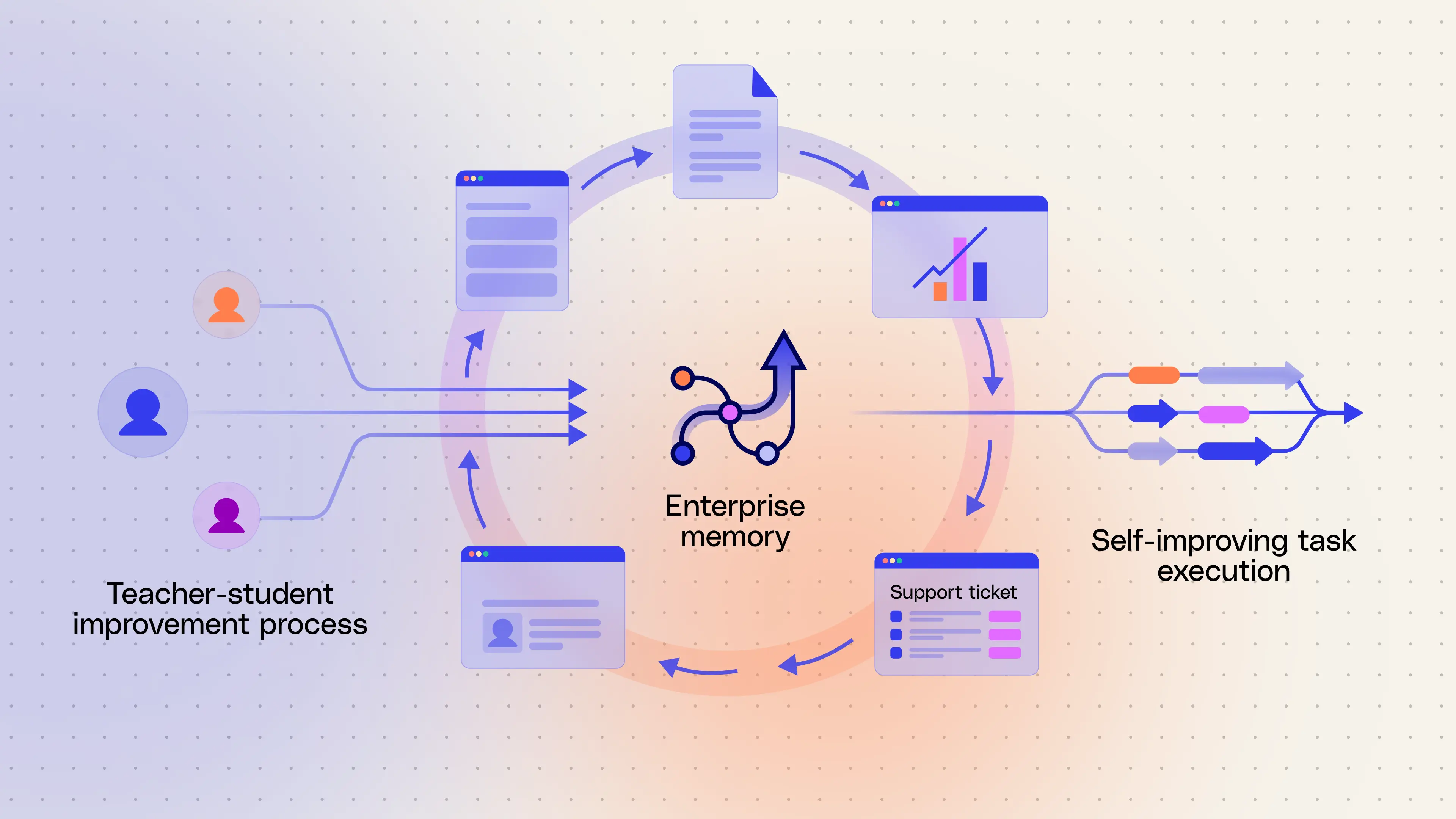
These intelligent systems operate through a continuous cycle of perception, reasoning, and action. They collect data from multiple sources across your organization, process it to identify patterns and insights, then execute tasks without constant human oversight — all while maintaining enterprise-grade security and respecting existing permissions.
The transformation from reactive tools to proactive agents means businesses can now delegate complete processes rather than individual tasks. Whether automating customer support workflows, conducting deep research across company knowledge bases, or managing complex project dependencies, AI agents are becoming essential infrastructure for competitive enterprises.
What are AI agents and why they matter for business
AI agents are autonomous software systems that perceive their environment, make decisions, and take actions to achieve specific goals. Unlike traditional automation tools that follow rigid scripts, these agents adapt their approach based on real-time feedback and changing conditions. They combine the reasoning capabilities of large language models with the ability to interact with multiple systems, tools, and data sources across your organization.
The distinction between AI agents and conventional chatbots lies in their capacity for complex, multi-step reasoning. When presented with a request like "analyze last quarter's customer feedback and create an action plan for the product team," an AI agent breaks this down into discrete tasks: gathering feedback from various channels, categorizing issues by theme, identifying trends, prioritizing based on impact, and generating a structured plan with specific recommendations. Each step involves different tools and data sources, with the agent orchestrating the entire process autonomously.
The architecture of modern AI agents
Modern AI agents operate through three core components that work in concert:
Enterprise-grade capabilities
What separates enterprise AI agents from consumer tools is their sophisticated handling of security, permissions, and organizational context. These systems integrate with existing identity management infrastructure to ensure users only access information they're authorized to see. They understand role hierarchies, departmental boundaries, and data sensitivity levels — critical considerations when automating workflows that touch sensitive customer data or proprietary information.
The evolution from simple RAG (Retrieval Augmented Generation) to agentic reasoning represents a quantum leap in capability. Early RAG systems could find information and generate responses based on that context. Today's agents go further: they formulate strategies, coordinate multiple sub-tasks, self-evaluate their progress, and adjust their approach when initial attempts don't succeed. This self-reflective capability means they can handle ambiguous requests and novel situations that would stump traditional automation.
The business impact of AI agents
Organizations deploying AI agents report transformative impacts across key metrics:
The shift to agentic AI also changes how teams collaborate. Instead of spending hours in coordination meetings or waiting for information from other departments, employees can delegate cross-functional tasks to agents that navigate organizational silos seamlessly. A sales representative can ask an agent to "prepare a comprehensive proposal for the Acme account including technical specifications, pricing history, and competitive analysis" — triggering a complex workflow that would typically require input from engineering, finance, and marketing teams.
As businesses face increasing pressure to do more with less while maintaining quality and compliance standards, AI agents offer a path to sustainable growth. They augment human capabilities rather than replace them, handling the repetitive and time-consuming work that prevents employees from focusing on innovation, relationship-building, and strategic decision-making. The question for modern enterprises isn't whether to adopt AI agents, but how quickly they can integrate these systems to remain competitive in an increasingly automated business landscape.
Certainly, let's revise the section to ensure it complements the previously written article without repeating content.
Customer experience agents: transforming support and engagement
Customer experience agents are revolutionizing interactions between businesses and clients, setting new benchmarks for service efficiency and personalization. By integrating seamlessly into existing infrastructures, these agents not only elevate customer satisfaction but also streamline internal workflows. Their ability to continuously learn and adapt positions them as essential components in today's fast-paced business environments.
Intelligent support automation
AI-driven support automation is reshaping how organizations deliver customer service. These agents leverage in-depth understanding of company-specific data and guidelines to provide consistent, human-like engagements across multiple channels. They efficiently manage the initial phases of customer interaction—resolving inquiries with precision while ensuring that complex issues are intelligently escalated to human agents.
By integrating with helpdesk systems, these agents facilitate smooth transitions within support operations. The automation of routine tasks allows human agents to concentrate on strategic and complex issues, significantly enhancing productivity and customer experience. This dynamic allocation of tasks ensures that customer support becomes more responsive and efficient, establishing new standards for service delivery.
Voice and conversational agents
Advancements in voice and conversational agents have brought forth interactions that feel both natural and intuitive. These agents can engage in meaningful dialogues across languages, making them invaluable for multinational enterprises. They excel in managing calls, scheduling, and conducting outreach with a nuanced understanding of emotional context.
Their sophisticated dialogue management systems analyze conversational nuances—enabling dialogues that are fluid and engaging. This capability is particularly crucial when handling private or sensitive information, as it allows for the secure processing of voice and text. By integrating emotional intelligence, these agents enhance the overall quality of customer interactions, building trust and satisfaction.
This evolution in customer experience agents not only boosts operational efficiency but also significantly enhances the quality of customer interactions—fostering loyalty and trust in a rapidly evolving digital landscape.
Knowledge and research agents: unlocking organizational intelligence
In the world of enterprise operations, leveraging vast amounts of organizational knowledge efficiently can redefine business potential. Knowledge and research agents lead this transformation, offering sophisticated tools for accessing, analyzing, and utilizing vast datasets. These agents provide a strategic edge, ensuring data contributes to comprehensive organizational insights.
Enterprise search and discovery
The effectiveness of knowledge management hinges on seamless search and discovery. Knowledge agents break traditional search barriers by integrating with an extensive array of applications, centralizing information from various sources into an intuitive, accessible platform. This aggregation ensures employees can easily retrieve the insights they need without navigating through multiple systems.
Critical to their function is the adherence to security protocols, which ensure that information access is strictly governed by existing authorization frameworks. Advanced algorithms and structured data models enhance the relevance of search results, pinpointing the most pertinent information for users' queries.
These agents continually evolve, refining their understanding of organizational language and context through adaptive learning models. This evolution enhances search precision, making enterprise data more actionable.
Research and analysis automation
Research agents revolutionize analytical processes, empowering businesses to derive actionable insights from complex data landscapes. They excel in executing in-depth analyses, employing strategic methodologies to synthesize diverse datasets. Their strength lies in facilitating business intelligence, competitive analysis, and comprehensive market research.
Beyond data compilation, these agents dynamically refine their analyses by posing targeted queries and integrating feedback. This iterative approach results in detailed, insightful reports that drive strategic decisions across organizations.
Through seamless integration with enterprise AI tools, research agents tap into both proprietary and external data sources, delivering insights rich in context and aligned with market trends. In an environment where strategic information is paramount, these agents provide the intelligence needed to maintain a competitive edge.
This evolution in AI-driven knowledge management and research marks a significant shift in enterprise operations, embedding data-driven insights into the core of strategic decision-making.
Productivity and workflow agents: automating daily operations
In the modern enterprise landscape, productivity and workflow agents play a crucial role in streamlining operations by taking on routine processes. These agents are designed to enhance the efficiency of task management by seamlessly connecting with existing digital infrastructures. By handling repetitive tasks, they allow employees to focus on more strategic and innovative initiatives, fostering a dynamic work environment.
Meeting and documentation agents
Meeting agents have revolutionized the way organizations handle meetings, ensuring that every detail is captured and actionable insights are always available. They seamlessly join scheduled calls, transcribing discussions in real time and capturing key decisions for immediate reference. These agents automate the entire meeting process, from distributing pre-meeting briefs to generating post-meeting summaries and follow-up communications, eliminating the need for manual effort.
With advanced natural language understanding, meeting agents transform complex discussions into clear, concise notes that can be shared with tailored access permissions, ensuring confidentiality and relevance. Beyond note-taking, these agents draft comprehensive proposals, contracts, and other essential documents based on meeting content, maintaining consistency and accuracy in all communications.
Project management automation
Project management agents redefine project workflows by employing no-code automations for tasks that previously consumed significant time. They manage recurring tasks, update statuses, and adjust deadlines, ensuring smooth project progression. By intelligently assigning tasks based on priority, team capacity, and skill alignment, these agents optimize resource allocation and team efficiency.
The integration of these agents with existing project management tools breaks down silos, enhancing cross-departmental collaboration. Their predictive capabilities allow them to foresee potential obstacles, recommend resource redistribution, and sustain momentum by proactively addressing challenges. By embedding themselves within the project management framework, these agents ensure that teams remain agile, responsive, and focused on their objectives.
Development and technical agents: accelerating digital innovation
In the rapidly evolving landscape of digital transformation, development and technical agents are key enablers, driving innovation and efficiency across software engineering and data analysis domains. These agents are not merely tools but active contributors to the development lifecycle, handling complex tasks that traditionally required significant manual effort and expertise. By automating routine processes and offering advanced analytical capabilities, they empower organizations to innovate at unprecedented speeds.
Code generation and testing
Software engineering agents are reshaping the way code is developed and refined. These systems meticulously examine entire codebases to identify areas of enhancement, crafting detailed implementation strategies that optimize development workflows. This automation allows developers to shift their focus to architectural design and solving intricate challenges, enhancing both productivity and the integrity of the final product.
Furthermore, these agents proficiently generate robust tests and comprehensive documentation, ensuring the software meets stringent quality criteria. Their versatility across various programming languages makes them invaluable in diverse coding environments. By integrating with version control systems, these agents automate code reviews and compliance checks, safeguarding code quality and adherence to industry standards. This integration streamlines development processes, facilitating a seamless path to continuous integration and deployment.
Data analysis and insights
In the realm of data analysis, data agents are revolutionizing how organizations derive insights and make informed decisions. These agents interpret natural language queries to perform intricate analyses, visualize data, and extract actionable insights, democratizing data access across the organization. They automate the creation of reports, detect anomalies, and conduct predictive analyses without requiring users to possess SQL expertise.
Equipped to handle both structured and unstructured data, these agents uncover trends and patterns that human analysts might overlook. Their ability to provide real-time dashboard updates and generate automated notifications ensures that teams remain proactive in monitoring critical metrics. This capability enables organizations to swiftly adapt to evolving market dynamics and operational shifts, fostering a responsive and strategically agile business environment. Through these advanced functionalities, data agents play a pivotal role in driving digital innovation, supporting informed decision-making and continuous organizational advancement.
Sales and marketing agents: driving revenue growth
Sales and marketing agents leverage cutting-edge AI capabilities to fundamentally enhance revenue operations. These agents are instrumental in automating intricate processes, allowing teams to allocate resources to strategic growth initiatives. By combining data insights with precise execution, they redefine how businesses connect with customers and expand their market reach.
Lead generation and qualification
Sales agents excel at transforming raw data into actionable insights, orchestrating a seamless process for lead generation and qualification. By sifting through extensive datasets, they identify potential prospects, ensuring sales teams focus on the most promising opportunities. These agents enrich contact profiles by integrating various data points, such as past interactions and buying behaviors, to create a comprehensive view of each lead's potential.
The automation of personalized outreach at scale is a hallmark of these agents. They craft customized email sequences and strategically timed follow-up reminders, ensuring that communication aligns with the prospect's journey. By automating meeting preparation and integrating seamlessly with CRM systems, sales agents ensure that every interaction is tracked, analyzed, and optimized for maximum conversion likelihood, providing sales teams with the insights needed to refine their strategies continuously.
Content and campaign automation
Marketing agents transform the approach to content and campaign management by automating creation, distribution, and analysis. These agents ensure consistent brand messaging across various platforms while utilizing real-time data to fine-tune targeting and timing. Their ability to generate content—ranging from social media posts to comprehensive ad copy—enables marketing teams to maintain an engaging and relevant presence.
Autonomous A/B testing and optimization empower these agents to adapt campaigns on the fly, ensuring that messaging resonates with target audiences. By handling these tasks, marketing agents free creative teams to focus on innovative strategies and high-level planning, ensuring that all campaign components work harmoniously to achieve business goals.
Financial and administrative agents: streamlining business operations
In modern enterprises, financial and administrative agents play a crucial role in optimizing back-office tasks, ensuring smooth operations and compliance across various financial activities. These agents excel in automating complex processes, providing both accuracy and efficiency while reducing the burden of manual tasks on human resources.
Expense and invoice processing
Financial agents simplify the management of expenses and invoices by automating vital processes. They categorize expenses and match receipts with precision, allowing for streamlined reimbursement workflows that comply with organizational policies. By automating the creation of invoices and sending timely reminders for payments, these agents help maintain steady cash flow and foster positive vendor relationships.
Their capability to reconcile transactions across multiple systems enhances financial accuracy, eliminating discrepancies and ensuring regulatory compliance. Advanced anomaly detection allows these agents to proactively identify potential compliance issues, protecting the organization from risks. With seamless integration into accounting software, they streamline data entry processes, minimizing errors and enabling finance teams to focus on strategic planning.
HR and recruitment automation
HR agents transform the recruitment landscape by automating the entire hiring process, enabling organizations to efficiently attract and retain top talent. These agents handle candidate screening with precision, ensuring that only the most qualified applicants progress through the recruitment stages. By scheduling interviews and conducting initial assessments, they expedite hiring timelines, allowing HR professionals to focus on strategic initiatives.
Beyond recruitment, HR agents enhance employee engagement by providing continuous access to information on company policies, benefits, and procedures. This round-the-clock availability ensures employees can obtain accurate answers without delays, boosting overall satisfaction. Automated workflow routing further optimizes HR processes, directing requests seamlessly to the appropriate departments, thereby maintaining operational efficiency and reducing administrative bottlenecks.
Security and compliance agents: protecting business assets
In a digital landscape where threats are ever-evolving, security and compliance agents play a critical role in safeguarding an organization's assets. These agents provide dynamic, real-time protection that aligns with risk management frameworks, ensuring organizations meet regulatory standards while proactively defending against new threats.
Risk detection and response
Within the realm of threat management, security agents utilize advanced monitoring systems to detect irregularities and breaches across digital infrastructures. By employing continuous oversight, they deliver a holistic view of potential vulnerabilities, executing swift incident response actions to neutralize threats. This includes automating containment efforts and alerting key stakeholders, ensuring proactive measures are in place to quell issues before escalation.
Through automation, these agents streamline compliance documentation and audits, maintaining thorough records in line with industry regulations. Real-time alert mechanisms and escalation processes ensure that critical incidents are promptly addressed, allowing teams to act swiftly and effectively. This proactive stance not only bolsters the organization's security posture but also builds trust among clients and stakeholders by demonstrating robust defense capabilities.
Access and permission management
Identity agents are integral to managing user access and permissions, ensuring that employees have the necessary access levels for their roles. By automating the onboarding process, access reviews, and permission changes, these agents uphold the principle of least privilege, minimizing unauthorized access risks. Such automation enhances both security and productivity by reducing manual workload and enabling efficient operations.
These agents excel in identifying unusual access patterns, allowing them to adjust permissions or flag concerns when risks emerge. Integration with comprehensive AI platforms ensures consistent application of security policies across all organizational tools and applications. This seamless integration not only strengthens the security framework but also supports agile operations, essential for maintaining competitiveness in today's digital environment.
Choosing the right AI agents for your business
Selecting AI agents for your enterprise requires a strategic approach, considering both immediate needs and long-term objectives. The right agents can significantly boost productivity and foster innovation, but understanding your organization’s specific requirements is crucial to making informed decisions.
Implementation considerations
When introducing AI agents, prioritize solutions that address your organization's most cumbersome and repetitive tasks. This strategy not only ensures a swift return on investment but also lays the groundwork for broader AI adoption. Assess the integration capabilities of these agents with your existing systems to prevent the formation of data silos and maintain seamless information flow across departments.
Consider whether cloud-based or on-premises solutions align better with your security and operational needs. Cloud solutions offer scalability and reduced maintenance, while on-premises options provide enhanced data control and compliance. Opt for agents with comprehensive API and webhook support, allowing tailored workflow customization to fit your business’s unique processes.
Measuring success and scaling
To evaluate the impact of AI agents effectively, start with pilot implementations in specific departments. This measured approach allows for the monitoring of key performance indicators such as efficiency gains, error reduction, and user satisfaction. Maintaining initial human oversight is essential to ensure proper agent operation and to foster trust among employees.
As these processes develop, gradually transition from semi-automated workflows to full-scale automation, expanding their reach across the organization. Focus on agents that offer customization and scalability, ensuring they can adapt as your business evolves. By continuously refining these systems, your organization can sustain a competitive edge and cultivate an environment of ongoing innovation and operational excellence.
As AI agents continue to reshape how businesses operate, the key to success lies in choosing solutions that integrate seamlessly with your existing infrastructure while delivering measurable results. The organizations that thrive in 2025 will be those that move beyond fragmented AI tools to embrace comprehensive platforms that unite search, automation, and intelligent workflows. Ready to see how AI can transform your workplace? Request a demo to explore how we can help you harness the full potential of AI agents across your organization.


%20(1).webp)