

Where Should AI Governance Happen: At the Gateway, in the Application, or Both?
AI governance belongs in both layers, with the gateway enforcing organization-wide policy and the application enforcing decisions that depend on business context. Treating AI governance at the gateway vs application as an either-or choice leaves one set of risks uncovered.
The gateway suits rules that apply to every request, like PII redaction, logging, and spending limits. The application suits rules only it can evaluate, like resource ownership and workflow state.
This guide covers how each layer works, where each fails alone, and how frameworks like the EU AI Act shape the split. You'll also get tests for checking your current architecture.
What AI Governance Placement Means and Why It Matters
AI governance placement is the decision about where in your stack you enforce policies for access control, data privacy, compliance, and safety. You can enforce them centrally at a gateway, inside each application, or across both.
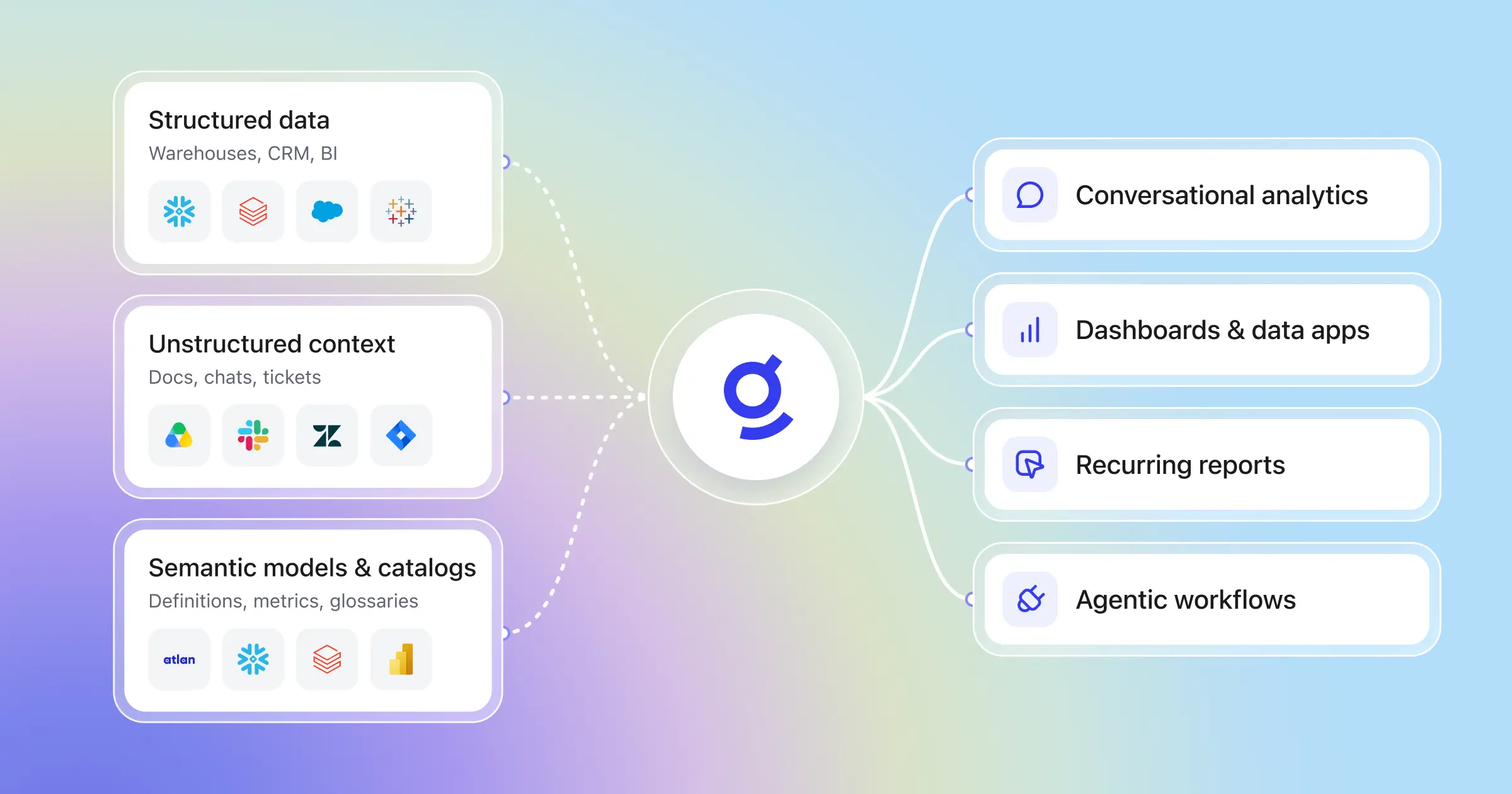
A gateway sits between your applications and the AI models they call, and it inspects every request before traffic reaches a provider. Application-level governance lives inside each service, agent, or workflow as permission checks, prompt validation, and output filtering written into the code. Each layer sees something the other can't: the gateway sees all traffic, while the application knows what a request means for a specific record.
Placement decides whether your AI security measures hold up as usage grows. Controls in the wrong layer lead to fragmented policies, uneven AI compliance, unregistered "shadow AI" tools, and audit gaps that surface during regulatory reviews. For teams building on an enterprise AI platform, the placement choice also sets how fast new use cases can ship without adding risk.
How Gateway-Level Governance Works
An AI gateway is the single entry point for an organization's AI traffic. Requests from assistants, agents, retrieval-augmented generation (RAG) pipelines, and internal tools pass through the gateway before they reach any model provider. Gartner published its first Market Guide for AI gateways in February 2026.
For each request, the gateway inspects the input, applies identity policy, selects a model, attaches a budget, checks the response, and logs the exchange. Common controls include prompt injection detection, content moderation, role-based access control, scoped API keys, and routing by geography or data sensitivity. The gateway can also add "AI-generated" disclosures automatically, which turns AI ethics commitments like transparency into enforced behavior.
Rate limiting shows the AI gateway benefits in practice. A platform team can cap each agent at 60 tool calls per minute, with a 429 error past the limit and a 403 for blocked IPs. Every agent inherits the rule on day one, with no changes to agent code or tool servers.
How Application-Level Governance Works
Application-level governance places controls inside the service, agent, or workflow that owns the data. A gateway knows who is calling. AI application governance covers what the gateway can't see, like resource ownership, data classification, workflow state, and per-action limits.
Agent tool calls make the difference concrete. One policy can allow an issue_refund tool only when the user holds the refund_approver role and the amount is under a set limit. Another can allow edit_project_plan only when the user's team ID matches the project's owning team ID.
Retrieval follows the same pattern. Document-level access control stays inside the vector database or source system rather than at the gateway. Only that system knows which documents each user can open.
Why Application-Only Governance Breaks at Scale
Application-only governance asks every product team to build its own logging, prompt filters, PII redaction, and disclosure messaging. Each team interprets the same policy a little differently, and those versions drift further apart with every release.
The audit gap appears early. A question like "Which models processed customer data this month?" has no single answer when each service logs in its own format. Teams that send prompts straight from frontend or backend code often skip logging entirely.
Delivery pressure compounds these AI governance challenges as teams wire in unregistered models and outside integrations, which grows shadow AI, a factor IBM found added USD 670,000 to the average breach cost. Training data, evaluation runs, and deployment artifacts lose their links to each other. Audit prep turns into a documentation exercise instead of evidence pulled from system telemetry.
Why Gateway-Only Governance Has Blind Spots
Gateway-only governance depends on coarse tools like allowlists, regex routes, and inline rules. Those tools can block a request pattern. They can't express relationship-aware rules, such as letting managers view performance reviews only for their direct reports.
Multi-agent workflows expose a deeper risk, because a check at the first hop says nothing about what a sub-agent does next. The sub-agent can end up acting with more authority than the original user had. Preventing that confused-deputy failure, and the excessive agency and privilege escalation it enables, means checking every hop and narrowing permissions with each delegation.
A gateway also governs runtime use only. The gateway can't show how training data was sourced, which datasets trained a model, how the model was evaluated, or who approved its release. Those AI risk management duties need controls inside training pipelines and deployment systems.
How to Layer Governance Across Both the Gateway and the Application
A layered design assigns each control to the layer that has the information to enforce it. In practice, the split looks like this:
- The gateway handles PII redaction, prompt injection detection, moderation, unified logging, per-team budgets, rate limits, provider routing, and key management.
- The application handles document access, ownership checks, workflow-state authorization, output validation, tool-call business rules, and delegation-chain verification.
Identity has to travel between the two layers. The gateway verifies the caller and passes that identity downstream, and the application decides what the caller can do with a specific record. Glean, for example, enforces permissions before content reaches the model, so answers draw only on what each user is already allowed to see.
Runtime controls also need to connect with lifecycle controls such as model registries, evaluation workflows, and deployment gates. When both layers write to one system of record, AI governance produces compliance evidence during normal operations. A shared record is a core AI governance best practice, because the evidence already exists when an auditor asks.
AI Governance Frameworks and Standards Shaping Placement Decisions
The EU AI Act takes a risk-based approach. Its obligations include training data governance, model traceability, pre-production evaluation, human oversight, runtime safety controls, transparency, continuous monitoring, and incident management. Runtime safety and transparency fit at the gateway, while traceability and oversight depend on application and lifecycle systems.
ISO/IEC 42001 defines a management system standard for AI, and the NIST AI Risk Management Framework (AI RMF) structures AI risk management. Both standards cover data collection, deployment, and post-deployment monitoring, which gives auditors a reason to look past inference logs. Financial services, healthcare, and other regulated industries add data residency and regional isolation requirements that both layers must enforce.
A simple AI compliance test uses one production output. Show an auditor the prompt, response, timestamp, user, model, and whether that user was allowed to see the source data. The gateway supplies the first five facts, and only the application can prove the sixth.
How to Evaluate Your Governance Architecture Today
Deciding on AI governance at the gateway vs application starts with an inventory of every AI service, agent, and model integration. A team that can't answer "What AI do we run?" has a discovery problem to solve before any placement decision. Footprint matters too, since a gateway can be overkill for one model provider, one or two AI apps, and light compliance needs.
Next, run a policy-change drill. Pick a new rule, such as "no customer PII in prompts to external models," and time how long it takes to enforce across every service. Weeks of code deployments across several teams means your governance is too distributed.
Then sequence the work by risk: gateway controls for budgets, redaction, and audit logging first, then application controls for permissions and workflow checks. When you compare AI governance tools, ours included, ask each vendor to run that policy-change drill live. You can learn more about our team and how we build governed AI.
Frequently Asked Questions
What are the main AI gateway benefits?
A gateway gives security and platform teams one place to set and change AI policy. A new filter or budget applies to every connected app at once, with no redeploys. Providers share one log format, which shortens audit prep, and unregistered tools lose their route to models.
How does AI governance at the gateway vs application layer differ?
The gateway judges the request, and the application judges the action. Gateway controls cover who is calling, which models they can reach, and what content is allowed through. Application controls decide whether this user can touch this specific record or trigger this workflow step, based on data only the application holds.
What happens when a company has no AI governance?
AI spend grows unchecked, and customer PII can flow into prompts sent to outside providers. Security posture varies by team, regulators ask for evidence nobody can produce, and shadow AI fills the gaps. Teams also lose the ability to trace an AI output back to its data or model.
How do you balance governance between the gateway and applications?
Ask one question per control: does enforcing it require knowing the specific record or workflow involved? If not, the gateway owns it. If so, the application owns it, and both layers report into the same audit record so reviewers see one trail.
Which AI governance frameworks affect where controls belong?
The EU AI Act sets risk-based obligations for AI systems, including traceability, human oversight, and monitoring. ISO/IEC 42001 sets requirements for an AI management system, and the NIST AI RMF guides how teams identify and reduce AI risk. Each one reaches past runtime into data sourcing and model approval, so no single layer satisfies it alone.
You can get the split right without rebuilding every application at once. Move the controls your gateway can own first, then give application teams the caller context they need for record-level decisions. Request a demo to explore how Glean and AI can transform your workplace, and we'll walk you through permission-aware governance across both layers.