

Which companies are leading in AI personal assistant technology?
The leading AI personal assistant companies fall into three groups: large platform providers that build conversational AI into existing software ecosystems, enterprise work AI platforms that unify search, assistant, and agent capabilities across company knowledge, and a fast-growing wave of startups targeting specific workflows like email triage, meeting intelligence, and autonomous task execution.
The market is projected to reach $4.84 billion in 2026, according to The Business Research Company. That growth reflects a shift in what buyers expect from AI assistants: not just answers, but action.
This guide breaks down how the category segments by use case, what features define the strongest platforms, and how to evaluate which of the many AI personal assistants fits your organization's needs.
What is an AI personal assistant?
An AI personal assistant is software that uses artificial intelligence to help people complete tasks, answer questions, manage workflows, and automate routine work across tools like email, calendar, and documents. The category has moved well beyond simple voice commands and chatbot interactions toward systems that understand context, remember preferences, take real actions, and work continuously in the background.
Three categories matter for buyers evaluating the space:
- Conversational AI covers chat-based tools for thinking and writing. You prompt, they respond, but the work still happens in your hands.
- Single-app AI tools automate one task inside one platform, such as calendar scheduling, code completion, or meeting transcription. They excel at one job but cannot cross application boundaries.
- Autonomous AI agents operate across applications and complete multi-step workflows without constant prompting. They browse the web, use desktop apps, send messages, and chain actions together the way a human assistant would.
The distinction that matters most when comparing options is autonomous versus on-demand. On-demand assistants are powerful when you invoke them but idle between uses. Autonomous agents run continuously in the background, triaging, drafting, and surfacing information without being asked. That difference compounds daily for teams with high email volume, recurring administrative tasks, or information scattered across many separate SaaS applications.
Enterprise-grade assistants add another layer that consumer tools skip: permission-aware security, audit trails, and data governance. The strongest enterprise platforms ground every response in company knowledge, respect existing access controls, and return cited answers rather than hallucinated guesses. That combination of context, security, and cross-application reach is what separates enterprise-ready assistants from consumer-grade tools.
Why AI personal assistant technology matters now
AI personal assistant technology matters now because the cost of fragmented, interrupt-driven work has become measurable. Knowledge workers lose about 23 minutes refocusing after each interruption, according to Gloria Mark's research at UC Irvine. Multiply that across a typical workday and intelligent automation shifts from convenience to necessity.
The underlying problem is fragmentation. Enterprise teams rely on a sprawling set of SaaS applications, scattering information across tools, teams, and formats. Finding what you need means tabbing between apps, re-asking colleagues, and stitching together answers from partial sources. That "hunt and stitch" workflow compounds daily, whether you are prepping for a meeting, triaging support tickets, or onboarding a new hire.
The category has evolved to address this. Early assistants were rule-based chatbots that followed scripts. Current systems combine natural language processing, machine learning, retrieval-augmented generation (RAG), and behavioral intelligence to deliver personalized, permission-aware, and contextually grounded assistance. Adoption now spans healthcare, financial services, retail, manufacturing, and professional services, driven by a consistent need: teams want to move faster without adding headcount, and AI assistants compress the time between question and action.
What features define the best AI personal assistant platforms
The best AI personal assistant platforms share six capabilities that separate enterprise-grade tools from consumer apps that break down at scale.
- Persistent memory and context awareness. The strongest platforms build a model of your preferences, projects, and work patterns across sessions, so you never re-explain yourself. You ask a question on Monday and the assistant still holds the context on Thursday.
- Cross-application integration. Leading solutions connect natively across a wide range of enterprise tools, including email, calendar, documents, CRM, and project management, and act across application boundaries. An assistant confined to one ecosystem cannot surface the full picture.
- Permission-aware security. Enterprise-grade assistants enforce existing access controls. They return only what you are allowed to see, maintain audit trails, and meet governance requirements like SOC 2 and ISO 27001.
- Retrieval-augmented generation (RAG). Trustworthy assistants ground answers in company knowledge using hybrid search combined with RAG. That produces cited, accurate responses rather than guesses, and gives users a clear source to verify.
- Agentic capabilities. Top platforms plan, adapt, and orchestrate multi-step actions. They automate recurring work, such as ticket triage, sales prep, onboarding workflows, and report generation, while respecting company permissions at every step.
- Breadth of input and learning. Leading platforms accept multimodal input, including text, voice, images, and files, and improve from user feedback over time. That flexibility supports the full range of knowledge work, from drafting a document to analyzing a spreadsheet.
How the AI personal assistant market segments by use case
The market divides into three tiers, each optimized for different workflows and buyer needs.
Consumer and individual productivity
Consumer-focused assistants handle personal scheduling, reminders, smart home control, voice commands, and everyday questions. These tools prioritize ease of use, voice-first interaction, and tight integration with a specific device ecosystem like a phone, speaker, or wearable.
The trade-off is depth. Consumer assistants offer shallow access to professional workflows, minimal cross-app automation, and little persistent memory across sessions. They work well for quick answers and device control but cannot surface a buried customer record or draft a follow-up email based on yesterday's meeting notes.
Enterprise and team productivity
Enterprise assistants focus on knowledge work: finding information across company systems, drafting communications, automating support workflows, preparing for meetings, and accelerating onboarding. They connect to the tools teams already use and return results grounded in company data.
These platforms require enterprise-grade security, including SOC 2, ISO 27001, permission enforcement, and data residency, along with governance controls and measurable ROI. The leading companies in AI for enterprise use cases differentiate through depth of context, breadth of connectors, and the ability to automate complex, multi-step processes with full auditability.
Developer and builder platforms
A growing segment serves developers who need APIs, CLI access, model flexibility, and extensible integration layers to embed AI into custom workflows. These platforms prioritize credential isolation, self-hosting options, and the ability to swap models for different tasks without rebuilding infrastructure.
This segment values control. Developers want to run models locally so proprietary code never leaves the machine, access multiple models through a single interface, and build custom agents without vendor lock-in.
How to compare AI personal assistant technologies
Comparing AI personal assistant technologies comes down to six criteria that separate platforms delivering sustained value from those that stall after the demo.
- Autonomy vs. on-demand. Some assistants work only when prompted. Others run continuously in the background, triaging, drafting, and surfacing information without being asked. The autonomous tier compounds value daily, while the on-demand tier excels at ad-hoc thinking work.
- Depth of integration. Evaluate whether the assistant connects to your full tool stack or is confined to a single ecosystem. An assistant locked to one vendor's apps leaves gaps that force manual work elsewhere.
- Reasoning quality. Test whether the assistant handles complex, multi-step requests accurately or falls apart when synthesizing across sources. Ask it to summarize a project's status by pulling from several systems at once, and weak reasoning surfaces immediately.
- Memory and personalization. Determine whether the assistant remembers your context across sessions and adapts to your communication style, or whether every conversation starts from scratch.
- Security and governance. Verify permission enforcement, contractual data retention policies with model providers, and admin controls for deployment at scale. The strongest platforms keep company data from training external models.
- Total cost of ownership. Compare subscription price plus setup complexity and time to value. A lower sticker price means little if deployment drags on for months or adoption stalls without dedicated resources.
| Evaluation criteria | What to look for | Why it matters |
|---|---|---|
| Autonomy | Runs continuously vs. on-demand only | Compounds value without manual invocation |
| Integration breadth | Connects natively across the full tool stack | Surfaces insights across the full stack |
| Context and memory | Remembers preferences across sessions | Eliminates repetitive explanation |
| Security model | Permission-aware, contractual data retention limits | Keeps sensitive data governed |
| Action-taking | Orchestrates multi-step workflows | Moves beyond answers to automation |
What innovations are shaping AI personal assistant technology
Five trends define the current wave of AI technology advancements in the assistant category.
- Agentic AI. The shift from assistants that answer questions to agents that plan, execute, and adapt multi-step workflows is the defining trend in 2026. Early assistants told you what to do. Agentic systems do the work, breaking complex requests into discrete steps and self-correcting when results fall short, all with appropriate human oversight.
- System of context. Leading platforms build enterprise-wide understanding through knowledge graphs that map people, content, interactions, and organizational structure, paired with a personal graph that captures individual signals and preferences. Glean combines an Enterprise Graph and a Personal Graph to deliver answers that reflect both company-wide context and individual work patterns.
- OS-level ambient memory. Emerging tools capture context automatically from every application a user works in, building persistent memory without manual input. The assistant learns your communication style, project involvement, and recurring workflows by observing how you work.
- Local and hybrid deployment. Privacy-conscious organizations and developers drive demand for assistants that run on-device or on-premises while still accessing cloud model capabilities when appropriate. That approach keeps sensitive code and data local while preserving access to powerful cloud-hosted reasoning.
- Multimodal interaction. Assistants increasingly accept and reason across text, voice, images, files, and screen context. A user can paste a screenshot, upload a PDF, or speak a question and get a grounded answer, plus hyper-personalization that adapts to individual preferences and communication styles over time.
How to evaluate which AI assistant is right for your organization
Evaluating the right AI assistant for your organization starts with your workflows, not a feature list. Use the following steps to match a platform to your actual needs.
- Map your highest-friction workflows. Identify where people spend the most time searching, switching tools, recreating information, or waiting for answers. Those pain points reveal where an assistant delivers the fastest payback.
- Identify your primary need. Enterprise-wide knowledge access calls for deep connectors and unified search. Team-specific automation, such as support ticket deflection, sales prep, or HR onboarding, calls for agentic capabilities. Developer tooling calls for APIs, model flexibility, and self-hosting options.
- Run a proof of concept against real data and real permissions. The best assistant delivers accurate, cited, permission-aware results on your actual company knowledge. A demo on synthetic data tells you little about production performance.
- Evaluate the maturity journey. Look for a platform that delivers value at initial search adoption and scales through conversational AI and full agentic automation as your AI maturity grows.
- Prioritize speed to value. Fast deployment, rapid adoption, and measurable productivity gains within weeks, not months, matter more than long feature lists. Ask vendors for time-to-first-value benchmarks and customer references at similar scale.
- Pressure-test security and governance. Ask about permission enforcement mechanisms, data residency options, model data retention policies, and admin controls. If a vendor cannot answer these questions precisely, the platform is not enterprise-ready.
Frequently asked questions
What are the top companies in AI personal assistant technology?
The market spans four types of players. Large platform companies build AI into existing software ecosystems. Pure-play AI companies focus on conversational and generative capabilities. Enterprise work AI platforms unify search, assistant, and agent capabilities across company knowledge. And a growing wave of startups targets specific workflows like email triage, calendar management, and meeting transcription.
How do different AI personal assistants compare?
The most meaningful axis is autonomous versus on-demand. Autonomous assistants run continuously and handle work without prompting, while on-demand assistants are powerful when invoked but idle between uses. Secondary axes include integration breadth, reasoning depth, memory persistence, security model, and total cost of ownership. Weigh these against your specific workflows.
What should enterprises look for in an AI assistant?
Enterprises should prioritize permission-aware results that respect existing access controls, a system of context that understands company knowledge at the organizational and individual level, and broad native connectivity to the tools teams already use. Add agentic capabilities for multi-step automation and enterprise governance, including audit trails and contractual data protections.
Are AI personal assistant startups worth evaluating?
Yes. Many startups target specific verticals like manufacturing, healthcare, logistics, and construction, or workflow problems like email triage, CRM automation, and meeting intelligence. Startups often move faster on narrow use cases, but enterprises should evaluate them against the same security, integration, and governance criteria applied to larger vendors.
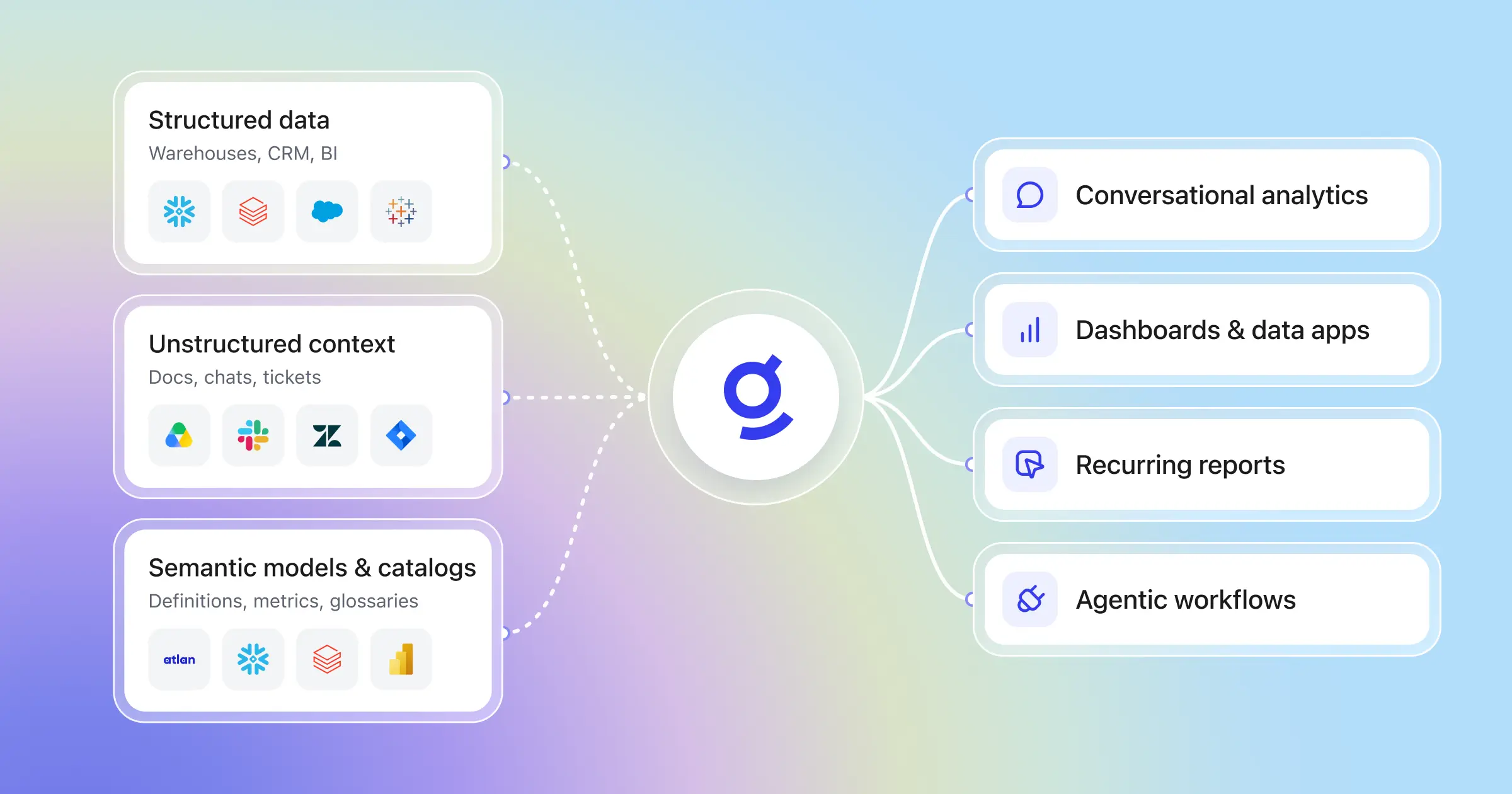
The best AI personal assistant is the one that turns your company's scattered knowledge into fast, trusted answers and safe automation, grounded in the permissions you already have. We built our Work AI platform to do exactly that, unifying enterprise search, a conversational assistant, and agents across the tools your teams already use. Request a demo to see how we can help you and your team spend less time hunting for information and more time acting on it.

.jpg)

.png)


.jpg)
.webp)