


Why is trust the biggest barrier to enterprise AI in Australia, and how do you fix it?
Enterprise AI trust in Australia is the confidence employees, leaders, and security teams need before AI runs in real work at scale. It rests on grounded answers, enforced permissions, clear governance, and proof that company data stays controlled.
Trust is what separates experimentation from production. Globally, 88% of organizations now use AI in at least one business function, yet most remain experimenting or piloting rather than scaling. When people cannot verify an answer, trace its source, or see who can access what, adoption stalls.
Only 36% of Australians are willing to trust AI, even though half already use it regularly, according to a 2025 KPMG and University of Melbourne study. For enterprises, that trust depends less on model novelty and more on security, context, and operational control.
How do you fix trust barriers to enterprise AI in Australia?
You fix trust barriers to enterprise AI in Australia by treating trust as a product requirement, not a change-management afterthought. Many of these barriers trace back to fragmented knowledge and rollout plans that skip governance, not the model itself.
The practical fix is a deliberate rollout order, so people can get answers and act without setting aside security, compliance, or common sense:
- Identify where trust breaks before AI reaches production.
- Ground every answer in company knowledge and context.
- Enforce permissions before the model generates a response.
- Make governance and transparency visible to every stakeholder.
- Keep enterprise data controlled, auditable, and out of unwanted training loops.
- Start with high-value, low-risk use cases that prove value in real work.
- Expand from trusted answers to governed actions.
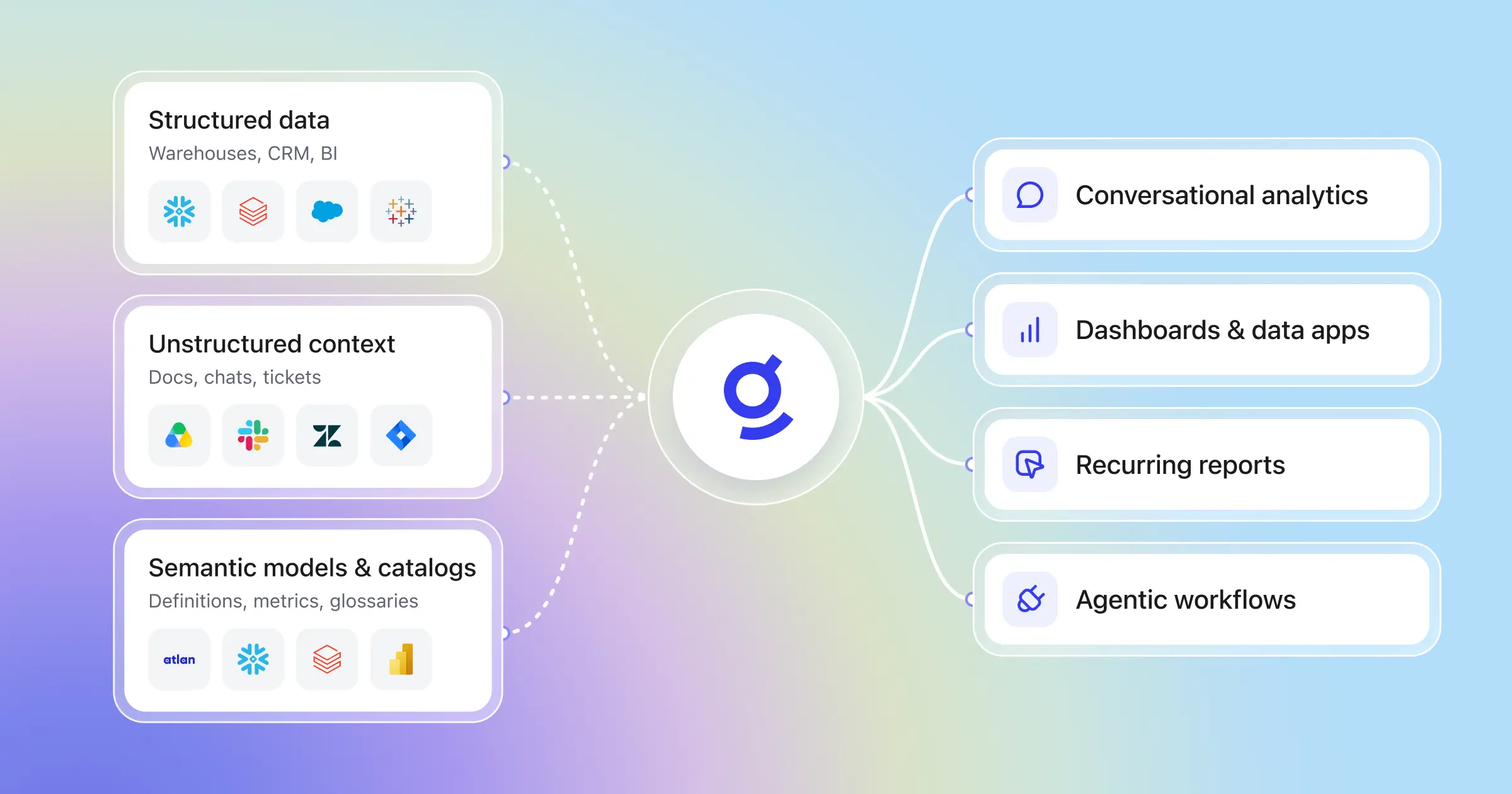
Each step compounds the last. Permission-aware retrieval, used by platforms like Glean, enforces existing access rights upstream of the model. Users reason only over data they can already see, and each answer arrives with citations they can open and verify.
Getting trust right has measurable value. In PwC's 2026 CEO survey, public companies with the fewest trust concerns delivered total shareholder returns nine percentage points higher than those with the most.
1. Identify why trust breaks before AI reaches production
Trust in enterprise AI usually breaks in four predictable places: unclear sources, weak permission controls, thin governance, and vague ownership. Naming these failure points early is the difference between a pilot that ships and one that stalls in review.
In regulated or distributed Australian organizations, the problem compounds. Legal, security, and business teams each need their own reason to say yes, and a single unexplained answer can freeze the whole rollout. Skepticism starts the moment a user cannot tell where an answer came from. They also wonder whether it is current, or whether the system should have seen that data at all. Many of these AI adoption challenges trace back to fragmented knowledge and disconnected tools, not the model.
The scale is documented. Around 65% of non-adopting Australian businesses cite distrust in AI decision-making or a preference to keep humans in control, according to the National AI Centre. The Reserve Bank of Australia found adoption among medium-to-large firms mostly shallow and often employee-led. That pattern leaves trust decisions to individuals instead of the business.
2. Ground every answer in company knowledge and context
Trust improves when AI works from your company's actual documents, tickets, chats, and policies instead of a model's generic memory, where AI inaccuracy is the most commonly reported AI risk. Grounded answers give people something to check, which is what turns a plausible response into a usable one.
Two design choices make grounding work. A connected knowledge layer understands people, content, teams, and workflows, so results reflect business context instead of keyword overlap. Retrieval-augmented generation (RAG) then pulls relevant company sources into each answer and attaches citations users can open and verify.
The payoff is concrete. When a new hire asks about parental leave and gets an answer linked to the current policy document, they trust it because they can read the source in one click. Making answers explainable by design is one of the clearest enterprise AI best practices, and it beats explaining a bad answer after the fact.
3. Enforce permissions before the model generates an answer
Permission enforcement is a trust problem before it is a technical one. If employees suspect AI might surface a salary sheet or an unreleased roadmap they were never meant to see, they stop using it.
The fix is permission-aware retrieval: the system checks each user's existing access rights before the model generates anything, so it only reasons over information that user is already allowed to open. Access control belongs in the architecture, upstream of the model, not in a policy note at the bottom of a page.
Keep identity and access consistent across search, chat, and any actions the system takes. Trust and AI security collapse when one surface respects permissions and another quietly does not. A support agent should get the same access boundaries whether they ask in a browser, in Slack, or through an assistant.
4. Make transparency and governance visible to every stakeholder
Governance builds trust only when people can see it. Across Asia-Pacific, only 9% of organizations meet the criteria for "Ready" AI governance, even though 23% consider themselves highly prepared. A security review that happens once, behind closed doors, does not reassure the employee deciding whether to rely on an answer today.
Define the essentials for each use case: an owner, approved data sources, audit expectations, and an escalation path for sensitive outputs. Then surface those controls in the product itself through source citations, timestamps, visible access boundaries, and confirmation prompts before anything changes data or triggers a workflow.
This approach matches national guidance. Australia's Guidance for AI Adoption, published in October 2025, sets out six practices: accountability, impact assessment, risk management, transparency, testing, and human oversight. Demand for this is real: 83% of Australians say assurances such as responsible governance and accuracy monitoring would make them more willing to trust AI, per the KPMG and University of Melbourne study.
5. Keep enterprise data controlled, auditable, and out of unwanted training loops
Australian enterprises are right to ask where their data goes, how long it is kept, and who can review it. Clear answers to those questions are a precondition for trust, not a compliance formality.
Set firm controls around data handling, retention, model access, auditability, and third-party usage, an approach Gartner predicts half of organizations will adopt as zero-trust data governance by 2028 as unverified AI-generated data grows. Company data should never train external models without explicit permission, and security teams should be able to verify that claim rather than take it on faith. Contractual zero-day retention with model providers is a concrete example of a control worth requiring.
Separate experimentation from production standards. A tool that is fine for low-risk drafting may be unfit for sensitive internal knowledge or agent-driven workflows. Enterprise AI solutions earn trust here by giving security and compliance teams specific controls they can inspect, not general promises of safety. That is what secure enterprise AI in Australia looks like in practice.
6. Start with high-value, low-risk use cases that prove trust in real work
Prove trust on narrow, high-value work before scaling. The fastest way to lose a skeptical audience is to launch AI on your broadest or most autonomous use case first.
Pick tasks where grounded answers matter and risk stays manageable: onboarding questions, internal policy lookups, support knowledge, or sales call preparation. Choose ones you can measure, such as time to first answer, repeat-question volume, or hours lost to context switching between tabs and Slack threads.
Narrow wins are how teams move past AI skepticism. One accurate, permission-aware answer that saves real time and holds up under scrutiny does more for adoption than any launch email. Confidence grows from lived experience, not from a mandate to trust the tool.
7. Expand from trusted answers to governed actions
Once people trust search and assistant answers, the next step is controlled automation. Trusted answers are the foundation that makes acting on them acceptable.
Let AI take action only within approved systems, approved scopes, and visible review paths. Match oversight to consequence: the more a task changes data or affects customers, the stronger the approval and monitoring should be.
Stage the rollout for agents. Start read-only, move to recommendations a person approves, then allow limited actions with logging and guardrails. Gartner predicts that by 2027, 40% of enterprises will demote or decommission autonomous AI agents after governance gaps surface in production. Agents should plan, adapt, and act with enterprise context and oversight, never run unattended. That progression turns enterprise AI implementation strategies into something durable, built one trusted step at a time.
Frequently asked questions about enterprise AI trust in Australia
What are the main trust issues organizations face with enterprise AI in Australia?
The main issues are unclear answer sources, weak permission controls, thin governance, and unclear ownership, and they compound in regulated, distributed teams. Around 65% of non-adopting Australian businesses cite distrust in AI decision-making or a preference to keep humans in control (National AI Centre, 2026).
How can companies build trust in AI technologies?
Ground every answer in company knowledge with citations, enforce permissions before the model generates a response, and make governance visible inside the product. Start with low-risk use cases that prove value, then expand. Trust grows when people can open a source and see who can access what.
What strategies can be implemented to overcome trust barriers in AI adoption?
Treat trust as a product requirement. Use permission-aware retrieval, cited answers, defined owners, and audit trails. Begin with measurable, low-risk workflows like onboarding or support, then move to governed actions only after answers earn confidence. Pair each rollout with concrete controls that security and compliance teams can inspect.
What role does transparency play in building trust in enterprise AI?
Transparency is central. Source citations, timestamps, visible access boundaries, and action confirmations let users verify answers instead of taking them on faith. It is also a national expectation: transparency is one of the six practices in Australia's Guidance for AI Adoption (October 2025).
How do cultural factors in Australia influence trust in AI technologies?
Australians are unusually cautious. Only 36% are willing to trust AI even though half use it regularly, and just 30% believe the benefits outweigh the risks, among the lowest globally (KPMG and University of Melbourne, 2025). Assurances and visible governance carry more weight here than in most markets.
Trust in enterprise AI is earned one grounded, permission-aware answer at a time, and it holds only when governance stays visible. We built our platform to give Australian teams cited answers, enforced permissions, and controls that security and compliance can inspect. When you're ready to see how that works across your own tools, request a demo to explore how we can put your company's knowledge to work with cited answers and permissions enforced by design.