

Token Efficiency vs. Cost: Making Informed AI Choices
Token efficiency determines whether your AI investment delivers results or burns budget on wasted computation. The cheapest per-token rate means nothing if a model needs four times as many tokens to reach the same answer.
Most enterprises evaluate AI costs by comparing rate cards, treating every token as interchangeable. Tokens vary wildly in the work they accomplish. Token efficiency measures how many tokens a model consumes to complete a specific task accurately. Cost per token is just a price on the invoice.
The distinction matters at scale. Production AI applications running one million requests per day spend $10,000 to $50,000 monthly on tokens alone. According to CloudZero's analysis, average monthly enterprise AI spend jumped 36% from $63,000 in 2024 to $85,500 in 2025 — and LLM API pricing now spans a 600x range. Output tokens cost three to six times more than input tokens across major providers. A verbose model costs more than a direct one, even at a lower per-token rate.
What token efficiency actually means (and why it's not the same as cheap tokens)
Token efficiency is the number of tokens a model needs to complete a task accurately. A 200-token answer is more efficient than an 800-token answer that reaches the same result. The metric that matters is cost per correct completion, not cost per token.
Picking the lowest per-token rate assumes all tokens do equal work. They do not. On identical tasks, some models consume 1.5 to four times more tokens than alternatives to produce the same quality output.
On simple knowledge queries, the gap can widen to 10x. The practical difference: cost per token is a pricing input you negotiate. Token efficiency is a performance characteristic you measure by how much useful work each token accomplishes.
Structured, high-signal context is one concrete way to close the gap. When enterprises feed well-organized context to a model instead of raw documents, output tokens can drop by more than half. Total cost often falls by a similar margin, even when total tokens processed increase, because the token mix shifts from expensive output to cheap cached input. Organizations that fail to optimize this balance end up paying the hidden cost of AI — fragmented tools and duplicated compute that quietly erode ROI.
Glean's Enterprise Graph applies this principle at the platform level. The graph organizes relationships across documents, messages, tools, and people so retrieval-augmented generation sends precise, permission-aware context. Fewer wasted tokens in, fewer wasted tokens out.
Why the cheapest model often costs more at scale
A lower per-token rate looks like savings on a spreadsheet. In production, that rate tells you almost nothing about what you actually spend. Total cost depends on how many tokens a model consumes to finish the job.
Large reasoning models illustrate the problem. When a straightforward question hits a reasoning-heavy model, that model generates hundreds of internal "thinking" tokens before producing a visible answer. Those reasoning tokens still appear on your invoice. AI is now the fastest-growing expense in corporate technology budgets — Deloitte reports that some firms see AI consuming up to half of their IT spend, yet only 28% of global finance leaders report clear, measurable value from their investments.
A model charging $2 per million input tokens but burning 4x the output on internal chains costs more than a model at $3 per million that answers directly. GitHub Copilot averaged a $20-per-user monthly loss against a $10-per-month subscription because heavy users consumed two to three times the seat fee in compute.
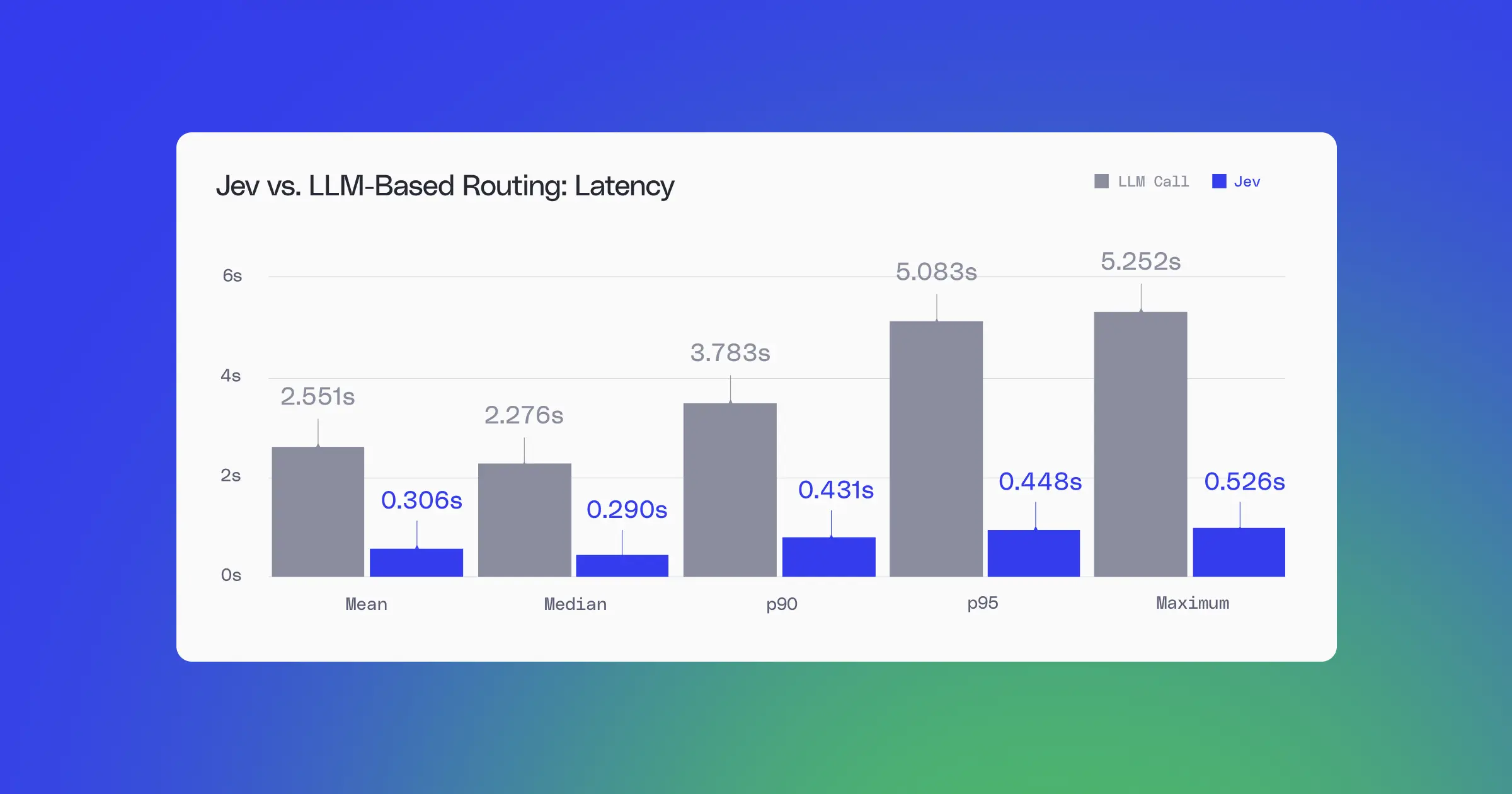
At enterprise scale, a 15% efficiency gap across millions of monthly queries translates to six-figure annual overruns. Glean's Agentic Engine addresses this by routing each query to an appropriately sized model, so straightforward questions never trigger expensive reasoning chains.
The five factors that matter more than price per token
Per-token pricing is one variable in a longer equation. These five factors determine what your AI deployment actually costs.
- Task completion accuracy. A model that answers correctly on the first attempt eliminates retries, human review, and escalation. A cheaper model with a 20% failure rate costs two to 10 times more than a pricier model that gets the answer right consistently.
- Output token discipline. Fewer output tokens at a higher rate often cost less than verbose output at a discount. A model that returns 150 focused tokens beats one that returns 600 tokens of narration and hedging, even if the second model charges half the rate.
- Context handling at length. Performance can degrade at longer context windows, and many models handle short prompts far better than long ones. Research shows that input token count impacts latency significantly, and agentic workflows that accumulate context across steps are especially sensitive. A model that loses coherence as context grows forces you to truncate or accept lower quality.
- Cache hit rates. Structured, consistent prompts hit provider caches. Cached input tokens cost roughly 10% of standard rates. As Inference.net details, prompt caching reduces token costs by 80–90% at both OpenAI and Anthropic — making it typically the highest-return optimization for RAG-heavy applications. Reusing a 3,000-token system prompt across 10,000 daily requests avoids 30 million redundant input tokens per day.
- Routing intelligence. Matching each task to the right model size reduces costs 40% to 60%. Simple classification and extraction tasks do not need frontier reasoning. Glean's token consumption architecture applies this principle automatically, matching query complexity to the right model tier through the Agentic Engine.
How input and output tokens shape your real costs
The pricing gap between input and output tokens is the single biggest cost lever most teams overlook. Flagship models charge $2 to $3 per million input tokens and $10 to $15 per million output tokens. That asymmetry means reducing output by even a small percentage has an outsized effect on your bill.
Workload type determines which side of the equation matters most. Retrieval-augmented generation (RAG) with long context windows and short answers keeps costs weighted toward input. Code generation and long-form content creation push costs toward output, where pricing bites hardest. Understanding the trade-offs between RAG vs. fine-tuning helps teams choose the approach that minimizes token waste for their specific workloads.
Reducing output starts with improving what goes in. When a model receives precise, pre-ranked context instead of raw document dumps, it generates shorter, more direct answers. The output token count drops because the model spends fewer tokens reasoning through ambiguity. Glean's Personal Graph applies this approach by surfacing context tailored to each user's role, recent activity, and permissions so the model receives high-signal input without the noise.
What agentic workflows reveal about token economics
AI agents chain dozens of inference calls to complete a single task. Speed and efficiency differences that barely register in single-call scenarios compound across those chains. A faster model can finish a multi-step workflow in minutes, while a slower one takes several times longer on the same task. Understanding how AI agents in the enterprise operate is essential for predicting where token costs will concentrate.
The bigger insight is where those tokens go. In most agentic architectures, the majority of token usage is data collection, not productive synthesis. Subagents burn hundreds of thousands of tokens on tasks that do not require frontier intelligence.
Efficient architectures split the work: smaller, cheaper models handle data gathering, while frontier models handle reasoning and final output. Silicon Data's analysis illustrates this starkly: routing one million requests through a small model costs roughly $72, while the same volume through a flagship model runs approximately $12,000. Code mode alone reduces token usage by 50% or more for multi-server deployments. Glean Agents address token efficiency in agentic systems through the Agentic Engine, which plans multi-step workflows and delegates data-gathering steps to appropriately sized models.
How to measure token efficiency before you commit
Synthetic benchmarks tell you how a model performs on standardized tests. Your workload is not a standardized test. Measuring token efficiency on your actual tasks, with your data, at your expected volumes is the only way to predict real costs.
Five measurements separate informed decisions from expensive guesses:
- Benchmark on actual tasks. Run your real queries through each candidate model. Measure total tokens consumed to reach a correct answer, not just response quality scores.
- Track cost per correct completion. Divide total spend by the number of correct first-attempt completions. A model with higher per-token rates but fewer retries often wins this metric by a wide margin.
- Compare the token mix. Break down consumption into input, output, cached, and reasoning tokens. Two models with identical total token counts can have dramatically different cost profiles based on how those tokens are distributed.
- Test at expected context lengths. Performance at 8,000 tokens does not predict performance at 64,000 or 128,000. Run evaluations at the context lengths your production workloads actually hit.
- Measure variance, not just averages. A model that averages $0.05 per query but occasionally spikes to $0.50 creates budget unpredictability. Standard deviation in cost per query is as important as mean cost. Applications with repetitive query patterns can achieve semantic cache hit rates of 40–60%, translating directly to proportional cost reductions.
Glean Assistant surfaces token consumption metrics across queries, models, and agent runs through built-in analytics, giving teams the data to make these comparisons without building custom instrumentation.
Building a token-efficient AI strategy for your organization
Token efficiency is an architectural concern, not a procurement negotiation. The decisions that reduce token waste happen in how you design workflows, structure context, and route queries.
Start with workload classification. Map your AI use cases by complexity, volume, and output requirements. Simple classification tasks, complex multi-step research, and long-form content generation have fundamentally different token profiles. A deep understanding of agentic reasoning helps teams design multi-step workflows that minimize unnecessary token consumption at each stage. Implement model routing as a default architecture, not an add-on.
LLM API prices have dropped sharply over the past year, and pricing will keep falling. But no price decrease fixes the problem of sending 50,000 tokens of irrelevant context to generate a two-sentence answer. Invest in retrieval quality, prompt structure, and caching infrastructure first. Monitor token economics continuously because model pricing, capabilities, and your own usage patterns shift faster than annual reviews can track. Glean's Enterprise Graph and Agentic Engine make structured context retrieval a platform-level default, routing each query so it consumes the minimum tokens needed for an accurate, permission-aware answer.
Frequently asked questions
What is token efficiency and why does it matter for enterprise AI?
Token efficiency measures how many tokens a model needs to complete a task accurately. At enterprise scale, two models can reach the same answer while consuming vastly different amounts of compute. That difference determines whether your AI budget delivers results or drains into wasted processing.
How do I compare the true cost of two AI models?
Measure cost per correct completion across your actual workloads. Include input, output, cached, and reasoning tokens in the calculation. Per-token rate alone does not capture retry costs, output verbosity, or cache efficiency.
Can a more expensive model actually save money?
Yes. A higher-priced model that answers correctly on the first attempt, produces concise output, and handles long context without degradation often costs less per task than a cheaper model that requires retries or generates verbose responses.
What is the biggest hidden cost in AI token pricing?
Output tokens. They cost three to six times more than input tokens, and verbose models generate hundreds of unnecessary output tokens per response. Internal reasoning tokens in chain-of-thought models add further invisible costs that never appear in rate card comparisons.
How does token efficiency apply to AI agents?
Agents chain dozens of inference calls per task, making token waste compound across every step. Efficient agent architectures delegate data-gathering to smaller models and reserve frontier reasoning for synthesis. Poorly structured agents see runs in the expensive tail consume five to six times the median cost, and that tail often drives more total spend than the other 90% of runs combined.
The path to lower AI costs runs through better architecture, not cheaper rate cards. When you invest in structured context, intelligent routing, and workload-appropriate model selection, every token works harder and your budget stretches further. Request a demo to see how we help enterprises build token-efficient AI workflows that scale without runaway spend.



.webp)




.webp)

.webp)