


Which everyday work questions should you use to shortlist enterprise AI search platforms for banks?
Use the questions your employees already ask about policy, procedure, people, approvals, customer operations, and follow-up actions to shortlist enterprise AI search platforms for banks — those questions show whether a platform holds up in daily work or only in a scripted demo.
A strong shortlist compares enterprise AI search platforms on five factors: answer trust, permission enforcement, source coverage, workflow fit, and measurable operational value. Each factor maps to a risk that bank IT, operations, compliance, and risk leaders already manage.
Although 88% of organizations now use AI regularly, most haven't scaled it. Banks need a system that understands context, respects entitlements, and handles regulated knowledge with care. The 10 questions below test each of those needs, plus whether the platform helps teams act on what they find.
How to shortlist enterprise AI search platforms for banks with everyday work questions
Build your AI search platform evaluation around questions employees already ask in operations, compliance, risk, service, lending, and IT. Run the same test set against the same connected systems for every vendor. A platform that stumbles on routine questions about cutoff times, approvals, or onboarding steps won't deliver value once thousands of employees depend on it — and with 37.4% of US adults now using genAI for work, that scale arrives quickly.
Test with at least four personas: a frontline employee, a manager, a control function user, and an admin. Side-by-side accounts reveal relevance gaps and permission errors that a single demo login hides. Score every answer on four questions:
- Did it answer the question directly?
- Did it cite the right source?
- Did it respect the user's permissions?
- Did it help the user take the next step?
Ask each vendor to run the questions live against your bank's content instead of a polished sample environment. In a 2025 Temenos survey reported by the ABA Banking Journal, virtually all banks approved genAI projects in under 12 months. Documented, repeatable tests give your risk and compliance reviewers the evidence to keep that pace.
1. "What is our current wire cutoff time for same-day payments?"
Start with the wire cutoff question because it's simple, time-sensitive, and costly to get wrong. A strong platform returns one direct answer, names the source, shows the last-updated date, and keeps old and new policy versions apart. A list of links or an uncited summary pushes verification back onto the employee.
Payments policy depends on exact wording. Look for hybrid retrieval that matches literal terms like "Fedwire" while still understanding that "same-day wire deadline" means the same thing. That pairing of exact and semantic matching is where AI-based enterprise search pulls ahead of keyword-only tools.
Follow up with "Has this cutoff changed in the last 90 days?" and expect the latest source plus a clear explanation of the change. When the record is unclear, the system should say "I can't confirm that." A guessed cutoff time does more damage than no answer.
2. "Where is the latest KYC procedure for small business onboarding?"
Source authority is what the know your customer (KYC) onboarding question exposes. Small business onboarding procedures often sit across a wiki, a document system, a ticket queue, and an internal portal, with drafts mixed in. The right result is the approved document, even when an outdated copy contains more matching terms.
Ranking by authority depends on signals beyond text: who owns the document, when it was last approved, and which policy it supports. Have the vendor show how the system tells apart procedures that differ by segment, state, or product. A platform that blends sole proprietor steps with LLC steps creates errors that reviewers have to catch later.
The result should reach beyond the main policy page. Expect the beneficial ownership form, the related checklist, and the system where the onboarding case gets logged.
3. "Who approves an exception to this lending policy?"
Asking who approves a lending policy exception shows whether the platform understands people as well as documents. Employees often need the right approver more than the right PDF. A mature system links policy text to org charts, roles, and expertise to name the accountable owner or escalation path.
That capability depends on a system of context, meaning a model of relationships between people, teams, documents, and past interactions. Platforms that treat each source as an isolated index can find the policy, yet they can't tell a commercial lender in Ohio who signs off.
Then ask the harder variant: "Who handles this when the policy owner is out?" A platform that names a delegate drawn from recent approval threads supports decisions. One that repeats the absent owner's name only supports discovery.
4. "What changed in the sanctions screening process last quarter?"
A question about last quarter's sanctions screening changes checks two skills at once: change detection and grounded summarization. A good answer compares current and prior guidance, cites both versions, and lets a reviewer verify each claim in a few clicks. Confident prose without that evidence isn't safe enough for regulated work.
The GAO's 2025 report on AI in financial services warns that generative AI "can produce outputs that are false but convincing." A citation alone doesn't prove an answer is right.
Feed the platform a long policy document, its release notes, and a related compliance announcement, and request one answer. Have a sanctions analyst check every cited passage afterward. The summary should be shorter than the sources while keeping the audit trail intact.
5. "Can I share this suspicious activity procedure with a contractor in branch operations?"
Sharing a suspicious activity procedure with a contractor is the clearest permission test in your set. The platform should enforce source permissions before it retrieves content or generates an answer, so each user sees only what they can already access. Run the question from a branch contractor's account and a Bank Secrecy Act (BSA) officer's account, then confirm the answers differ correctly without manual tuning.
Leakage risk is why permission enforcement sets enterprise AI search platforms for banks apart from public genAI apps. The same GAO report found that some machine learning and genAI models "may leak sensitive data directly or by inference." Ask how permissions sync, how fast a revoked entitlement takes effect, and whether access controls sit upstream of answer generation.
Auditability belongs in the same test: who asked, which sources the system used, and what it returned. For banks with broker-dealer affiliates, FINRA's 2026 oversight report notes genAI use "can implicate rules regarding supervision, communications, recordkeeping and fair dealing." Those logs become part of your control evidence.
6. "Show me the checklist for opening a commercial account for a nonprofit in New York."
Opening a nonprofit commercial account in New York is a multi-part request. It combines a customer type, a product, a state, and a process, which mirrors how frontline staff ask for help on a busy day.
A useful answer builds one checklist from several sources: the core procedure, New York requirements, tax-exempt documentation forms, and internal notes on exceptions. A platform that answers each part separately leaves employees to hunt and stitch across systems themselves.
Next, ask what happens when the minimum balance lives in a product database and the documentation rules live in a PDF. The same 2025 Temenos survey, reported by the ABA Banking Journal, found 75% of respondents plan to increase systems integration investment.
7. "Draft a response to a customer asking why their transfer is delayed, using our approved policy language."
Drafting a reply about a delayed transfer measures grounded generation. You want a usable draft anchored in approved guidance and the bank's customer tone. Each draft should cite its policy basis so the employee can confirm it before sending.
Check whether the system distinguishes internal notes, official policy, and customer-safe language. A draft that quotes an internal fraud-review note to a customer creates a disclosure problem. The GAO notes that regulators see AI creating or increasing risks of unfair, deceptive, or abusive acts or practices, so customer-facing text deserves extra scrutiny.
Watch where the citations land in the draft. When evidence sits beside each claim, a supervisor can approve the reply without re-researching the policy.
8. "Open a help request for access to the treasury portal and include the right policy link."
Filing a treasury portal access request shows whether the platform can move from answer to action. Employees get more value when they finish a common follow-up task without switching between the policy site, the access catalog, and the IT service desk. That matters when workers are already interrupted every 2 minutes during core hours.
Ask the vendor to demonstrate a governed flow: find the access policy, pick the correct entitlement, and file the ticket with the policy link attached. The system should plan the steps, carry context between them, and pause for approval before anything is submitted.
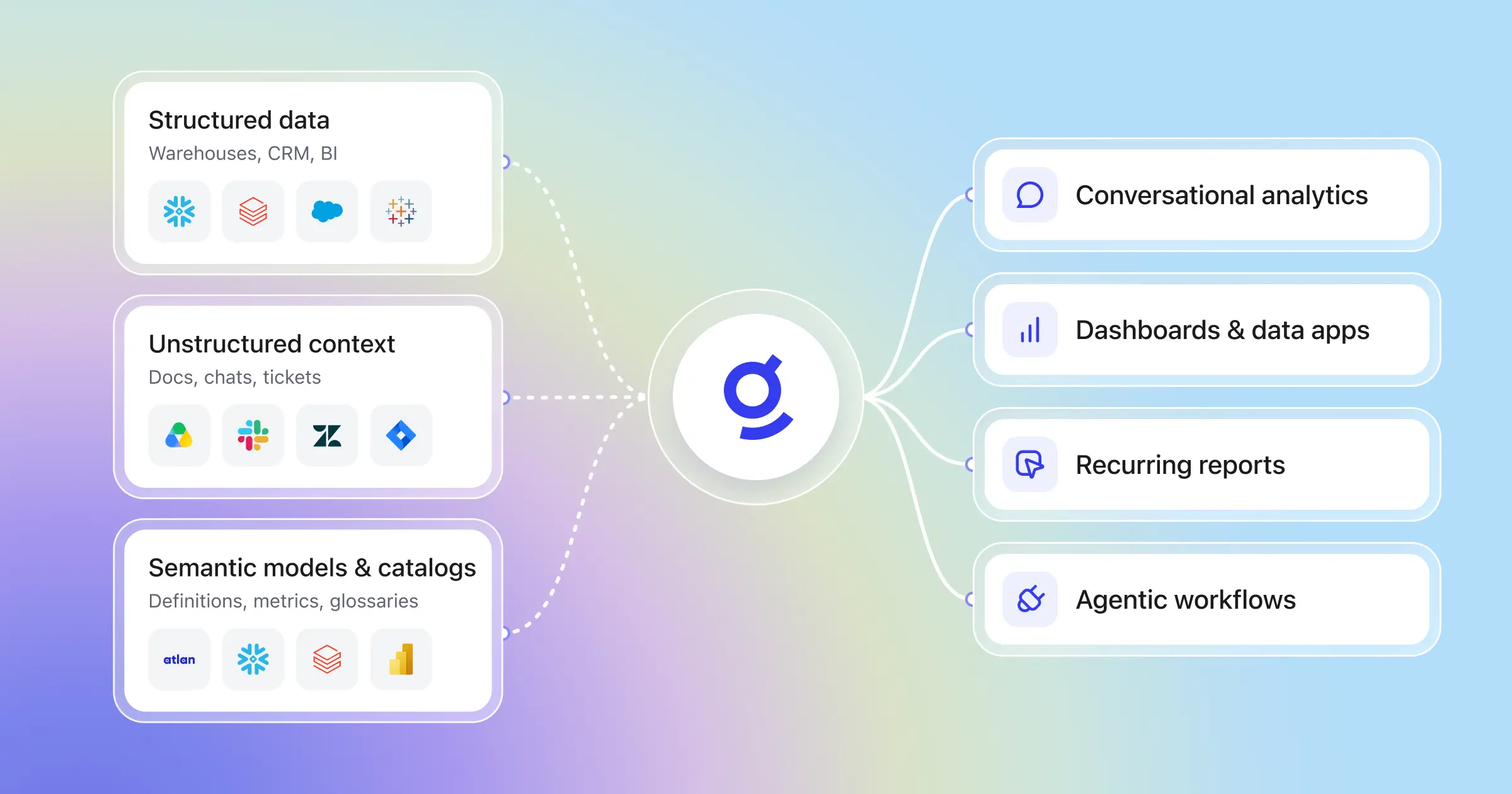
Multi-step automation is drawing growing interest in banking. Banking Dive reports that multi-agent systems combine multi-step processes, such as routing fraud-detection information, typically run by an individual or several systems. That end-to-end flow is the practical promise behind Glean's AI solutions, where search, assistant, and agents share the same permissions and context.
9. "What answers do new relationship managers look for most in their first 30 days?"
Onboarding analytics come into focus when you ask what new relationship managers need in their first 30 days. The platform should reveal what new hires search for, which queries return nothing useful, and which gaps generate repeat questions to senior bankers.
Admins should be able to see unanswered queries, low-confidence topics, and the sources behind the best-rated answers. If new hires keep asking where the credit memo template lives, the fix is a named content owner and one canonical page. Good analytics point you to that fix.
Ramp time carries a direct cost in banking, where Accenture estimates 73% of bank employee time could be reshaped by genAI, with relationship managers among the roles most likely to be augmented. Each week a new relationship manager spends tracking down pricing exceptions is another week of interruptions for the team lead who answers them.
10. "How much time are we saving on repeated policy and process questions?"
Time saved on repeated policy questions is the metric that turns pilot results into a business case. Ask vendors how they measure time to answer, ticket deflection, escalations, onboarding speed, and completed workflows. Click counts and chat volume don't show value.
Peers already report results. The EY-Parthenon 2025 survey found 77% of banks have launched or soft-launched genAI applications, and 61% report substantial impact. Ask which metrics come out of the box and which require integration with your service desk or HR systems.
Push on one distinction: how does the platform tell a viewed answer from a trusted one? Signals like a copied citation, a closed ticket, or no follow-up question point to real time saved.
Which everyday work questions should you use to shortlist enterprise AI search platforms for banks?: Frequently Asked Questions
1. What specific features should I look for in an AI search platform for banking?
Prioritize permission-aware retrieval, cited answers, native connectors to your core systems, and support for structured and unstructured data. Add workflow support so employees can act on an answer within governed controls.
2. How can I assess the effectiveness of an AI search tool in my bank's operations?
Run a fixed set of real questions across several personas and score answer quality, source accuracy, permission behavior, and next-step usefulness. After launch, track time to answer, escalation volume, and onboarding speed against a pre-pilot baseline.
3. What common challenges do banks face when implementing AI search solutions?
Common obstacles include fragmented knowledge, unclear document ownership, slow permission syncing, and pilots disconnected from daily work. Adoption also drops when answers lack citations or employees still check several systems to finish one task.
4. Which questions should I ask vendors to confirm their AI search platform meets our needs?
Ask how permissions are enforced and synced, how fresh the index is, how the system ranks authoritative sources, and how it handles regulated content. Then request a live test on your own content with your own personas.
5. How do I measure the ROI of an AI search platform in a banking context?
Measure hours saved on common knowledge tasks, deflected support tickets, reduced duplicate work, and shorter ramp time for new hires. Pair usage data with workflow outcomes, since trusted answers that shorten real tasks matter more than search activity.
These 10 questions give you a repeatable, evidence-based way to compare platforms on the work your teams already do. We'd be glad to run them against your own content and personas so you can see cited, permission-aware answers on real bank questions. Request a demo to explore how we can help your teams find trusted answers and act on them.