


What do Australian enterprises get wrong about enterprise search ROI?
Australian enterprises get enterprise search ROI wrong by measuring it as cost savings alone — hours saved and headcount avoided are easy to count, so they crowd out the value that actually compounds. Enterprise search ROI is the business value returned from technology that lets employees find, understand, and act on information across every system an organization uses.
That narrow framing misses faster decisions, less rework, stronger compliance, and knowledge that stays in the business when people leave. Enterprise search ROI is not a single line on a spreadsheet.
True return spans three layers: operational efficiency, decision quality, and strategic capability. The gap in framing shows up in the numbers, where just 12% of Australian leaders report generative AI is already transforming their business, compared with 25% globally. This post covers why Australian enterprises measure the wrong things, how fragmented data and low adoption destroy value before it starts, and what metrics and frameworks actually survive board scrutiny.
Why Australian enterprises measure search activity instead of search impact
Australian enterprises most often measure search activity instead of search impact. Queries per day, click-through rates, and pages indexed are simple to report, but they say nothing about whether employees found what they needed or changed what they did next.
Boards that lean toward risk-aversion make this worse, because teams default to safe, countable metrics over the harder outcomes that carry the real value. Effective ROI measurement frameworks connect search performance to business KPIs the executive team already tracks: time-to-resolution in support, ramp time for new hires, deal velocity in sales, and audit findings in compliance.
An enterprise AI platform that connects to existing business systems can surface these outcome metrics automatically, rather than forcing teams to hand-correlate search logs with business results.
The measurement mirage is common in organizations running several disconnected AI pilots without a shared strategy. They report model accuracy or deployment velocity while revenue stays flat, and in Australia 46% take a piecemeal approach to AI rather than a strategic one.
How fragmented data and siloed systems undermine search ROI before it starts
Fragmented data caps enterprise search ROI before measurement starts, because a search tool can only return value from the systems it actually reaches. In Australia, 64% of Australian leaders rank integrated data systems as the biggest enabler of AI readiness, yet most deployments connect to a fraction of where knowledge lives.
When search reaches only three or four of the 15 or 20 systems employees use daily, people keep asking colleagues, digging through email, or recreating work that already exists. Data governance gaps compound the problem: inconsistent naming, outdated documents surfaced next to current ones, and no clear owner for content quality. In Australia, 73% of Australian organizations report challenges with poor data quality, the biggest obstacle to AI deployment.
The teams with the highest-value knowledge often have the least prepared data. In Australian enterprises, legal (84%), finance (74%), and HR (67%) flag that their data remains unprepared for AI.
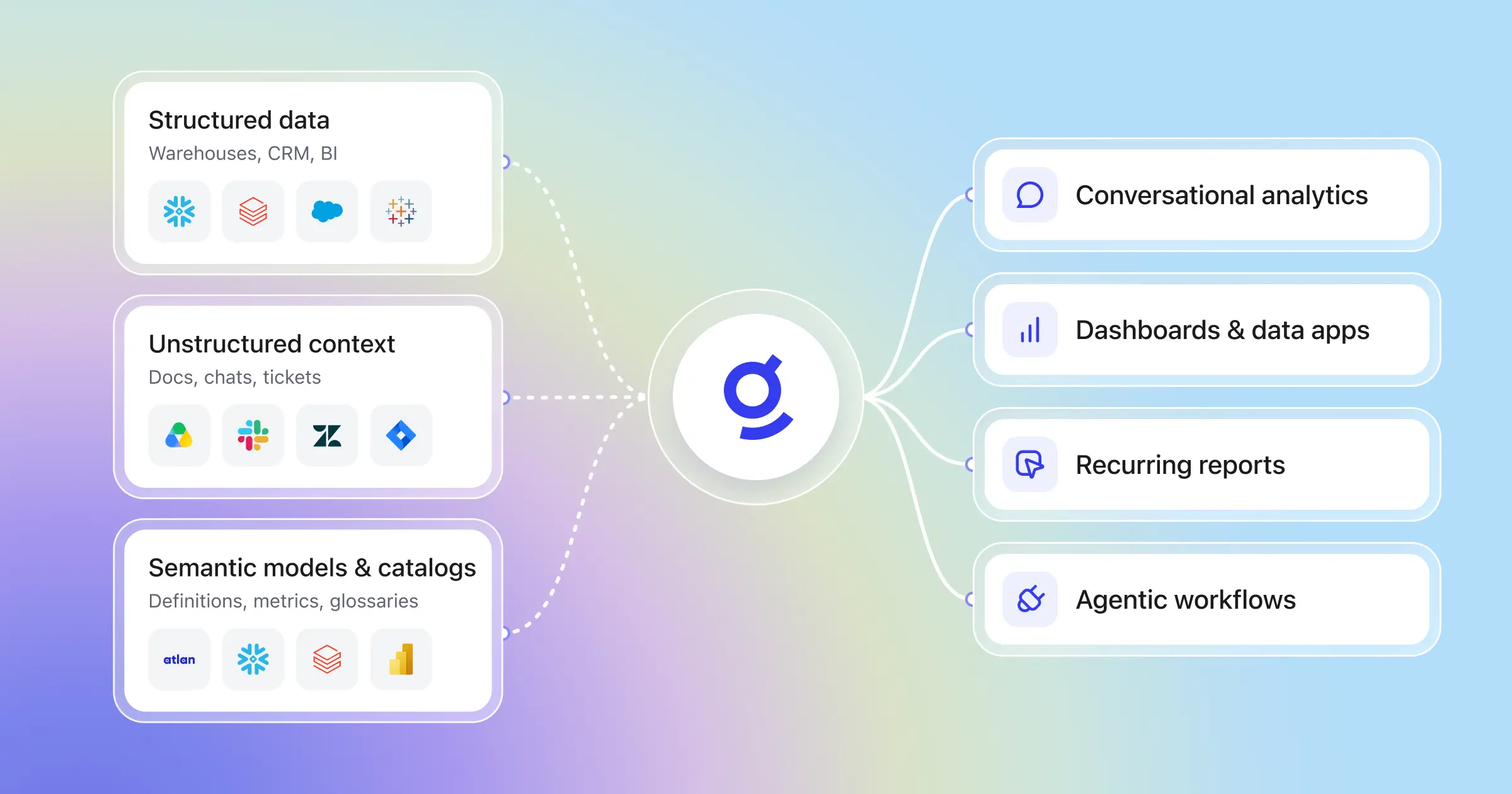
The fix is foundational. Search ROI depends on breadth of connection, depth of understanding, and permission awareness, so results respect who is allowed to see what. Glean's Enterprise Graph, for example, maps relationships across people, content, and context spanning 275+ connectors, with permission-aware results enforced at the search layer.
Organizations that treat data readiness as a prerequisite rather than an afterthought see ROI timelines compress, because the search system has clean, connected knowledge from day one.
Where user adoption failures silently destroy enterprise search value
User adoption is where enterprise search value quietly leaks away, and in Australia only 14% of Australian organizations have scaled AI across their business. Low adoption is the main reason search investments stall after launch.
The pattern repeats: IT selects and deploys a tool, usage spikes in week one, then declines as employees find results irrelevant, incomplete, or slower than asking a colleague. Three quarters (75%) of Australian organizations are concerned about shadow AI, the use of unauthorized tools, which is a direct signal that the sanctioned option is not meeting their needs.
Adoption fails when search returns links instead of answers, when results lack context about why a document matters, or when the system cannot tell a policy draft from the approved version. It works when search lives where people already work, inside messaging tools, browsers, and business applications, instead of a separate portal.
Organizations that invest in AI-based enterprise search with personalized relevance, where results are ranked by each person's role, team, and recent work, see adoption hold because the tool gets more useful over time.
Why piecemeal AI strategies cost Australian enterprises more than they save
Piecemeal AI strategies cost Australian enterprises more than they save, because fragmentation multiplies spend without multiplying value. Only 10% of Australian businesses invest in AI in a strategic and holistic manner; 46% take a piecemeal approach and 32% leave it to individual departments.
Piecemeal adoption means teams buy overlapping point solutions, one for support ticket deflection, another for sales enablement, another for internal knowledge, each with its own data silo, security model, and governance gap. That fragmentation compounds cost through duplicate licensing, redundant integration work, inconsistent security postures, and no unified view of the knowledge the organization holds.
The competitive pressure is measurable. Australian organizations are achieving a 15% return on business AI investments this year, an average return of US$3.2 million on an average US$19.1 million spend; ROI is expected to reach 29% within two years. That spend is outpaced by global peers: Chinese organizations average US$42 million and US organizations average US$37 million, versus Australia's US$19.1 million.
A platform approach connects all enterprise knowledge, enforces permissions upstream, and serves search, conversational AI, and automation from one foundation, which removes duplication. The path to AI ROI runs through consolidation: fewer tools, deeper integration, and a single governed layer that gains value as more teams and sources connect.
What ROI metrics Australian enterprises should actually track
Effective enterprise search ROI measurement needs metrics across four categories: efficiency, revenue impact, risk reduction, and capability building. Tracking one category alone hides most of the return.
Efficiency metrics
- Time-to-answer: how long an employee takes to find the information a task requires, measured in minutes, not clicks.
- Rework reduction: how often teams recreate documents, analyses, or answers that already exist elsewhere.
- Onboarding velocity: how quickly new hires reach productivity against a pre-search baseline.
Revenue and business impact metrics
- Support ticket deflection rate: share of employee or customer questions resolved through self-service search before reaching an agent.
- Deal cycle acceleration: reduction in time sales teams spend finding competitive intelligence, case studies, or product specifications.
- Decision latency: elapsed time from question to action in cross-functional work like compliance reviews, product launches, or incident response.
Risk and governance metrics
- Compliance exposure: reduction in audit findings, policy violations, or instances where employees acted on outdated information.
- Permission accuracy: share of results that correctly enforce access controls, so sensitive information reaches only authorized users.
- Shadow AI reduction: decline in unsanctioned tool use as the governed search platform meets employee needs.
Strategic capability metrics
- Knowledge retention: measurable reduction in institutional knowledge lost during turnover, tracked through query patterns and content reuse.
- Cross-team knowledge flow: how often employees find and use knowledge created by other departments, a leading indicator of organizational learning.
How to build an enterprise search ROI framework that survives board scrutiny
An enterprise search ROI framework survives board scrutiny when it starts before deployment and ties back to numbers leadership already trusts. Set baselines first: measure current time-to-answer, rework rates, and support ticket volumes so you have a credible before to compare against. A system that logs time-to-answer and content reuse as people search removes the manual correlation that makes these baselines hard to hold.
Pick three to five metrics across efficiency, revenue, and risk rather than collapsing everything into one payback number, because search value is multi-dimensional and a single figure will mislead. Measure monthly, review quarterly, and present a three-year view, since year one may be break-even as adoption builds while benefits compound in years two and three.
Always include a do-nothing scenario. Put a number on the hours employees lose searching, recreating work, or deciding on incomplete data while competitors move faster. Build in contingency by assuming timelines stretch 30% and costs run 20% over budget, then confirm the business case still holds.
Tie at least one metric to a figure the CFO already watches: revenue per employee, customer lifetime value, or net promoter score. A framework that lives apart from business performance reporting is the first budget cut when pressure hits.
What to do this quarter to close the enterprise search ROI gap
Closing the enterprise search ROI gap this quarter starts with a few concrete moves that expose where value leaks today.
- Audit your search environment: compare how many systems your search tool connects to against how many your employees use daily. A gap above 30% means your ROI ceiling is artificially low.
- Run a one-week time study with three to five teams. Have people log time spent searching, asking colleagues, or recreating content to set the baseline your ROI case needs.
- Prove one high-value use case first: the single problem where faster access to trusted information has the clearest dollar impact. Expand only after it pays off.
- Review your data governance posture. Check that permissions are enforced consistently, outdated content is flagged or archived, and someone owns content quality in each department.
- Test whether your search returns cited answers grounded in company knowledge or just links. If employees still open five documents and synthesize the answer themselves, the tool shifts the work rather than removing it.
- Set a human-in-the-loop process for any AI-generated answer that reaches customers or informs compliance. In Australia, 43% of Australian organizations working with agentic AI are running agentic workflows with no human in the loop, which is an unmanaged liability, not a time saver.
Frequently asked questions about enterprise search ROI
What is enterprise search ROI and how is it calculated?
Enterprise search ROI is the business value returned from technology that lets employees find, understand, and act on information across every system an organization uses. It is calculated by measuring outcomes across four categories — efficiency (time-to-answer, rework reduction), revenue impact (ticket deflection, deal cycle acceleration), risk reduction (compliance exposure, permission accuracy), and strategic capability (knowledge retention, cross-team knowledge flow) — then comparing those outcomes against the total cost of the search investment over a defined period.
Why do Australian enterprises struggle to prove enterprise search ROI to their boards?
Australian enterprises struggle to prove enterprise search ROI to boards because they track search activity metrics (queries per day, click-through rates) rather than business outcome metrics (time-to-resolution, deal velocity, audit findings). Boards that are risk-averse default to safe, countable metrics, so the harder outcomes that carry the real value go unmeasured and the business case collapses under scrutiny.
How does fragmented data limit enterprise search ROI?
Fragmented data limits enterprise search ROI because a search tool can only return value from the systems it actually reaches. When search connects to only three or four of the 15 or 20 systems employees use daily, employees keep asking colleagues, digging through email, or recreating work that already exists — none of which shows up as search value. In Australia, 73% of organizations report poor data quality as the biggest obstacle to AI deployment, which directly caps what any search investment can return.
What is the difference between a platform approach and a piecemeal approach to enterprise search?
A piecemeal approach means buying separate point solutions for support ticket deflection, sales enablement, and internal knowledge, each with its own data silo, security model, and governance gap — multiplying spend without multiplying value. A platform approach connects all enterprise knowledge in one permission-aware layer and serves search, conversational AI, and automation from a single foundation, removing duplicate licensing, redundant integration work, and inconsistent security postures.
How long does it take to see ROI from an enterprise search investment?
Year one of an enterprise search investment may be break-even as adoption builds, while benefits compound in years two and three. Australian organizations are currently achieving a 15% return on business AI investments, with ROI expected to reach 29% within two years. Building a three-year view into your ROI framework — and setting baselines before deployment — gives leadership a credible picture of when the investment pays off.
The Australian enterprises that win on enterprise search ROI are the ones that connect their knowledge, measure outcomes their executives already track, and earn adoption by returning cited answers instead of links. We built our Work AI platform to do exactly that: unify your systems into one permission-aware layer, then prove value against the efficiency, revenue, risk, and capability metrics that matter to your board. Request a demo to see how we can turn your search investment into measurable returns.