



Which Search Solution Is Most Suitable for Data-Heavy Companies Like Databricks?
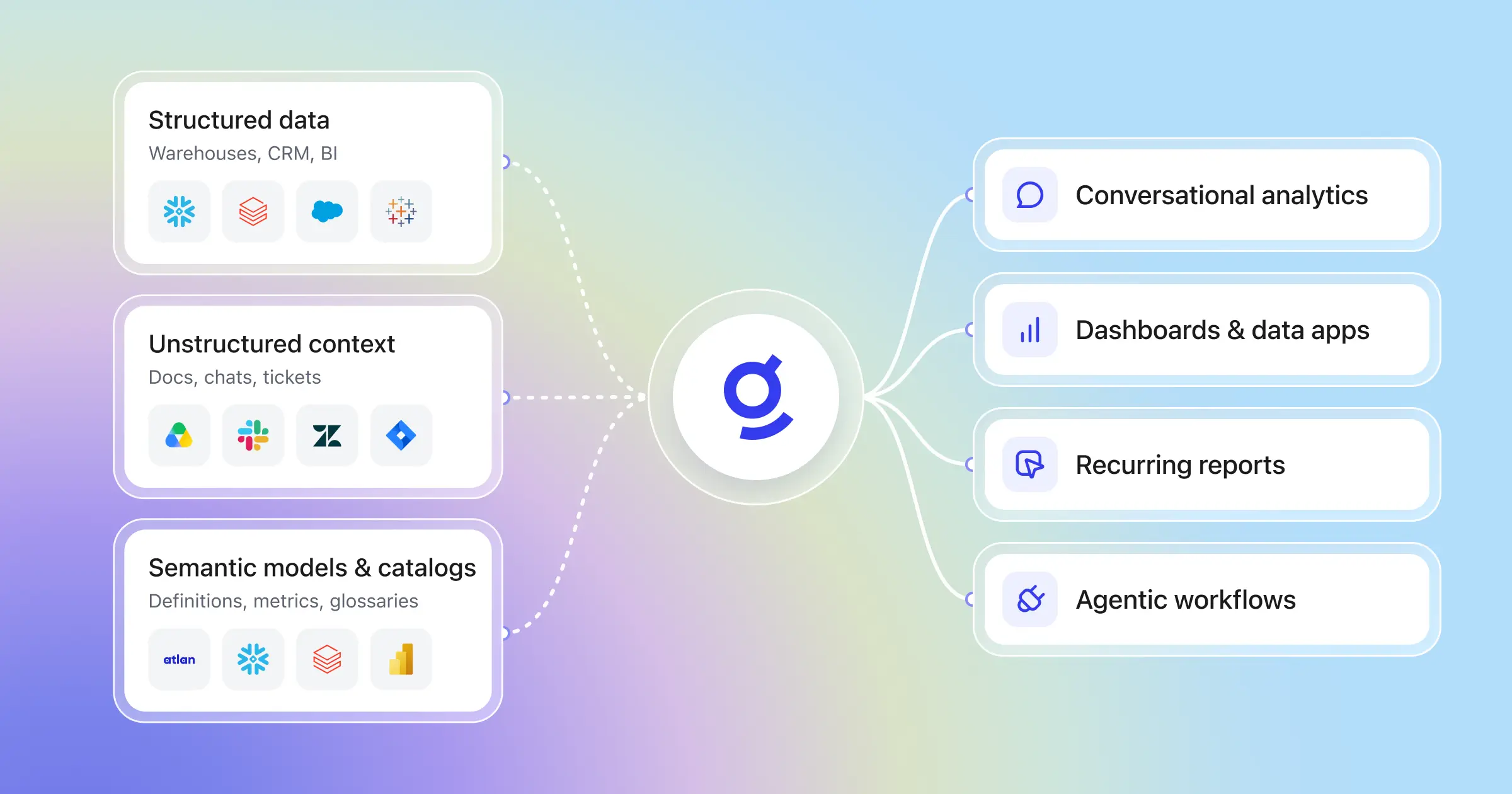
The search solution best suited for data-heavy companies is a permission-aware work AI platform that connects across the entire data stack and returns cited answers grounded in what each user can access. A single index or basic keyword tool cannot surface the right insight when information spans data lakes, warehouses, engineering notebooks, CRMs, wikis, and messaging apps.
Data-heavy search means handling terabytes of structured and unstructured content spread across dozens of tools while enforcing strict access controls. A query like "churn model" might live in a data catalog, a Jupyter notebook, a Slack thread, and a customer success ticket simultaneously. The search layer needs to unify all of those sources and respect who is allowed to see what.
The stakes are high. Analysts lose hours re-finding datasets. Engineers duplicate queries others already wrote. Customer-facing teams quote outdated metrics because the current report is buried three tools away. Good enterprise search solutions cut that friction by delivering answers, not links, and by keeping sensitive data visible only to the right people.
What Makes a Search Solution Suitable for Data-Heavy Environments?
A suitable search solution connects every system where data lives and returns answers grounded in what each person is permitted to see. Data-heavy companies store information across data lakes, warehouses, engineering tools, CRMs, support platforms, wikis, and messaging apps. When a product analyst searches for "churn model documentation," the platform should pull context from the data catalog entry, the notebook that built the model, the Slack discussion that debated thresholds, and the support ticket that flagged edge cases.
Effective enterprise search combines semantic understanding with strict permission enforcement. Engineers, analysts, and business users get relevant results without exposing sensitive datasets to the wrong audience. The search layer must know that a junior analyst can see the aggregated dashboard but not the raw customer-level table underneath.
Key capabilities to look for
- Native connectors to a broad set of enterprise tools. The platform should integrate with data lakes, warehouses, BI tools, ticketing systems, code repositories, and collaboration apps out of the box.
- A context layer that understands relationships. People, content, and workflows connect in ways that matter. An enterprise knowledge graph tracks who owns which dataset, which notebook references which table, and who the subject-matter expert is when documentation does not exist.
- Hybrid search combining lexical and semantic retrieval. Running keyword retrieval (BM25) alongside vector-based semantic retrieval and fusing the results is a common approach known as hybrid search. It catches exact column names a vector model might miss while still understanding synonyms and intent, which is why many enterprise retrieval-augmented generation (RAG) systems use it rather than relying on vectors alone.
- Retrieval-augmented generation that delivers cited answers. RAG retrieves relevant documents and passes them to a language model so the response is grounded in real sources. Users get a direct answer with citations they can verify, not a list of links to click through.
Why Traditional Search Fails at Scale in Analytics-Driven Organizations
Legacy enterprise search returns links, not answers. In organizations processing petabytes of data across lakehouse architectures, ML pipelines, and BI tools, those link lists create a manual hunt-and-stitch cycle — a 2025 Coveo survey found employees waste an average of three hours a day searching for information. You find a pointer to a dashboard, then open the catalog to check who owns it, then message that person on Slack, then wait for context. The information exists — it's just scattered.
The scale of this problem is staggering. According to Forrester Consulting's 2022 study "Crisis of the Fractured Organization," large organizations use an average of 367 software apps and systems, and knowledge workers spend nearly 29% of their week — about 11.6 hours — searching for information. In analytics-driven companies, that time loss compounds: every hour spent hunting for a feature-engineering notebook or dataset lineage document is an hour not spent building models or shipping insights.
Keyword search alone can't resolve ambiguity across the sprawling set of apps today's workers juggle — a 2025 Microsoft Work Trend Index found nearly half of employees (48%) say their work feels chaotic and fragmented. The problem is sprawl, not just data volume. When a data scientist searches "revenue pipeline," are they looking for an Airflow DAG, a sales funnel dashboard, or a dbt model? Without a graph that maps entities and relationships — connecting people to projects, datasets to owners, and documentation to code — the search layer has no way to infer intent.
Permission complexity adds another failure mode. Governed datasets, role-based catalog access, and column-level security all require enforcement upstream of results. A search platform that surfaces a link to a restricted data product without checking access controls creates friction at best and a compliance risk at worst.
Key Features to Evaluate in a Search Platform for Big Data Workflows
Unified connectivity across the data stack
A search platform for data-heavy environments needs native connectors to your analytics tools, not just productivity apps. Look for integrations with data catalogs, notebook environments, orchestration platforms, and BI tools. A platform with 275+ native connectors, including data catalogs and notebooks, can index pipeline metadata, dataset descriptions, and query history without custom ETL.
Context-aware retrieval, not just keyword matching
An enterprise knowledge graph maps relationships between datasets, documentation, people, and projects. When an analyst searches "customer churn features," context-aware retrieval surfaces the relevant feature store table, the owning team's Confluence page, and the Slack thread where the last schema change was discussed. Hybrid search, combining lexical matching with semantic understanding, delivers this precision.
Permission-aware results by default
Governance isn't optional in analytics organizations. The search layer should enforce permissions at query time, respecting catalog access controls, column-level security policies, and team-based restrictions. If a user isn't authorized to view a dataset in your catalog, they shouldn't see it in search results either. Permission enforcement happens upstream, before results reach the user.
AI-generated answers with citations
Retrieval-augmented generation transforms search from link-finding to answer-giving. Instead of returning ten documents about your fraud model's training data, the platform synthesizes a cited answer: "The fraud model uses transaction velocity, merchant category, and device fingerprint as primary features, documented in the feature registry (link)." Citations let users verify and dig deeper.
How Search Solutions Compare When Handling Large, Complex Datasets
The gap between these approaches widens as data volume and tool sprawl increase. A platform built around a system of context — one that understands the relationships between your data assets, teams, and workflows — scales with complexity instead of crumbling under it.
How a Unified AI Platform Supports Data-Driven Decisions Across Teams
Making data-driven decisions depends on fast, trusted access to the right information. A unified AI platform connects knowledge across tools and surfaces it with enterprise context, helping every team move from searching to acting.
For data engineering and analytics teams
Pipeline lineage, dataset ownership, and incident runbooks surface in seconds via an enterprise knowledge graph. When an on-call engineer investigates a failed DAG, a conversational assistant grounded in company data provides cited answers: the root cause from the postmortem doc, the owning team from the data catalog, and the remediation steps from the runbook. No tab-switching, no Slack pings, no hunting.
Data teams also benefit from hybrid search that understands technical terminology. Searching "monthly active users metric" returns the dbt model definition, the dashboard embedding it, and the most recent Slack discussion about its calculation logic. Results rank by relevance and authority.
For business stakeholders
Non-technical users shouldn't need SQL skills to explore company data. A permission-aware assistant lets product managers, finance analysts, and operations leads ask questions in plain language: "What was our top-performing region last quarter?" or "Show me the support ticket trends for our enterprise tier." The assistant queries structured data sources and returns answers with business context, not raw tables.
This capability bridges the gap between self-serve analytics ambitions and reality. Instead of filing a request with the data team and waiting days, stakeholders get answers immediately — bounded by their existing access permissions.
For IT and security leaders
Governed deployment matters. Look for audit trails that log every query and response, data residency controls that keep content in approved regions, and zero-retention agreements with LLM providers that prevent model training on your data. SSO via identity providers keeps access controls synchronized.
Total cost of ownership extends beyond license fees. Factor in connector maintenance, permission sync overhead, and engineering time saved. A platform with pre-built connectors to your data stack and automatic permission updates reduces hidden costs and accelerates time to value.
What the Glean and Databricks Partnership Signals About the Future of Enterprise Search
On June 12, 2024, Glean and Databricks announced a partnership to let everyday users discover and analyze tabular data using natural language via Databricks AI/BI Genie.
The integration works like this: Glean uses Databricks Genie to translate a natural-language question into SQL and returns results with the business context behind the numbers. Teams already working in SQL can build agents with prepared queries that run directly against Databricks. The assistant can query a Databricks Genie space or workspace tables live, without indexing additional data.
This partnership signals a broader trend: the search layer is becoming the interface for governed data, regardless of where that data lives. Instead of training every employee on SQL syntax or building custom dashboards for every use case, organizations can expose structured data through a conversational layer that respects permissions and provides context.
For analytics-driven companies, this model addresses a persistent bottleneck. Data teams have invested heavily in lakehouse architectures, catalog governance, and semantic layers. A search platform that connects to these investments — rather than duplicating them — extends their value to every employee.
How to Evaluate and Select the Right Search Solution for Your Organization
- Map your tools. Inventory every data source, analytics tool, and collaboration platform your teams use daily. Prioritize platforms with native connectors to your lakehouse, data catalog, notebooks, and BI tools. Custom connector development adds months to deployment.
- Test permission fidelity. Run queries as users with different access levels. Confirm that restricted datasets, sensitive columns, and team-specific documentation remain invisible to unauthorized users. Permission enforcement should happen at query time, not as a post-filter.
- Measure time to answer, not time to results. Legacy search metrics track how quickly a user receives links. Modern search platforms should deliver cited answers. Time a realistic workflow: from question to actionable insight, including any verification steps.
- Assess the context layer. Ask how the platform models relationships between datasets, documentation, people, and projects. An enterprise knowledge graph that understands these connections delivers relevance that keyword matching alone cannot achieve.
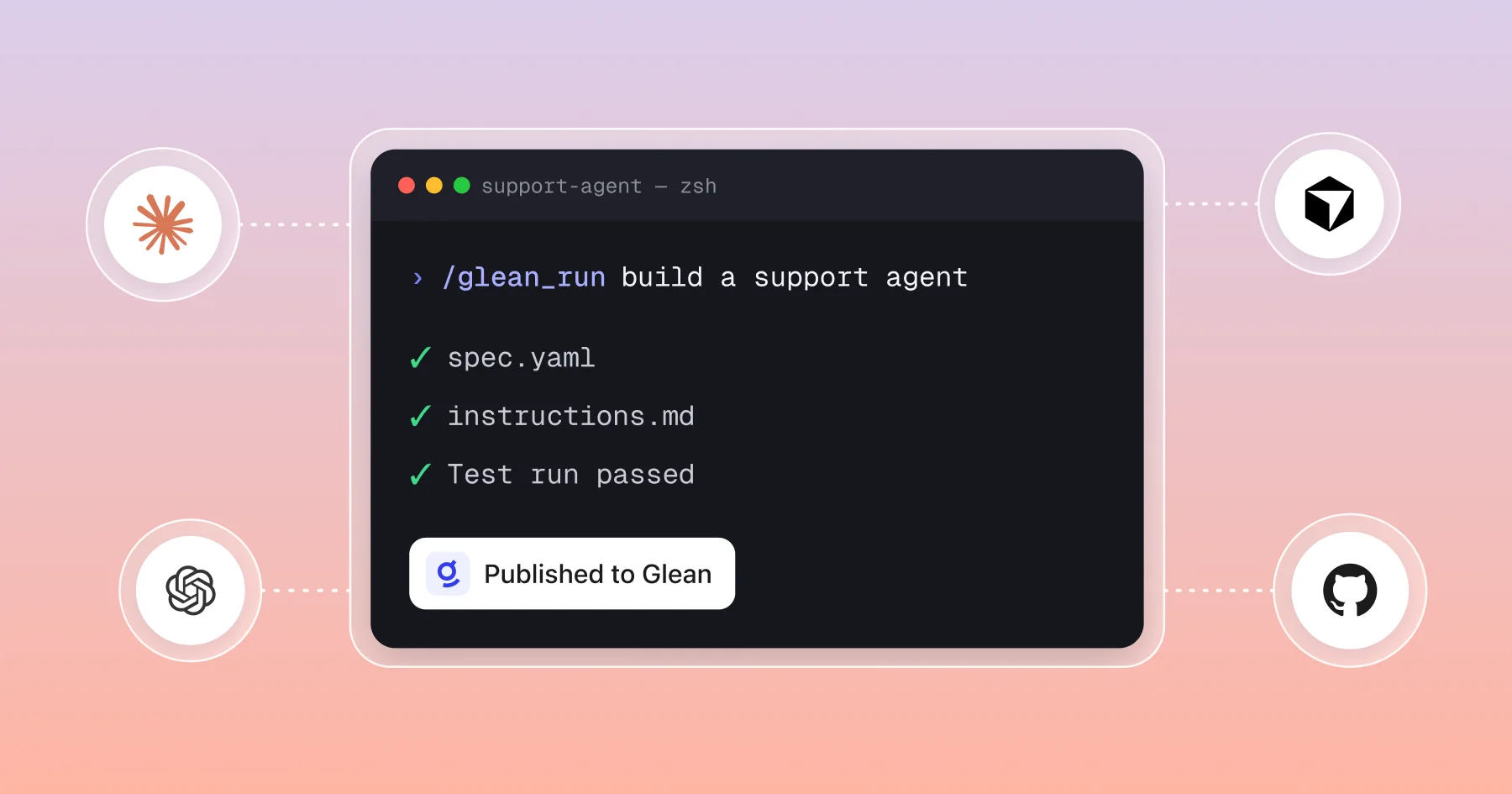
- Evaluate agentic capabilities. For repetitive workflows like generating weekly metric summaries, compiling PR reviews, and drafting incident postmortems, assess whether the platform supports multi-step agents that plan, execute, and act with governance guardrails.
- Validate security and governance posture. Confirm SOC 2 compliance, data residency options, audit logging for every query and response, and zero-retention commitments with LLM providers. Request documentation on how permissions sync, how frequently indexes refresh, and where data is stored.
Frequently Asked Questions
What are the key features of search solutions suitable for data-heavy companies?
Look for unified connectivity to your data stack (catalogs, notebooks, BI tools), permission enforcement that respects column-level security, an enterprise knowledge graph that maps relationships between datasets and owners, hybrid search combining keyword and semantic retrieval, and AI-generated answers with citations. Agentic automation for repetitive workflows adds further value.
How do different search solutions compare in handling large datasets?
Purpose-built work AI platforms offer native connectors to analytics tools, permission-aware results, and cited answers grounded in indexed enterprise content. General-purpose AI chatbots lack organizational context and permission enforcement. Legacy enterprise search returns links without answer synthesis or relational understanding.
Which search solutions integrate best with data analytics tools?
Platforms with pre-built connectors to data catalogs, lakehouse environments, notebook tools, and BI dashboards integrate most effectively. Check for 275+ native connectors and APIs. Avoid solutions requiring extensive custom connector development, which delays deployment and increases maintenance burden.
What should I consider when comparing costs of enterprise search solutions?
Evaluate total cost of ownership beyond license fees: connector development and maintenance, permission sync overhead, engineering time for customization, and ongoing tuning. Platforms with pre-built connectors, automatic permission updates, and rapid deployment timelines reduce hidden costs significantly.
Can a search platform also automate workflows for data teams?
Yes. Agentic capabilities let you build multi-step agents that plan, execute, and act on repetitive workflows: generating weekly metric summaries, compiling PR reviews for a release, or drafting incident postmortems. These agents operate with enterprise governance, including permission awareness, approval gates, and audit trails.
Whether you're connecting data warehouses, BI tools, or collaboration platforms, we help you bring it all together with permission-aware results and cited answers grounded in your company's knowledge. Our partnership with Databricks Genie extends this context into your analytics workflows, so every team — from data engineers to business analysts — can find what they need without switching tools. Request a demo to see how we connect your entire data stack.
emo">Request a demo to see how we connect your entire data stack.

.jpg)

.png)



.jpg)
.webp)